Language Spotlight: Dลsatsu (Insight)

Note: As I continue to learn the Japanese language and culture, these Spotlight posts seek to highlight things I find curious, interesting, and meaningful. The relationship between language and culture runs deep. In fact, there are many points where it gets hard to tell one from the other. “Language is not merely an indifferent mechanism for cataloguing men’s experience but the language itself affects the cataloguing processโ€ฆ. The language system of each culture is a fluid factor in culture; it varies with each generation and serves as clue to its thinking as well as actually coloring and molding this thinking.” In other words, if I am going to learn how to reach Japanese people, I need to understand how Japanese people think. The process of how they think is intimately intwined with the language they use. Unfortunately for us, it goes far beyond simply using “Google Translate” to come up with the right vocabulary. Language embeds the foundational concepts of culture into everyday interaction. So, deeper we go into this wonderful world of language exploration! Much of this information comes from Charles Corwin’s Biblical Encounter with Japanese Culture (Tokyo, 1967).

Dลsatsu is comprised of two characters in kanji. The first character (dล) can represent “cave” while the second character (satsu) can mean “look”. More specifically, the first usually refers to a cave or hole scooped out by flowing water. Satsu is a bit more complicated. It is actually the kanji for “look” but with a piece that means “veil” added on top. So, dลsatsu is really more of the concept of looking deeply (as into a cave) and perceiving the reality of an object.

We have some English idioms which get to a similar meaning. “Read between the lines” comes to mind, as does “See right through someone”. We also tend to use expressions like “get to the bottom of” and “determine the mood” in a parallel sense.

In the New Testament, insight often refers to spiritual discernment or understanding. We look for insight when we seek divine revelation in Scripture. We also gain “insight” when we understand someone’s innermost reality.

Japanese dลsatsu and Biblical insight both denote a seeing that is more than observation. It is seeing that cuts through the obvious and seeks to perceive something’s essence. However due to the influence of Buddhist thought, Japanese understanding of this concept has traditionally focused its attention on achieving insight through clearing away all mental impairments and attitudes. Biblical insight, on the other hand, is centered in more moral and spiritual terms. It is a seeing beyond the outward symbols of something and perceiving the inner reality that those symbols portray.

Unlike its Buddhist counterpart, Biblical insight cannot be achieved unaided, but must come through the assistance of God’s Holy Spirit. (1 Cor. 2:9-10). Rather than simply determining the essence of something, Biblical insight is more concerned with seeing the spiritual truth behind the visible words and actions.

~ Clay

Introducing Tachikawa

โ€ฆfor it is God who works in you to will and to act in order to fulfill his good purpose.
~ Philippians 2:13

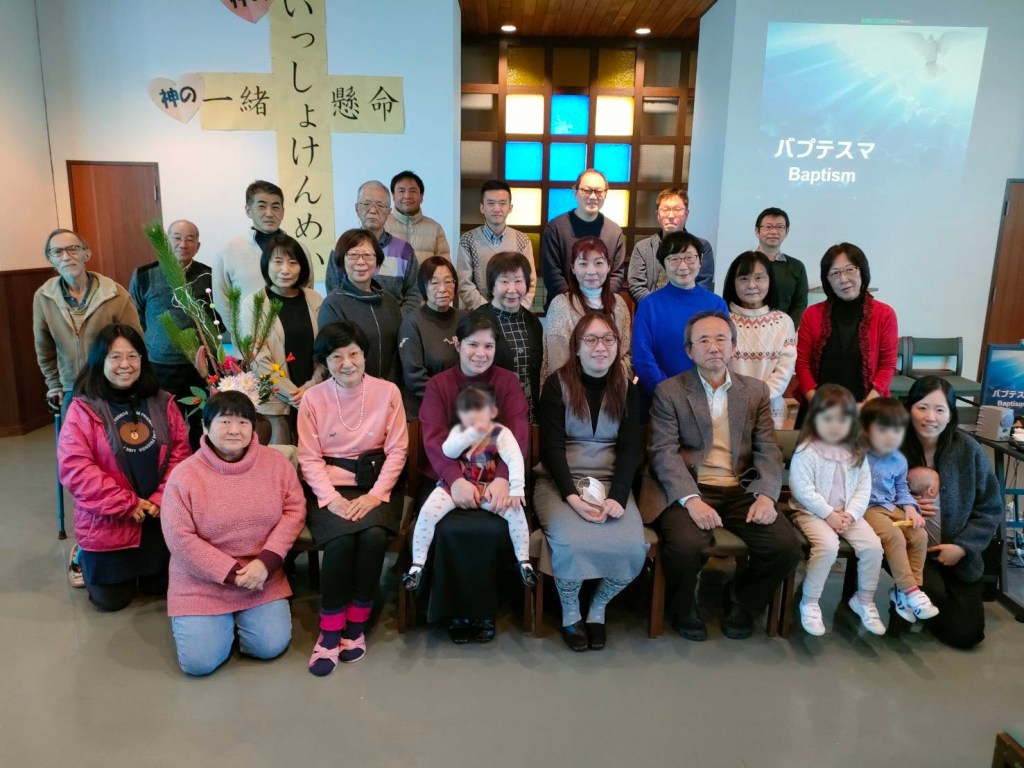
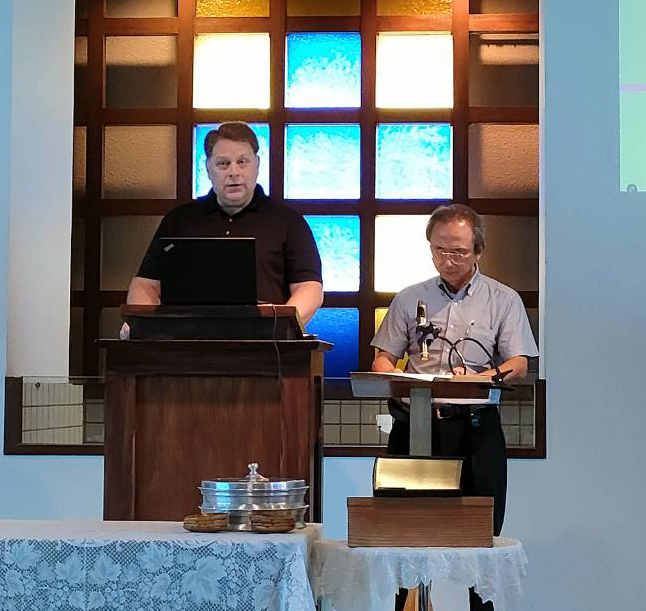
A typical Sunday morning gathering

This blog post will be focusing on Tachikawa, Japan. Emily and I have committed to working with the congregation here and we are excited to share some of the reasons for our decision. The photo above was taken during our trip last summer. Although some members couldnโ€™t be present the day this picture was taken, it is a good representation of a typical Sunday worship gathering. Over the last two summers as we worked and worshiped alongside this small but faithful group, these people have gradually gone from anonymous Japanese individuals to beloved brothers and sisters laboring for Jesus despite tough cultural challenges.

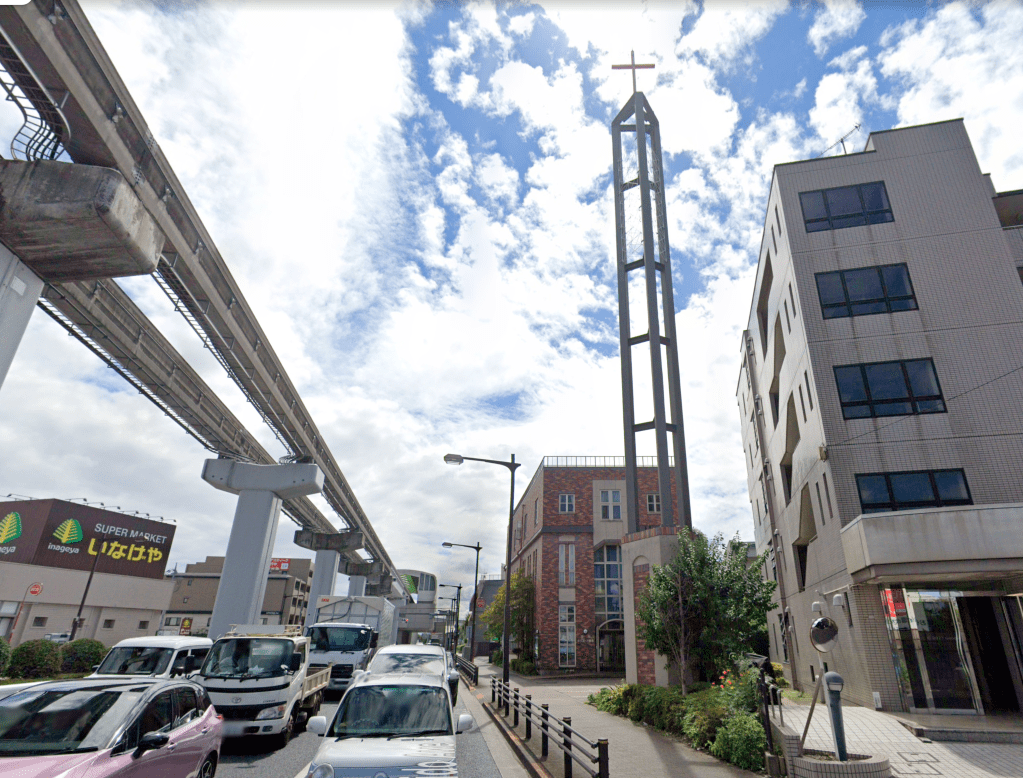
Downtown Tachikawa

Tachikawa is a suburb on the Western side of the Tokyo metropolitan area. While not as densely populated as central Tokyo, most Americans would still consider it to be crowded. Tachikawa Station serves as a major suburban hub at the intersection of five different train lines. Current estimates suggest that at least 175,000 people transit through this station each day. Consequently, the Tachikawa area has seen a steady increase in development and is an attractive destination for people who want to live away from the congested parts of Central Tokyo yet still have easy access to all parts of the greater Tokyo area.

In particular, this part of the city is attractive to young families. Despite most areas in Japan dealing with the twin crises of low birth rates and an aging population, Emily and I have observed over the past two summers that the Tachikawa area has an abundance of families with small children. We believe this presents a number of exciting possibilities for ministry!

Tachikawa Church of Christ

For over 60 years, the Tachikawa Church of Christ has faithfully stood in this area of Tokyo as witness to the Gospel. The congregation also serves as host for the Japan School of Evangelism which utilizes the classroom and library spaces on its second floor, and dormitory lodgings on its third floor. Nao Fukushima serves as minister and evangelist along with his wife Noriko. Tachikawa is one of Japanโ€™s larger congregations, with a membership around 30 individuals.

When most people think of missionary activities, their first thoughts often tend toward evangelizing a local community and establishing a new church plant. Spreading the Gospel into new areas is critical Kingdom work, and for many missionaries around the globe this is the only option available. So when Emily and I talk with people about our plans in Tachikawa, they are often surprised that our work will focus on an existing congregation that already has a minister in place. There are several reasons for this.

It would be very difficult to plant a new church, legally. In recent history, Japan has had to endure reprehensible behavior from a variety of religious groups. From the sarin gas attacks in Tokyo subways by cult members to extortionist fundraising practices by other groups, a number of events have caused the Japanese government to be extremely reticent to issue new licenses under the national Religious Corporation Law. Ultimately, the behavior of these non-Christian groups has put the brakes on any process which would recognize a new church plant. Without this legal designation, it would be impossible to enter into contracts for rental agreements, bank accounts, building projects, taxes, and a whole host of other legal relationships needed to exist as a congregation. The best we could hope for would be to operate as a โ€œsatelliteโ€ location of an existing congregation, requiring the host group to sign for everything.

Similarly, the visa standards in Japan require Emily and I to be sponsored by an existing Japanese congregation. While it is possible to ask the Tachikawa congregation to sponsor our visa in order for us to work in a different place, we are hesitant to ask the congregationโ€™s leaders to shoulder additional administrative responsibilities in this way. I am confident they would be willing to do so, since it is a necessity of the Japanese visa system, but we donโ€™t wish to impose upon these brothers and sisters who already give so much of their time serving the Lord.

More importantly, Emily and I have committed to working with the Christians in Tachikawa because they have asked us to come. We see great opportunity for mission work within this church family and among this community. Although this congregation has a long history and faithful core membership, they have struggled to bounce back from the disruption of the COVID pandemic. Nao and Noriko Fukushima serve the congregation tirelessly, but they both must work secular jobs to make ends meet. Other core members faithfully help week in and week out, but the Tachikawa congregation would greatly benefit from an infusion of new energy. This is a main reason why they began seeking missionaries to come and join their work.

Godly mentors are a blessing to be treasured. As Emily and I transition to life as Japanese missionaries, there will be many personal and ministry challenges. By working with the Tachikawa congregation, we also get to deepen our relationship with Nao and Noriko Fukushima. These two have decades of experience working for Jesus in the cultural context of Japan, but they have also spent time in the United States while completing college degrees. In other words, they have experienced both sides of the transition Emily and I will be making. We have already grown so much through getting to know them. Taking this mentor relationship to the next level will help further equip us for the work ahead.

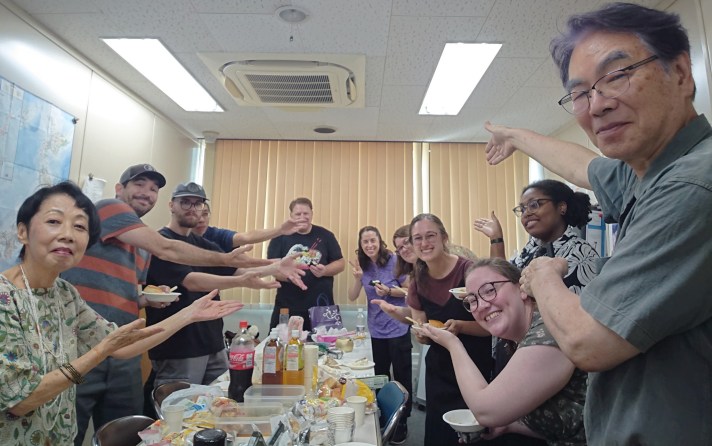
Tokyo Academy of Communication Language Institute

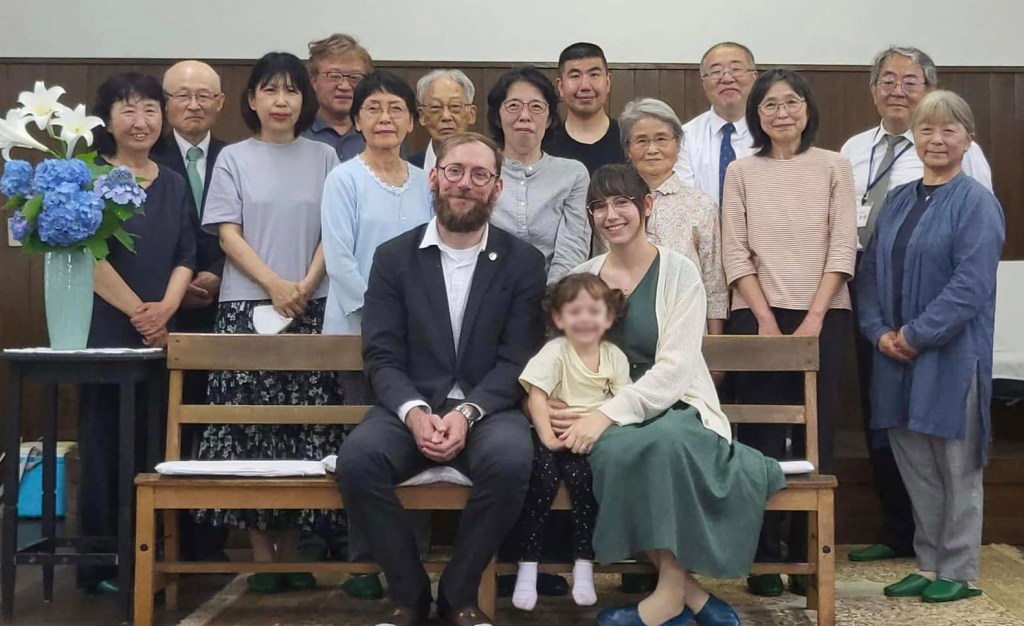
Our first two years on the field will be primarily focused on language study. Living and working in Tachikawa will allow easy access to an exciting opportunity. On the recommendation of Les and Sarah Taylor, we took some time this past summer to visit the Tokyo Academy of Communication. Located near Ochanomizu station in central Tokyo, this school teaches the Japanese language with missionaries and their families specifically in mind. Takahashi sensei and Yamamoto sensei (at far right and left in the photo above) were both very welcoming and encouraging. They even let us experience a whole dayโ€™s activities as a preview. It is clear that they approach language learning as Kingdom ministry, and we are looking forward to their guidance and coaching as we learn the intricacies of Japanese language and culture.

As a mission field, Japan is a very unique place. Everywhere you look, there are reminders that Japan is a curious blend of ancient tradition and modern life. As we learn to navigate this reality and seek to reach the people here, Emily and I are grateful for the many ways that working with the church in Tachikawa will help make our efforts more effective. We believe that God is already at work in this community. By listening to His word and looking to His leading, it is our conviction that the Spirit will give us the words to use and the opportunity to speak them.

~ Clay

The Body of Christ

The first part of Romans chapter 12 is one of those passages that you hear a lot. โ€œOffer your bodies as living sacrificesโ€ and โ€œin Christ we who are many form one bodyโ€ are phrases that get used often in everything from sermons to worship songs. Iโ€™ve even seen them on t-shirts and social media posts. It is such a pivotal chapter, that we often forget where it is in the context of Romans as a whole.

Romans has this reputation of being one of the most theological books in the Bible. And that reputation is WELL DESERVED. Basically, in the first 11 chapters Paul has been systematically laying out a complete theology for understanding what it means to be a Christian. This reputation for being so theological has caused some people to wonder why Paul includes these practical chapters toward the end.

Romans 12:1-2 โ€“ Therefore, I urge you, brothers and sisters, in view of Godโ€™s mercy, to offer your bodies as a living sacrifice, holy and pleasing to Godโ€”this is your true and proper worship. Do not conform to the pattern of this world, but be transformed by the renewing of your mind. Then you will be able to test and approve what Godโ€™s will isโ€”his good, pleasing and perfect will.

What we can sometimes fail to remember is that ALL theology is practical. And all Christian practice IS theological. You canโ€™t have one without the other. The Good News of Jesus Christ is meant to transform a personโ€™s life. Unless we start to LIVE OUT our theology, the Gospel hasnโ€™t accomplished its purpose.

We offer ourselves as living sacrifices, and that is how we worship God. Here is where a little bit of first century context might be helpful. When we think of the word โ€œsacrificeโ€ we often think of giving up something or going without something. But when the first century person thought of the word โ€œsacrificeโ€ they equated it with the word โ€œworship.โ€ In the ancient world, ritual sacrifice at a temple WAS how you worshipped your God โ€“ Jews and Gentiles alike. The temple in Jerusalem AND countless temples all over the Roman Empire were constantly busy with people coming to sacrifice something AS THEIR ACT OF WORSHIP. 

As you might expect, many Gentiles practiced a cheap version of worship. They reasoned that if all we have to do is offer this animal at an alter once a year (or however often), then weโ€™re golden. Weโ€™re straight with the gods. I can live the rest of my life however I want. Israel, by the way, wasnโ€™t immune to this kind of thinking either. The Old Testament prophets spoke against this again and again.

For a better example, look no further than when Jesus himself calls out the Pharisees for being white-washed tombs. Pretty sacrifices on the outside, but no genuine worship on the inside. Thatโ€™s why Paul follows his word about offering yourselves as sacrifices with a caution to not conform to the pattern of the world, but instead be transformed by the renewing of your mind. 

No, the sacrifice that we offer at the alter โ€“ our worship to God โ€“ is an INFORMED sacrifice. I’ve written before about how Paul saw the world as being caught between two ages. When we accept Christ as Lord and seek to follow him, we have switched our allegiance from the โ€œpresent ageโ€ and instead seek to live in โ€œthe age to come.โ€ And so our sacrifice is a living one. Literally. We sacrifice the right to live however we want to and instead live in ways that honor God. We align ourselves with โ€œthe age to come,โ€ but โ€œthe present ageโ€ is still all around us. 

Some might feel that it is enough to simply โ€œlive a good life.โ€ Try not to sin, study your Bible, pray regularly, show up on Sunday morningโ€ฆ you know. Doing the things. But if we stop there, then Iโ€™m not sure thatโ€™s really an informed sacrifice. We need to ask ourselves,  โ€œWhat does God really desire from our worship?โ€ I think it is what He has always desired.

Think about Abraham. When God chose Abraham and told him to leave his family, leave his homeland, and set off on this adventure, what is the reason that He gives Abraham. Do you remember? Genesis 12: โ€œI will make you into a great nationโ€ฆ I will bless youโ€ฆ and all the peoples on earth will be blessed through you.โ€ God desires that His people are a blessing to the whole earth. Thatโ€™s what He has always wanted humans to be. Isaiah echoes this as well when the Servant of the Lord (that is, Jesus) isnโ€™t just going to restore the people of Israel, he is going to โ€œbe a light for the Gentiles, that salvation may reach to the ends of the earth.โ€ God chose the people of Israel so that the rest of the world could see and be drawn to Him.

As Christians, our purpose is the same. Jesus commands us to โ€œgo into all the worldโ€ preaching the Gospel and making disciples. You canโ€™t just BE CHRISTIAN. You have to also โ€œDO CHRISTIAN.โ€ Theology and practice go together. They are two parts of the same thing. Or, as James will write, โ€œfaith without works is dead.โ€

Romans 12:3-8 – For by the grace given me I say to every one of you: Do not think of yourself more highly than you ought, but rather think of yourself with sober judgment, in accordance with the faith God has distributed to each of you. For just as each of us has one body with many members, and these members do not all have the same function, so in Christ we, though many, form one body, and each member belongs to all the others. We have different gifts, according to the grace given to each of us. If your gift is prophesying, then prophesy in accordance with your faith; if it is serving, then serve; if it is teaching, then teach; if it is to encourage, then give encouragement; if it is giving, then give generously; if it is to lead, do it diligently; if it is to show mercy, do it cheerfully.

So in the first two verses, Paul says we should offer ourselves as living sacrifices โ€“ and that those should be โ€œinformedโ€ sacrifices. Realizing that BEING Christians inherently involves DOING Christian things. And then he rolls right into this analogy of being part of a body. Lots of people get wound up exploring this analogy. How does this body part fit in with that body part? Does the thing that I think Iโ€™m good at fit into the body of Christ and if so, how and where? Is this body part working well with that body part? Is this body really working together as a whole unit? OK. Those are good discussions and someone needs to be looking at that. Sure.

But I want to step back and make sure we donโ€™t lose sight of Paulโ€™s main point here. It is NO accident that he follows his words about living sacrifice and renewing your mind with the body analogy. If we are going to BE CHRISTIANS and DO CHRISTIANITY, then the proper place for that is WITHIN THE BODY. It is in the community of Christ that we become most effective. It is by serving the world around us TOGETHER AS A CHURCH that outsiders are best drawn to a life in Christ. 

When we work together as a body, we get to take advantage of each otherโ€™s strengths. Paul lists a few of them in these verses โ€“ prophesying, teaching, serving, encouraging, giving, leading, showing mercy. I donโ€™t think Paul means to limit the list to just these seven. There are lots of ways that you can plug in and become part of the body of Christ. Figuring out what that means for you is part of being โ€œinformedโ€ with your sacrifice. 

Besides, working as part of a group is just better. Think of it in terms of movies and TV shows. These days, super hero movies often feature groups of main characters: Guardians of the Galaxy, Fantastic Four, The Avengers, Justice League. Or go back in time a bit to my day: Power Rangers, Teenage Mutant Ninja Turtles, The Original Transformers, Chronicles of Narnia, Lord of the Rings. Or look at it in the Anime genre: Frieren, Delicious in Dungeon, Kpop Demon Hunters, One Piece, My Hero Academia, โ€ฆand the list goes on. I love a good Superman movie, but the group of heroes is just so much more relatable. No one person can do it all. They have to rely on each other to overcome whatever challenges they face. Itโ€™s a similar dynamic as you and I become part of the body of Christ.

Being part of the body is also where we grow as Christians. โ€œAs Iron sharpens iron, so one person sharpens another.โ€ Thatโ€™s actually in Proverbs, which is part of Israelโ€™s heritage. But it is equally true in the body of Christ. My gifts can be used to reach non-Christians, but they can also be used to build up the body through mentoring or teaching, or even just encouraging other Christians. Your gifts can do the same for me. It is when we are in each otherโ€™s lives that we can have this effect on each other. Itโ€™s when we are in each otherโ€™s lives that we are attached to the body. And it is when we are attached to the body that we receive the spiritual nourishment needed to live and grow in our faith.

This was proven in a negative way in the COVID pandemic. Suddenly, we all stayed home and watched Sunday morning on our TVs. Sure, we still got a sermon and we still heard communion thoughts. Most of us sang along when the songs were played on the screen. But as necessary as these changes were for the physical health in our city, they were devastating for the spiritual health of our community. Iโ€™ve known quite a few people who quit watching during the pandemic and havenโ€™t returned now that things are back to normal. Being members one to another is vitally important in our life as Christians.

So, BE Christians, DOING Christianity, as part of the BODY of Christ. That is what Paul is saying in this passage. 

~ Clay

Communion and Choosing

We celebrate the Lordโ€™s Supper each week by sharing this little piece of bread and a few drops of juice. These two basic items, which are simple enough to be found in every culture around the globe, are meant to remind us of Jesus. Matthew, Mark, and Luke all recount the story of Jesus instructing his disciples about the bread and the cup. During the Passover meal, Jesus takes some bread and declares, โ€œThis is my body, given for you.โ€ And then in a similar fashion, He takes the cup and says, โ€œThis cup is the new covenant in my blood, which is poured out for you.โ€ Simple and short, but packed with meaning.

Lukeโ€™s gospel starts the meal with Jesus telling His disciples, โ€œI have eagerly desired to eat this Passover with you before I suffer. For I tell you, I will not eat it again until if finds fulfillment in the kingdom of God.โ€ This will be their last meal together before Jesus is arrested in the garden and everything else that follows. This is one reason that Jesusโ€™s โ€œLast Supperโ€ becomes the โ€œLordโ€™s Supper.โ€ But donโ€™t forget that Jesus also was very intentional in setting up the Lordโ€™s Supper DURING this Passover Meal. He wants His disciples to draw meaning and connection between what they are celebrating in the Passover and the events that are just about to take place.

Exodus 12 is where we find the story of how the Passover Meal began. Israel is enslaved to Egypt and the oppression is great. God has empowered Moses to battle with Pharaoh (and Egyptโ€™s gods) through the first nine plagues, and has announced the nature of the tenth and final plague. The Israelites are instructed to sacrifice a lamb and use it to prepare a hasty meal with unleavened bread. Some of the blood from the lamb is to be spread on the doorframe of the house where they will eat. When the Lord passes through the land killing all firstborn of both people and animals, He will see the blood on the doorpost and passover that house and whomever is inside. The power of Egypt will be broken and the Israelites will be set free. They are then instructed to celebrate this meal and reenact this evening every year as a meal of remembrance of what God has done.

Jesus declares that this new meal of remembrance is the FULLFILLMENT of the old one. When we accept the saving Grace of Jesus, we align our lives with Godโ€™s Kingdom in this new covenant. Then when it comes time for God to pass judgement again, he instead sees the blood of Jesus in our place and passes us over. In Exodus, I donโ€™t think it really mattered who was inside the house. If the doorframe had the blood of the sacrificial lamb on it, God passed them over. Similarly, it doesnโ€™t really matter who you are either. When you choose Christ and put your faith in Him, His blood causes Godโ€™s judgement to pass over you as well.

The Israelites were instructed to commemorate this Passover Meal each year in order to remember and pass on to future generations the story of the night that God delivered them from bondage. God broke the power of the Egyptians and set them free, and the Passover meal stood as a lasting reminder of that fact. By sacrificing that lamb and spreading its blood on the doorposts, they were CHOOSING to go with God rather than remain in bondage to the Egyptians. Because of this blood, they were set free from slavery to the Egyptians and could follow God wherever He leads. Commemorating this choice each year through the Passover Meal was vitally important. We read in the following chapters of Exodus that the Israelites were going to need every reminder they could get if they were going to keep choosing God instead of something else. Time and again, we read about how they failed to do so.ย 

For us, this choice was made at our baptism. When we put on Jesus in baptism, we CHOSE through faith, to go with God rather than remain in bondage to sin. In a similar way to Israel, we are set free from sin because of our faith and can follow God wherever He leads. Commemorating this choice each week through this meal of remembrance is vitally important. Before we get too down on Israel for failing to consistently choose God as they wandered the desert, letโ€™s be honest with ourselves and recognize that we also fail to consistently choose God โ€“ and we get this remembrance meal every week! I donโ€™t have to remember all the way back to the last Passover meal. I simply have to remember back to last Sunday!

So, in this remembrance meal, and with this blood of Jesus, let us be mindful not only of Jesus and the sacrifice that He made. Let us remember that we CHOSE to follow Him and trust in His blood for our own passover. May this meal also help us to KEEP CHOOSING God in the midst of our wandering this week.

~ Clay

Language Spotlight: Shinkล (Faith)

Note: As I continue to learn the Japanese language and culture, these Spotlight posts seek to highlight things I find curious, interesting, and meaningful. The relationship between language and culture runs deep. In fact, there are many points where it gets hard to tell one from the other. “Language is not merely an indifferent mechanism for cataloguing men’s experience but the language itself affects the cataloguing processโ€ฆ. The language system of each culture is a fluid factor in culture; it varies with each generation and serves as clue to its thinking as well as actually coloring and molding this thinking.” In other words, if I am going to learn how to reach Japanese people, I need to understand how Japanese people think. The process of how they think is intimately intwined with the language they use. Unfortunately for us, it goes far beyond simply using “Google Translate” to come up with the right vocabulary. Language embeds the foundational concepts of culture into everyday interaction. So, deeper we go into this wonderful world of language exploration! Much of this information comes from Charles Corwin’s Biblical Encounter with Japanese Culture (Tokyo, 1967).

The concept of “faith” can vary widely in Japanese. When written in kanji, Shinkล is a combination of two characters: “shin” and “ko”. “Shin” can mean “new,” but it can also mean “truth” or “without doubt” or “trust”. The word “ko” can mean “respect” but it can also mean “look up”, “esteem”, or even “affection born from admiration of the holy.” So, together these two concepts become informed by each of their parts. Faith can be thought of as “looking up toward truth” or “positively trusting the holy.”

Buddhist thought approaches faith from a very different place than Christian thought. When a Buddhist speaks about faith, they are referring to a religious response toward a religious object. It stresses man’s activity in faith. Literally, they speak of it as “doing faith” or “practicing faith.” Consequently, faith could be perceived to be as simple as observing prescribed Buddhist rituals such as a memorial for the deceased. Maybe you just offer some rice before the family altar each morning. The more you practice these rites, the more you might be called one who practices faith. The Shinto religion is a system based upon gratitude. Using this lens, one could say that the faithful are those who express appreciation toward local shinto deities or deceased ancestors for blessings received in the present.

In both of these cases, the exercise of faith is stressed more than the object of faith.

For New Testament Christians, faith is a very different idea. For us, faith is all about the object! This faith (or faith’s object) is summed up in recognizing Jesus as Lord and accepting the miracle of the Resurrection. Accepting the New Testament faith is accepting the central figure of history which establishes Jesus as Lord, involving a personal relationship with this Lord. It is linked to terms such as repentance, forgiveness, and obedience. Essentially, faith is the act in which man separates himself from the world and turns around completely towards God in response to God’s eschatological deed in Christ. It is active and ongoing. Believers are the “believing ones” who are constantly relating themselves to God’s act of salvation.

When Japanese people say they “have no faith” they merely mean that they aren’t very zealous when it comes to a religious activity. It never really touches on the Christian notion of faith being based on a personal relationship with a deity.

Biblical faith, on the other hand, speaks of a special relationship in which God embraces the whole man or woman. All of the blessings which Christ has gained by virtue of His exaltation become common property with those joined to Him. Even better, all of the rebellion, sin, and unworthiness of the believer become Christ’s possessions as He suffered on the cross.

Japanese faith is a mental activity or religious rite performed by man. Biblical faith is a joining between man and God. It is one more way that the Gospel is very good news for the Japanese, if we take the time to help them understand.


~ Clay

2026 Missions Update

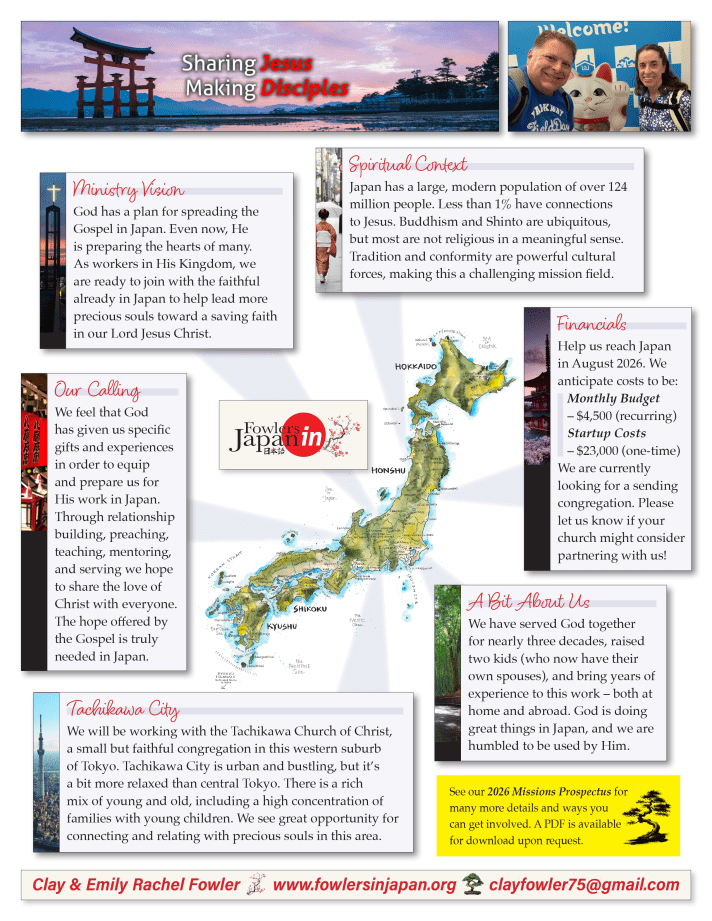
Emily and I are excited to share that we are officially launching our funding campaign for full-time mission work in Tachikawa, Japan! We have designed a one-page summary for quick reference. It contains descriptions of our Vision for Ministry, our Calling, the Spiritual Context of Japan, an intro to Tachikawa City, and a bit about ourselves and our financial goals. Do us a favor and download the PDF version and please share it with anyone who might be interested in partnering with us for missions in Japan!

For those desiring a greater level of detail, we have also produced a 2026 Missions Prospectus. This comprehensive document provides information about our plans, our working agreement with the Tachikawa congregation, letters of recommendation, official documentation, our personal credentials, and more. It is designed to help you be fully informed as you consider partnering with us in this work. Our Missions Prospectus is available to anyone, but since it has a number of sensitive details we have chosen not to publish it on the web. Simply contact us to request a copy and we’ll be happy to send it directly to you.

Several of the website pages have also been updated or expanded. Here is a brief description of what has changed:

The page outlining Our Mission now includes more specific information about Tachikawa Church of Christ, the place we have agreed to work.

The Support page has now been expanded to three separate pages:
– The Email Newsletter page (the place to sign up!)
– The Prayer Partners page (for general requests)
– The Financial Support page (with actual numbers)

And finally, for those who are ready to partner with us financially, we have a Financial Pledge Form where you can let us know the type and amount you would like to give. Simply click the blue button to put your name down as partners in this work.

As always, thank you for your encouraging messages. They mean a great deal! Thank you again for praying for us, for Japan, and for the Kingdom work being done.

~ Clay

Tension Between the Ages

What then? Shall we sin because we are not under the law but under grace? By no means! Donโ€™t you know that when you offer yourselves to someone as obedient slaves, you are slaves of the one you obeyโ€”whether you are slaves to sin, which leads to death, or to obedience, which leads to righteousness? But thanks be to God that, though you used to be slaves to sin, you have come to obey from your heart the pattern of teaching that has now claimed your allegiance. You have been set free from sin and have become slaves to righteousness. I am using an example from everyday life because of your human limitations. Just as you used to offer yourselves as slaves to impurity and to ever-increasing wickedness, so now offer yourselves as slaves to righteousness leading to holiness. When you were slaves to sin, you were free from the control of righteousness. What benefit did you reap at that time from the things you are now ashamed of? Those things result in death! But now that you have been set free from sin and have become slaves of God, the benefit you reap leads to holiness, and the result is eternal life. For the wages of sin is death, but the gift of God is eternal life in Christ Jesus our Lord. ~ Romans 6:15-23

Paul is continuing to build the argument that he has been working on through several of these chapters. Ultimately, that argument will be that Christians have it better! In the first half of chapter six, Paul focused on the freedom that Christians enjoy. In this half of the chapter, he shifts gears and explores how Christians have it better through this idea of slavery.

Like he often does, Paul is exploring this idea by working within a dual-option reality. He sets up these two options as the two main options available to everyone. Either you are a slave to sin or you are a slave to righteousness. Speaking to Christians, Paul is assuming that the reader has *chosen* to be a slave to righteousness, even if they might not have heard it in these terms before.

There is one major concept that we need to know in order to fully appreciate what Paul is doing in this section. For us โ€” 21st century Americans โ€” we can have a hard time thinking of ourselves in terms of slavery, especially 1st century notions of slavery. So, let me back up a little bit and build in some context.

In the first century, most Jews held firmly to a concept some scholars call โ€œapocalyptic thinking.โ€ For them, history is divided into two ages: โ€œthe present ageโ€ and โ€œthe age to come.โ€ The present age is dominated by sin, Gentiles, and Satan. The age to come will be marked by God vindicating himself and his people, banishing evil, and establishing his eternal kingdom.

We find this sort of language all over Paulโ€™s writing:
– Ephesians: Paul contrasts โ€œthe present ageโ€ with โ€œthe one to comeโ€
ย – Corinthians: Paul refers to โ€œthe rulers of this ageโ€ and โ€œthe god of this ageโ€
ย – Galatians: Paul says we are living in โ€œthe present evil age.โ€

But the coming of Jesus has changed all of that! Through Christโ€™s death and resurrection, the โ€œnew ageโ€ has been inaugurated. Godโ€™s โ€œnew kingdomโ€ has arrived. YET – this present evil age hasnโ€™t come to an end, and the new age isnโ€™t yet present in its full and final form. Evil and sin still exist, and believers have not yet been made perfect. We give our lives to God and align ourselves with the new age, but we still live in a world dominated by the old age and we feel the effects and contamination of sin in our lives.

So, how should we read these passage that seem to setup a choice between two options? It is a tension that Paul himself is navigating in these verses. Paul goes back and forth between verses that indicate God has accomplished our break with sin:
– v2: We are dead to sin
ย – v6: our old self was crucified with Jesus
ย – v11: we are dead to sin but alive to God
ย – v13: weโ€™ve been brought from death to life
ย – v14: sin shall not be your master
ย – v18: we are set free from sin and have become slaves to righteousness
ย – v22: we are set free from sin and have become slaves to God

Yet Paul also sprinkles in statements that command us to stay away from โ€œold ageโ€ thinking:
ย – v12: Do not let sin reign
ย – v13: do not offer the parts of your body to sinโ€ฆ offer yourselves to God
ย – v19: offer the parts of your body in slavery to righteousness

So, which is it? Has God conquered? Or do we need to still be wary of sin in our lives? 

I think one of the keys to navigating this tension well is to realize that it is God who takes the initiative. Through grace, God acts to help his people, and then He asks for them to respond. Paul never calls on people to โ€œwage a war against sin and hope that God will take their side and win the war for them.โ€ That sounds ridiculous. But often, itโ€™s what we actually tend to do. We have to remember that we are living in the middle of this tension between what God has already done and what we are supposed to do. 

We are pretty good at avoiding โ€œlegalismโ€ because weโ€™ve had that one drilled into us for quite some time. But there is a soft version of legalism that sneaks under our radar. It looks like this: we can obey God or even make Him happy on our own. We chide ourselves on how we failed yet again to live up to our idea of what God wants. Instead, we should be embracing Godโ€™s grace again today because He freely gives it! 

When we embrace Godโ€™s grace and live our lives out of that mindset – then we truly become Godโ€™s children. Everything we do should be rooted in Godโ€™s grace. In fact, everything we do should serve to CHANNEL Godโ€™s grace toward everyone around us!

Before we swing too far to one side, though. Remember that we are working through this tension of new age and old age being present together. Leaning totally on the Grace end of the spectrum can start to look like some sort of โ€œmagical Christianityโ€ where we donโ€™t really have to put anything into it. โ€œLet go and Let Godโ€ is the rallying cry of those who end up too far this direction. Donโ€™t go so far toward Grace that you forget that God HAS commanded us to be a certain way and to act in certain ways.

You live in both ages, so you need to bake both kinds of mindsets into your faith walk. Paul will spend chapters 7 and 8 hashing it out further, but for now I think it is enough to notice that Paul agrees with James: Faith without works is dead. Live into the Grace of God and channel that Grace to everyone around you โ€” but honor that gift of Grace by living a life that is obedient to Godโ€™s calling.

May God bless you as you seek to serve Him this week.

~ Clay

Prayer for the Kingdom (Message 3 of 3)

Note: This is the third of three sermons I preached this Summer in Japan.

In recent weeks, we have focused on how our prayers to God can become more relational. Weโ€™ve looked at many of the prayers that Paul includes in his letters, especially his โ€œThanksgiving Prayers.โ€ They have helped deepen our understanding of prayer through his example to encourage others and show gratitude. As our relationship with God becomes deeper, we may even have times when we pray to change Godโ€™s mind. In Matthew 7:11, Jesus says, โ€œask and you will receive, seek and you will find, knock and the door will be opened. How much more will your Father in heaven give good things to those who ask of him?โ€

ใ“ใ“ๆ•ฐ้€ฑ้–“ใ€็งใŸใกใฏ็ฅžใธใฎ็ฅˆใ‚ŠใŒใ€ใ‚ˆใ‚Š้–ขไฟ‚็š„ใชใ‚‚ใฎใซใชใ‚‹๏ผˆ็ฅžใจใฎ้–ขไฟ‚ใ‚’ๆทฑใ‚ใ‚‹๏ผ‰ใŸใ‚ใซใฏใฉใ†ใ™ใ‚Œใฐใ‚ˆใ„ใ‹ใจใ„ใ†ไบ‹ใซ็„ฆ็‚นใ‚’ๅฝ“ใฆใฆใใพใ—ใŸใ€‚ใƒ‘ใ‚ฆใƒญใฎๆ‰‹็ด™ใซๅŽ้Œฒใ•ใ‚Œใฆใ„ใ‚‹ๅคšใใฎ็ฅˆใ‚Šใ€็‰นใซๅฝผใฎใ€Œๆ„Ÿ่ฌใฎ็ฅˆใ‚Šใ€ใซใคใ„ใฆๅญฆใณใพใ—ใŸใ€‚ใ“ใ‚Œใ‚‰ใฎ็ฅˆใ‚Šใฎไธญใซใฏใ€ใƒ‘ใ‚ฆใƒญใŒไป–่€…ใ‚’ๅŠฑใพใ—ใ€ๆ„Ÿ่ฌใ‚’่กจใ™ใ‚‚ใฎใŒใ‚ใ‚Šใ€็งใŸใกใฎ็ฅˆใ‚Šใฎ็†่งฃใ‚’ๆทฑใ‚ใฆใใ‚Œใพใ—ใŸใ€‚็ฅžใจใฎ้–ขไฟ‚ใŒๆทฑใพใ‚‹ใซใคใ‚Œใ€็งใŸใกใฎ็ฅˆใ‚ŠใŒ็ฅžใฎ่€ƒใˆใ‚’ๅค‰ใˆใ‚‹ๆ™‚ใ‚‚ใ‚ใ‚‹ใ‹ใ‚‚ใ—ใ‚Œใพใ›ใ‚“ใ€‚ใƒžใ‚ฟใ‚คใซใ‚ˆใ‚‹็ฆ้Ÿณๆ›ธ 7็ซ 7ใจ11็ฏ€ใงใ€ใ‚คใ‚จใ‚นๆง˜ใฏใ“ใ†่จ€ใ‚ใ‚Œใพใ—ใŸใ€‚ใ€Œๆฑ‚ใ‚ใชใ•ใ„ใ€‚ใใ†ใ™ใ‚ŒใฐไธŽใˆใ‚‰ใ‚Œใพใ™ใ€‚ๆœใ—ใชใ•ใ„ใ€‚ใใ†ใ™ใ‚Œใฐ่ฆ‹ใคใ‹ใ‚Šใพใ™ใ€‚ใŸใŸใใชใ•ใ„ใ€‚ใใ†ใ™ใ‚Œใฐ้–‹ใ‹ใ‚Œใพใ™ใ€‚ใ€ใ€ใ€ใจใ™ใ‚Œใฐใ€ใชใŠใฎใ“ใจใ€ๅคฉใซใŠใ‚‰ใ‚Œใ‚‹ใ‚ใชใŸใŒใŸใฎ็ˆถใŒใ€ใฉใ†ใ—ใฆใ€ๆฑ‚ใ‚ใ‚‹่€…ใŸใกใซ่‰ฏใ„ใ‚‚ใฎใ‚’ไธ‹ใ•ใ‚‰ใชใ„ใ“ใจใŒใ‚ใ‚Šใพใ—ใ‚‡ใ†ใ€‚ใ€

Rooting our prayers in our relationship with God also helps protect us from praying for the wrong reasons. About 25 years ago, there was a book published in the United States titled โ€œThe Prayer of Jabez.โ€ This book sold over 10 million copies and itโ€™s main idea was that Christians should include a certain kind of prayer in their daily routine. The kind of prayer that this author was suggesting follows a format similar to a prayer found in the Old Testament.

็ฅˆใ‚Šใ‚’็ฅžใจใฎ้–ขไฟ‚ใซๆ นใ–ใ—ใŸใ‚‚ใฎใซใ™ใ‚‹ใ“ใจใฏใ€้–“้•ใฃใŸๅ‹•ๆฉŸใง็ฅˆใ‚Šใ‹ใ‚‰็งใŸใกใ‚’ๅฎˆใฃใฆใใ‚Œใ‚‹ใ“ใจใซใ‚‚ใชใ‚Šใพใ™ใ€‚็ด„25ๅนดๅ‰ใ€ใ‚ขใƒกใƒชใ‚ซใงใ€Žใƒคใƒ™ใƒ„ใฎ็ฅˆใ‚Šใ€ใจใ„ใ†ๆœฌใŒๅ‡บ็‰ˆใ•ใ‚Œใพใ—ใŸใ€‚ใ“ใฎๆœฌใฏ1000ไธ‡้ƒจไปฅไธŠๅฃฒใ‚Œใพใ—ใŸใ€‚ใใฎไธปๆ—จใฏใ‚ฏใƒชใ‚นใƒใƒฃใƒณใฏใ€็‰นๅฎšใฎ็ฅˆใ‚Šใ‚’ๆ—ฅใ€…ใฎ็ฅˆใ‚Šใฎไธญใซๅ–ใ‚Šๅ…ฅใ‚Œใ‚‹ในใใงใ‚ใ‚‹ใจใ„ใ†ใ‚‚ใฎใงใ—ใŸใ€‚่‘—่€…ใŒๆๅ”ฑใ™ใ‚‹็ฅˆใ‚Šใฏใ€ๆ—ง็ด„่–ๆ›ธใซ่ฆ‹ใ‚‰ใ‚Œใ‚‹็ฅˆใ‚Šใฎๅฝขๅผใงใ—ใŸใ€‚

First Chronicles chapter four is mainly concerned with documenting the names of a wide variety of the descendants of Judah. Most scholars agree that First and Second Chronicles were written after the Isrealites returned from exile, and so an accounting of each tribeโ€™s descendants is an important part of the early chapters. But right in the middle of this list, the author takes a moment to single out this person named Jabez.

็ฌฌไธ€ๆญดไปฃ่ชŒ4็ซ ใซใฏใ€ใƒฆใƒ€ใฎๅญๅญซใฎๆง˜ใ€…ใชๆฐๆ—ใฎๅๅ‰ใŒ่จ˜ใ•ใ‚Œใฆใ„ใพใ™ใ€‚ๅคšใใฎๅญฆ่€…ใฏใ€็ฌฌไธ€ใ€็ฌฌไบŒๆญดไปฃ่ชŒใฏใ‚คใ‚นใƒฉใ‚จใƒซไบบใŒๆ•ๅ›šใ‹ใ‚‰ๅธฐ้‚„ใ—ใŸๅพŒใซๆ›ธใ‹ใ‚ŒใŸใจ่€ƒใˆใพใ™ใ€‚ใใ‚Œใ‚†ใˆใ“ใฎๆ›ธใฎๆœ€ๅˆใฎ้ƒจๅˆ†ใซใ‚ใ‚‹ๅ„้ƒจๆ—ใฎ็ณปๅ›ณใฎ้‡่ฆใชๅฝนๅ‰ฒใ‚’ๆžœใŸใ—ใŸใ“ใจใ‚’ๆŒ‡ๆ‘˜ใ—ใพใ™ใ€‚ใใฎใƒชใ‚นใƒˆใฎ็œŸใ‚“ไธญใ‚ใŸใ‚Šใงใ€ๆญดไปฃ่ชŒใฎ่‘—่€…ใฏใƒคใƒ™ใƒ„ใจใ„ใ†ไบบ็‰ฉใซใคใ„ใฆๅฐ‘ใ—ๆ›ธใ„ใฆใ„ใพใ™ใ€‚

1 Chronicles 4:9-10 reads, “Jabez was more honorable than his brothers. His mother had named him Jabez, saying, I gave birth to him in pain.โ€™ Jabez cried out to the God of Israel, โ€˜Oh, that you would bless me and enlarge my territory! Let your hand be with me, and keep me from harm so that I will be free from pain.โ€™ And God granted his request.โ€

็ฌฌไธ€ๆญดไปฃ่ชŒ 4็ซ 9-10็ฏ€ใซใฏใ“ใ†่จ˜ใ•ใ‚Œใฆใ„ใพใ™ใ€‚ใ€Œ 4:9 ใƒคใƒ™ใƒ„ใฏๅฝผใฎๅ…„ๅผŸใŸใกใ‚ˆใ‚Šใ‚‚้‡ใ‚“ใ˜ใ‚‰ใ‚ŒใŸใ€‚ๅฝผใฎๆฏใฏใ€ใ€Œ็งใŒๆ‚ฒใ—ใฟใฎใ†ใกใซใ“ใฎๅญใ‚’็”ฃใ‚“ใ ใ‹ใ‚‰ใ€ใจ่จ€ใฃใฆใ€ๅฝผใซใƒคใƒ™ใƒ„ใจใ„ใ†ๅใ‚’ใคใ‘ใŸใ€‚ 4:10 ใƒคใƒ™ใƒ„ใฏใ‚คใ‚นใƒฉใ‚จใƒซใฎ็ฅžใซๅ‘ผใฐใ‚ใฃใฆ่จ€ใฃใŸใ€‚ใ€Œ็งใ‚’ๅคงใ„ใซ็ฅ็ฆใ—ใ€็งใฎๅœฐๅขƒใ‚’ๅบƒใ’ใฆใใ ใ•ใ„ใพใ™ใ‚ˆใ†ใซใ€‚ๅพกๆ‰‹ใŒ็งใจใจใ‚‚ใซใ‚ใ‚Šใ€ใ‚ใ–ใ‚ใ„ใ‹ใ‚‰้ ใ–ใ‘ใฆ็งใŒ่‹ฆใ—ใ‚€ใ“ใจใฎใชใ„ใ‚ˆใ†ใซใ—ใฆใใ ใ•ใ„ใพใ™ใ‚ˆใ†ใซใ€‚ใ€ใใ“ใง็ฅžใฏๅฝผใฎ้ก˜ใฃใŸใ“ใจใ‚’ใ‹ใชใˆใ‚‰ใ‚ŒใŸใ€‚ใ€

The author of the book published 25 years ago pointed to this verse and concluded, โ€œโ€ฆmake the Jabez prayer for blessing part of the daily fabric of your lifeโ€ฆ By the end of that time, youโ€™ll be noticing significant changes in your life.โ€ This author also went on to say, โ€œYou start to pray for more ministry, and amazing things occur. As your opportunities expand, your ability and resources supernaturally increase, too. Right away youโ€™ll sense the pleasure God feels in your request and His urgency to accomplish great things through you.โ€

25ๅนดๅ‰ใซๅ‡บ็‰ˆใ•ใ‚ŒใŸใใฎๆœฌใฎ่‘—่€…ใฏใ“ใฎ่–ๅฅใ‚’ๅผ•็”จใ—ใ€ใ“ใ†็ต่ซ–ใฅใ‘ใฆใ„ใพใ™ใ€‚ใ€Œโ€ฆใƒคใƒ™ใƒ„ใฎ็ฅ็ฆใฎ็ฅˆใ‚Šใ‚’ใ‚ใชใŸใฎๆ—ฅใ€…ใฎ็”Ÿๆดปใฎไธ€้ƒจใซใ—ใฆใใ ใ•ใ„ใ€‚โ€ฆใใ†ใ™ใ‚Œใฐใ€ไบบ็”Ÿใซๅคงใใชๅค‰ๅŒ–ใŒ่จชใ‚Œใ‚‹ใ“ใจใซๆฐ—ใฅใใงใ—ใ‚‡ใ†ใ€‚ใ€่‘—่€…ใฏใ•ใ‚‰ใซใ“ใ†็ถšใ‘ใฆใ„ใพใ™ใ€‚ใ€Œใ‚ˆใ‚Šๅคšใใฎๅฅ‰ไป•ใฎใŸใ‚ใซ็ฅˆใ‚Šๅง‹ใ‚ใ‚‹ใจใ€้ฉšใในใใ“ใจใŒ่ตทใ“ใ‚Šใพใ™ใ€‚ๆฉŸไผšใŒๅบƒใŒใ‚‹ใซใคใ‚Œใฆใ€ใ‚ใชใŸใฎ่ƒฝๅŠ›ใจ่ณ‡ๆบใ‚‚่ถ…่‡ช็„ถ็š„ใซๅข—ๅคงใ—ใพใ™ใ€‚ใ‚ใชใŸใฏใ™ใใซใ€็ฅžใŒใ‚ใชใŸใฎ้ก˜ใ„ใซๅ–œใณใ‚’ๆ„Ÿใ˜ใ€ใ‚ใชใŸใ‚’้€šใ—ใฆๅ‰ๅคงใชใ“ใจใ‚’ๆˆใ—้‚ใ’ใŸใ„ใจใ„ใ†ๅˆ‡ๅฎŸใชๆ€ใ„ใ‚’ๆ„Ÿใ˜ใ‚‹ใงใ—ใ‚‡ใ†ใ€‚ใ€

Although this book became very popular and sold many copies, it also received a large amount of criticism. While we do make requests to God through prayer, approaching prayer as a way to increase our own happiness can easily be abused. This kind of thinking puts ourselves and our own needs at the center of our prayers to God. Again, presenting our requests before God through prayer is not a sinful practice. But making ourselves the center of our prayer life is a dangerous step to take.

ใ“ใฎๆœฌใฏๅคงๅค‰ใชไบบๆฐ—ใ‚’้›†ใ‚ใ€ๅคšใใฎ้ƒจๆ•ฐใŒๅฃฒใ‚Œใพใ—ใŸใŒใ€ๅŒๆ™‚ใซๅคšใใฎๆ‰นๅˆคใ‚‚ๅ—ใ‘ใพใ—ใŸใ€‚็งใŸใกใฏ็ฅˆใ‚Šใ‚’้€šใ—ใฆ็ฅžใซ้ก˜ใ„ใ‚’ๆงใ’ใพใ™ใŒใ€็ฅˆใ‚Šใ‚’่‡ชๅˆ†ใซๅนธ็ฆใ‚’ใ‚‚ใŸใ‚‰ใ™ใŸใ‚ใฎๆ‰‹ๆฎตใจใ—ใฆๆ‰ใˆใ‚‹ใชใ‚‰ใ€็ฅˆใ‚ŠใŒๅฎนๆ˜“ใซ่ชค็”จใ•ใ‚Œใฆใ—ใพใ†ๅฏ่ƒฝๆ€งใŒใ‚ใ‚Šใพใ™ใ€‚ใ“ใฎใ‚ˆใ†ใช่€ƒใˆๆ–นใฏใ€่‡ชๅˆ†่‡ช่บซใจ่‡ชๅˆ†ใฎๅฟ…่ฆใ‚’ใ€็ฅžใธใฎ็ฅˆใ‚Šใฎไธญๅฟƒใซ็ฝฎใ„ใฆใ—ใพใ„ใพใ™ใ€‚็นฐใ‚Š่ฟ”ใ—ใพใ™ใŒใ€็ฅˆใ‚Šใ‚’้€šใ—ใฆ็ฅžใฎๅ‰ใซ้ก˜ใ„ใ‚’ๆงใ’ใ‚‹ใ“ใจใฏ็ฝชๆทฑใ„่กŒ็‚บใงใฏใ‚ใ‚Šใพใ›ใ‚“ใ€‚ใ—ใ‹ใ—ใ€็งใŸใก่‡ช่บซใ‚’็ฅˆใ‚Šใฎไธญๅฟƒใซ็ฝฎใใ“ใจใฏๅฑ้™บใชไธ€ๆญฉใงใ™ใ€‚

Approaching prayer in this way can lead to a mechanistic view of God. Our Father in Heaven is a being with whom we should develop a relationship. He is not a vending machine waiting to dispense whatever would make us happy or successful. Our prayers should be offered with humility and submission to Godโ€™s will, not with an expectation that God will give us whatever we desire.

ใ“ใฎใ‚ˆใ†ใซ็ฅˆใ‚Šใซ่‡จใ‚€ใ“ใจใฏใ€็ฅžใ‚’ๆฉŸๆขฐใฎใ‚ˆใ†ใซๆ‰ใˆใ‚‹ๅ‚พๅ‘ใซใคใชใŒใ‚Šใพใ™ใ€‚ๅคฉใฎ็ˆถใชใ‚‹็ฅžใฏใ€็งใŸใกใŒ้–ขไฟ‚ใ‚’็ฏ‰ใไธŠใ’ใ‚‹ในใๅญ˜ๅœจใงใ™ใ€‚็ฅžใฏใ€็งใŸใกใ‚’ๅนธใ›ใซใ—ใŸใ‚ŠๆˆๅŠŸใ•ใ›ใŸใ‚Šใ™ใ‚‹ใŸใ‚ใซไฝ•ใงใ‚‚ไธŽใˆใฆใใ‚Œใ‚‹่‡ชๅ‹•่ฒฉๅฃฒๆฉŸใงใฏใ‚ใ‚Šใพใ›ใ‚“ใ€‚็งใŸใกใฏใ€็ฅžใŒ็งใŸใกใฎๆœ›ใ‚€ใ‚‚ใฎใ‚’ไฝ•ใงใ‚‚ไธŽใˆใฆใใ‚Œใ‚‹ใจๆœŸๅพ…ใ™ใ‚‹ใฎใงใฏใชใใ€่ฌ™่™šใ•ใจ็ฅžใฎๅพกๅฟƒใธใฎๆœๅพ“ใ‚’ใ‚‚ใฃใฆ็ฅˆใ‚Šใ‚’ๆงใ’ใ‚‹ในใใงใ™ใ€‚

Approaching prayer in this way can also lead to a life characterized by consuming more and becoming entitled. God, in this skewed kind of thinking, becomes less about meeting my NEED and more about satisfying my GREED. Eventually, this sort of prayer life becomes like an addiction to asking. We end up believing that God will always say YES because we have not trained our appetites to say NO.

ใ“ใฎใ‚ˆใ†ใซ็ฅˆใ‚Šใซ่‡จใ‚€ใ“ใจใฏใ€ใ‚ˆใ‚Šๅคšใใฎใ‚‚ใฎใ‚’ๆ‰‹ใซๅ…ฅใ‚Œใ‚ˆใ†ใจใ—ใ€ๅธธใซ่‡ชๅˆ†ใฎๆจฉๅˆฉใ‚’ไธปๅผตใ™ใ‚‹ไบบ็”ŸใซใคใชใŒใ‚‹ๅฏ่ƒฝๆ€งใ‚‚ใ‚ใ‚Šใพใ™ใ€‚ใ“ใฎใ‚ˆใ†ใชๆญชใ‚“ใ ่€ƒใˆๆ–นใงใฏใ€็ฅžใŒ่‡ชๅˆ†ใฎๅฟ…่ฆใ‚’ๆบ€ใŸใ™ใ“ใจใ‚ˆใ‚Šใ‚‚ใ€่‡ชๅˆ†ใฎๆฌฒใ‚’ๆบ€ใŸใ™ใ“ใจใซ้‡็‚นใ‚’็ฝฎใใ‚ˆใ†ใซใชใ‚Šใพใ™ใ€‚ๆœ€็ต‚็š„ใซใ€ใใฎใ‚ˆใ†ใช็ฅˆใ‚Šใฎ็”Ÿๆดปใฏใ€ไพๅญ˜็—‡ใฎใ‚ˆใ†ใซใชใ‚Šใพใ™ใ€‚็งใŸใกใฏใ€่‡ชๅˆ†ใฎๆฌฒๆฑ‚ใซใ€ŒใƒŽใƒผใ€ใจ่จ€ใ†ใ‚ˆใ†ใซ่จ“็ทดใ•ใ‚Œใฆใ„ใชใ„ใŸใ‚ใ€็ฅžใฏๅธธใซใ€Œใ‚คใ‚จใ‚นใ€ใจ่จ€ใฃใฆใใ‚Œใ‚‹ใจไฟกใ˜ใฆใ—ใพใ†ใฎใงใ™ใ€‚

But before we go too far, letโ€™s remember that the prayer of Jabez IS included in the Bible. Maybe there is some sort of lesson to be learned from it. When viewed with a more complete theology of prayer, the prayer of Jabez offers some valuable insight. A biblical theology of prayer includes not just what we are asking of God, but how we are asking too. Consider how Jesus discusses prayer in Luke 18:1-8:

ใ—ใ‹ใ—ใ€่ฉฑใŒๅ…ˆใซ้€ฒใ‚€ๅ‰ใซใ€ใƒคใƒ™ใƒ„ใฎ็ฅˆใ‚ŠใŒ่–ๆ›ธใฎไธญใซๅซใพใ‚Œใฆใ„ใ‚‹ใ“ใจใ‚’ๆ€ใ„ๅ‡บใ—ใพใ—ใ‚‡ใ†ใ€‚ใใ“ใ‹ใ‚‰ไฝ•ใ‹ๅญฆใถในใๆ•™่จ“ใŒใ‚ใ‚‹ใ‹ใ‚‚ใ—ใ‚Œใพใ›ใ‚“ใ€‚ใ‚ˆใ‚ŠๅŒ…ๆ‹ฌ็š„ใช็ฅˆใ‚Šใฎ็ฅžๅญฆใฎ่ฆณ็‚นใ‹ใ‚‰่ฆ‹ใ‚‹ใจใ€ใƒคใƒ™ใƒ„ใฎ็ฅˆใ‚Šใฏ่ฒด้‡ใชๆดžๅฏŸใ‚’ไธŽใˆใฆใใ‚Œใพใ™ใ€‚่–ๆ›ธ็š„ใช็ฅˆใ‚Šใฎๆ•™ใˆใซใฏใ€็งใŸใกใŒ็ฅžใซไฝ•ใ‚’ๆฑ‚ใ‚ใ‚‹ใ‹ใ ใ‘ใงใชใใ€ใฉใฎใ‚ˆใ†ใซๆฑ‚ใ‚ใ‚‹ใ‹ใ‚‚ๅซใพใ‚Œใฆใ„ใพใ™ใ€‚ใƒซใ‚ซใซใ‚ˆใ‚‹็ฆ้Ÿณๆ›ธ 18็ซ 1-8็ฏ€ใงใ€ใ‚คใ‚จใ‚นๆง˜ใŒ็ฅˆใ‚Šใซใคใ„ใฆใฉใฎใ‚ˆใ†ใซๆ•™ใˆใฆใŠใ‚‰ใ‚Œใ‚‹ใ‹ใ‚’่€ƒใˆใฆใฟใพใ—ใ‚‡ใ†ใ€‚

Then Jesus told his disciples a parable to show them that they should always pray and not give up. He said: โ€œIn a certain town there was a judge who neither feared God nor cared what people thought. And there was a widow in that town who kept coming to him with the plea, โ€˜Grant me justice against my adversary.โ€™ โ€œFor some time he refused. But finally he said to himself, โ€˜Even though I donโ€™t fear God or care what people think, yet because this widow keeps bothering me, I will see that she gets justice, so that she wonโ€™t eventually come and attack me!โ€™โ€ And the Lord said, โ€œListen to what the unjust judge says. And will not God bring about justice for his chosen ones, who cry out to him day and night? Will he keep putting them off? I tell you, he will see that they get justice, and quickly.

18:1 ใ„ใคใงใ‚‚็ฅˆใ‚‹ในใใงใ‚ใ‚Šใ€ๅคฑๆœ›ใ—ใฆใฏใชใ‚‰ใชใ„ใ“ใจใ‚’ๆ•™ใˆใ‚‹ใŸใ‚ใซใ€ใ‚คใ‚จใ‚นใฏๅฝผใ‚‰ใซใŸใจใˆใ‚’่ฉฑใ•ใ‚ŒใŸใ€‚ 18:2 ใ€Œใ‚ใ‚‹็”บใซใ€็ฅžใ‚’ๆใ‚Œใšใ€ไบบใ‚’ไบบใจใ‚‚ๆ€ใ‚ใชใ„่ฃๅˆคๅฎ˜ใŒใ„ใŸใ€‚ 18:3 ใใฎ็”บใซใ€ใฒใจใ‚Šใฎใ‚„ใ‚‚ใ‚ใŒใ„ใŸใŒใ€ๅฝผใฎใจใ“ใ‚ใซใ‚„ใฃใฆๆฅใฆใฏใ€ใ€Ž็งใฎ็›ธๆ‰‹ใ‚’ใ•ใฐใ„ใฆใ€็งใ‚’ๅฎˆใฃใฆใใ ใ•ใ„ใ€ใจ่จ€ใฃใฆใ„ใŸใ€‚ 18:4 ๅฝผใฏใ€ใ—ใฐใ‚‰ใใฏๅ–ใ‚Šๅˆใ‚ใชใ„ใงใ„ใŸใŒใ€ๅพŒใซใฏๅฟƒใฒใใ‹ใซใ€Ž็งใฏ็ฅžใ‚’ๆใ‚Œใšไบบใ‚’ไบบใจใ‚‚ๆ€ใ‚ใชใ„ใŒใ€ 18:5 ใฉใ†ใ‚‚ใ€ใ“ใฎใ‚„ใ‚‚ใ‚ใฏใ€ใ†ใ‚‹ใ•ใใฆใ—ใ‹ใŸใŒใชใ„ใ‹ใ‚‰ใ€ใ“ใฎๅฅณใฎใŸใ‚ใซ่ฃๅˆคใ‚’ใ—ใฆใ‚„ใ‚‹ใ“ใจใซใ—ใ‚ˆใ†ใ€‚ใงใชใ„ใจใ€ใฒใฃใใ‚Šใชใ—ใซใ‚„ใฃใฆๆฅใฆใ†ใ‚‹ใ•ใใฆใ—ใ‹ใŸใŒใชใ„ใ€ใจ่จ€ใฃใŸใ€‚ใ€

 18:6 ไธปใฏ่จ€ใ‚ใ‚ŒใŸใ€‚ใ€Œไธๆญฃใช่ฃๅˆคๅฎ˜ใฎ่จ€ใฃใฆใ„ใ‚‹ใ“ใจใ‚’่žใใชใ•ใ„ใ€‚ 18:7 ใพใ—ใฆ็ฅžใฏใ€ๅคœๆ˜ผ็ฅžใ‚’ๅ‘ผใณๆฑ‚ใ‚ใฆใ„ใ‚‹้ธๆฐ‘ใฎใŸใ‚ใซใ•ใฐใใ‚’ใคใ‘ใชใ„ใงใ€ใ„ใคใพใงใ‚‚ใใฎใ“ใจใ‚’ๆ”พใฃใฆใŠใ‹ใ‚Œใ‚‹ใ“ใจใŒใ‚ใ‚‹ใงใ—ใ‚‡ใ†ใ‹ใ€‚

The widow prays often and she prays for justice. Jesus is teaching us something about how we pray through this parable. So what about the prayer of Jabez? What is going on with him? Letโ€™s hear his prayer again, โ€œOh, that you would bless me and enlarge my territory! Let your hand be with me, and keep me from harm so that I will be free from pain.โ€

ใ‚„ใ‚‚ใ‚ใฏ้ ป็นใซ็ฅˆใ‚Šใ€ๆญฃ็พฉใฎใŸใ‚ใซ็ฅˆใ‚Šใพใ—ใŸใ€‚ใ‚คใ‚จใ‚นใฏใ“ใฎใŸใจใˆ่ฉฑใ‚’้€šใ—ใฆใ€็งใŸใกใŒใฉใฎใ‚ˆใ†ใซ็ฅˆใ‚‹ใ‹ใซใคใ„ใฆๆ•™ใˆใฆใ„ใพใ™ใ€‚ใงใฏใ€ใƒคใƒ™ใƒ„ใฎ็ฅˆใ‚Šใฏใฉใ†ใงใ—ใ‚‡ใ†ใ‹ใ€‚ๅฝผใซไฝ•ใŒ่ตทใ“ใฃใฆใ„ใ‚‹ใฎใงใ—ใ‚‡ใ†ใ‹ใ€‚ใ‚‚ใ†ไธ€ๅบฆๅฝผใฎ็ฅˆใ‚Šใ‚’่žใ„ใฆใฟใพใ—ใ‚‡ใ†ใ€‚ใ€Œใ‚ใ‚ใ€ใฉใ†ใ‹็งใ‚’็ฅ็ฆใ—ใ€็งใฎ้ ˜ๅœŸใ‚’ๅบƒใ’ใฆใใ ใ•ใ„ใ€‚ใ‚ใชใŸใฎๅพกๆ‰‹ใŒ็งใจใจใ‚‚ใซใ‚ใ‚Šใ€็งใ‚’็ฝใ„ใ‹ใ‚‰ๅฎˆใฃใฆใใ ใ•ใ„ใ€‚ใใ†ใ™ใ‚Œใฐใ€็งใฏ่‹ฆใ—ใฟใ‹ใ‚‰่งฃๆ”พใ•ใ‚Œใพใ™ใ€‚ใ€

Scholars remind us that Jabez is of the tribe of Judah. Elsewhere in Chronicles we read how the tribes of Simeon and Reuben pillaged the land of their enemies so that they could inhabit their territories. Those stories describe a process that could be violent and painful. So, it is possible that Jabez is actually pleading for God to protect him and help his people flourish without having to resort to violence.

ๅญฆ่€…ใŸใกใฏใ€ใƒคใƒ™ใƒ„ใŒใƒฆใƒ€ๆ—ใฎๅ‡บ่บซใงใ‚ใ‚‹ใ“ใจใ‚’ๆŒ‡ๆ‘˜ใ—ใฆใ„ใพใ™ใ€‚ๆญดไปฃ่ชŒใฎไป–ใฎ็ฎ‡ๆ‰€ใงใฏใ€ใ‚ทใƒกใ‚ชใƒณๆ—ใจใƒซใƒ™ใƒณๆ—ใŒๆ•ตใฎ้ ˜ๅœŸใ‚’็•ฅๅฅชใ—ใ€่‡ชๅˆ†ใŸใกใฎ้ ˜ๅœŸใซไฝใฟ็€ใ„ใŸใ“ใจใŒ่จ˜ใ•ใ‚Œใฆใ„ใพใ™ใ€‚ใ“ใ‚Œใ‚‰ใฎ็‰ฉ่ชžใฏใ€ๆšดๅŠ›ใจ่‹ฆ็—›ใŒไผดใชใฃใŸใงใ‚ใ‚ใ†ๆˆฆใ„ใฎ้Ž็จ‹ใ‚’ๆใ„ใฆใ„ใพใ™ใ€‚ใงใ™ใ‹ใ‚‰ใ€ใƒคใƒ™ใƒ„ใฏ็ฅžใซใ€ๆšดๅŠ›ใซ่จดใˆใ‚‹ใ“ใจใชใใ€่‡ชๅˆ†ใ‚’ๅฎˆใ‚Šใ€ๆฐ‘ใŒ็นๆ „ใงใใ‚‹ใ‚ˆใ†ๅŠฉใ‘ใฆใใ ใ•ใ‚‹ใ‚ˆใ†็ฅˆใฃใฆใ„ใŸใฎใ‹ใ‚‚ใ—ใ‚Œใพใ›ใ‚“ใ€‚

Jabez prays โ€œโ€ฆand that you would keep me from hurt and harm.โ€ The translation of this text could mean that Jabez isnโ€™t praying for his own protection, rather that he wouldnโ€™t be the one inflicting hurt and harm on others. Read this way, the prayer of Jabez becomes a powerful example for us. Jabez trusts in prayer more than he does in his own strength or power. He is submitting to God through prayer and asking for Godโ€™s help on behalf of his people, not for his own desires.

ใƒคใƒ™ใƒ„ใฏใ€Œโ€ฆใใ—ใฆใ€ใ‚ใชใŸใŒ็งใ‚’ๅ‚ทใ‚„ๅฎณใ‹ใ‚‰ๅฎˆใฃใฆใใ ใ•ใ„ใพใ™ใ‚ˆใ†ใซใ€ใจ็ฅˆใ‚Šใพใ™ใ€‚ใ“ใฎ่–ๅฅใฎ็ฟป่จณใฏใ€ใƒคใƒ™ใƒ„ใŒ่‡ชๅˆ†่‡ช่บซใฎไฟ่ญทใ‚’็ฅˆใฃใฆใ„ใ‚‹ใฎใงใฏใชใใ€ใ‚€ใ—ใ‚ไป–ไบบใซๅ‚ทใ‚„ๅฎณใ‚’ไธŽใˆใ‚‹่€…ใซใชใ‚‰ใชใ„ใ‚ˆใ†ใซ็ฅˆใฃใฆใ„ใ‚‹ใจใ„ใ†ๆ„ๅ‘ณใซใ‚‚่งฃ้‡ˆใงใใพใ™ใ€‚ใ“ใฎใ‚ˆใ†ใซ่ชญใ‚€ใจใ€ใƒคใƒ™ใƒ„ใฎ็ฅˆใ‚Šใฏ็งใŸใกใซใจใฃใฆๅŠ›ๅผทใ„ๆจก็ฏ„ใจใชใ‚Šใพใ™ใ€‚ใƒคใƒ™ใƒ„ใฏ่‡ชๅˆ†ใฎๅŠ›ใ‚„ๆจฉๅŠ›ใ‚ˆใ‚Šใ‚‚ใ€็ฅˆใ‚Šใซไฟก้ ผใ‚’็ฝฎใ„ใฆใ„ใพใ—ใŸใ€‚ๅฝผใฏ็ฅˆใ‚Šใ‚’้€šใ—ใฆ็ฅžใซๅพ“ใ„ใ€่‡ชๅˆ†ใฎๆฌฒๆœ›ใฎใŸใ‚ใงใฏใชใใ€ๆฐ‘ใฎใŸใ‚ใซ็ฅžใฎๅŠฉใ‘ใ‚’ๆฑ‚ใ‚ใฆใ„ใŸใฎใงใ™ใ€‚

Just like Jabez, we enjoy the privilege of praying on behalf of our people. We pray for each other regularly, and that is an important part of our prayer lives. However, we are called to think in greater terms. Jabez was part of the tribe of Judah, and those tribes and clans were based on physical relationships. Either you were descended from Judah or you were not. As Christians, our ties are not based on physical relations. Our ties are found rooted in Godโ€™s Spirit. We are a spiritual family. We are bound together in the Love of Christ.

ใƒคใƒ™ใƒ„ใฎใ‚ˆใ†ใซใ€็งใŸใกใซใ‚‚ๆฐ‘ใฎใŸใ‚ใซ็ฅˆใ‚‹ใจใ„ใ†็‰นๆจฉใŒไธŽใˆใ‚‰ใ‚Œใฆใ„ใพใ™ใ€‚็งใŸใกใŒไบ’ใ„ใฎใŸใ‚ใซๅฎšๆœŸ็š„ใซ็ฅˆใ‚Šๅˆใ†ไบ‹ใฏใ€็งใŸใกใฎ็ฅˆใ‚Šใฎ็”Ÿๆดปใฎ้‡่ฆใช้ƒจๅˆ†ใงใ™ใ€‚ใ—ใ‹ใ—ใ€็งใŸใกใฏใ‚ˆใ‚Šๅคงใใช่ฆ–็‚นใง่€ƒใˆใ‚‹ใ‚ˆใ†ใซๆฑ‚ใ‚ใ‚‰ใ‚Œใฆใ„ใพใ™ใ€‚ใƒคใƒ™ใƒ„ใฏใƒฆใƒ€ๆ—ใฎไธ€ๅ“กใงใ‚ใ‚Šใ€ๅฝ“ๆ™‚ใฎ้ƒจๆ—ใ‚„ๆฐๆ—ใฏ่‚‰ไฝ“็š„ใช้–ขไฟ‚ใซๅŸบใฅใ„ใฆใ„ใพใ—ใŸใ€‚ใ‚ใชใŸใฏใƒฆใƒ€ๆ—ใฎๅญๅญซใงใ‚ใ‚‹ใ‹ใ€ใใ†ใงใชใ„ใ‹ใฎใฉใกใ‚‰ใ‹ใงใ—ใŸใ€‚ใ‚ฏใƒชใ‚นใƒใƒฃใƒณใงใ‚ใ‚‹็งใŸใกใฎ็ต†ใฏใ€่‚‰ไฝ“็š„ใช้–ขไฟ‚ใซๅŸบใฅใใ‚‚ใฎใงใฏใ‚ใ‚Šใพใ›ใ‚“ใ€‚็งใŸใกใฎ็ต†ใฏ็ฅžใฎ้œŠใซๆ นใ–ใ—ใฆใ„ใพใ™ใ€‚็งใŸใกใฏ้œŠ็š„ใชๅฎถๆ—ใงใ™ใ€‚ใ‚ญใƒชใ‚นใƒˆใฎๆ„›ใซใ‚ˆใฃใฆ็ตใฐใ‚Œใฆใ„ใพใ™ใ€‚

Since our family is defined by the Holy Spirit, it can include anyone who has the same Spirit in their lives. We arenโ€™t limited to only including those who were born into our tribe. We can welcome people into our tribe regardless of where they are from! 

็งใŸใกใฎๅฎถๆ—้–ขไฟ‚ใฏ่–้œŠใซใ‚ˆใฃใฆๅฎš็พฉใ•ใ‚Œใ‚‹ใฎใงใ€ไบบ็”ŸใซใŠใ„ใฆๅŒใ˜่–้œŠใ‚’ๆŒใคไบบใชใ‚‰่ชฐใงใ‚‚ๅ—ใ‘ๅ…ฅใ‚Œใ‚‹ใ“ใจใŒใงใใพใ™ใ€‚็งใŸใกใฎ้ƒจๆ—ใซ็”Ÿใพใ‚ŒใŸไบบใ ใ‘ใซ้™ๅฎšใ•ใ‚Œใ‚‹ใ‚ใ‘ใงใฏใ‚ใ‚Šใพใ›ใ‚“ใ€‚ๅ‡บ่บซๅœฐใซ้–ขไฟ‚ใชใใ€่ชฐใงใ‚‚็งใŸใกใฎ้ƒจๆ—ใซ่ฟŽใˆๅ…ฅใ‚Œใ‚‹ใ“ใจใŒใงใใพใ™ใ€‚

Yes, we can pray the prayer of Jabez asking for Godโ€™s blessing on behalf of other Christians. But unlike Jabez, we also get to ask God to lead other people to join us in this walk of faith in our savior Jesus! This gift of forgiveness and becoming part of the family of God is not limited only to those who have a certain ancestor. It is freely available to anyone who puts their faith in the saving power of our loving Father.

ใใ†ใงใ™ใ€็งใŸใกใฏไป–ใฎใ‚ฏใƒชใ‚นใƒใƒฃใƒณใฎใŸใ‚ใซ็ฅžใฎ็ฅ็ฆใ‚’็ฅˆใ‚‹ใƒคใƒ™ใƒ„ใฎ็ฅˆใ‚Šใ‚’ๆงใ’ใ‚‹ใ“ใจใŒใงใใพใ™ใ€‚ใ—ใ‹ใ—ใ€ใƒคใƒ™ใƒ„ใจใฏ็•ฐใชใ‚Šใ€็งใŸใกใฏไป–ใฎไบบใ€…ใŒ็งใŸใกใฎๆ•‘ใ„ไธปใ‚คใ‚จใ‚นใธใฎไฟกไปฐใฎๆญฉใฟใซๅŠ ใ‚ใ‚‹ใ‚ˆใ†ใซ็ฅžใฎๅฐŽใใ‚’็ฅˆใ‚‹ใ“ใจใŒใงใใ‚‹ใฎใงใ™ใ€‚่ตฆใ—ใจ็ฅžใจใฎๅฎถๆ—้–ขไฟ‚ใจใ„ใ†่ณœ็‰ฉใฏใ€็‰นๅฎšใฎๅ…ˆ็ฅ–ใ‚’ๆŒใคไบบใ ใ‘ใซ้™ใ‚‰ใ‚Œใ‚‹ใ‚‚ใฎใงใฏใ‚ใ‚Šใพใ›ใ‚“ใ€‚ๆ„›ใ™ใ‚‹็ˆถใชใ‚‹็ฅžใฎๆ•‘ใ„ใฎๅŠ›ใซไฟกไปฐใ‚’็ฝฎใใ™ในใฆใฎไบบใซใ€ๅบƒใไธŽใˆใ‚‰ใ‚Œใฆใ„ใ‚‹ใฎใงใ™ใ€‚

Thatโ€™s why Paul can pray in Colossians 4:3, โ€œAt the same time pray for us as well that God will open to us a door for the word, that we may declare the mystery of Christ.โ€ And even more directly in 2 Thessalonians 3:1, โ€œFinally, brothers and sisters, pray for us, so that the word of the Lord may spread rapidly and be glorified everywhere, just as it is among you.โ€ 

ใงใ™ใ‹ใ‚‰ใƒ‘ใ‚ฆใƒญใฏใ‚ณใƒญใ‚ตใ‚คไบบใธใฎๆ‰‹็ด™4็ซ 3็ฏ€ใงใ€ใ€ŒๅŒๆ™‚ใซใ€็งใŸใกใฎใŸใ‚ใซใ‚‚ใ€็ฅžใŒใฟใ“ใจใฐใฎใŸใ‚ใซ้–€ใ‚’้–‹ใ„ใฆใใ ใ•ใฃใฆใ€็งใŸใกใŒใ‚ญใƒชใ‚นใƒˆใฎๅฅฅ็พฉใ‚’่ชžใ‚Œใ‚‹ใ‚ˆใ†ใซใ€็ฅˆใฃใฆใใ ใ•ใ„ใ€‚ใ€ใจ็ฅˆใ‚‹ใ“ใจใŒใงใใŸใฎใงใ™ใ€‚ใใ—ใฆใ€็ฌฌไบŒใƒ†ใ‚ตใƒญใƒ‹ใ‚ฑไบบใธใฎๆ‰‹็ด™3็ซ 1็ฏ€ใงใฏใ€ใ•ใ‚‰ใซ็›ดๆŽฅ็š„ใซใ€ใ€Œ็ต‚ใ‚ใ‚Šใซใ€ๅ…„ๅผŸใŸใกใ‚ˆใ€‚็งใŸใกใฎใŸใ‚ใซ็ฅˆใฃใฆใใ ใ•ใ„ใ€‚ไธปใฎใฟใ“ใจใฐใŒใ€ใ‚ใชใŸใŒใŸใฎใจใ“ใ‚ใงใจๅŒใ˜ใ‚ˆใ†ใซๆ—ฉใๅบƒใพใ‚Šใ€ใพใŸใ‚ใŒใ‚ใ‚‰ใ‚Œใพใ™ใ‚ˆใ†ใซใ€‚ใ€ใจ็ฅˆใฃใฆใ„ใพใ™ใ€‚

As we grow deeper in relationship with God, we are shaped by His Spirit. Gradually, His desires become our desires as well. 1 Timothy 2:3-4 declares that, โ€œThis is good, and pleases God our Savior, who wants all people to be saved and to come to a knowledge of the truth.โ€ As Christians, we have the joy of participating in Godโ€™s desire. We should make sure that our prayers reflect that as well.

็ฅžใจใฎ้–ขไฟ‚ใŒๆทฑใพใ‚‹ใซใคใ‚Œใฆใ€็งใŸใกใฏ็ฅžใฎ้œŠใซใ‚ˆใฃใฆๅฝขไฝœใ‚‰ใ‚Œใพใ™ใ€‚ๅพใ€…ใซใ€็ฅžใฎๆœ›ใฟใฏ็งใŸใกใฎๆœ›ใฟใซใ‚‚ใชใ‚Šใพใ™ใ€‚็ฌฌไธ€ใƒ†ใƒขใƒ†ใธใฎๆ‰‹็ด™2็ซ 3-4็ฏ€ใฏใ€ใ€Œใใ†ใ™ใ‚‹ใ“ใจใฏใ€็งใŸใกใฎๆ•‘ใ„ไธปใงใ‚ใ‚‹็ฅžใฎๅพกๅ‰ใซใŠใ„ใฆ่‰ฏใ„ใ“ใจใงใ‚ใ‚Šใ€ๅ–œใฐใ‚Œใ‚‹ใ“ใจใชใฎใงใ™ใ€‚็ฅžใฏใ€ใ™ในใฆใฎไบบใŒๆ•‘ใ‚ใ‚Œใฆใ€็œŸ็†ใ‚’็Ÿฅใ‚‹ใ‚ˆใ†ใซใชใ‚‹ใฎใ‚’ๆœ›ใ‚“ใงใŠใ‚‰ใ‚Œใพใ™ใ€‚ใ€ใจๅฎฃ่จ€ใ—ใฆใ„ใพใ™ใ€‚ใ‚ฏใƒชใ‚นใƒใƒฃใƒณใจใ—ใฆใ€็งใŸใกใฏ็ฅžใฎๆœ›ใฟใซใ‚ใšใ‹ใ‚‹ๅ–œใณใ‚’ๆŒใฃใฆใ„ใพใ™ใ€‚็งใŸใกใฎ็ฅˆใ‚Šใ‚‚ใ€ใใฎใ“ใจใ‚’ๅๆ˜ ใ—ใŸใ‚‚ใฎใงใ‚ใ‚‹ในใใงใ™ใ€‚

~ Clay

Changing God’s Mind Through Prayer (Message 2 of 3)

Note: This is the second of three sermons I preached in Japan this Summer.

Two weeks ago, I encouraged us all to become more relational when we pray to God. Following Paulโ€™s example, prayer can result in a deeper relationship with God and prayer can also draw us closer to each other. We should spend significant time praying for the foundational parts of our inner Christian life instead of allowing our prayers to always be about the outward, visible parts of our walk with Jesus.

2้€ฑ้–“ๅ‰ใฎใƒกใƒƒใ‚ปใƒผใ‚ธใงใ€็งใŸใกใฏ็ฅˆใ‚‹ๆ™‚ใซๅคงๅˆ‡ใชใฎใฏ็ฅžใจใฎ้–ขไฟ‚ใงใ‚ใ‚‹ใ“ใจใ‚’ๅญฆใณใพใ—ใŸใ€‚ใƒ‘ใ‚ฆใƒญใฎ็ฅˆใ‚Šใฎๆจก็ฏ„ใซๅพ“ใ†ใชใ‚‰ใ€็ฅˆใ‚Šใฏ็งใŸใกใ‚’็ฅžใซ่ฟ‘ใฅใ‘ใ€ใŠไบ’ใ„ใซ่ฟ‘ใฅใ‘ใ‚‹ใ“ใจใŒใงใใพใ™ใ€‚็งใŸใกใฏใ€ใ‚ˆใ‚Šๅคšใใฎๆ™‚้–“ใ‚’่‡ชๅˆ†ใŸใกใฎใ‚ฏใƒชใ‚นใƒใƒฃใƒณ็”Ÿๆดปใฎๅ†…ๅดใฎๆœฌ่ณช็š„ใ€ๆ นๆœฌ็š„ใช้ƒจๅˆ†ใซ่ฒปใ‚„ใ™ในใใงใ€็”Ÿๆดปใฎๅค–ๅดใฎ็›ฎใซ่ฆ‹ใˆใ‚‹้ƒจๅˆ†ใŒ็ฅˆใ‚Šใฎไธญๅฟƒใซใชใฃใฆใฏใ„ใ‘ใพใ›ใ‚“ใ€‚

It is desirable that we focus much of our prayer life on those foundational parts of our Christian walk, but we cannot forget that God still wants us to pray for specific requests as well. It is good when we seek Godโ€™s intervention for the struggles present in our lives. As we learn to speak with our heavenly Father in more relational ways, it is only natural for us to express our desires and wishes to Him as well. 

ใ‚ฏใƒชใ‚นใƒใƒฃใƒณ็”ŸๆดปใฎๅœŸๅฐใจใชใ‚‹้ƒจๅˆ†ใซ็ฅˆใ‚Šใ‚’้›†ไธญใ•ใ›ใ‚‹ใฎใฏๆœ›ใพใ—ใ„ใ“ใจใงใ™ใŒใ€็ฅžใฏ็งใŸใกใŒๅ…ทไฝ“็š„ใช้ก˜ใ„ใ‚’็ฅˆใ‚‹ใ“ใจใ‚‚ๆœ›ใ‚“ใงใŠใ‚‰ใ‚Œใ‚‹ใ“ใจใ‚’ๅฟ˜ใ‚Œใฆใฏใชใ‚Šใพใ›ใ‚“ใ€‚ไบบ็”Ÿใฎๆง˜ใ€…ใช่‹ฆใ—ใฟใซ้–ขใ—ใฆ็ฅžใฎไป‹ๅ…ฅใ‚’ๆฑ‚ใ‚ใ‚‹ใฎใฏ่‰ฏใ„ใ“ใจใงใ™ใ€‚ๅคฉใฎ็ˆถใจใฎ้–ขไฟ‚ใ‚’ๅคงๅˆ‡ใซใ—ใชใŒใ‚‰็ˆถใชใ‚‹็ฅžใซ่ชžใ‚Šใ€็งใŸใกใฎๆœ›ใฟใ‚„้ก˜ใ„ใ‚’ไผใˆใ‚‹ใ“ใจใฏ่‡ช็„ถใชใ“ใจใงใ™ใ€‚

Many times, when we present our requests to God, we ask for Him to do something. It might be that we ask Him to intervene for us. It might be that we ask Him to intervene for someone else. In either case, we are usually asking God for something that hasnโ€™t happened yet. Sometimes we pray for God to move in some way, but that prayer seems to go unanswered. In that case, we usually think about it in one of two ways.

ๅคšใใฎๅ ดๅˆใ€็งใŸใกใฏ็ฅžใซ้ก˜ใ„ใ‚’ๆงใ’ใ‚‹ๆ™‚ใ€ไฝ•ใ‹ใ—ใฆใปใ—ใ„ใ“ใจใ‚’ๆฑ‚ใ‚ใพใ™ใ€‚ใใ‚Œใฏใ€่‡ชๅˆ†ใฎใŸใ‚ใซไป‹ๅ…ฅใ—ใฆใ„ใŸใ ใใ“ใจใ‹ใ‚‚ใ—ใ‚Œใพใ›ใ‚“ใ—ใ€ไป–ใฎไบบใฎใŸใ‚ใ‹ใ‚‚ใ—ใ‚Œใพใ›ใ‚“ใ€‚ใฉใกใ‚‰ใฎๅ ดๅˆใ‚‚ใ€็งใŸใกใฏใพใ ่ตทใใฆใ„ใชใ„ใ“ใจใ‚’็ฅžใซๆฑ‚ใ‚ใพใ™ใ€‚ๆ™‚ใซใฏใ€็ฅžใซๅ‹•ใ„ใฆๆฌฒใ—ใ„ใฎใซใ€ใใฎ็ฅˆใ‚ŠใŒ่žใ‹ใ‚Œใฆใ„ใชใ„ใ‚ˆใ†ใซๆ€ใ†ใ“ใจใŒใ‚ใ‚Šใพใ™ใ€‚ใใฎใ‚ˆใ†ใชๅ ดๅˆใ€็งใŸใกใฏใŸใ„ใฆใ„ไบŒใคใฎใ†ใกใฉใกใ‚‰ใ‹ใฎใ“ใจใ‚’่€ƒใˆใพใ™ใ€‚

Our first thought might be that God is planning on giving us what we are asking for, but the timing is not right. When we recognize that God has better knowledge than we do, we are able to wait with patience for the answer to our prayers. Patience, you may remember, is one of the fruits of the Spiritโ€™s work in our lives, and waiting on God is a common theme in the Bible. Abraham, Moses, and David all experienced significant periods of waiting for God to act. 

ไธ€ใคใฎ่€ƒใˆใฏใ€็ฅžใฏ็งใŸใกใŒๆฑ‚ใ‚ใฆใ„ใ‚‹ใ‚‚ใฎใ‚’ไธŽใˆใ‚ˆใ†ใจใ—ใฆใŠใ‚‰ใ‚Œใ‚‹ใ‘ใฉใ€ใ‚ฟใ‚คใƒŸใƒณใ‚ฐใŒใพใ ๅˆใฃใฆใ„ใชใ„ใฎใงใฏใชใ„ใ‹ใจใ„ใ†ใ“ใจใงใ™ใ€‚ใ—ใ‹ใ—ใ€็ฅžใŒ็งใŸใกใ‚ˆใ‚Šใ‚‚ๅคšใใฎใ“ใจใ‚’ใ”ๅญ˜็Ÿฅใ ใจๆ€ใˆใฐใ€็งใŸใกใฏ็ฅˆใ‚Šใฎ็ญ”ใˆใ‚’ๅฟ่€ๅผทใๅพ…ใคใ“ใจใŒใงใใพใ™ใ€‚ๅฟ่€ใฏใ€่–้œŠใŒ็งใŸใกใฎไบบ็”Ÿใซๅƒใใ‹ใ‘ใฆไธŽใˆใฆใใ ใ•ใ‚‹่ณœ็‰ฉใฎไธ€ใคใงใ‚ใ‚Šใ€็ฅžใ‚’ๅพ…ใคใ“ใจใฏ่–ๆ›ธใฎไธญใงใ‚ˆใ่ฆ‹ใ‚‰ใ‚Œใ‚‹ใƒ†ใƒผใƒžใงใ™ใ€‚ใ‚ขใƒ–ใƒฉใƒใƒ ใ€ใƒขใƒผใ‚ปใ€ใƒ€ใƒ“ใƒ‡ใฏ็š†ใ€็ฅžใฎใ‚ใ–ใ‚’้•ทใ„ๆœŸ้–“ๅพ…ใคใจใ„ใ†็ตŒ้จ“ใ‚’ใ—ใพใ—ใŸใ€‚

Our second thought on unanswered prayer is where I want to focus on today. That thought might look something like this: God, I earnestly want this. Please change this thing in my life. If it is your will, I am begging you to act in this way. โ€” If these prayers go unanswered long enough, we might even start to think in terms of praying for God to change His mind. 

ไปŠๆ—ฅใฏใ€็ฅˆใ‚Š็ญ”ใˆใ‚‰ใ‚Œใฆใ„ใชใ„ใ“ใจใซๅฏพใ™ใ‚‹ไบŒใค็›ฎใฎ่€ƒใˆๆ–นใซ็„ฆ็‚นใ‚’ๅฝ“ใฆใŸใ„ใจๆ€ใ„ใพใ™ใ€‚ใใ‚Œใฏใ€ๆฌกใฎใ‚ˆใ†ใชใ‚‚ใฎใ‹ใ‚‚ใ—ใ‚Œใพใ›ใ‚“ใ€‚ใ€Œ็ฅžๆง˜ใ€็งใฏๅˆ‡ใซ้ก˜ใ„ใพใ™ใ€‚ใฉใ†ใ‹็งใฎไบบ็”Ÿใฎใ“ใฎใ“ใจใ‚’ๅค‰ใˆใฆใใ ใ•ใ„ใ€‚ใ‚‚ใ—ๅพกๅฟƒใงใ‚ใ‚Œใฐใ€ใใฎใ‚ˆใ†ใซใ—ใฆไธ‹ใ•ใ‚‹ใ“ใจใ‚’ใŠ็ฅˆใ‚Šใ„ใŸใ—ใพใ™ใ€‚ใ€ โ€” ็งใŸใกใฏใ“ใ‚Œใ‚‰ใฎ็ฅˆใ‚ŠใŒ้•ทใ„้–“็ญ”ใˆใ‚‰ใ‚Œใชใ„ใจใ€็ฅžใŒ่€ƒใˆใ‚’ๅค‰ใˆใฆใใ ใ•ใ‚‹ใ‚ˆใ†ใซ็ฅˆใ‚‹ใ“ใจใ‚’่€ƒใˆๅง‹ใ‚ใ‚‹ใ‹ใ‚‚ใ—ใ‚Œใพใ›ใ‚“ใ€‚

But, we need to consider this question: Does God change His mind? As your prayer life grows more relational, this question becomes more and more important. It is a pivotal question to ask, because how we answer this question has great impact on the way that we pray.

ใ—ใ‹ใ—ใ€็งใŸใกใฏๆฌกใฎใ“ใจใซใคใ„ใฆ่€ƒใˆใ‚‹ๅฟ…่ฆใŒใ‚ใ‚Šใพใ™ใ€‚็ฅžใฏใ”่‡ชๅˆ†ใฎ่€ƒใˆใ‚’ๅค‰ใˆใ‚‹ใฎใงใ—ใ‚‡ใ†ใ‹๏ผŸ็ฅˆใ‚Šใฎ็”ŸๆดปใŒ็ฅžใจใฎไฟก้ ผ้–ขไฟ‚ใซๆ นใ–ใ™ใ‚ˆใ†ใซใชใ‚‹ใซใคใ‚Œใฆใ€ใ“ใฎๅ•ใ„ใฏใพใ™ใพใ™้‡่ฆใซใชใ‚Šใพใ™ใ€‚ใ“ใ‚Œใฏๆฅตใ‚ใฆ้‡่ฆใชๅ•ใ„ใงใ™ใ€‚ใชใœใชใ‚‰ใ€ใ“ใฎๅ•ใ„ใซใฉใ†็ญ”ใˆใ‚‹ใ‹ใŒใ€็งใŸใกใฎ็ฅˆใ‚Šๆ–นใซๅคงใใชๅฝฑ้Ÿฟใ‚’ไธŽใˆใ‚‹ใ‹ใ‚‰ใงใ™ใ€‚

So, does God change His mind? Some would say โ€œNo. God does not change His mind.โ€ There are four Old Testament texts that suggest God does not change his mind:

ใงใฏใ€็ฅžใฏ่€ƒใˆใ‚’ๅค‰ใˆใ‚‹ใฎใงใ—ใ‚‡ใ†ใ‹๏ผŸใ€Œใ„ใ„ใˆใ€‚็ฅžใฏๆฑบใ—ใฆ่€ƒใˆใ‚’ๅค‰ใˆใพใ›ใ‚“ใ€ใจ่จ€ใ†ไบบใ‚‚ใ„ใ‚‹ใงใ—ใ‚‡ใ†ใ€‚ๆ—ง็ด„่–ๆ›ธใซใฏใ€็ฅžใŒ่€ƒใˆใ‚’ๅค‰ใˆใชใ„ใ“ใจใ‚’็คบใ™็ฎ‡ๆ‰€ใŒ4ใคใ‚ใ‚Šใพใ™ใ€‚

In Numbers 23:18-19 God tells Balaam to deliver this message to Balak:

โ€œArise, Balak, and listen;
    hear me, son of Zippor.

God is not human, that he should lie,
    not a human being, that he should change his mind.
Does he speak and then not act?
    Does he promise and not fulfill?โ€

ๆฐ‘ๆ•ฐ่จ˜ 23็ซ 18-19็ฏ€ใงใ€็ฅžใฏใƒใƒฉใƒ ใซๆฌกใฎ่จ€่‘‰ใ‚’ใƒใƒฉใ‚ฏใซไผใˆใ‚‹ใ‚ˆใ†ใซๅ‘ฝใ˜ใฆใ„ใพใ™ใ€‚

ๆฐ‘ 23:18 ใƒใƒฉใƒ ใฏๅฝผใฎใ“ใจใ‚ใ–ใ‚’ๅ”ฑใˆใฆ่จ€ใฃใŸใ€‚ใ€Œ็ซ‹ใฆใ€ใƒใƒฉใ‚ฏใ‚ˆใ€‚ใใ—ใฆ่žใ‘ใ€‚ใƒ„ใ‚ฃใƒใƒซใฎๅญใ‚ˆใ€‚็งใซ่€ณใ‚’ๅ‚พใ‘ใ‚ˆใ€‚23:19็ฅžใฏไบบ้–“ใงใฏใชใใ€ๅฝใ‚Šใ‚’่จ€ใ†ใ“ใจใŒใชใ„ใ€‚ไบบใฎๅญใงใฏใชใใ€ๆ‚”ใ„ใ‚‹ใ“ใจใŒใชใ„ใ€‚็ฅžใฏ่จ€ใ‚ใ‚ŒใŸใ“ใจใ‚’ใ€ใชใ•ใ‚‰ใชใ„ใ ใ‚ใ†ใ‹ใ€‚็ด„ๆŸใ•ใ‚ŒใŸใ“ใจใ‚’ๆˆใ—้‚ใ’ใ‚‰ใ‚Œใชใ„ใ ใ‚ใ†ใ‹ใ€‚

And in 1 Samuel 15:29, when King Saul pleads with God after hearing that his lineage will not stay on the throne, Samuel tells Saul:

โ€œHe who is the Glory of Israel does not lie or change his mind;ย 
for he is not a human being, that he should change his mind.โ€

ใพใŸใ€๏ผ‘ใ‚ตใƒ ใ‚จใƒซ่จ˜15็ซ 29็ฏ€ใงใฏใ€ใ‚ตใ‚ฆใƒซ็Ž‹ใŒ่‡ชๅˆ†ใฎๅญๅญซใŒ็Ž‹ไฝใซใจใฉใพใ‚‰ใชใ„ใ“ใจใ‚’่žใใ€็ฅžใซๅ˜†้ก˜ใ—ใŸใจใใ€ใ‚ตใƒ ใ‚จใƒซใฏใ‚ตใ‚ฆใƒซใซใ“ใ†ๅ‘Šใ’ใฆใ„ใพใ™ใ€‚

โ… ใ‚ตใƒ  15:29 ๅฎŸใซใ€ใ‚คใ‚นใƒฉใ‚จใƒซใฎๆ „ๅ…‰ใงใ‚ใ‚‹ๆ–นใฏใ€ๅฝใ‚‹ใ“ใจใ‚‚ใชใใ€ๆ‚”ใ„ใ‚‹ใ“ใจใ‚‚ใชใ„ใ€‚ใ“ใฎๆ–นใฏไบบ้–“ใงใฏใชใ„ใฎใงใ€ๆ‚”ใ„ใ‚‹ใ“ใจใŒใชใ„ใ€‚ใ€

In Malachiโ€™s prophecy against Israel for breaking the Covenant, God tells the people:

โ€œโ€˜I the Lord do not change. So you, the descendants of Jacob, are not destroyed. Ever since the time of your ancestors you have turned away from my decrees and have not kept them. Return to me, and I will return to you,โ€™ says the Lord Almighty.โ€

็ฅžใจใฎๅฅ‘็ด„ใ‚’็ ดใฃใŸใ‚คใ‚นใƒฉใ‚จใƒซใซๅฏพใ—ใฆใ€ใƒžใƒฉใ‚ญใฎ้ ่จ€ใ‚’้€šใ—ใฆ็ฅžใฏใ“ใ†่ชžใ‚‰ใ‚Œใพใ—ใŸใ€‚๏พ๏พ—๏ฝท3:6-7

๏พ๏พ—๏ฝท 3:6 ใ€ไธปใ€‘ใงใ‚ใ‚‹ใ‚ใŸใ—ใฏๅค‰ใ‚ใ‚‹ใ“ใจใŒใชใ„ใ€‚ใƒคใ‚ณใƒ–ใฎๅญใ‚‰ใ‚ˆใ€‚ใ‚ใชใŸใŒใŸใฏใ€ๆป…ใผใ—ๅฐฝใใ•ใ‚Œใชใ„ใ€‚3:7 ใ‚ใชใŸใŒใŸใฎๅ…ˆ็ฅ–ใฎๆ™‚ไปฃใ‹ใ‚‰ใ€ใ‚ใชใŸใŒใŸใฏใ€ใ‚ใŸใ—ใฎใŠใใฆใ‚’้›ขใ‚Œใ€ใใ‚Œใ‚’ๅฎˆใ‚‰ใชใ‹ใฃใŸใ€‚ใ‚ใŸใ—ใฎใจใ“ใ‚ใซๅธฐใ‚Œใ€‚ใใ†ใ™ใ‚Œใฐใ€ใ‚ใŸใ—ใ‚‚ใ‚ใชใŸใŒใŸใฎใจใ“ใ‚ใซๅธฐใ‚ใ†ใ€‚โ”€โ”€ไธ‡่ปใฎใ€ไธปใ€‘ใฏไปฐใ›ใ‚‰ใ‚Œใ‚‹

And in Psalm 110, David writes that: โ€œThe Lord has sworn and will not change his mind.โ€

ใใ—ใฆ่ฉฉ็ฏ‡110็ฏ‡ใงใ€ใƒ€ใƒ“ใƒ‡ใฏใ“ใ†ๆ›ธใ„ใฆใ„ใพใ™ใ€‚

่ฉฉ 110:4 ใ€ไธปใ€‘ใฏ่ช“ใ„ใ€ใใ—ใฆใฟใ“ใ“ใ‚ใ‚’ๅค‰ใˆใชใ„ใ€‚

And yetโ€ฆ letโ€™s consider the passage in 2 Kings 20:1-7:

In those days Hezekiah became ill and was at the point of death. The prophet Isaiah son of Amoz went to him and said, โ€œThis is what the Lord says: Put your house in order, because you are going to die; you will not recover.โ€ Hezekiah turned his face to the wall and prayed to the Lord, โ€œRemember, Lord, how I have walked before you faithfully and with wholehearted devotion and have done what is good in your eyes.โ€ And Hezekiah wept bitterlyโ€ฆโ€ 

ใ—ใ‹ใ—ใชใŒใ‚‰โ€ฆ2ๅˆ—็Ž‹่จ˜20็ซ 1-7็ฏ€ใ‚’่€ƒใˆใฆใฟใพใ—ใ‚‡ใ†ใ€‚

โ…กๅˆ—็Ž‹ 20:1-3 ใใฎใ“ใ‚ใ€ใƒ’ใ‚ผใ‚ญใƒคใฏ็—…ๆฐ—ใซใชใฃใฆๆญปใซใ‹ใ‹ใฃใฆใ„ใŸใ€‚ใใ“ใธใ€ใ‚ขใƒขใƒ„ใฎๅญใ€้ ่จ€่€…ใ‚คใ‚ถใƒคใŒๆฅใฆใ€ๅฝผใซ่จ€ใฃใŸใ€‚ใ€Œใ€ไธปใ€‘ใฏใ“ใ†ไปฐใ›ใ‚‰ใ‚Œใพใ™ใ€‚ใ€Žใ‚ใชใŸใฎๅฎถใ‚’ๆ•ด็†ใ›ใ‚ˆใ€‚ใ‚ใชใŸใฏๆญปใฌใ€‚็›ดใ‚‰ใชใ„ใ€‚ใ€ใ€ 20:2 ใใ“ใงใƒ’ใ‚ผใ‚ญใƒคใฏ้ก”ใ‚’ๅฃใซๅ‘ใ‘ใฆใ€ใ€ไธปใ€‘ใซ็ฅˆใฃใฆใ€่จ€ใฃใŸใ€‚20:3 ใ€Œใ‚ใ‚ใ€ใ€ไธปใ€‘ใ‚ˆใ€‚ใฉใ†ใ‹ๆ€ใ„ๅ‡บใ—ใฆใใ ใ•ใ„ใ€‚็งใŒใ€ใพใ“ใจใ‚’ๅฐฝใใ—ใ€ๅ…จใๅฟƒใ‚’ใ‚‚ใฃใฆใ€ใ‚ใชใŸใฎๅพกๅ‰ใซๆญฉใฟใ€ใ‚ใชใŸใŒใ‚ˆใ„ใจ่ฆ‹ใ‚‰ใ‚Œใ‚‹ใ“ใจใ‚’่กŒใฃใฆใใŸใ“ใจใ‚’ใ€‚ใ€ใ“ใ†ใ—ใฆใ€ใƒ’ใ‚ผใ‚ญใƒคใฏๅคงๅฃฐใงๆณฃใ„ใŸใ€‚

โ€œโ€ฆBefore Isaiah had left the middle court, the word of the Lord came to him: โ€œGo back and tell Hezekiah, the ruler of my people, โ€˜This is what the Lord, the God of your father David, says: I have heard your prayer and seen your tears; I will heal you. On the third day from now you will go up to the temple of the Lord. I will add fifteen years to your life. And I will deliver you and this city from the hand of the king of Assyria. I will defend this city for my sake and for the sake of my servant David.โ€™โ€ Then Isaiah said, โ€œPrepare a poultice of figs.โ€ They did so and applied it to the boil, and he recovered.

 20:4 ใ‚คใ‚ถใƒคใŒใพใ ไธญๅบญใ‚’ๅ‡บใชใ„ใ†ใกใซใ€ๆฌกใฎใ‚ˆใ†ใชใ€ไธปใ€‘ใฎใ“ใจใฐใŒๅฝผใซใ‚ใฃใŸใ€‚

 20:5 ใ€Œๅผ•ใ่ฟ”ใ—ใฆใ€ใ‚ใŸใ—ใฎๆฐ‘ใฎๅ›ไธปใƒ’ใ‚ผใ‚ญใƒคใซๅ‘Šใ’ใ‚ˆใ€‚ใ‚ใชใŸใฎ็ˆถใƒ€ใƒ“ใƒ‡ใฎ็ฅžใ€ใ€ไธปใ€‘ใฏใ€ใ“ใ†ไปฐใ›ใ‚‰ใ‚Œใ‚‹ใ€‚ใ€Žใ‚ใŸใ—ใฏใ‚ใชใŸใฎ็ฅˆใ‚Šใ‚’่žใ„ใŸใ€‚ใ‚ใชใŸใฎๆถ™ใ‚‚่ฆ‹ใŸใ€‚่ฆ‹ใ‚ˆใ€‚ใ‚ใŸใ—ใฏใ‚ใชใŸใ‚’ใ„ใ‚„ใ™ใ€‚ไธ‰ๆ—ฅ็›ฎใซใฏใ€ใ‚ใชใŸใฏใ€ไธปใ€‘ใฎๅฎฎใซไธŠใ‚‹ใ€‚20:6ใ‚ใŸใ—ใฏใ€ใ‚ใชใŸใฎๅฏฟๅ‘ฝใซใ‚‚ใ†ๅไบ”ๅนดใ‚’ๅŠ ใˆใ‚ˆใ†ใ€‚ใ‚ใŸใ—ใฏใ‚ขใƒƒใ‚ทใƒชใƒคใฎ็Ž‹ใฎๆ‰‹ใ‹ใ‚‰ใ€ใ‚ใชใŸใจใ“ใฎ็”บใ‚’ๆ•‘ใ„ๅ‡บใ—ใ€ใ‚ใŸใ—ใฎใŸใ‚ใซใ€ใพใŸใ€ใ‚ใŸใ—ใฎใ—ใ‚‚ในใƒ€ใƒ“ใƒ‡ใฎใŸใ‚ใซใ“ใฎ็”บใ‚’ๅฎˆใ‚‹ใ€‚ใ€ใ€20:7 ใ‚คใ‚ถใƒคใŒใ€ใ€Œๅนฒใ—ใ„ใกใ˜ใใ‚’ใฒใจใ‹ใŸใพใ‚Šใ€ๆŒใฃใฆๆฅใชใ•ใ„ใ€ใจๅ‘ฝใ˜ใŸใฎใงใ€ไบบใ€…ใฏใใ‚Œใ‚’ๆŒใฃใฆๆฅใฆใ€่…ซ็‰ฉใซๅฝ“ใฆใŸใ€‚ใ™ใ‚‹ใจใ€ๅฝผใฏ็›ดใฃใŸใ€‚

God seems totally affected by Hezekiahโ€™s prayer. He sends Isaiah to tell Hezekiah that this illness would be fatal. After hearing Hezekiahโ€™s prayer, however, God heals him and grants him 15 more years of life.

็ฅžใฏใƒ’ใ‚ผใ‚ญใƒคใฎ็ฅˆใ‚Šใซใ‚ˆใฃใฆๅฟƒใ‚’ๅ‹•ใ‹ใ•ใ‚ŒใŸใ‚ˆใ†ใงใ™ใ€‚ใ‚คใ‚ถใƒคใ‚’้ฃใ‚ใ—ใฆใ€ใ“ใฎ็—…ๆฐ—ใŒ่‡ดๅ‘ฝ็š„ใงใ‚ใ‚‹ใ“ใจใ‚’ใƒ’ใ‚ผใ‚ญใƒคใซๅ‘Šใ’ใ•ใ›ใพใ—ใŸใ€‚ใ—ใ‹ใ—ใ€็ฅžใฏใƒ’ใ‚ผใ‚ญใƒคใฎ็ฅˆใ‚Šใ‚’่žใ„ใฆๅฝผใ‚’็™’ใ—ใ€ใ•ใ‚‰ใซ15ๅนดใฎๅ‘ฝใ‚’ไธŽใˆใพใ—ใŸใ€‚

Hezekiah is not alone, either. What about Moses? Exodus 32:9-14 describes an incredible discussion between Moses and God:

โ€œI have seen these people,โ€ the Lord said to Moses, โ€œand they are a stiff-necked people. Now leave me alone so that my anger may burn against them and that I may destroy them. Then I will make you into a great nation.โ€ But Moses sought the favor of the Lord his God. โ€œLord,โ€ he said, โ€œwhy should your anger burn against your people, whom you brought out of Egypt with great power and a mighty hand?โ€œ โ€ฆ and skipping down to verse 14 โ€ฆ โ€œThen the Lord relented and did not bring on his people the disaster he had threatened.โ€

ใƒ’ใ‚ผใ‚ญใƒคใ ใ‘ใงใฏใ‚ใ‚Šใพใ›ใ‚“ใ€‚ใƒขใƒผใ‚ปใฏใฉใ†ใงใ—ใ‚‡ใ†ใ‹๏ผŸๅ‡บใ‚จใ‚ธใƒ—ใƒˆ่จ˜32็ซ 9-14็ฏ€ใซใฏใ€ใƒขใƒผใ‚ปใจ็ฅžใฎ้ฉšใในใๅฏพ่ฉฑใŒ่จ˜ใ•ใ‚Œใฆใ„ใพใ™ใ€‚

ๅ‡บ 32:9 ใ€ไธปใ€‘ใฏใพใŸใ€ใƒขใƒผใ‚ปใซไปฐใ›ใ‚‰ใ‚ŒใŸใ€‚ใ€Œใ‚ใŸใ—ใฏใ“ใฎๆฐ‘ใ‚’่ฆ‹ใŸใ€‚ใ“ใ‚Œใฏใ€ๅฎŸใซใ†ใชใ˜ใฎใ“ใ‚ใ„ๆฐ‘ใ ใ€‚32:10 ไปŠใฏใŸใ ใ€ใ‚ใŸใ—ใฎใ™ใ‚‹ใพใพใซใ›ใ‚ˆใ€‚ใ‚ใŸใ—ใฎๆ€’ใ‚ŠใŒๅฝผใ‚‰ใซๅ‘ใ‹ใฃใฆ็‡ƒใˆไธŠใŒใฃใฆใ€ใ‚ใŸใ—ใŒๅฝผใ‚‰ใ‚’็ตถใกๆป…ใผใ™ใŸใ‚ใ ใ€‚ใ—ใ‹ใ—ใ€ใ‚ใŸใ—ใฏใ‚ใชใŸใ‚’ๅคงใ„ใชใ‚‹ๅ›ฝๆฐ‘ใจใ—ใ‚ˆใ†ใ€‚ใ€32:11 ใ—ใ‹ใ—ใƒขใƒผใ‚ปใฏใ€ๅฝผใฎ็ฅžใ€ใ€ไธปใ€‘ใซๅ˜†้ก˜ใ—ใฆ่จ€ใฃใŸใ€‚ใ€Œใ€ไธปใ€‘ใ‚ˆใ€‚ใ‚ใชใŸใŒๅ‰ๅคงใชๅŠ›ใจๅŠ›ๅผทใ„ๅพกๆ‰‹ใ‚’ใ‚‚ใฃใฆใ€ใ‚จใ‚ธใƒ—ใƒˆใฎๅœฐใ‹ใ‚‰้€ฃใ‚Œๅ‡บใ•ใ‚ŒใŸใ”่‡ชๅˆ†ใฎๆฐ‘ใซๅ‘ใ‹ใฃใฆใ€ใฉใ†ใ—ใฆใ€ใ‚ใชใŸใฏๅพกๆ€’ใ‚Šใ‚’็‡ƒใ‚„ใ•ใ‚Œใ‚‹ใฎใงใ™ใ‹ใ€‚ใ€ใ€ใ€ๅฐ‘ใ—้ฃ›ใฐใ—ใฆ14็ฏ€ใ‚’่ชญใฟใพใ™ใ€‚32:14 ใ™ใ‚‹ใจใ€ใ€ไธปใ€‘ใฏใใฎๆฐ‘ใซไธ‹ใ™ใจไปฐใ›ใ‚‰ใ‚ŒใŸใ‚ใ–ใ‚ใ„ใ‚’ๆ€ใ„็›ดใ•ใ‚ŒใŸใ€‚

In fact, there are at least 19 different texts which suggest that God could change His mind. Consider Jesus himself, in the garden, praying earnestly that God would change His mind and take the cup of crucifixion away from Him. Or, why would Paul repeatedly plead with God to remove the thorn in his flesh if he didnโ€™t believe that God could change His mind and do so. 

ๅฎŸ้š›ใ€็ฅžใŒ่€ƒใˆใ‚’ๅค‰ใˆใ‚‹ใ“ใจใ‚’็คบใ™่–ๆ›ธ็ฎ‡ๆ‰€ใฏๅฐ‘ใชใใจใ‚‚19็ฎ‡ๆ‰€ใ‚ใ‚Šใพใ™ใ€‚ใ‚ฒใƒƒใ‚ปใƒžใƒใฎๅœ’ใงใ€ใ‚คใ‚จใ‚นๆง˜ใ”่‡ช่บซใŒใ€็ฅžใŒๅฟƒใ‚’ๅค‰ใˆใฆๅๅญ—ๆžถใฎๆฏใ‚’ๅ–ใ‚ŠๅŽปใฃใฆใใ ใ•ใ‚‹ใ‚ˆใ†ใซใจ็†ฑๅฟƒใซ็ฅˆใ‚‰ใ‚ŒใŸใ“ใจใ‚’่€ƒใˆใฆใฟใฆใใ ใ•ใ„ใ€‚ใ‚ใ‚‹ใ„ใฏใ€ใ‚‚ใ—ใƒ‘ใ‚ฆใƒญใŒใ€็ฅžใŒๅฟƒใ‚’ๅค‰ใˆใฆใใ†ใ™ใ‚‹ใ“ใจใŒใงใใ‚‹ใจไฟกใ˜ใฆใ„ใชใ‹ใฃใŸใชใ‚‰ใ€ใชใœ่‡ชๅˆ†ใฎ่‚‰ไฝ“ใฎใจใ’ใ‚’ๅ–ใ‚Š้™คใ„ใฆใใ ใ•ใ‚‹ใ‚ˆใ†็นฐใ‚Š่ฟ”ใ—็ฅžใซ็ฅˆใฃใŸใฎใงใ—ใ‚‡ใ†ใ‹ใ€‚

It seems clear that God *does* change His mind. In fact, we can tell from these stories that God is not reluctant to change His mind! I think this is possible because of our relationship with Him. God eagerly desires to know His people intimately. He further desires that His people intimately know Him as well. God wants this relationship to be so authentic that we are able to challenge him in prayer and be able to beg Him for something different to happen in the world.

็ฅžใŒ่€ƒใˆใ‚’ๅค‰ใˆใ‚‹๏ผˆๆ€ใ„็›ดใ•ใ‚Œใ‚‹๏ผ‰ใ“ใจใฏๆ˜Žใ‚‰ใ‹ใงใ™ใ€‚ๅฎŸ้š›ใ€ใ“ใ‚Œใ‚‰ใฎ็‰ฉ่ชžใ‹ใ‚‰ใ€็ฅžใฏๅฟƒใ‚’ๅค‰ใˆใ‚‹ใ“ใจใ‚’ใŸใ‚ใ‚‰ใฃใฆใ„ใชใ„ใ“ใจใŒใ‚ใ‹ใ‚Šใพใ™ใ€‚ใ“ใ‚Œใฏใ€็งใŸใกใจ็ฅžใจใฎ้–“ใซ็”ŸใใŸ้–ขไฟ‚ใŒใ‚ใ‚‹ใ‹ใ‚‰ใ“ใๅฏ่ƒฝใชใฎใ ใจๆ€ใ„ใพใ™ใ€‚็ฅžใฏใ€ใ”่‡ชๅˆ†ใฎๆฐ‘ใ‚’ๆทฑใ็Ÿฅใ‚ŠใŸใ„ใจๅผทใ้ก˜ใฃใฆใŠใ‚‰ใ‚Œใพใ™ใ€‚ใ•ใ‚‰ใซใ€็ฅžใฏใ”่‡ชๅˆ†ใฎๆฐ‘ใŒ็ฅžใ‚’ๆทฑใ็Ÿฅใ‚‹ใ“ใจใ‚‚ๆœ›ใ‚“ใงใŠใ‚‰ใ‚Œใพใ™ใ€‚็ฅžใฏใ€ใ“ใฎ้–ขไฟ‚ใŒๆœฌ็‰ฉใงใ‚ใ‚Šใ€็งใŸใกใŒ็ฅˆใ‚Šใฎไธญใง็ฅžใซ่จดใˆใ€ใ“ใฎไธ–็•Œใงไฝ•ใ‹้•ใ†ใ“ใจใŒ่ตทใ“ใ‚‹ใ‚ˆใ†ใซใจ้ก˜ใ†ใ‚ˆใ†ใซใชใ‚‹ใ“ใจใ‚’ๆœ›ใ‚“ใงใŠใ‚‰ใ‚Œใพใ™ใ€‚

So, what does it take to change Godโ€™s mind?

Some would say that the way to change Godโ€™s mind through prayer is to live righteously.

ใงใฏใ€็ฅžใฎๅฟƒใ‚’ๅค‰ใˆใ‚‹ใซใฏไฝ•ใŒๅฟ…่ฆใงใ—ใ‚‡ใ†ใ‹ใ€‚

็ฅˆใ‚Šใ‚’้€šใ—ใฆ็ฅžใฎๅฟƒใ‚’ๅค‰ใˆใ‚‹ใซใฏใ€็ฅžใฎ็พฉใซใ‹ใชใฃใŸ็”Ÿใๆ–นใ‚’ใ™ใ‚‹ใ“ใจใ ใจ่จ€ใ†ไบบใ‚‚ใ„ใ‚‹ใงใ—ใ‚‡ใ†ใ€‚

In Isaiah 1:15, God tells the Israelites that:

โ€œWhen you spread out your hands in prayer,
ย ย ย ย I hide my eyes from you;
even when you offer many prayers,
ย ย ย ย I am not listening.
Your hands are full of blood!โ€

ใ‚คใ‚ถใƒคๆ›ธ 1็ซ 15็ฏ€ใงใ€็ฅžใฏใ‚คใ‚นใƒฉใ‚จใƒซไบบใซใ“ใ†ๅ‘Šใ’ใฆใ„ใพใ™ใ€‚

1:15 ใ‚ใชใŸใŒใŸใŒๆ‰‹ใ‚’ๅทฎใ—ไผธในใฆ็ฅˆใฃใฆใ‚‚ใ€ใ‚ใŸใ—ใฏใ‚ใชใŸใŒใŸใ‹ใ‚‰็›ฎใ‚’ใใ‚‰ใ™ใ€‚ใฉใ‚“ใชใซ็ฅˆใ‚Šใ‚’ๅข—ใ—ๅŠ ใˆใฆใ‚‚ใ€่žใใ“ใจใฏใชใ„ใ€‚ใ‚ใชใŸใŒใŸใฎๆ‰‹ใฏ่ก€ใพใฟใ‚Œใ ใ€‚

Or for a more positive example, we could turn to James 5:16 and read:

โ€œTherefore confess your sins to each other and pray for each other so that you may be healed. The prayer of a righteous person is powerful and effective.โ€

ใ‚ใ‚‹ใ„ใฏใ€ใ‚‚ใฃใจๅ‰ๅ‘ใใชไพ‹ใจใ—ใฆใ€ใƒคใ‚ณใƒ–ใฎๆ‰‹็ด™ 5็ซ 16็ฏ€ใ‚’่ชญใ‚“ใงใฟใพใ—ใ‚‡ใ†ใ€‚

๏พ”๏ฝบ๏พŒ๏พž5:16 ใงใ™ใ‹ใ‚‰ใ€ใ‚ใชใŸใŒใŸใฏใ€ไบ’ใ„ใซ็ฝชใ‚’่จ€ใ„่กจใ—ใ€ไบ’ใ„ใฎใŸใ‚ใซ็ฅˆใ‚Šใชใ•ใ„ใ€‚ใ„ใ‚„ใ•ใ‚Œใ‚‹ใŸใ‚ใงใ™ใ€‚็พฉไบบใฎ็ฅˆใ‚Šใฏๅƒใใจใ€ๅคงใใชๅŠ›ใŒใ‚ใ‚Šใพใ™ใ€‚

We can definitely say that yes, living righteously is an important part of it. But there are kings who are *not* righteous who have their prayers answered.

็ขบใ‹ใซใ€็พฉใซใ‹ใชใฃใŸ็”Ÿใๆ–นใฏ้‡่ฆใช่ฆ็ด ใงใ™ใ€‚ใ—ใ‹ใ—ใ€็พฉไบบใงใฏใชใ„ใฎใซ็ฅˆใ‚ŠใŒ่žใๅฑŠใ‘ใ‚‰ใ‚ŒใŸ็Ž‹ใŸใกใฎไพ‹ใŒใ‚ใ‚Šใพใ™ใ€‚

Jeroboam was a bad king by all accounts. In 1 Kings 13, Jeroboamโ€™s hand was miraculously shriveled up when he tried to have the Man of God arrested. Yet:

โ€œThen the king said to the man of God, โ€˜Intercede with the Lord your God and pray for me that my hand may be restored.โ€™ So the man of God interceded with the Lord, and the kingโ€™s hand was restored and became as it was before.โ€ 

ใƒคใƒญใƒ–ใ‚ขใƒ ใฏใ€่ชฐใฎ็›ฎใซใ‚‚ๆ‚ชใ„็Ž‹ใงใ—ใŸใ€‚1ๅˆ—็Ž‹่จ˜ 13็ซ ใงใฏใ€ใƒคใƒญใƒ–ใ‚ขใƒ ใŒ็ฅžใฎไบบใ‚’ๆ•ใ‚‰ใˆใ‚ˆใ†ใจใ—ใŸๆ™‚ใ€ไผธใฐใ—ใŸๆ‰‹ใŒๅฅ‡่ทก็š„ใซใ—ใชใณใฆๆˆปใ›ใชใใชใฃใŸใจใ‚ใ‚Šใพใ™ใ€‚ใ—ใ‹ใ—ใ€ใคใฅใใŒใ‚ใ‚Šใพใ™ใ€‚

โ… ๅˆ—็Ž‹13:6 ใใ“ใงใ€็Ž‹ใฏใ“ใฎ็ฅžใฎไบบใซๅ‘ใ‹ใฃใฆ่จ€ใฃใŸใ€‚ใ€Œใฉใ†ใ‹ใ€ใ‚ใชใŸใฎ็ฅžใ€ใ€ไธปใ€‘ใซใŠ้ก˜ใ„ใ‚’ใ—ใฆใ€็งใฎใŸใ‚ใซ็ฅˆใฃใฆใใ ใ•ใ„ใ€‚ใใ†ใ™ใ‚Œใฐใ€็งใฎๆ‰‹ใฏใ‚‚ใจใซๆˆปใ‚‹ใงใ—ใ‚‡ใ†ใ€‚ใ€็ฅžใฎไบบใŒใ€ไธปใ€‘ใซ้ก˜ใฃใŸใฎใงใ€็Ž‹ใฎๆ‰‹ใฏใ‚‚ใจใซๆˆปใ‚Šใ€ๅ‰ใจๅŒใ˜ใ‚ˆใ†ใซใชใฃใŸใ€‚

In 2 Kings 13, we are told that Jehoahaz did evil in the eyes of the Lord as did Jeroboam, and it caused the Lord to burn against the people through oppression from their neighbor, Aram. But in verses 4 and 5 we read:

โ€œThen Jehoahaz sought the Lordโ€™s favor, and the Lord listened to him, for he saw how severely the king of Aram was oppressing Israel. The Lord provided a deliverer for Israel, and they escaped from the power of Aram. So the Israelites lived in their own homes as they had before.โ€

2ๅˆ—็Ž‹่จ˜13็ซ ใซใฏใ€ใ‚จใƒ›ใ‚ขใƒใ‚บใŒใƒคใƒญใƒ–ใ‚ขใƒ ใจๅŒๆง˜ใซไธปใฎ็›ฎใซๆ‚ชใ‚’่กŒใชใฃใŸใ“ใจใŒ่จ˜ใ•ใ‚Œใฆใ„ใพใ™ใ€‚ใใฎใŸใ‚ใ€ไธปใฏใ‚คใ‚นใƒฉใ‚จใƒซใฎๆฐ‘ใ‚’้šฃๅ›ฝใ‚ขใƒฉใƒ ใฎๆ‰‹ใซๆธกใ—่‹ฆใ—ใ‚ใพใ—ใŸใ€‚ใ—ใ‹ใ—ใ€4็ฏ€ใจ5็ฏ€ใซใฏใ“ใ†ใ‚ใ‚Šใพใ™ใ€‚

โ…กๅˆ—็Ž‹13:4 ใ—ใ‹ใ—ใ€ใ‚จใƒ›ใ‚ขใƒใ‚บใŒใ€ไธปใ€‘ใซ้ก˜ใฃใŸใฎใงใ€ใ€ไธปใ€‘ใฏใ“ใ‚Œใ‚’่žใๅ…ฅใ‚Œใ‚‰ใ‚ŒใŸใ€‚ใ‚ขใƒฉใƒ ใฎ็Ž‹ใฎใ—ใ„ใŸใ’ใซใ‚ˆใฃใฆใ€ใ‚คใ‚นใƒฉใ‚จใƒซใŒใ—ใ„ใŸใ’ใ‚‰ใ‚Œใฆใ„ใ‚‹ใฎใ‚’่ฆ‹ใ‚‰ใ‚ŒใŸใ‹ใ‚‰ใงใ‚ใ‚‹ใ€‚13:5 ใ€ไธปใ€‘ใŒใ‚คใ‚นใƒฉใ‚จใƒซไบบใซใฒใจใ‚Šใฎๆ•‘ใ„ๆ‰‹ใ‚’ไธŽใˆใ‚‰ใ‚ŒใŸใจใใ€ใ‚คใ‚นใƒฉใ‚จใƒซใฎไบบใ€…ใฏใ‚ขใƒฉใƒ ใฎๆ”ฏ้…ใ‚’่„ฑใ—ใ€ไปฅๅ‰ใฎใ‚ˆใ†ใซใ€่‡ชๅˆ†ใŸใกใฎๅคฉๅน•ใซไฝใ‚€ใ‚ˆใ†ใซใชใฃใŸใ€‚

Even King Ahab, who was the worst king of them all, received favorable attention from God. After Ahab seizes Nabothโ€™s vineyard for himself, God sends Elijah with a message of personal destruction for Ahab and his whole family. Then we come to 1 Kings 21:27-29:

โ€œWhen Ahab heard these words, he tore his clothes, put on sackcloth and fasted. He lay in sackcloth and went around meekly. Then the word of the Lord came to Elijah the Tishbite: โ€˜Have you noticed how Ahab has humbled himself before me? Because he has humbled himself, I will not bring this disaster in his day, but I will bring it on his house in the days of his son.โ€™โ€

ใ‚คใ‚นใƒฉใ‚จใƒซๅฒไธŠๆœ€ๆ‚ชใฎ็Ž‹ใงใ‚ใฃใŸใ‚ขใƒใƒ–็Ž‹ใงใ•ใˆใ€็ฅžใ‹ใ‚‰ใ‚ใ–ใ‚ใ„ใซๆ›ฟใˆใฆใ‚ใ‚ใ‚Œใฟใ‚’ๅ—ใ‘ใพใ—ใŸใ€‚ใ‚ขใƒใƒ–ใŒใƒŠใƒœใƒ†ใฎใถใฉใ†ๅœ’ใ‚’ๅฅชใ„ๅ–ใฃใŸๅพŒใ€็ฅžใฏใ‚จใƒชใƒคใ‚’้ฃใ‚ใ—ใ€ใ‚ขใƒใƒ–ใจใใฎๅฎถๆ—ๅ…จๅ“กใซ็ ดๆป…ใฎ็Ÿฅใ‚‰ใ›ใ‚’ไผใˆใ•ใ›ใพใ™ใ€‚ใใ—ใฆ1ๅˆ—็Ž‹่จ˜ 21็ซ 27-29็ฏ€ใซใฏใ“ใฎใ‚ˆใ†ใซ็ถšใใพใ™ใ€‚

1ๅˆ—็Ž‹21:27 ใ‚ขใƒใƒ–ใฏใ€ใ“ใ‚Œใ‚‰ใฎใ“ใจใฐใ‚’่žใใจใ™ใใ€่‡ชๅˆ†ใฎๅค–ๅฅ—ใ‚’่ฃ‚ใใ€่บซใซ่’ๅธƒใ‚’ใพใจใ„ใ€ๆ–ญ้ฃŸใ‚’ใ—ใ€่’ๅธƒใ‚’็€ใฆไผใ—ใ€ใพใŸใ€ๆ‰“ใกใ—ใŠใ‚Œใฆๆญฉใ„ใŸใ€‚21:28 ใใฎใจใใ€ใƒ†ใ‚ฃใ‚ทใƒฅใƒ™ไบบใ‚จใƒชใƒคใซๆฌกใฎใ‚ˆใ†ใชใ€ไธปใ€‘ใฎใ“ใจใฐใŒใ‚ใฃใŸใ€‚21:29 ใ€Œใ‚ใชใŸใฏใ‚ขใƒใƒ–ใŒใ‚ใŸใ—ใฎๅ‰ใซใธใ‚Šใใ ใฃใฆใ„ใ‚‹ใฎใ‚’่ฆ‹ใŸใ‹ใ€‚ๅฝผใŒใ‚ใŸใ—ใฎๅ‰ใซใธใ‚Šใใ ใฃใฆใ„ใ‚‹ใฎใงใ€ๅฝผใฎ็”Ÿใใฆใ„ใ‚‹้–“ใฏใ€ใ‚ใ–ใ‚ใ„ใ‚’ไธ‹ใ•ใชใ„ใ€‚ใ—ใ‹ใ—ใ€ๅฝผใฎๅญใฎๆ™‚ไปฃใซใ€ๅฝผใฎๅฎถใซใ‚ใ–ใ‚ใ„ใ‚’ไธ‹ใ™ใ€‚ใ€

There are many reasons to live righteously. But that doesnโ€™t necessarily mean that all of our prayers will be answered. The reverse is true as well, though! The fact that our prayers may go unanswered certainly does not have to mean that we have done something wrong.

ๆญฃใ—ใ็”Ÿใใ‚‹็†็”ฑใฏใŸใใ•ใ‚“ใ‚ใ‚Šใพใ™ใ€‚ใ—ใ‹ใ—ใ€ใใ‚Œใฏๅฟ…ใšใ—ใ‚‚ใ™ในใฆใฎ็ฅˆใ‚ŠใŒ็ญ”ใˆใ‚‰ใ‚Œใ‚‹ใจใ„ใ†ไฟ่จผใงใฏใ‚ใ‚Šใพใ›ใ‚“ใ€‚ใ—ใ‹ใ—ใ€ใใฎ้€†ใ‚‚่จ€ใˆใพใ™ใ€‚็ฅˆใ‚ŠใŒ็ญ”ใˆใ‚‰ใ‚Œใชใ„ใฎใฏๅฟ…ใšใ—ใ‚‚ไฝ•ใ‹ๆ‚ชใ„ใ“ใจใ‚’ใ—ใŸใ‹ใ‚‰ใ ใจใ„ใ†ใ“ใจใงใฏใ‚ใ‚Šใพใ›ใ‚“ใ€‚

So, what does it take to change Godโ€™s mind if it canโ€™t be fully explained by living a righteous life? Well, some people might suggest that we should keep praying because there is power in prayer.

ใงใฏใ€ๆญฃใ—ใ„็”Ÿใๆ–นใ ใ‘ใงใฏๅๅˆ†ใซ่ชฌๆ˜Žใงใใชใ„ใฎใงใ‚ใ‚Œใฐใ€็ฅžใฎๅฟƒใ‚’ๅค‰ใˆใ‚‹ใซใฏไฝ•ใŒๅฟ…่ฆใชใฎใงใ—ใ‚‡ใ†ใ‹๏ผŸ็ฅˆใ‚ŠใซใฏๅŠ›ใŒใ‚ใ‚‹ใ‹ใ‚‰ใ€็ฅˆใ‚Š็ถšใ‘ใ‚‹ในใใ ใจ่จ€ใ†ไบบใ‚‚ใ„ใ‚‹ใ‹ใ‚‚ใ—ใ‚Œใพใ›ใ‚“ใ€‚

To that, I can definitively say there is NO power in prayer. Prayer is simply the means through which power is requested. The power belongs to the One who can answer our prayer! Itโ€™s not about saying the right words or having the right habits. We cannot approach prayer as a kind of formula which depends on us asking in the right way. That comes dangerously close to trying to manipulate God.

ใใ‚Œใซๅฏพใ—ใฆใ€็งใฏใ“ใ†ๆ–ญ่จ€ใงใใพใ™ใ€‚็ฅˆใ‚ŠใซๅŠ›ใŒใ‚ใ‚‹ใฎใงใฏใ‚ใ‚Šใพใ›ใ‚“ใ€‚็ฅˆใ‚Šใฏๅ˜ใซๅŠ›ใ‚’ๆฑ‚ใ‚ใ‚‹ๆ‰‹ๆฎตใซ้ŽใŽใพใ›ใ‚“ใ€‚ใใฎๅŠ›ใฏใ€็งใŸใกใฎ้ก˜ใ„ใซ็ญ”ใˆใฆใใ ใ•ใ‚‹็ฅžใซใ‚ใ‚Šใพใ™ใ€‚ๅคงๅˆ‡ใชใฎใฏใ€ๆญฃใ—ใ„่จ€่‘‰ใ‚’ๅ”ฑใˆใ‚‹ใ“ใจใ‚„ใ€ๆญฃใ—ใ„็ฟ’ๆ…ฃใ‚’่บซใซใคใ‘ใ‚‹ใ“ใจใงใฏใ‚ใ‚Šใพใ›ใ‚“ใ€‚็ฅˆใ‚Šใ‚’ใ€ๆญฃใ—ใ„ๆ–นๆณ•ใ‚„ๆฑบใพใ‚Šๆ–‡ๅฅใซใ‚ˆใฃใฆๅƒใ้ญ”่ก“ใฎใ‚ˆใ†ใซ่€ƒใˆใฆใฏใชใ‚Šใพใ›ใ‚“ใ€‚ใใ‚Œใงใฏใ€็ฅˆใ‚ŠใŒ็ฅžใ‚’ๆ“ใ‚ใ†ใจใ™ใ‚‹่กŒ็‚บใซใชใฃใฆใ—ใพใ„ใพใ™ใ€‚

Scholars have noted that many of the answered prayers we have considered this morning contain strong emotion. Hezekiah wept bitterly. Ahab tore his clothes and went around meekly. Jesus prayed with such emotion that sweat drops of blood appeared. 

่–ๆ›ธๅญฆ่€…ใŸใกใฏใ€ไปŠๆœ็งใŸใกใŒๅญฆใ‚“ใ ็ญ”ใˆใ‚‰ใ‚ŒใŸ็ฅˆใ‚Šไพ‹ใซใฏใ€ๅผทใ„ๆ„Ÿๆƒ…ใŒ่พผใ‚ใ‚‰ใ‚Œใฆใ„ใ‚‹ใจๆŒ‡ๆ‘˜ใ—ใพใ™ใ€‚ใƒ’ใ‚ผใ‚ญใƒคใฏๆฟ€ใ—ใๆณฃใใพใ—ใŸใ€‚ใ‚ขใƒใƒ–ใฏ่กฃๆœใ‚’ๅผ•ใ่ฃ‚ใใ€ใธใ‚Šใใ ใฃใŸๆ…‹ๅบฆใงๆญฉใๅ›žใ‚Šใพใ—ใŸใ€‚ใ‚คใ‚จใ‚นใฏใ€่ก€ใฎๆฑ—ใŒๆปดใ‚‹ใปใฉๆ„Ÿๆƒ…ใ‚’่พผใ‚ใฆ็ฅˆใ‚Šใพใ—ใŸใ€‚

Now, I am not saying that crying will automatically get us what we want. But this point does remind us that we donโ€™t simply approach God with only our minds. We approach God with our hearts as well. After all, if we are learning to interact with Him in a more relational way, then we will naturally be praying with all of our heart, mind, and soul.

ใใ‚Œใฏใ€ๆณฃใ‘ใฐ่‡ชๅ‹•็š„ใซๆœ›ใฟใŒๅถใ†ใจใ„ใ†ใ“ใจใงใฏใ‚ใ‚Šใพใ›ใ‚“ใ€‚ใ—ใ‹ใ—ใ€ใ“ใฎใ“ใจใฏใ€็งใŸใกใŒ้ ญใ ใ‘ใง็ฅžใซ่ฟ‘ใฅใใฎใงใฏใชใ„ใ“ใจใ‚’ๆ€ใ„ๅ‡บใ•ใ›ใฆใใ‚Œใพใ™ใ€‚็งใŸใกใฏ้ ญใ ใ‘ใงใฏใชใๅฟƒใงใ‚‚็ฅžใซ่ฟ‘ใฅใใฎใงใ™ใ€‚็ตๅฑ€ใฎใจใ“ใ‚ใ€็”ŸใใŸ้–ขไฟ‚ใงใ‚ˆใ‚Šๆทฑใใ€่ฆชๅฏ†ใซ็ฅžใจ้–ขใ‚ใ‚‹ใ“ใจใ‚’ๅญฆใ‚“ใงใ„ใ‚Œใฐใ€่‡ช็„ถใจๅฟƒใจๆ€ใ„ใจ้ญ‚ใ‚’่พผใ‚ใฆ็ฅˆใ‚‹ใ‚ˆใ†ใซใชใ‚‹ใงใ—ใ‚‡ใ†ใ€‚

Ultimately, that is how we change Godโ€™s mind. He eagerly desires to walk alongside us in this life. God is ready and willing to shower His blessings and protection upon us as we seek to grow deeper in relationship with Him. Prayer is a big part of that process. As we come to rely on God more and more in our lives, we will naturally want to share our whole being with Him – including our wants and desires. And since He is the most loving of fathers, He will naturally want to interact with those wants and desires in genuine and tangible ways.

ๆœ€็ต‚็š„ใซใฏใ€ใใ‚ŒใŒ็ฅžใฎๅฟƒใ‚’ๅค‰ใˆใ‚‹ๆ–นๆณ•ใงใ™ใ€‚็ฅžใฏใ“ใฎไบบ็”ŸใซใŠใ„ใฆใ€็งใŸใกใจๅ…ฑใซๆญฉใ‚€ใ“ใจใ‚’ๆฑ‚ใ‚ใฆใŠใ‚‰ใ‚Œใพใ™ใ€‚็ฅžใฏใ€็งใŸใกใŒ็ฅžใจใฎ้–ขไฟ‚ใ‚’ๆทฑใ‚ใ‚ˆใ†ใจๅŠชใ‚ใ‚‹ๆ™‚ใ€็ฅ็ฆใจๅฎˆใ‚Šใ‚’ๆƒœใ—ใฟใชใๆณจใ„ใงใใ ใ•ใ„ใพใ™ใ€‚็ฅˆใ‚Šใฏใใฎ้Ž็จ‹ใซใŠใ„ใฆๅคงใใชๅฝนๅ‰ฒใ‚’ๆžœใŸใ—ใพใ™ใ€‚ไบบ็”ŸใซใŠใ„ใฆ็ฅžใซไฟก้ ผใ™ใ‚‹ใ‚ˆใ†ใซใชใ‚Œใฐใชใ‚‹ใปใฉใ€็งใŸใกใฏ่‡ช็„ถใจใ€่‡ชๅˆ†ใฎ้ก˜ใ„ใ‚„ๆœ›ใฟใ ใ‘ใงใชใใ€่‡ชๅˆ†ใฎใ™ในใฆใ‚’็ฅžใจๅˆ†ใ‹ใกๅˆใ„ใŸใ„ใจๆ€ใ†ใ‚ˆใ†ใซใชใ‚Šใพใ™ใ€‚ใใ—ใฆใ€ๆœ€ใ‚‚ๆ„›ใซๆบ€ใกใŸ็ˆถใงใ‚ใ‚‹็ฅžใฏใ€็งใŸใกใฎ้ก˜ใ„ใ‚„ๆœ›ใฟใซใ€่ช ๅฎŸใซใ‹ใคๅ…ทไฝ“็š„ใชๆ–นๆณ•ใงๅฟœใˆใŸใ„ใจ้ก˜ใฃใฆใŠใ‚‰ใ‚Œใ‚‹ใฎใงใ™ใ€‚

May you experience the Joy of living in the presence of God more fully this week.

Amen.

ไปŠ้€ฑใ€ใฟใชใ•ใ‚“ใŒ็ฅžใฎๅพกใงใ€็ฅžใจใ„ใฃใ—ใ‚‡ใซ็”Ÿใใ‚‹ๅ–œใณใ‚’ใ‚ˆใ‚Šๆทฑใไฝ“้จ“ใ™ใ‚‹ใ“ใจใŒใงใใพใ™ใ‚ˆใ†ใซใ€‚

ใ‚ขใƒผใƒกใƒณใ€‚

Christian Prayer (Message 1 of 3)

Note: This is the first of three sermons I preached while in Japan this Summer.

ใ‚ฏใƒชใ‚นใƒใƒฃใƒณใฎ็ฅˆใ‚Šใ€€๏พ›๏ฝฐ๏พ1:8-10

This morning I would like to spend some time thinking about prayer. As Christians, we know that we are supposed to pray often. Thessalonians 5:16 tells us to โ€œpray continually, giving thanks in all circumstances.โ€ Philippians 4:6 says that โ€œin every situation, by prayer and petition, with thanksgiving, present your requests to God.โ€ Colossians 4:2 says it even stronger, โ€œDevote yourselves to prayer, being watchful and thankful.โ€ 

ไปŠๆœใฏใ”ใ„ใฃใ—ใ‚‡ใซ็ฅˆใ‚Šใซใคใ„ใฆ่€ƒใˆใŸใ„ใจๆ€ใ„ใพใ™ใ€‚็งใŸใกใฏใ‚ฏใƒชใ‚นใƒใƒฃใƒณใจใ—ใฆ้ ป็นใซ็ฅˆใ‚‹ในใใงใ‚ใ‚‹ใ“ใจใ‚’็Ÿฅใฃใฆใ„ใพใ™ใ€‚1๏พƒ๏ฝป๏พ›๏พ†๏ฝน5:16ใ€€ใ€Œ็ตถใˆใš็ฅˆใ‚Šใชใ•ใ„ใ€‚ใ™ในใฆใฎใ“ใจใซใคใ„ใฆๆ„Ÿ่ฌใ—ใชใ•ใ„ใ€‚ใ€ใจใ‚ใ‚Šใพใ™ใ€‚ใ€€๏พ‹๏พŸ๏พ˜๏พ‹๏พŸ4:6ใซใฏใ€Œใ‚ใ‚‰ใ‚†ใ‚‹ๅ ดๅˆใซใ€ๆ„Ÿ่ฌใ‚’ใ‚‚ใฃใฆใ•ใ•ใ’ใ‚‹็ฅˆใ‚Šใจ้ก˜ใ„ใซใ‚ˆใฃใฆใ€ใ‚ใชใŸใŒใŸใฎ้ก˜ใ„ไบ‹ใ‚’็ฅžใซ็Ÿฅใฃใฆใ„ใŸใ ใใชใ•ใ„ใ€‚ใ€ใจใ‚ใ‚Šใพใ™ใ€‚ใ•ใ‚‰ใซ๏ฝบ๏พ›๏ฝป๏ฝฒ4:2ใซใฏใ€Œ็›ฎใ‚’ใ•ใพใ—ใฆใ€ๆ„Ÿ่ฌใ‚’ใ‚‚ใฃใฆใ€ใŸใ‚†ใฟใชใ็ฅˆใ‚Šใชใ•ใ„ใ€‚ใ€ใจๆ›ธใ‹ใ‚Œใฆใ„ใพใ™ใ€‚

Scripture encourages us to pray when we are in distress, to confess our sins to each other and pray for each other, to pray that we will resist temptation, and even to pray for the welfare of our enemies. There are many kinds of prayers. Yet, even with all of these reminders, I still wonder if we truly understand why we pray.

่–ๆ›ธใฏใ€็งใŸใกใŒ่ฝใก่พผใ‚“ใงใ„ใ‚‹ๆ™‚ใซ็ฅˆใ‚‹ใ‚ˆใ†ใซใ€ใพใŸใŠไบ’ใ„ใซ็ฝชใ‚’ๅ‘Š็™ฝใ—ๅˆใฃใฆ็ฅˆใ‚Šๅˆใ†ใ‚ˆใ†ใซใ€ใพใŸ่ช˜ๆƒ‘ใซ่ฒ ใ‘ใชใ„ใ‚ˆใ†ใซ็ฅˆใ‚‹ใ‚ˆใ†ใซใ€ใ•ใ‚‰ใซใฏ่‡ชๅˆ†ใŸใกใฎๆ•ตใฎใŸใ‚ใซ็ฅˆใ‚‹ใ‚ˆใ†ใซๅ‘ฝใ˜ใฆใ„ใพใ™ใ€‚็ฅˆใ‚Šใซใฏๆง˜ใ€…ใชใ‚‚ใฎใŒใ‚ใ‚Šใ€ใ“ใฎใ‚ˆใ†ใซใ€Œ็ฅˆใ‚‹ใ‚ˆใ†ใซใ€ใจใ„ใ†ใŸใใ•ใ‚“ใฎๅŠฑใพใ—ใŒใ‚ใฃใฆใ‚‚ใ€็งใŸใกใฏๆœฌๅฝ“ใซ็ฅˆใ‚‹็†็”ฑใŒๅˆ†ใ‹ใฃใฆใ„ใ‚‹ใ ใ‚ใ†ใ‹ใจ่€ƒใˆใฆใ—ใพใ„ใพใ™ใ€‚

Sometimes itโ€™s hard to know what we are supposed to be praying for. If we know someone with a medical issue, we know we should pray for them. If someone is struggling with a sin and they ask for our help, we know how to pray for them. If there is some sort of physical need like money or a job, we know what that prayer should look like. But is there a deeper reason to pray? How do we pray when there isnโ€™t a specific need to pray about? Can we simply sit before God in the morning just to nurture a relationship? Maybe there are ways to pray that are less about asking for Godโ€™s action and more about getting to know God better himself? 

ๆ™‚ใ€…ใ€ไฝ•ใ‚’็ฅˆใ‚‹ในใใ‹ใŒๅˆ†ใ‹ใ‚‰ใชใ„ใ“ใจใŒใ‚ใ‚Šใพใ™ใ€‚ใ‚‚ใ—่ชฐใ‹ใŒ็—…ๆฐ—ใงใ‚ใ‚Œใฐใ€ใ‚ˆใใชใ‚‹ใ‚ˆใ†ใซ็ฅˆใ‚Šใพใ™ใ€‚่ชฐใ‹ใŒ็ฝชใซ่‹ฆใ—ใฟๅŠฉใ‘ใ‚’ๆฑ‚ใ‚ใ‚‹ๅ ดๅˆใฏใฉใ†็ฅˆใ‚‹ในใใ‹ๅˆ†ใ‹ใ‚Šใพใ™ใ€‚ใพใŸใŠ้‡‘ใ‚„ไป•ไบ‹ใฎใ‚ˆใ†ใช็‰ฉ็†็š„ใชใ“ใจใซใคใ„ใฆใฎ็ฅˆใ‚Šใ‚‚ๅˆ†ใ‹ใ‚Šใพใ™ใ€‚ใ—ใ‹ใ—ใ€็ฅˆใ‚Šใซใฏใ‚‚ใฃใจๆทฑใ„็†็”ฑใŒใ‚ใ‚‹ใฎใงใฏใชใ„ใงใ—ใ‚‡ใ†ใ‹ใ€‚ๅ…ทไฝ“็š„ใช็ฅˆใ‚Šใฎ่ชฒ้กŒใŒใชใ„ๆ™‚ใซใฏใฉใฎใ‚ˆใ†ใซ็ฅˆใฃใŸใ‚‰ใ‚ˆใ„ใฎใงใ—ใ‚‡ใ†ใ‹ใ€‚ๆœใ€็ฅžใจใฎ้–ขไฟ‚ใ‚’ๆทฑใ‚ใ‚‹ใŸใ‚ใซใŸใ ็ฅžใฎๅ‰ใซๅบงใฃใฆใ„ใ‚‹ใ“ใจใฏใฉใ†ใงใ—ใ‚‡ใ†ใ€‚็ฅžใซไฝ•ใ‹ใ‚’ๆฑ‚ใ‚ใ‚‹ใฎใงใฏใชใใ€็ฅžใ”่‡ช่บซใ‚’ใ‚ˆใ‚Šๆทฑใ็Ÿฅใ‚‹ใŸใ‚ใซ็ฅˆใ‚‹ๆ–นๆณ•ใฏใ‚ใ‚‹ใฎใงใ—ใ‚‡ใ†ใ‹ใ€‚

Paul records a number of prayers in his letters. In some of them, he is asking that the people who received the letter experience a deeper relationship with the Father.

ใƒ‘ใ‚ฆใƒญใฏๆ‰‹็ด™ไธญใงใ„ใใคใ‹ใฎ็ฅˆใ‚Šใ‚’่จ˜้Œฒใ—ใฆใ„ใพใ™ใ€‚ใใฎไธญใซใฏใ€ๆ‰‹็ด™ใ‚’ๅ—ใ‘ๅ–ใฃใŸไบบใ€…ใŒ็ˆถใชใ‚‹็ฅžใจใ‚ˆใ‚Šๆทฑใ„้–ขไฟ‚ใ‚’ไฝ“้จ“ใงใใ‚‹ใ‚ˆใ†ใจใ„ใ†็ฅˆใ‚Šใ‚‚ใ‚ใ‚Šใพใ™ใ€‚

Ephesians 1:17-19 

โ€œI pray that the God of our Lord Jesus Christ, the Father of glory, may give you a spirit of wisdom and revelation as you come to know him, so that, with the eyes of your heart enlightened, you may know what is the hope to which he has called you, what are the riches of his glorious inheritance among the saints, and what is the immeasurable greatness of his power for us who believe, according to the working of his great power.โ€ 

๏ฝด๏พ๏พŸ๏ฝฟ1:17-19ใ€€

1:17 ใฉใ†ใ‹ใ€็งใŸใกใฎไธปใ‚คใ‚จใ‚นใƒปใ‚ญใƒชใ‚นใƒˆใฎ็ฅžใ€ใ™ใชใ‚ใกๆ „ๅ…‰ใฎ็ˆถใŒใ€็ฅžใ‚’็Ÿฅใ‚‹ใŸใ‚ใฎ็Ÿฅๆตใจๅ•“็คบใฎๅพก้œŠใ‚’ใ€ใ‚ใชใŸใŒใŸใซไธŽใˆใฆใใ ใ•ใ„ใพใ™ใ‚ˆใ†ใซใ€‚

 1:18 ใพใŸใ€ใ‚ใชใŸใŒใŸใฎๅฟƒใฎ็›ฎใŒใฏใฃใใ‚Š่ฆ‹ใˆใ‚‹ใ‚ˆใ†ใซใชใฃใฆใ€็ฅžใฎๅฌใ—ใซใ‚ˆใฃใฆไธŽใˆใ‚‰ใ‚Œใ‚‹ๆœ›ใฟใŒใฉใฎใ‚ˆใ†ใชใ‚‚ใฎใ‹ใ€่–ๅพ’ใฎๅ—ใ‘็ถ™ใใ‚‚ใฎใŒใฉใฎใ‚ˆใ†ใซๆ „ๅ…‰ใซๅฏŒใ‚“ใ ใ‚‚ใฎใ‹ใ€

 1:19 ใพใŸใ€็ฅžใฎๅ…จ่ƒฝใฎๅŠ›ใฎๅƒใใซใ‚ˆใฃใฆ็งใŸใกไฟกใ˜ใ‚‹่€…ใซๅƒใ็ฅžใฎใ™ใใ‚ŒใŸๅŠ›ใŒใฉใฎใ‚ˆใ†ใซๅ‰ๅคงใชใ‚‚ใฎใงใ‚ใ‚‹ใ‹ใ‚’ใ€ใ‚ใชใŸใŒใŸใŒ็Ÿฅใ‚‹ใ“ใจใŒใงใใพใ™ใ‚ˆใ†ใซใ€‚

In this prayer, Paul is asking God to give the Christians in Ephesus a spirit of wisdom and revelation and that the eyes of their hearts might be enlightened. He seeks for them real knowledge of our true hope and that they would experience the riches of their inheritance among the saints. Ultimately, Pauls wants them to know the immeasurable greatness of Godโ€™s power.

ใ“ใฎ็ฅˆใ‚Šใฎไธญใงใ€ใƒ‘ใ‚ฆใƒญใฏ็ฅžใŒใ‚จใƒšใ‚ฝใฎใ‚ฏใƒชใ‚นใƒใƒฃใƒณใŸใกใซ็Ÿฅๆตใจๅ•“็คบใฎ้œŠใ‚’ไธŽใˆใ€ๅฝผใ‚‰ใฎๅฟƒใฎ็›ฎใŒ็…งใ‚‰ใ•ใ‚Œใ‚‹ใ‚ˆใ†ใซ็ฅˆใฃใฆใ„ใพใ™ใ€‚ใพใŸใพใ“ใจใฎ็Ÿฅ่ญ˜ใซใ‚ˆใ‚Šๆœฌๅฝ“ใฎๅธŒๆœ›ใ‚’็Ÿฅใ‚Šใ€่–ๅพ’ใŸใกใฎ้–“ใงๅ—ใ‘็ถ™ใŒใ‚Œใ‚‹็ฅžใ‹ใ‚‰ใฎ็›ธ็ถšใฎ่ฑŠใ‹ใ•ใ‚’ไฝ“้จ“ใ™ใ‚‹ใ‚ˆใ†ใซ้ก˜ใฃใฆใ„ใพใ™ใ€‚ๆœ€็ต‚็š„ใซใƒ‘ใ‚ฆใƒญใฏๅฝผใ‚‰ใซ็ฅžใฎๅŠ›ใฎ่จˆใ‚Š็Ÿฅใ‚Œใชใ„ๅ‰ๅคงใ•ใ‚’็Ÿฅใฃใฆๆฌฒใ—ใ„ใจ้ก˜ใฃใฆใ„ใพใ™ใ€‚

Philippians 1:9-10 

โ€œAnd this is my prayer, that your love may overflow more and more with knowledge and full insight  to help you to determine what is best, so that in the day of Christ you may be pure and blameless,  having produced the harvest of righteousness that comes through Jesus Christ for the glory and praise of God.โ€ 

๏พ‹๏พŸ๏พ˜๏พ‹๏พŸ1:9-11ใ€€1:9 ็งใฏ็ฅˆใฃใฆใ„ใพใ™ใ€‚ใ‚ใชใŸใŒใŸใฎๆ„›ใŒ็œŸใฎ็Ÿฅ่ญ˜ใจใ‚ใ‚‰ใ‚†ใ‚‹่ญ˜ๅˆฅๅŠ›ใซใ‚ˆใฃใฆใ€ใ„ใ‚ˆใ„ใ‚ˆ่ฑŠใ‹ใซใชใ‚Šใ€1:10 ใ‚ใชใŸใŒใŸใŒใ€็œŸใซใ™ใใ‚ŒใŸใ‚‚ใฎใ‚’่ฆ‹ๅˆ†ใ‘ใ‚‹ใ“ใจใŒใงใใ‚‹ใ‚ˆใ†ใซใชใ‚Šใพใ™ใ‚ˆใ†ใซใ€‚ใพใŸใ‚ใชใŸใŒใŸใŒใ€ใ‚ญใƒชใ‚นใƒˆใฎๆ—ฅใซใฏ็ด”็œŸใง้ž้›ฃใ•ใ‚Œใ‚‹ใจใ“ใ‚ใŒใชใใ€ 1:11 ใ‚คใ‚จใ‚นใƒปใ‚ญใƒชใ‚นใƒˆใซใ‚ˆใฃใฆไธŽใˆใ‚‰ใ‚Œใ‚‹็พฉใฎๅฎŸใซๆบ€ใŸใ•ใ‚Œใฆใ„ใ‚‹่€…ใจใชใ‚Šใ€็ฅžใฎๅพกๆ „ใˆใจ่ช‰ใ‚ŒใŒ็พใ•ใ‚Œใพใ™ใ‚ˆใ†ใซใ€‚

For the Christians in Philippi, Paul asks that their love may overflow with knowledge and insight. He wants them to remain blameless on the day of Christ and he is hoping that their lives will produce a harvest of righteousness 

ใƒ‘ใ‚ฆใƒญใฏใ€ใƒ”ใƒชใƒ”ใฎใ‚ฏใƒชใ‚นใƒใƒฃใƒณใŸใกใฎๆ„›ใŒ็Ÿฅ่ญ˜ใจๅˆ†ๅˆฅใซๆบ€ใกใ‚ใตใ‚Œใ‚‹ใ‚ˆใ†ใซใจ้ก˜ใฃใฆใ„ใพใ™ใ€‚ใƒ‘ใ‚ฆใƒญใฏๅฝผใ‚‰ใŒใ‚ญใƒชใ‚นใƒˆใฎๆ—ฅใพใงๅ‚ทใฎใชใ„่€…ใงใ‚ใ‚Š็ถšใ‘ใ‚‹ใ“ใจใ‚’ๆœ›ใฟใ€ๅฝผใ‚‰ใฎไบบ็”ŸใŒ็พฉใฎๅŽ็ฉซใ‚’็”Ÿใฟๅ‡บใ™ใ“ใจใ‚’้ก˜ใฃใฆใ„ใพใ™ใ€‚

Colossians 1:9-10 

โ€œFor this reason, since the day we heard it, we have not ceased praying for you and asking that you may be filled with the knowledge of Godโ€™s will in all spiritual wisdom and understanding,ย so that you may lead lives worthy of the Lord, fully pleasing to him, as you bear fruit in every good work and as you grow in the knowledge of God.โ€

๏ฝบ๏พ›๏ฝป๏ฝฒ1:9-10

1:9 ใ“ใ†ใ„ใ†ใ‚ใ‘ใงใ€็งใŸใกใฏใใฎใ“ใจใ‚’่žใ„ใŸๆ—ฅใ‹ใ‚‰ใ€็ตถใˆใšใ‚ใชใŸใŒใŸใฎใŸใ‚ใซ็ฅˆใ‚Šๆฑ‚ใ‚ใฆใ„ใพใ™ใ€‚ใฉใ†ใ‹ใ€ใ‚ใชใŸใŒใŸใŒใ‚ใ‚‰ใ‚†ใ‚‹้œŠ็š„ใช็Ÿฅๆตใจ็†่งฃๅŠ›ใซใ‚ˆใฃใฆใ€็ฅžใฎใฟใ“ใ“ใ‚ใซ้–ขใ™ใ‚‹็œŸใฎ็Ÿฅ่ญ˜ใซๆบ€ใŸใ•ใ‚Œใพใ™ใ‚ˆใ†ใซใ€‚

 1:10 ใพใŸใ€ไธปใซใ‹ใชใฃใŸๆญฉใฟใ‚’ใ—ใฆใ€ใ‚ใ‚‰ใ‚†ใ‚‹็‚นใงไธปใซๅ–œใฐใ‚Œใ€ใ‚ใ‚‰ใ‚†ใ‚‹ๅ–„่กŒใฎใ†ใกใซๅฎŸใ‚’็ตใณใ€็ฅžใ‚’็Ÿฅใ‚‹็Ÿฅ่ญ˜ใ‚’ๅข—ใ—ๅŠ ใˆใ‚‰ใ‚Œใพใ™ใ‚ˆใ†ใซใ€‚

For the faithful in Colosse, Paul wants them to develop knowledge of Godโ€™s will in all spiritual wisdom and understanding as they lead lives worthy of the Lord. That way they will bear fruit in every good work and grow in knowledge of God. 

ใ‚ณใƒญใ‚ตใ‚คใฎๅฟ ๅฎŸใชไฟก่€…ใŸใกใซใฏใ€ใƒ‘ใ‚ฆใƒญใฏใ€ๅฝผใ‚‰ใŒไธปใซใตใ•ใ‚ใ—ใ„็”Ÿๆดปใ‚’้€ใ‚‹ไธญใงใ€ใ‚ใ‚‰ใ‚†ใ‚‹้œŠ็š„ใช็Ÿฅๆตใจ็†่งฃใซใŠใ„ใฆ็ฅžใฎๅพกๅฟƒใ‚’็Ÿฅใ‚‹็Ÿฅ่ญ˜ใ‚’ๆทฑใ‚ใ‚‹ใ“ใจใ‚’ๆœ›ใ‚“ใงใ„ใพใ—ใŸใ€‚ใพใŸใใฎใ‚ˆใ†ใซใ—ใฆใ€ๅฝผใ‚‰ใŒใ‚ใ‚‰ใ‚†ใ‚‹ๅ–„่กŒใซใŠใ„ใฆๅฎŸใ‚’็ตใณใ€็ฅžใ‚’็Ÿฅใ‚‹็Ÿฅ่ญ˜ใซใŠใ„ใฆๆˆ้•ทใ™ใ‚‹ใ“ใจใ‚’้ก˜ใฃใฆใ„ใพใ—ใŸใ€‚

Paul focuses on what happens on the inside, which ultimately produces fruit on the outside.

ใƒ‘ใ‚ฆใƒญใฏใ€ๅ†…้ขใฎๆˆ้•ทใซ็„ฆ็‚นใ‚’ๅฝ“ใฆใฆใ„ใพใ™ใ€‚ใใ‚ŒใŒๆœ€็ต‚็š„ใซใ€ๅค–้ขใซๅฎŸใ‚’็ตใถใ‹ใ‚‰ใงใ™ใ€‚

Paulโ€™s prayers sound a little bit like the ones we pray for our children. In a sense, they are. These are new Christians who are just taking their first baby steps along the path that follows Jesus. His prayers are about a personโ€™s foundation. They arenโ€™t prayers that something would happen *to* someone, but that something would start happening *within* them. 

ใƒ‘ใ‚ฆใƒญใฎ็ฅˆใ‚Šใฏใ€็งใŸใกใŒๅญไพ›ใŸใกใฎใŸใ‚ใซ็ฅˆใ‚‹็ฅˆใ‚Šใซๅฐ‘ใ—ไผผใฆใ„ใพใ™ใ€‚ใ‚ใ‚‹ๆ„ๅ‘ณใงใฏใใฎใ‚ˆใ†ใช็ฅˆใ‚Šใ ใจๆ€ใ„ใพใ™ใ€‚ๅฝผใ‚‰ใฏใ‚คใ‚จใ‚นใซๅพ“ใ†้“ใ‚’ๆญฉใฟๅง‹ใ‚ใŸใฐใ‹ใ‚Šใฎๆ–ฐใ—ใ„ใ‚ฏใƒชใ‚นใƒใƒฃใƒณใงใ™ใ€‚ใƒ‘ใ‚ฆใƒญใฎ็ฅˆใ‚Šใฏใ€ไบบ้–“ใฎๅŸบ็คŽใซใคใ„ใฆใฎ็ฅˆใ‚Šใงใ™ใ€‚ใใ‚Œใฏใ€ใใฎไบบใซๅฏพใ—ใฆไฝ•ใ‹ใŒ่ตทใ“ใ‚‹ใ‚ˆใ†ใซใจใ„ใ†็ฅˆใ‚Šใงใฏใชใใ€ๅฝผใ‚‰ใฎๅ†…ๅดใงไฝ•ใ‹ใŒ่ตทใ“ใ‚Šๅง‹ใ‚ใ‚‹ใ‚ˆใ†ใซใจใ„ใ†็ฅˆใ‚Šใงใ™ใ€‚

Letโ€™s take a closer look at a very specific kind of prayer that Paul likes to include in his letters.

ใƒ‘ใ‚ฆใƒญใŒๆ‰‹็ด™ใฎไธญใงๅฅฝใ‚“ใง็”จใ„ใŸๅ…ทไฝ“็š„ใช็ฅˆใ‚Šใฎไพ‹ใ‚’่ฆ‹ใฆใฟใพใ—ใ‚‡ใ†ใ€‚

Romans 1:8-10 

โ€œFirst, I thank my God through Jesus Christ for all of you, because your faith is proclaimed throughout the world. For God, whom I serve with my spirit by announcing the gospel of his Son, is my witness that without ceasing I remember you always in my prayers, asking that by Godโ€™s will I may somehow at last succeed in coming to you.โ€ 

๏พ›๏ฝฐ๏พ1:8-10

1:8 ใพใš็ฌฌไธ€ใซใ€ใ‚ใชใŸใŒใŸใ™ในใฆใฎใŸใ‚ใซใ€็งใฏใ‚คใ‚จใ‚นใƒปใ‚ญใƒชใ‚นใƒˆใซใ‚ˆใฃใฆ็งใฎ็ฅžใซๆ„Ÿ่ฌใ—ใพใ™ใ€‚ใใ‚Œใฏใ€ใ‚ใชใŸใŒใŸใฎไฟกไปฐใŒๅ…จไธ–็•Œใซ่จ€ใ„ไผใˆใ‚‰ใ‚Œใฆใ„ใ‚‹ใ‹ใ‚‰ใงใ™ใ€‚

 1:9 ็งใŒๅพกๅญใฎ็ฆ้Ÿณใ‚’ๅฎฃในไผใˆใคใค้œŠใ‚’ใ‚‚ใฃใฆไป•ใˆใฆใ„ใ‚‹็ฅžใŒใ‚ใ‹ใ—ใ—ใฆใใ ใ•ใ‚‹ใ“ใจใงใ™ใŒใ€็งใฏใ‚ใชใŸใŒใŸใฎใ“ใจใ‚’ๆ€ใ‚ใฌๆ™‚ใฏใชใใ€

 1:10 ใ„ใคใ‚‚็ฅˆใ‚ŠใฎใŸใณใ”ใจใซใ€็ฅžใฎใฟใ“ใ“ใ‚ใซใ‚ˆใฃใฆใ€ไฝ•ใจใ‹ใ—ใฆใ€ไปŠๅบฆใฏใคใ„ใซ้“ใŒ้–‹ใ‹ใ‚Œใฆใ€ใ‚ใชใŸใŒใŸใฎใจใ“ใ‚ใซ่กŒใ‘ใ‚‹ใ‚ˆใ†ใซใจ้ก˜ใฃใฆใ„ใพใ™ใ€‚

1 Corinthians 1:4 

โ€œI give thanks to my God always for you because of the grace of God that has been given you in Christ Jesus,โ€ 

1๏ฝบ๏พ˜๏พ๏พ„1:4

1:4 ็งใฏใ€ใ‚ญใƒชใ‚นใƒˆใƒปใ‚คใ‚จใ‚นใซใ‚ˆใฃใฆใ‚ใชใŸใŒใŸใซไธŽใˆใ‚‰ใ‚ŒใŸ็ฅžใฎๆตใฟใฎใ‚†ใˆใซใ€ใ‚ใชใŸใŒใŸใฎใ“ใจใ‚’ใ„ใคใ‚‚็ฅžใซๆ„Ÿ่ฌใ—ใฆใ„ใพใ™ใ€‚

Ephesians 1:16 

โ€œI do not cease to give thanks for you as I remember you in my prayers.โ€ 

๏ฝด๏พ๏พŸ๏ฝฟ1:16

1:16 ใ‚ใชใŸใŒใŸใฎใŸใ‚ใซ็ตถใˆใšๆ„Ÿ่ฌใ‚’ใ•ใ•ใ’ใ€ใ‚ใชใŸใŒใŸใฎใ“ใจใ‚’่ฆšใˆใฆ็ฅˆใฃใฆใ„ใพใ™ใ€‚

Philippians 1:3-5 

โ€œI thank my God every time I remember you, constantly praying with joy in every one of my prayers for all of you, because of your sharing in the gospel from the first day until now.โ€ 

๏พ‹๏พŸ๏พ˜๏พ‹๏พŸ1:3-5

 1:3 ็งใฏใ€ใ‚ใชใŸใŒใŸใฎใ“ใจใ‚’ๆ€ใ†ใ”ใจใซ็งใฎ็ฅžใซๆ„Ÿ่ฌใ—ใ€

 1:4 ใ‚ใชใŸใŒใŸใ™ในใฆใฎใŸใ‚ใซ็ฅˆใ‚‹ใ”ใจใซใ€ใ„ใคใ‚‚ๅ–œใณใ‚’ใ‚‚ใฃใฆ็ฅˆใ‚Šใ€

 1:5 ใ‚ใชใŸใŒใŸใŒใ€ๆœ€ๅˆใฎๆ—ฅใ‹ใ‚‰ไปŠๆ—ฅใพใงใ€็ฆ้Ÿณใ‚’ๅบƒใ‚ใ‚‹ใ“ใจใซใ‚ใšใ‹ใฃใฆๆฅใŸใ“ใจใ‚’ๆ„Ÿ่ฌใ—ใฆใ„ใพใ™ใ€‚

Colossians 1:3 

โ€œIn our prayers for you we always thank God, the Father of our Lord Jesus Christ,โ€ 

๏ฝบ๏พ›๏ฝป๏ฝฒ1:3

1:3 ็งใŸใกใฏใ€ใ„ใคใ‚‚ใ‚ใชใŸใŒใŸใฎใŸใ‚ใซ็ฅˆใ‚Šใ€็งใŸใกใฎไธปใ‚คใ‚จใ‚นใƒปใ‚ญใƒชใ‚นใƒˆใฎ็ˆถใชใ‚‹็ฅžใซๆ„Ÿ่ฌใ—ใฆใ„ใพใ™ใ€‚

1 Thessalonians 1:2 

โ€œWe always give thanks to God for all of you and mention you in our prayers, constantlyโ€ 

1๏พƒ๏ฝป๏พ›๏พ†๏ฝน1:2

 1:2 ็งใŸใกใฏใ€ใ„ใคใ‚‚ใ‚ใชใŸใŒใŸใ™ในใฆใฎใŸใ‚ใซ็ฅžใซๆ„Ÿ่ฌใ—ใ€็ฅˆใ‚Šใฎใจใใซใ‚ใชใŸใŒใŸใ‚’่ฆšใˆ

2 Thessalonians 1:3 

โ€œWe must always give thanks to God for you, brothers and sisters, as is right, because your faith is growing abundantly, and the love of everyone of you for one another is increasing.โ€ 

2๏พƒ๏ฝป๏พ›๏พ†๏ฝน1:3

 1:3 ๅ…„ๅผŸใŸใกใ€‚ใ‚ใชใŸใŒใŸใฎใ“ใจใซใคใ„ใฆใ€็งใŸใกใฏใ„ใคใ‚‚็ฅžใซๆ„Ÿ่ฌใ—ใชใ‘ใ‚Œใฐใชใ‚Šใพใ›ใ‚“ใ€‚ใใ†ใ™ใ‚‹ใฎใŒๅฝ“็„ถใชใฎใงใ™ใ€‚ใชใœใชใ‚‰ใ‚ใชใŸใŒใŸใฎไฟกไปฐใŒ็›ฎใซ่ฆ‹ใˆใฆๆˆ้•ทใ—ใ€ใ‚ใชใŸใŒใŸใ™ในใฆใฎ้–“ใงใ€ใฒใจใ‚Šใฒใจใ‚Šใซ็›ธไบ’ใฎๆ„›ใŒๅข—ใ—ๅŠ ใ‚ใฃใฆใ„ใ‚‹ใ‹ใ‚‰ใงใ™ใ€‚

Philemon 1:4 

โ€œWhen I remember you in my prayers, I always thank my God because I hear of your love for all the saints and your faith toward the Lord Jesus.โ€ 

๏พ‹๏พŸ๏พš๏พ“๏พ1:4

1:4 ็งใฏใ€็ฅˆใ‚Šใฎใ†ใกใซใ‚ใชใŸใฎใ“ใจใ‚’่ฆšใˆใ€ใ„ใคใ‚‚็งใฎ็ฅžใซๆ„Ÿ่ฌใ—ใฆใ„ใพใ™ใ€‚

Each of these prayers comes right at the very beginning of these letters. Scholars who study Paulโ€™s letters call this his Thanksgiving Section. He always starts his letters with a prayer of thanks. 

ใ“ใ‚Œใ‚‰ใฎ็ฅˆใ‚Šใฏใ€ใƒ‘ใ‚ฆใƒญใฎๆ‰‹็ด™ใฎๆ›ธใๅ‡บใ—ใฎ้ƒจๅˆ†ใซใ‚ใ‚Šใพใ™ใ€‚ใƒ‘ใ‚ฆใƒญใฎๆ‰‹็ด™ใ‚’็ ”็ฉถใ—ใฆใ„ใ‚‹ๅญฆ่€…ใŸใกใฏใ€ใ“ใฎ้ƒจๅˆ†ใ‚’ใ€Œๆ„Ÿ่ฌใ€ใฎ็ฏ€ใจๅ‘ผใ‚“ใงใ„ใพใ™ใ€‚ใƒ‘ใ‚ฆใƒญใฏๅธธใซๆ‰‹็ด™ใ‚’ๆ„Ÿ่ฌใฎ็ฅˆใ‚Šใงๅง‹ใ‚ใฆใ„ใพใ™ใ€‚

Is this just a normal way of writing letters in the first century? Probably not. One major scholar studied other letters from the Greco-Roman world of Paul to see the conventions that influenced him. Those letters DO NOT have a thanksgiving section. This seems to be a trademark thing of Paul. 

ใใ‚Œใฏ1ไธ–็ด€ใฎๆ‰‹็ด™ใฎๆ›ธใๆ–นใจใ—ใฆๆ™ฎ้€šใ ใฃใŸใฎใงใ—ใ‚‡ใ†ใ‹๏ผŸใŠใใ‚‰ใใใ†ใงใฏใ‚ใ‚Šใพใ›ใ‚“ใ€‚ใ‚ใ‚‹่‘—ๅใชๅญฆ่€…ใฏใ€ใƒ‘ใ‚ฆใƒญใฎๆ™‚ไปฃใฎใ‚ฎใƒชใ‚ทใƒฃใƒปใƒญใƒผใƒžไธ–็•Œใฎไป–ใฎๆ‰‹็ด™ใ‚’็ ”็ฉถใ—ใ€ๅฝ“ๆ™‚ใฎๆ‰‹็ด™ใฎๆง˜ๅผใซใคใ„ใฆ่ชฟในใพใ—ใŸใŒใ€ใใ‚Œใ‚‰ใฎๆ‰‹็ด™ใซใฏๆ„Ÿ่ฌใฎ็ฅˆใ‚Šใฎ้ƒจๅˆ†ใฏๅซใพใ‚Œใฆใ„ใพใ›ใ‚“ใงใ—ใŸใ€‚ๆ„Ÿ่ฌใฎ็ฅˆใ‚Šใฏๅฝ“ๆ™‚ใฎ็ฟ’ๆ…ฃใงใฏใชใใ€ใƒ‘ใ‚ฆใƒญ็‰นๆœ‰ใฎใ‚‚ใฎใงใ‚ใฃใŸใ‚ˆใ†ใงใ™ใ€‚

Notice how personal this is. โ€œWhen I pray, I think about you.โ€ โ€œWhen I give thanks, I thank God for you.โ€ Think about how affirming this would be if you were to receive a letter like this. Itโ€™s important to know that someone out there cares about you and that they know you by name. This might be a great way to start if you are a person who is learning to pray. Start with gratitude. Then include people. 

ใƒ‘ใ‚ฆใƒญใฎใใ‚Œใ‚‰่จ€่‘‰ใŒใฉใ‚Œใปใฉๅ€‹ไบบ็š„ใง่ฆชใ—ใฟใซใ‚ใตใ‚ŒใŸใ‚‚ใฎใงใ‚ใ‚‹ใ‹ใซๆณจ็›ฎใ—ใฆใใ ใ•ใ„ใ€‚ใ€Œ็งใŒ็ฅˆใ‚‹ใจใใ€็งใฏใ‚ใชใŸใฎใ“ใจใ‚’ๆ€ใ„ใพใ™ใ€‚ใ€ใ€Œ็งใŒๆ„Ÿ่ฌใ™ใ‚‹ใจใใ€็งใฏใ‚ใชใŸใฎใŸใ‚ใซ็ฅžใซๆ„Ÿ่ฌใ—ใพใ™ใ€‚ใ€ใ‚‚ใ—ใ‚ใชใŸใŒใ“ใฎใ‚ˆใ†ใชๆ‰‹็ด™ใ‚’ๅ—ใ‘ๅ–ใฃใŸใ‚‰ใ€ใฉใ‚ŒใปใฉๅŠฑใพใ•ใ‚Œใ‚‹ใ‹่€ƒใˆใฆใฟใฆใใ ใ•ใ„ใ€‚ใฉใ“ใ‹ใซใ‚ใชใŸใฎใ“ใจใ‚’ๆฐ—ใซใ‹ใ‘ใ€ใ‚ใชใŸใฎใ“ใจใ‚’็Ÿฅใฃใฆใ„ใ‚‹ไบบใŒใ„ใ‚‹ใ“ใจใ‚’็Ÿฅใ‚‹ใ“ใจใฏ้‡่ฆใงใ™ใ€‚็ฅˆใ‚Šใ‚’ๅญฆใ‚“ใงใ„ใ‚‹ไบบใซใจใฃใฆใ€ใ“ใ‚Œใฏ็ด ๆ™ดใ‚‰ใ—ใ„ๅ‡บ็™บ็‚นใจใชใ‚‹ใ‹ใ‚‚ใ—ใ‚Œใพใ›ใ‚“ใ€‚ๆ„Ÿ่ฌใ‹ใ‚‰ๅง‹ใ‚ใ€ใใ—ใฆไบบใ€…ใฎใŸใ‚ใซ็ฅˆใ‚Šใพใ—ใ‚‡ใ†ใ€‚

Even Christians who have been praying for years and years sometimes feel stuck when it comes to prayer. Itโ€™s hard to pray. And we feel like we are missing out on something because we arenโ€™t praying well. Sometimes we feel stuck praying because we have been praying for the same thing over and over and not much happens. Often we choose to pray less often because it becomes so routine and we want our prayers to be meaningful instead. 

ไฝ•ๅนดใ‚‚็ฅˆใ‚Š็ถšใ‘ใฆใใŸใ‚ฏใƒชใ‚นใƒใƒฃใƒณใงใ‚‚ใ€็ฅˆใ‚Šใซ่กŒใ่ฉฐใพใ‚Šใ‚’ๆ„Ÿใ˜ใ‚‹ใ“ใจใŒใ‚ใ‚Šใพใ™ใ€‚็ฅˆใ‚‹ใฎใฏ้›ฃใ—ใ„ใ‚‚ใฎใงใ™ใ€‚ใใ—ใฆใ€ใ†ใพใ็ฅˆใ‚Œใฆใ„ใชใ„ใจใ€ไฝ•ใ‹ใŒๆฌ ใ‘ใฆใ„ใ‚‹ใ‚ˆใ†ใซๆ„Ÿใ˜ใ‚‹ใฎใงใ™ใ€‚ๅŒใ˜ใ“ใจใ‚’ไฝ•ๅบฆใ‚‚็นฐใ‚Š่ฟ”ใ—็ฅˆใฃใฆใ‚‚ใ€ไฝ•ใ‚‚่ตทใ“ใ‚‰ใชใ„ใŸใ‚ใ€็ฅˆใ‚Šใซ่กŒใ่ฉฐใพใ‚Šใ‚’ๆ„Ÿใ˜ใ‚‹ใ“ใจใ‚‚ใ‚ใ‚Šใพใ™ใ€‚็ฅˆใ‚ŠใŒๆฉŸๆขฐ็š„ใซใชใฃใฆใ—ใพใ„ใ€ใ‚ˆใ‚Šๆ„ๅ‘ณใฎใ‚ใ‚‹็ฅˆใ‚Šใ‚’ใ—ใŸใ„ใจ้ก˜ใ†ใ‚ใพใ‚Šใ€็ฅˆใ‚‹ๅ›žๆ•ฐใ‚’ๆธ›ใ‚‰ใ—ใฆใ—ใพใ†ใ“ใจใ‚‚ๅฐ‘ใชใใ‚ใ‚Šใพใ›ใ‚“ใ€‚

When we feel ungrateful, pray for others. When we feel stuck in prayer, express gratitude. Find ways to approach Godโ€™s throne on behalf of those around us. Seek to pray about those foundational things for ourselves and for others. Find time to spend alone with God, guiding your relationship with Him deeper and deeper.

ๆ„Ÿ่ฌใฎๆฐ—ๆŒใกใŒ่–„ใ‚ŒใŸๆ™‚ใซใฏใ€ไป–ใฎไบบใฎใŸใ‚ใซ็ฅˆใ‚Šใพใ—ใ‚‡ใ†ใ€‚็ฅˆใ‚Šใซ่กŒใ่ฉฐใพใ‚Šใ‚’ๆ„Ÿใ˜ใŸใ‚‰ใ€ๆ„Ÿ่ฌใฎๆฐ—ๆŒใกใ‚’่กจใ—ใพใ—ใ‚‡ใ†ใ€‚ๅ‘จใ‚ŠใฎไบบใฎใŸใ‚ใซ็ฅžใฎๅพกๅบงใซ่ฟ‘ใฅใๆ–นๆณ•ใ‚’่ฆ‹ใคใ‘ใพใ—ใ‚‡ใ†ใ€‚่‡ชๅˆ†่‡ช่บซใจไป–ใฎไบบใฎใŸใ‚ใซใ€ๅŸบๆœฌ็š„ใชไบ‹ๆŸ„ใซใคใ„ใฆ็ฅˆใ‚‹ใ‚ˆใ†ๅŠชใ‚ใพใ—ใ‚‡ใ†ใ€‚็ฅžใจไบŒไบบใใ‚Šใง้Žใ”ใ™ๆ™‚้–“ใ‚’่ฆ‹ใคใ‘ใ€็ฅžใจใฎ้–ขไฟ‚ใ‚’ใ‚ˆใ‚Šๆทฑใใ€ใ‚ˆใ‚Š่ฆชใ—ใใ—ใฆใ„ใใพใ—ใ‚‡ใ†ใ€‚

~ Clay