
A Sweet 4th Week

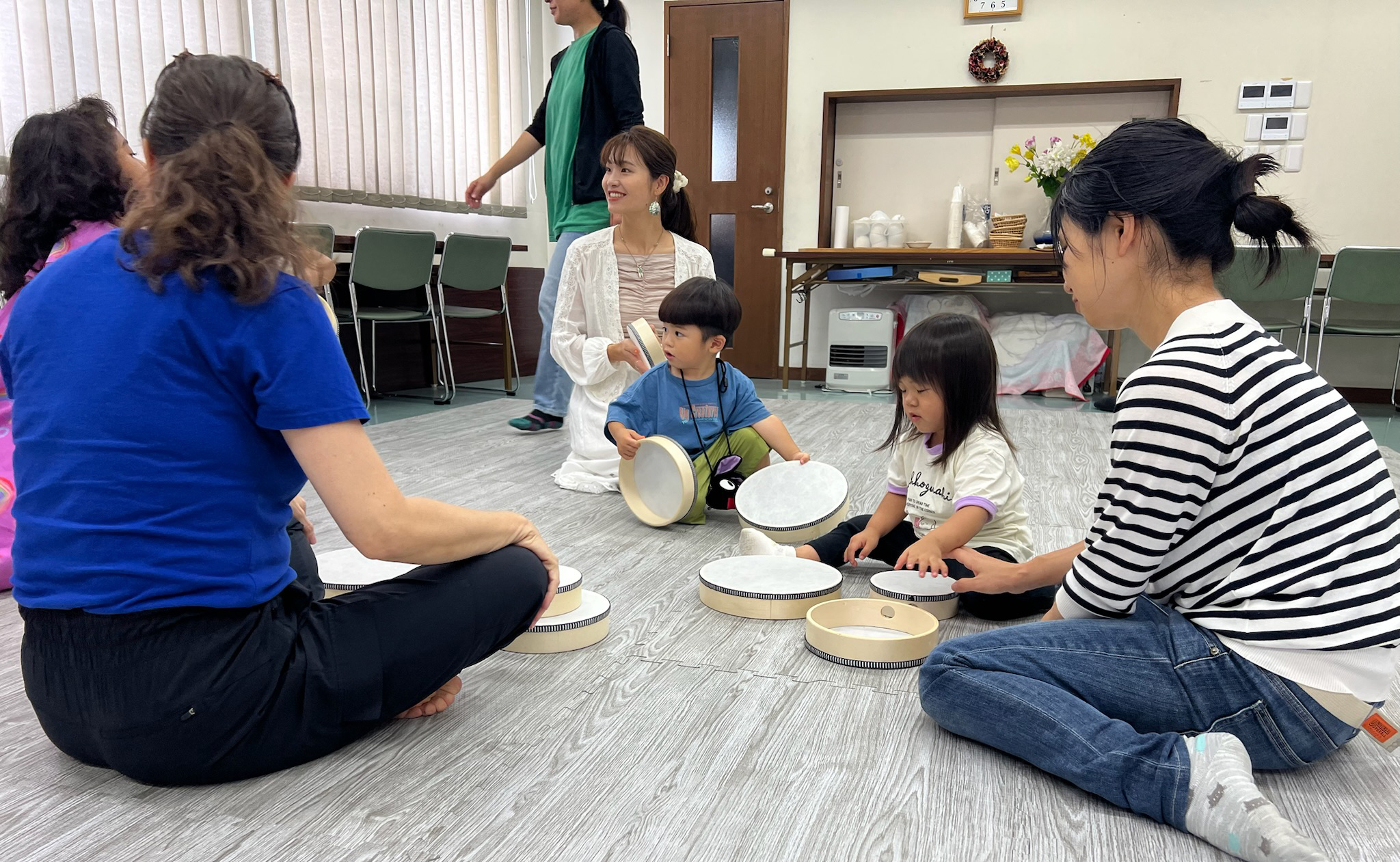
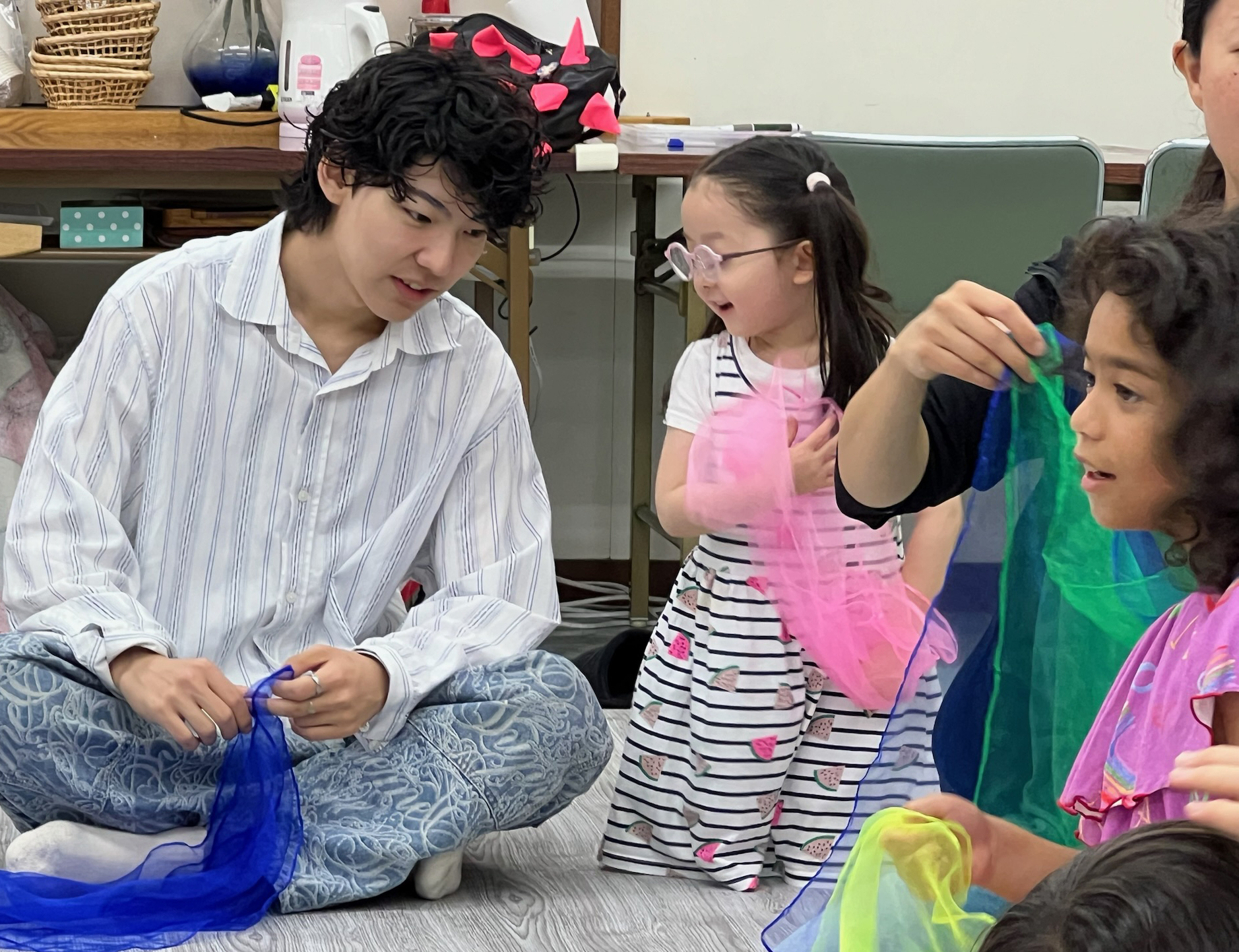
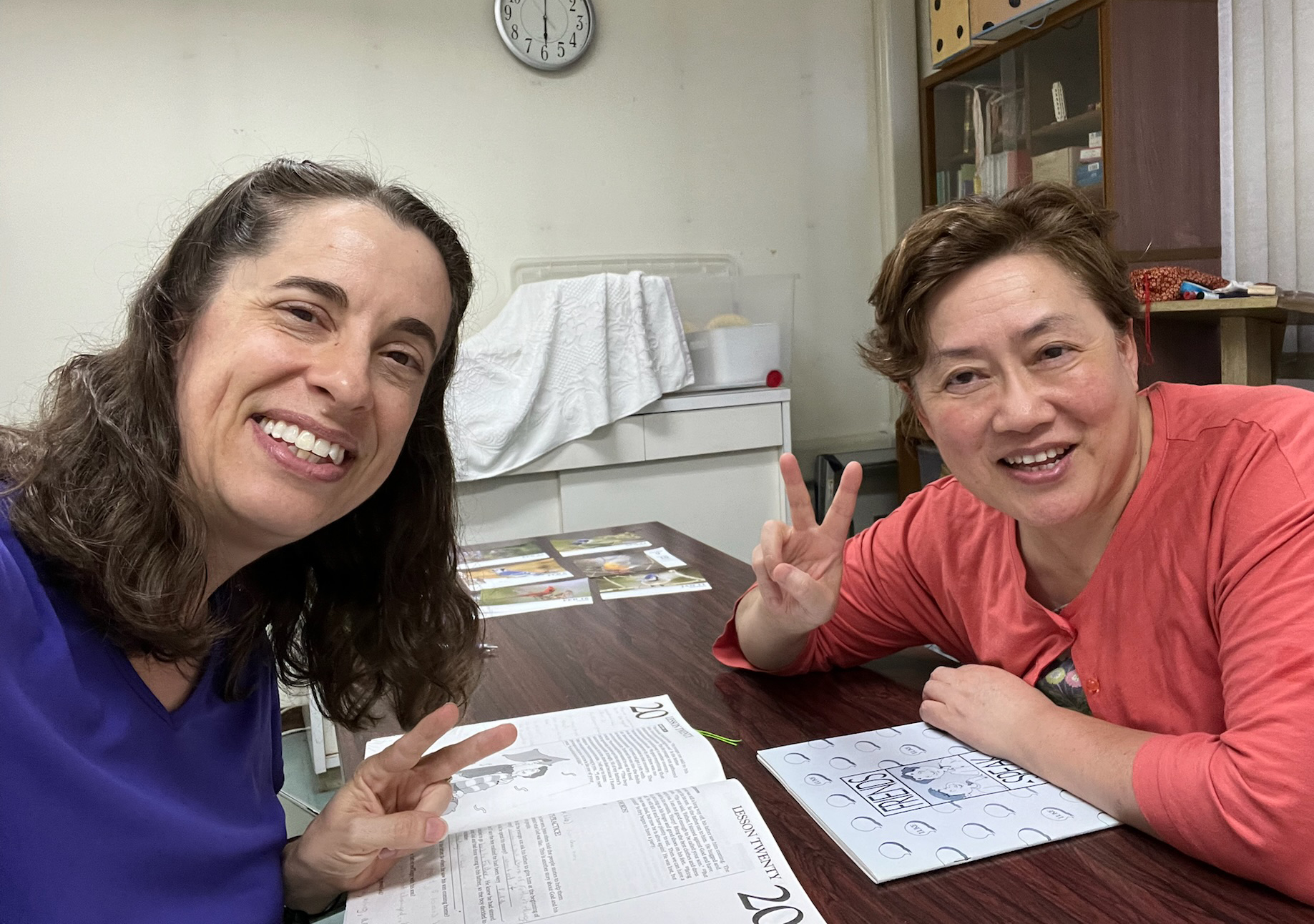
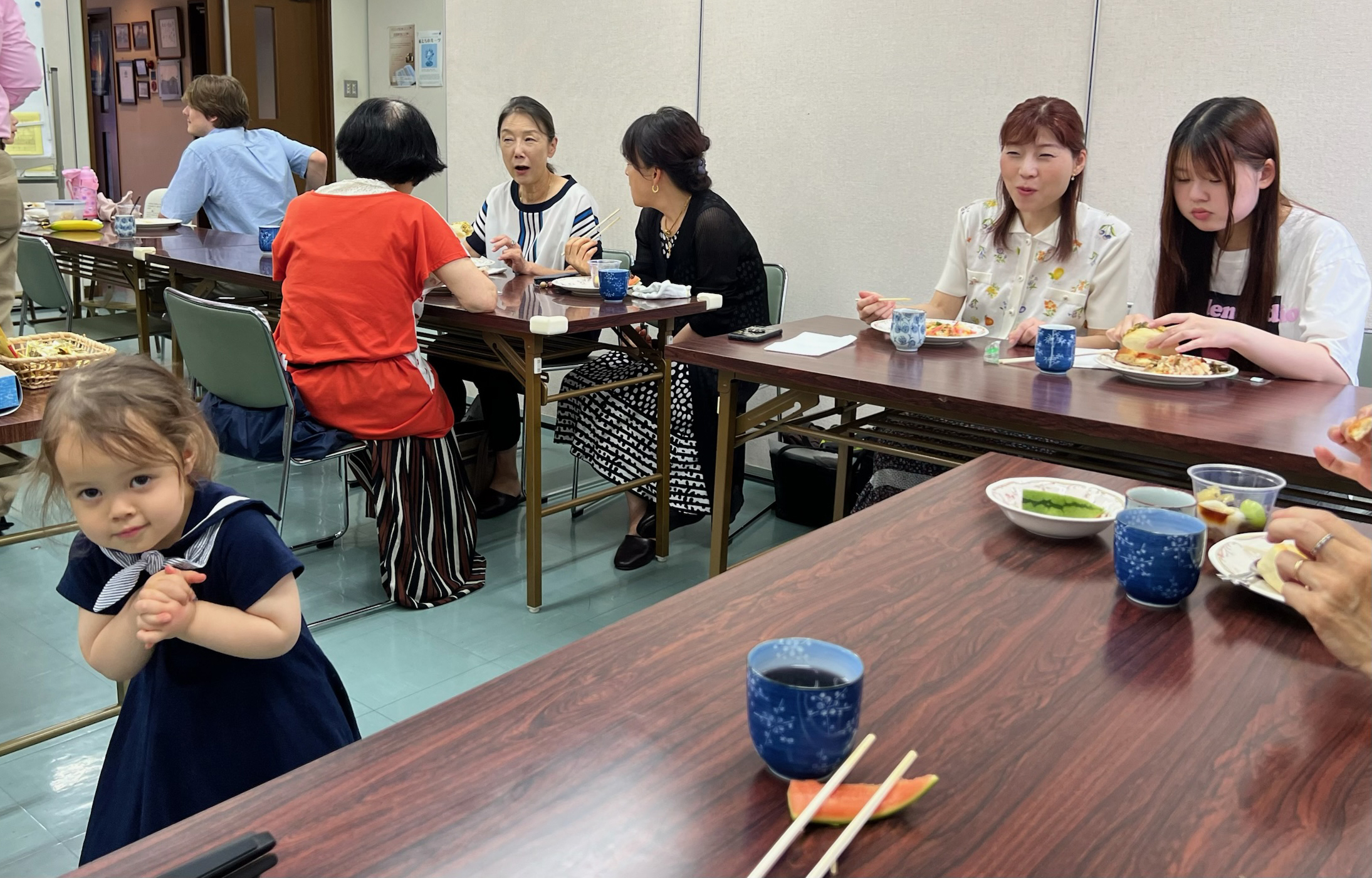
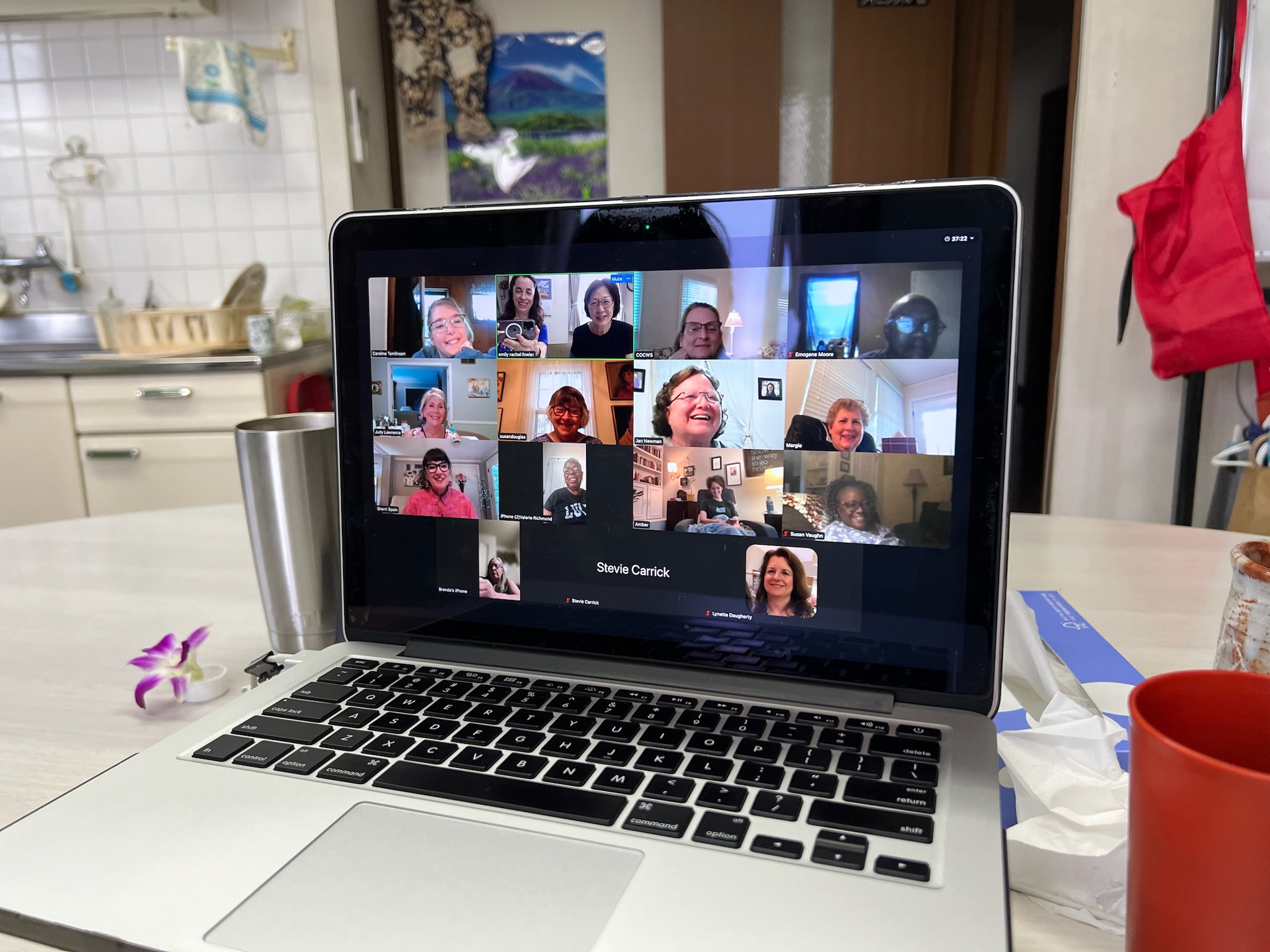
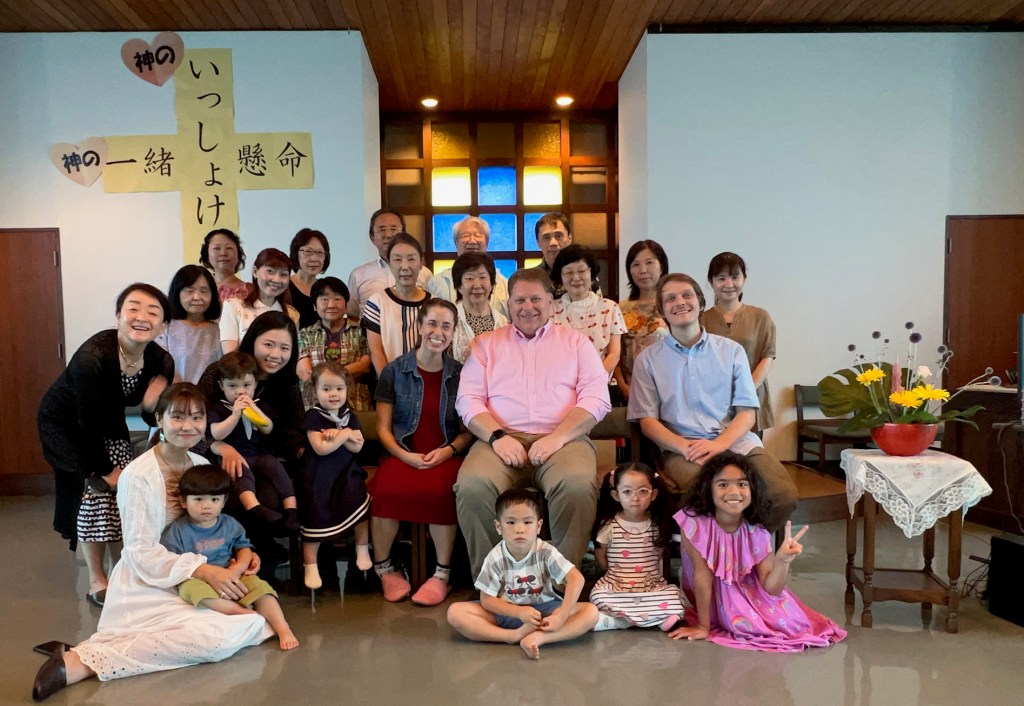
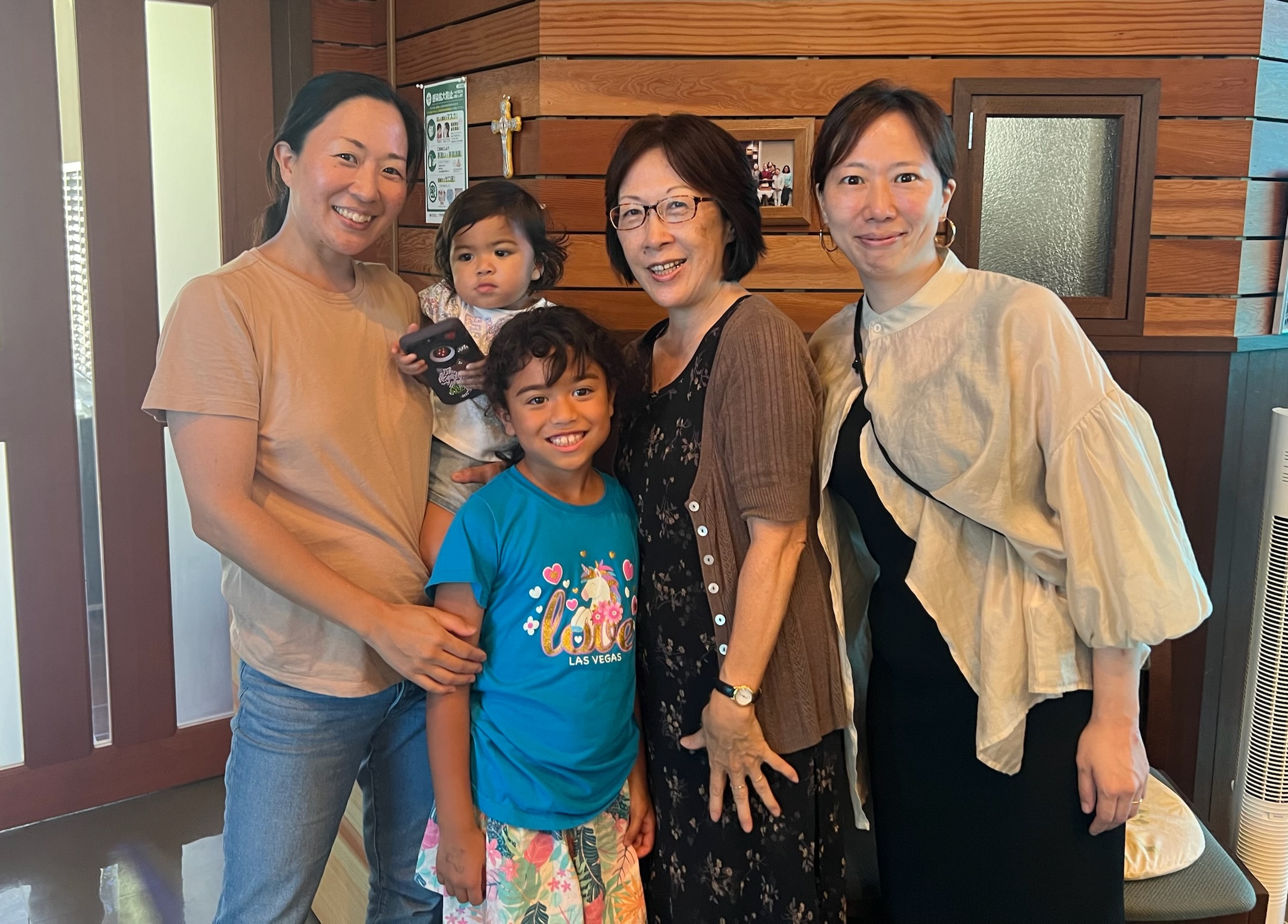
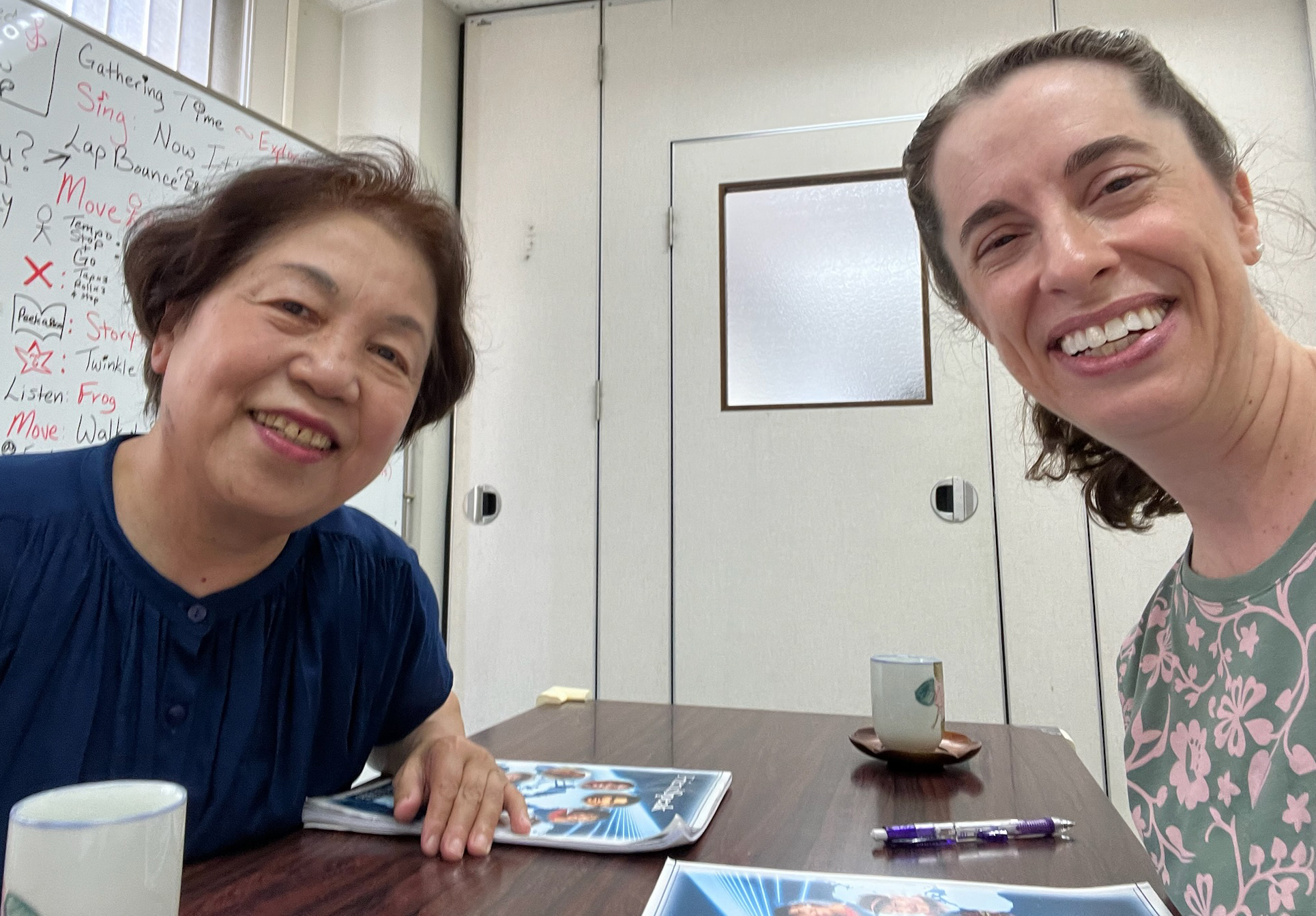
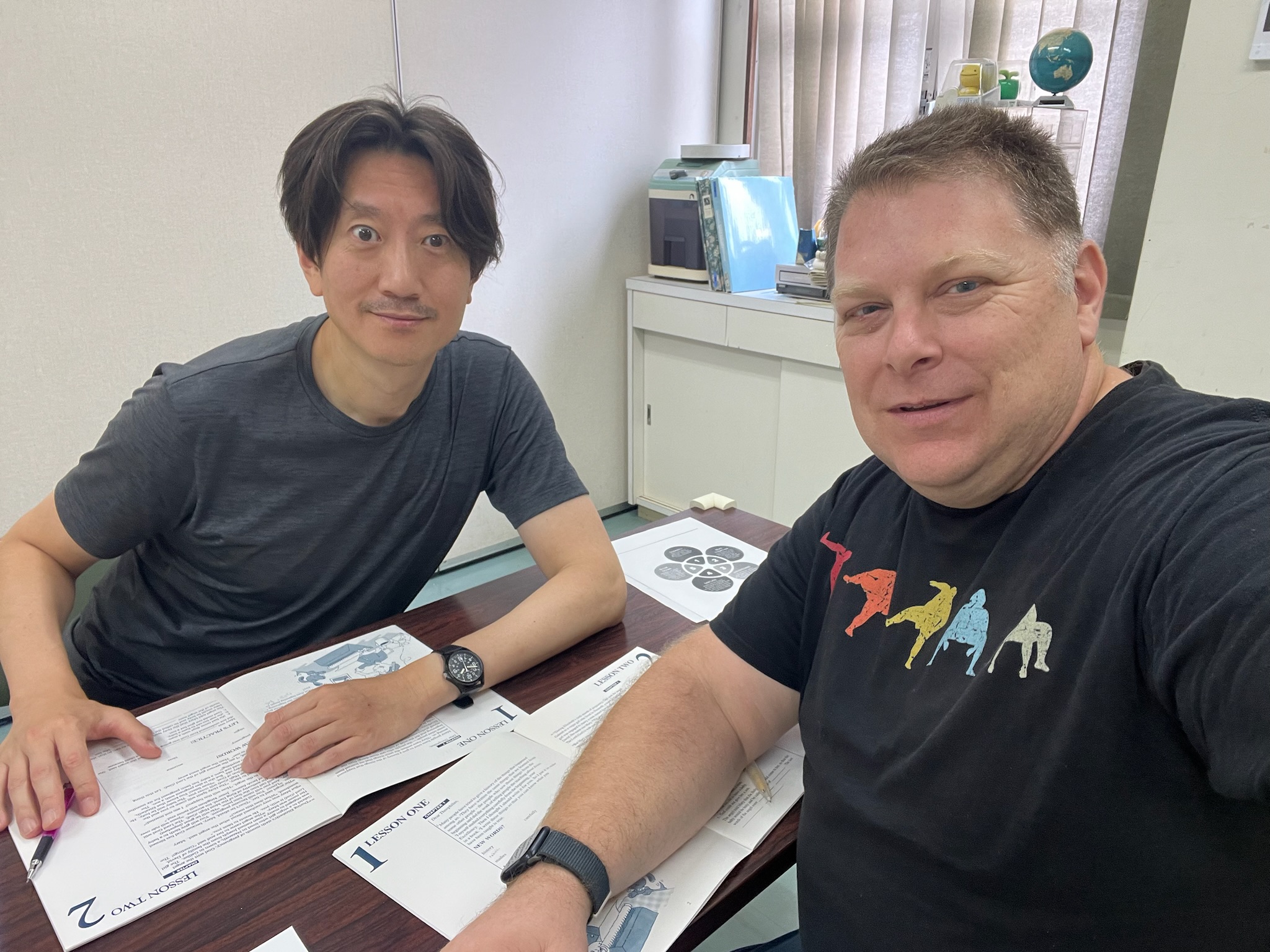
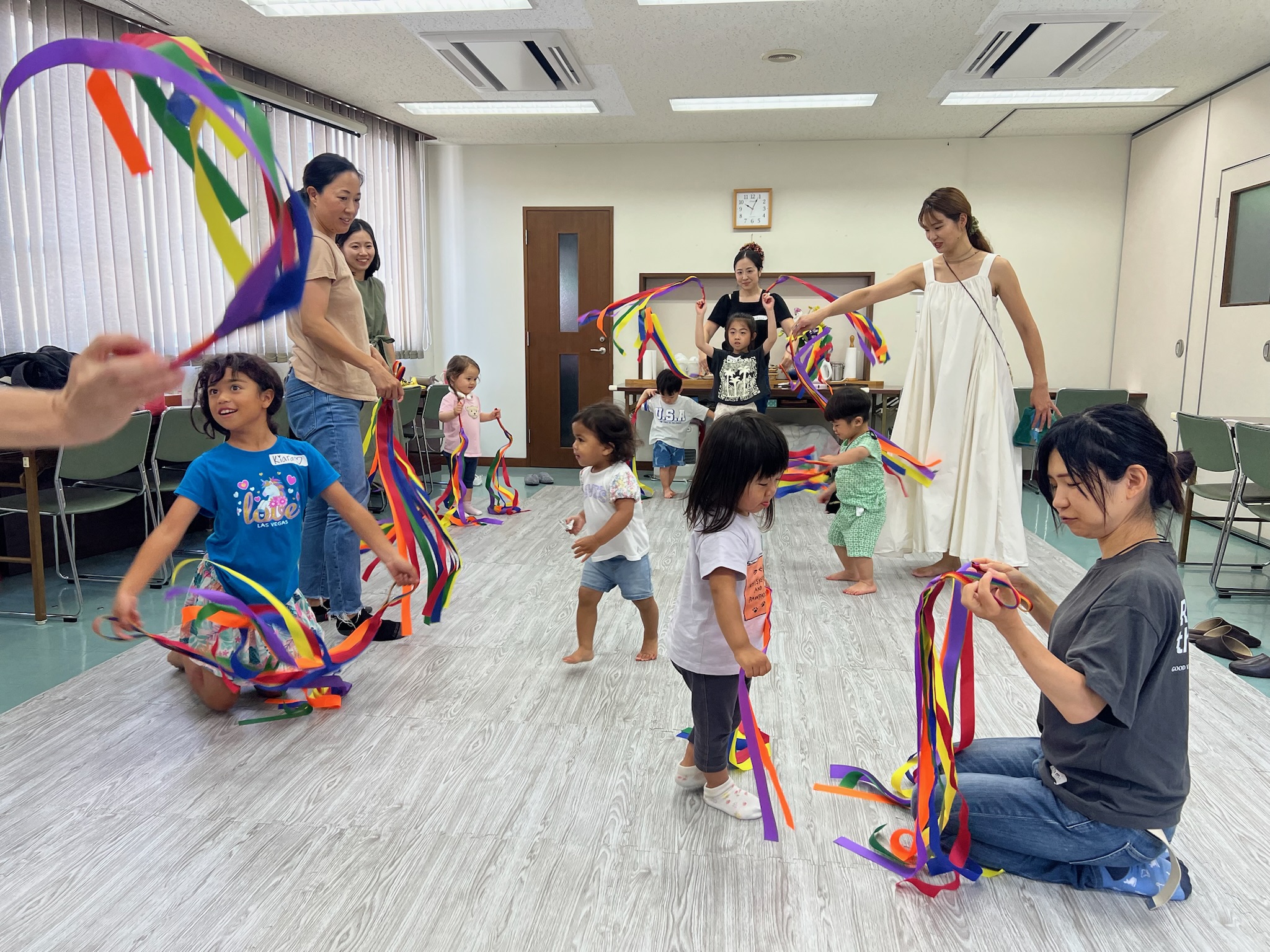
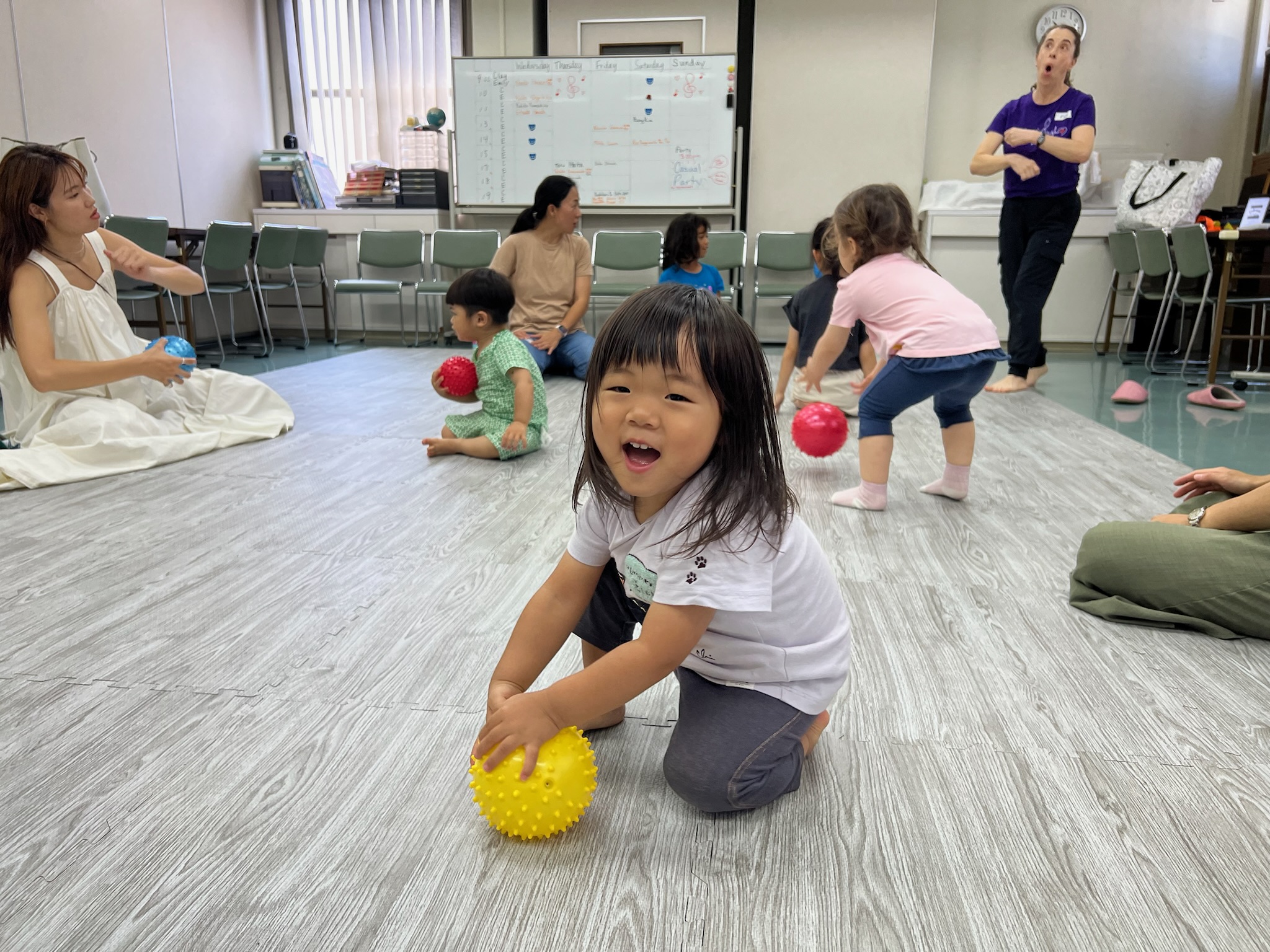
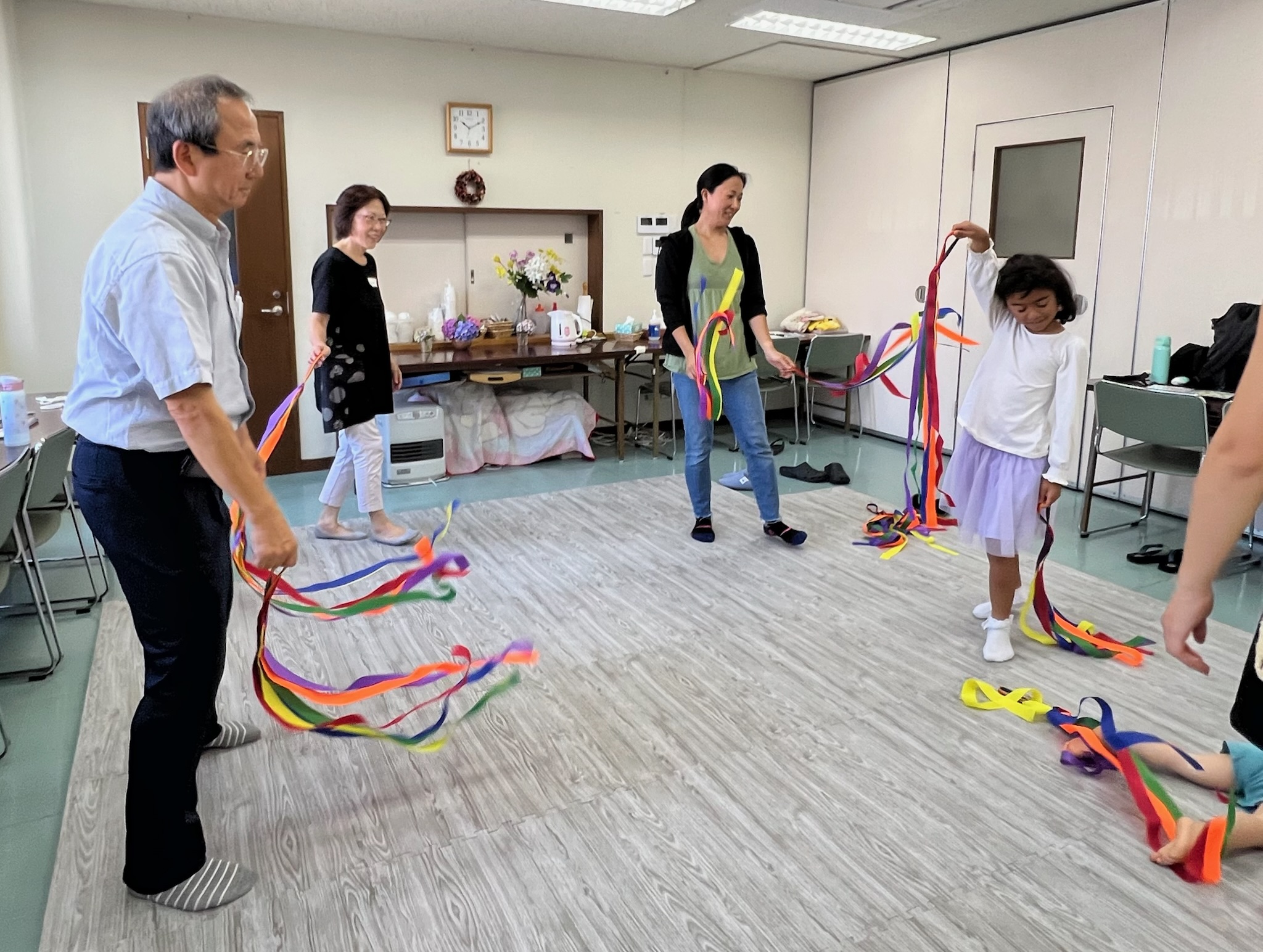
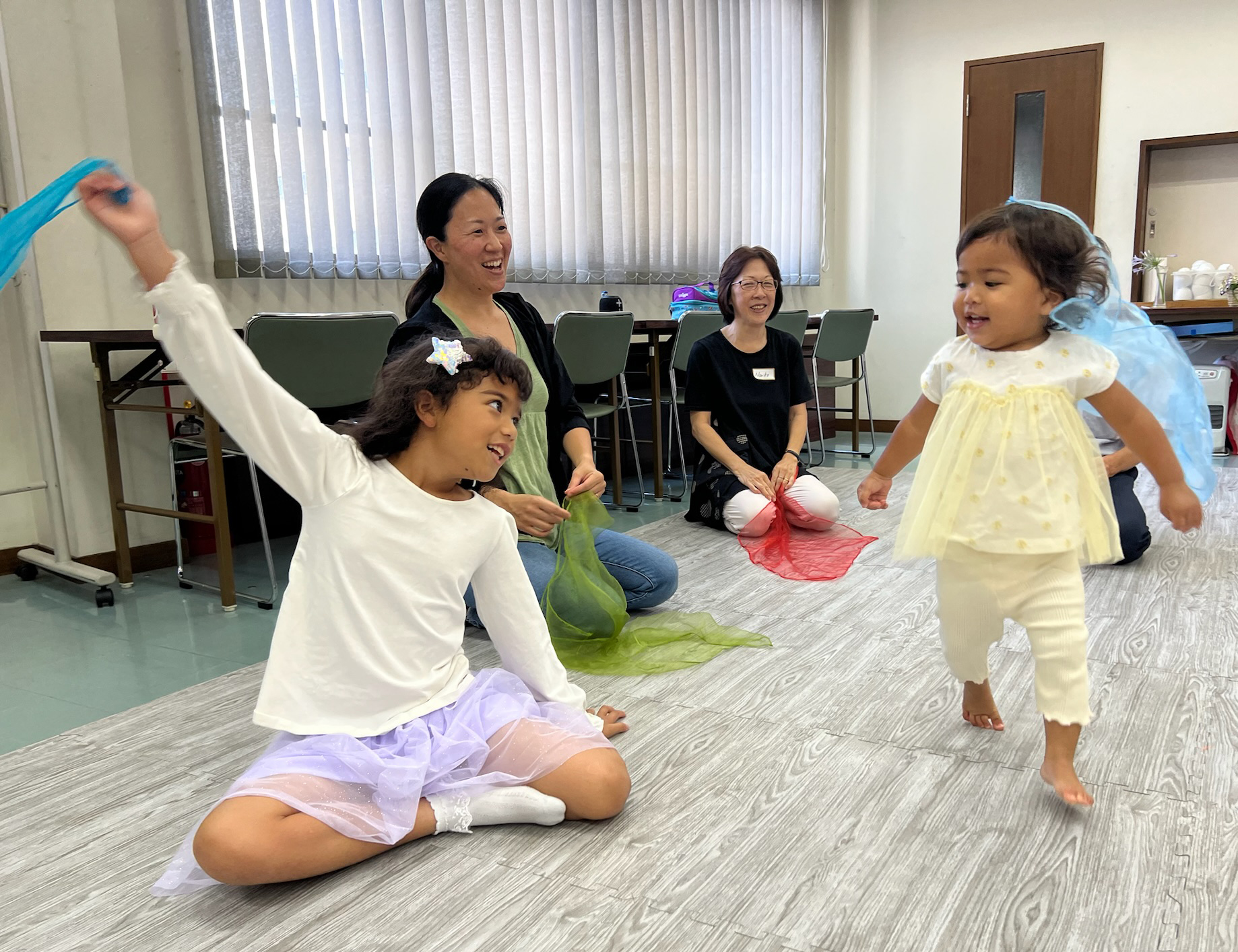
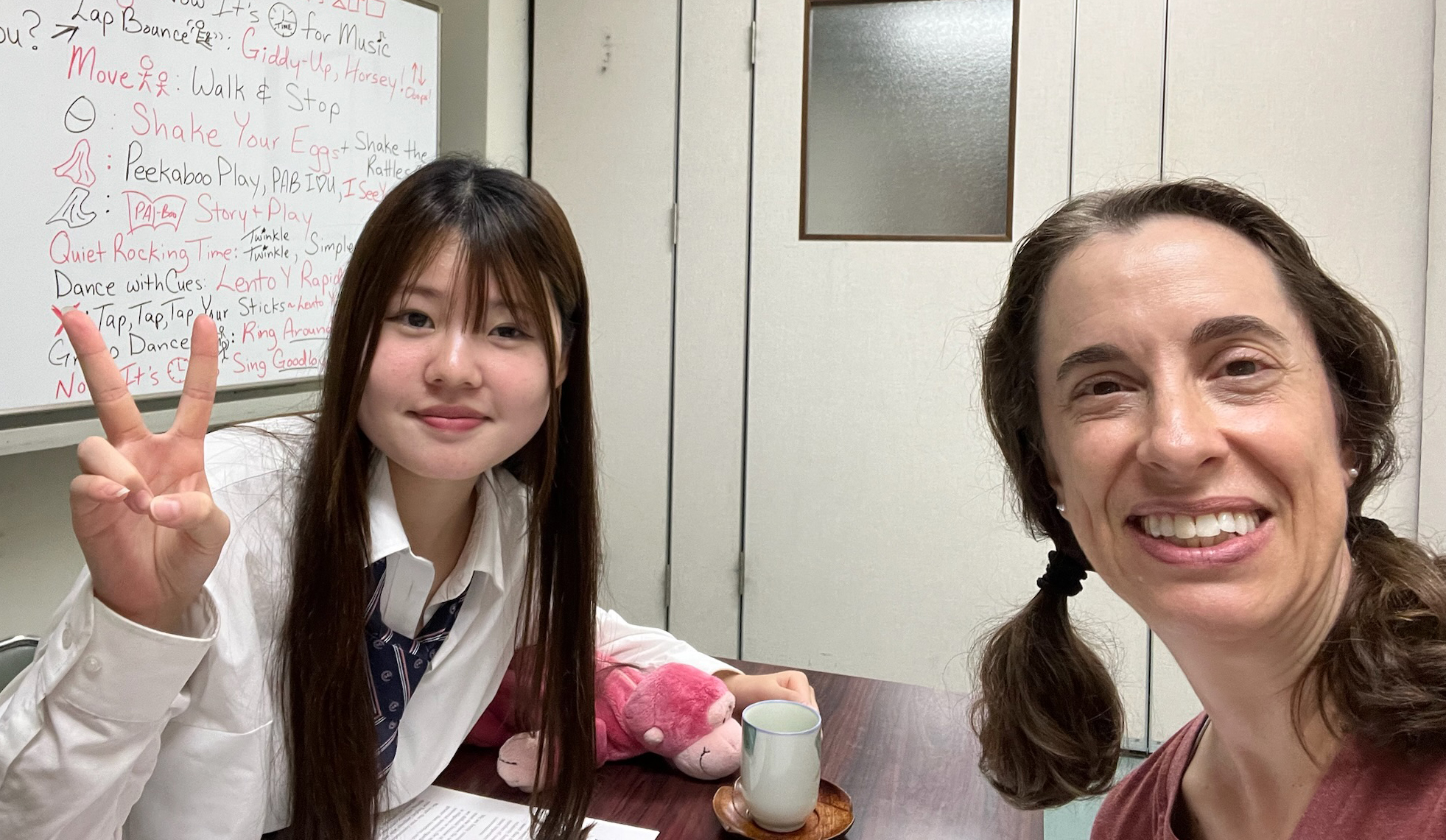
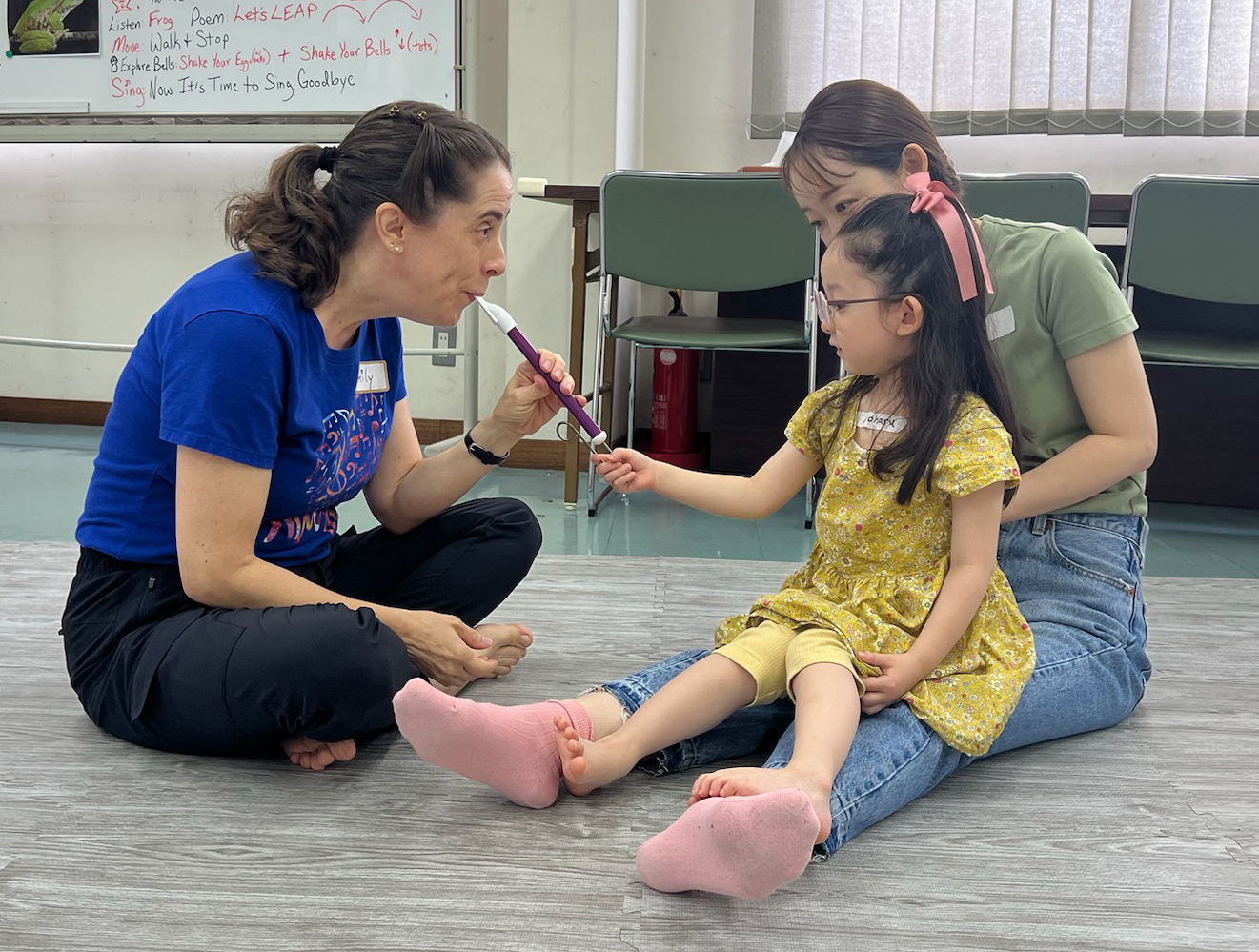
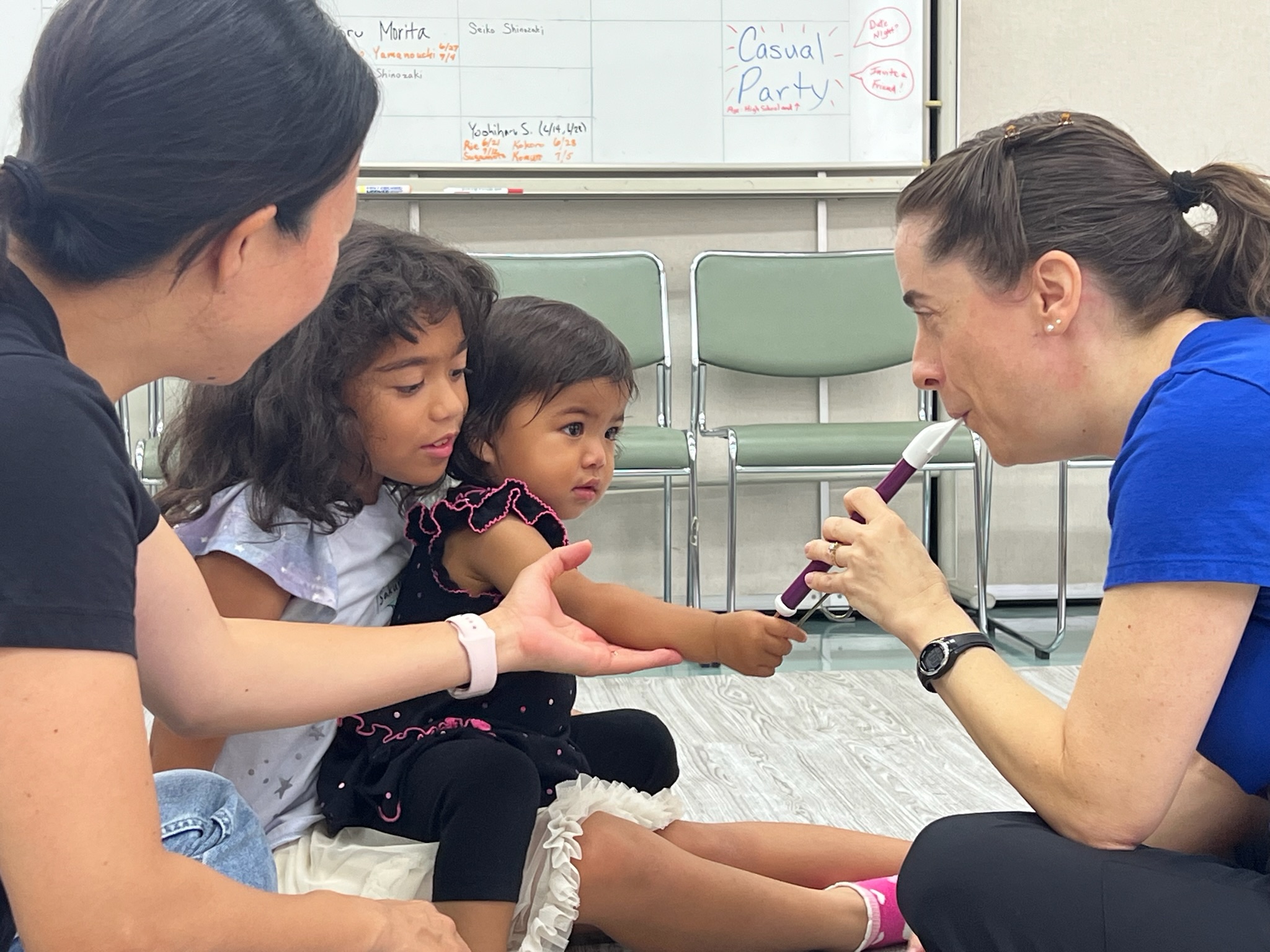
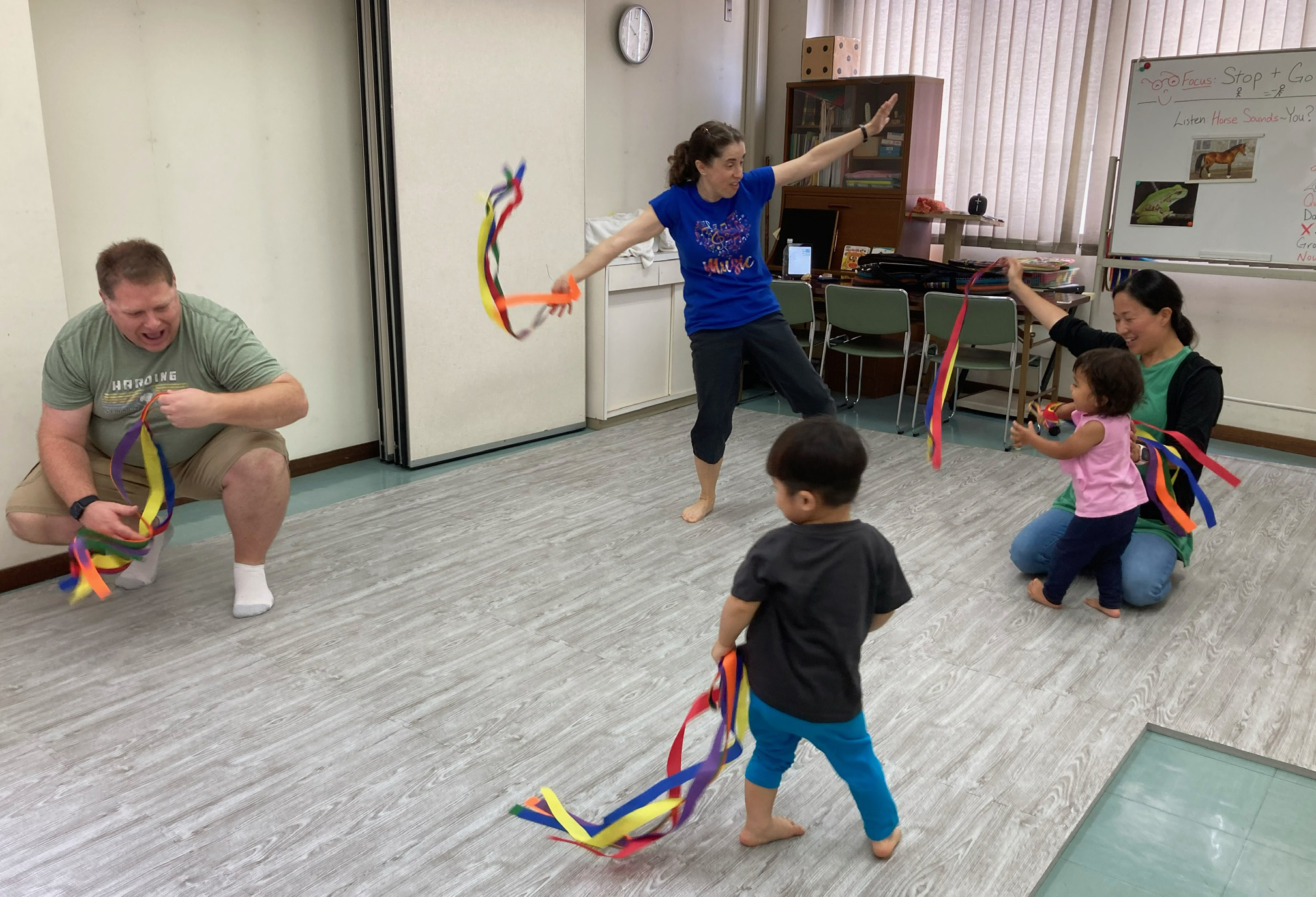
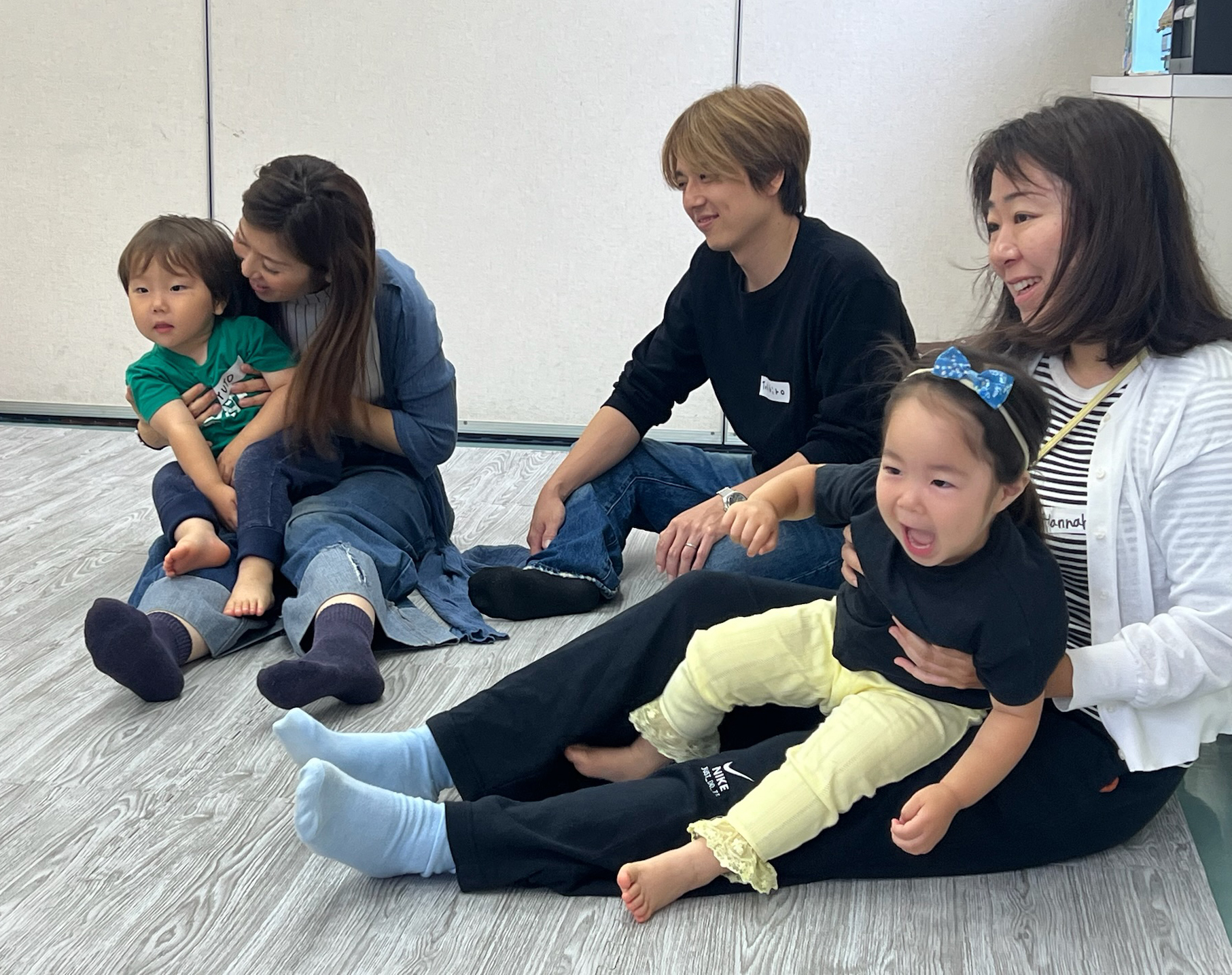
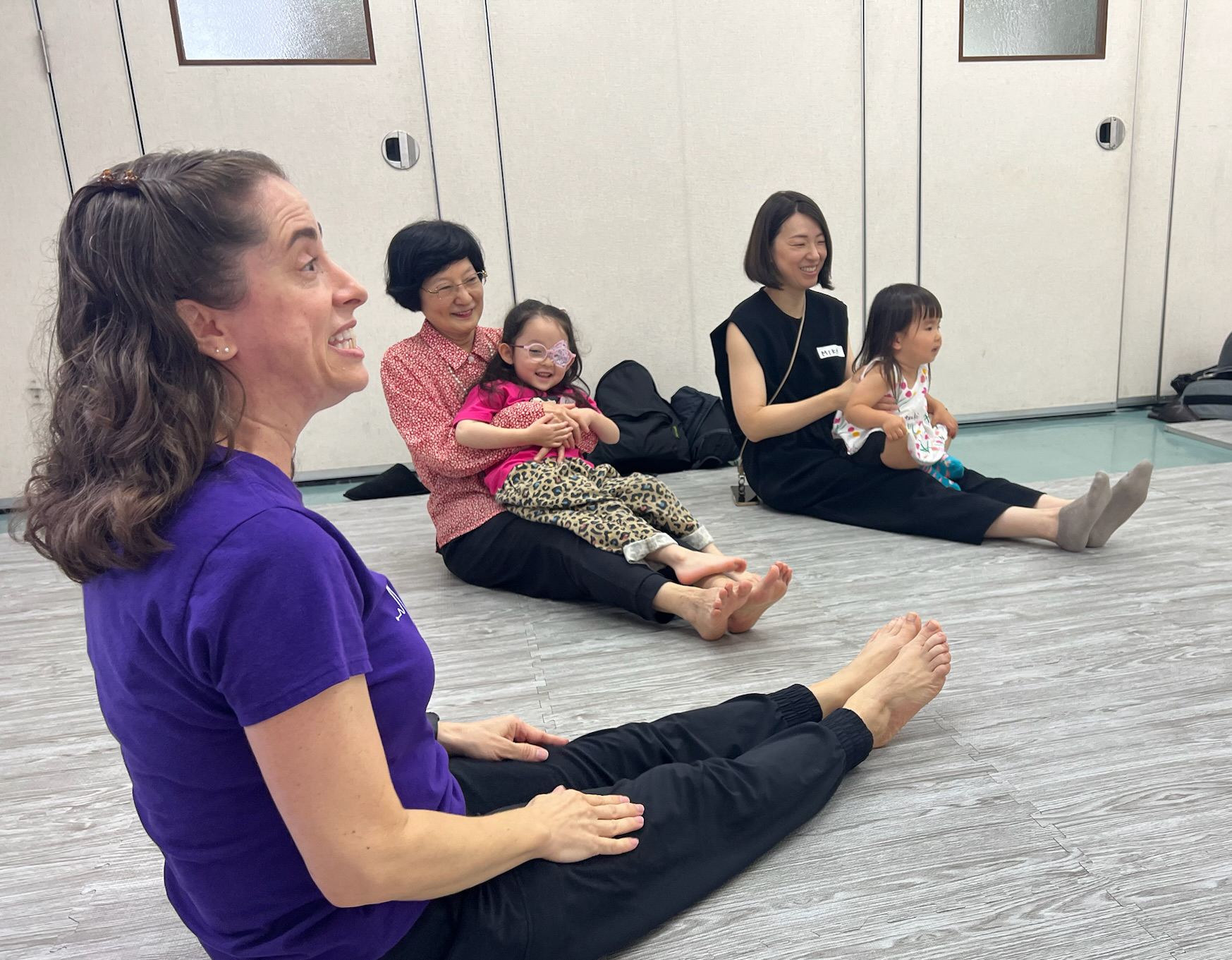
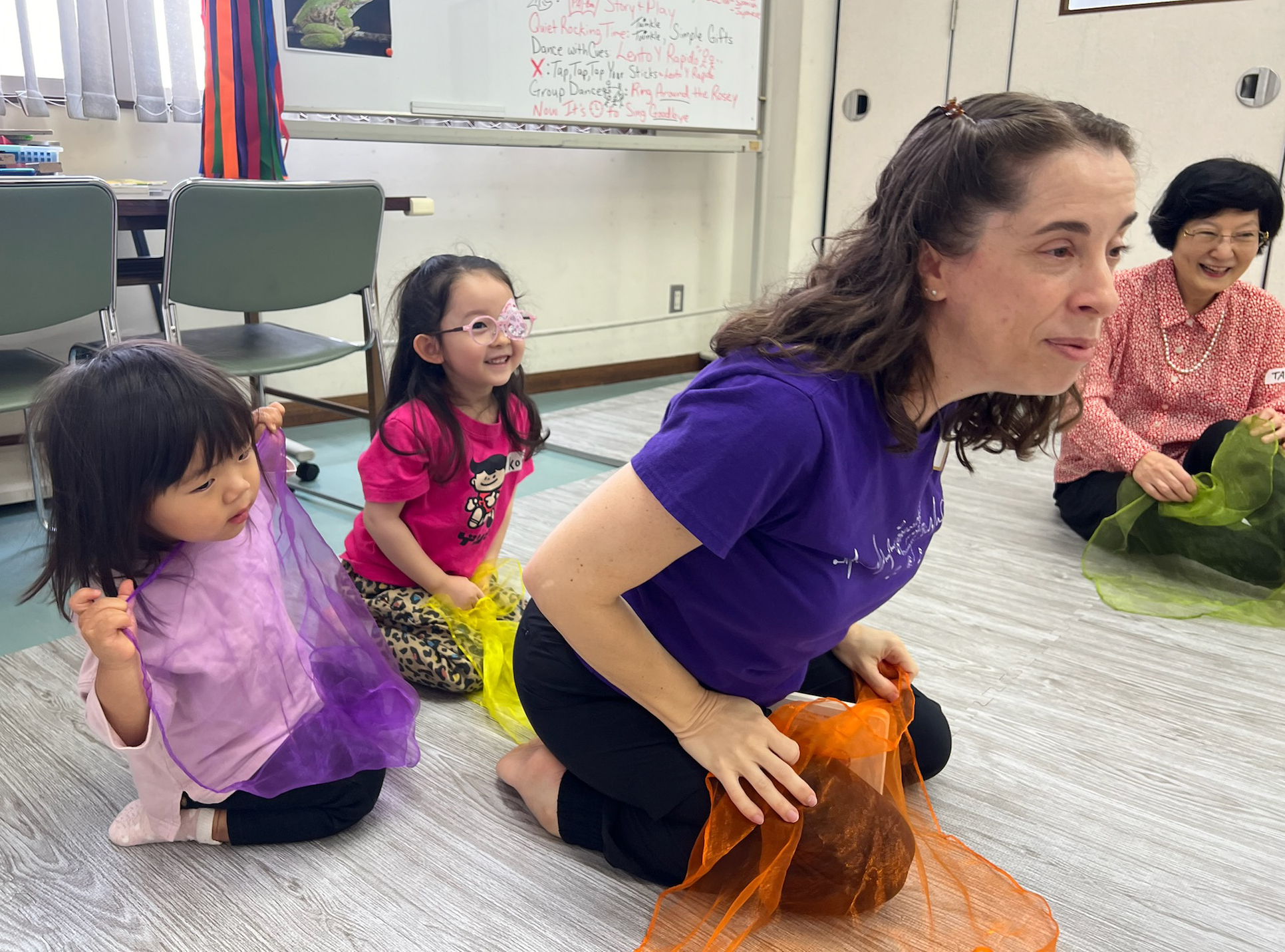
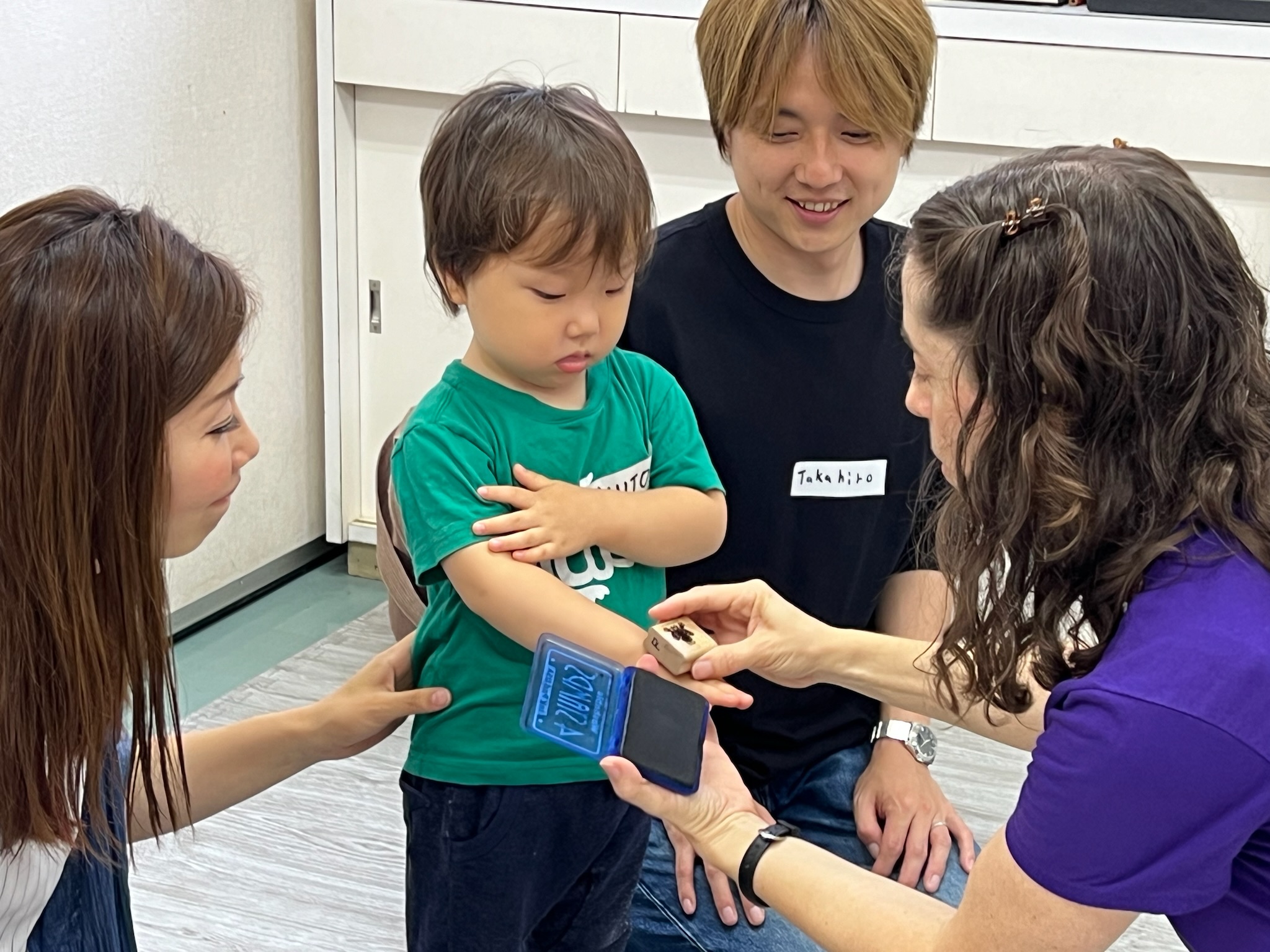
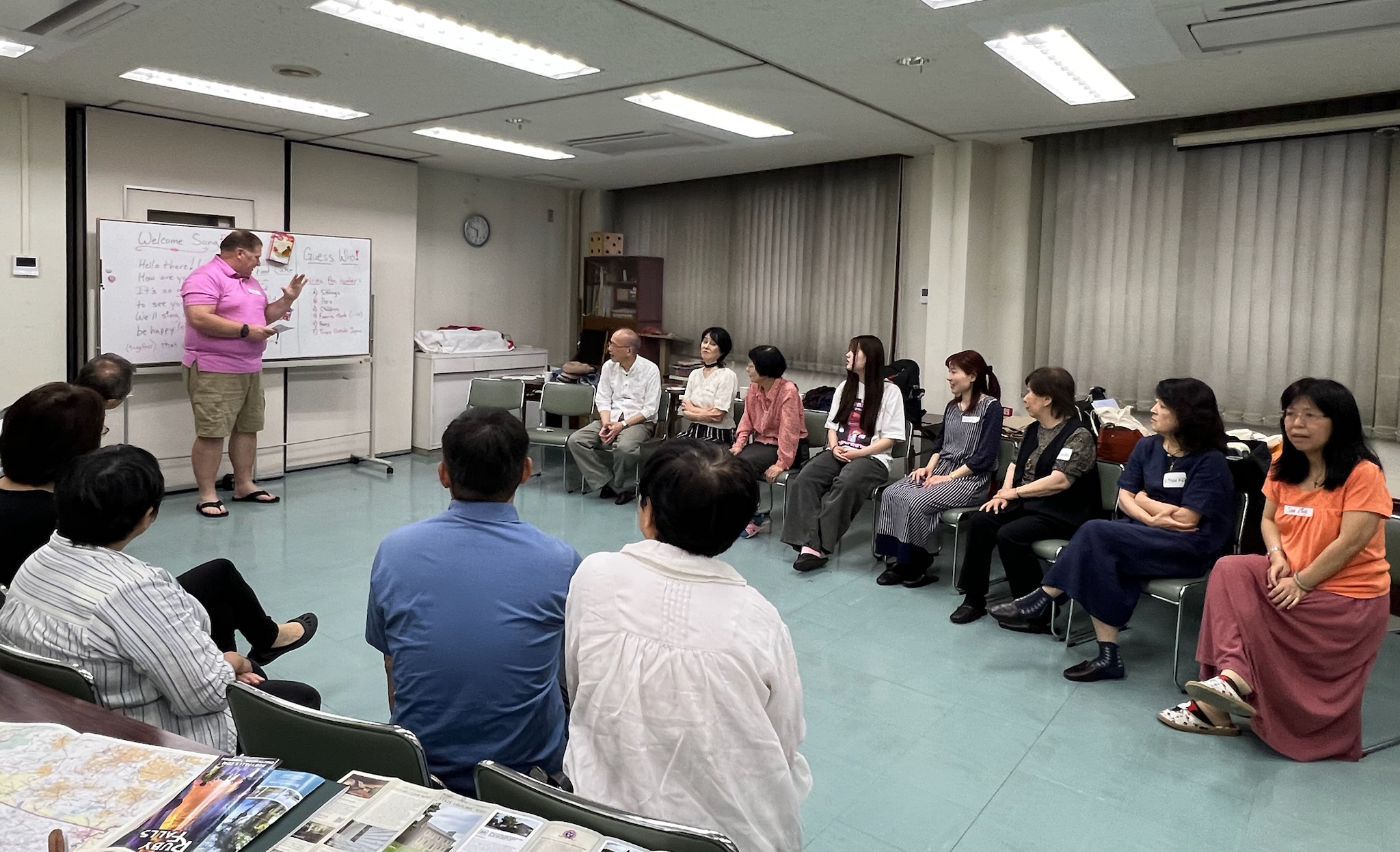
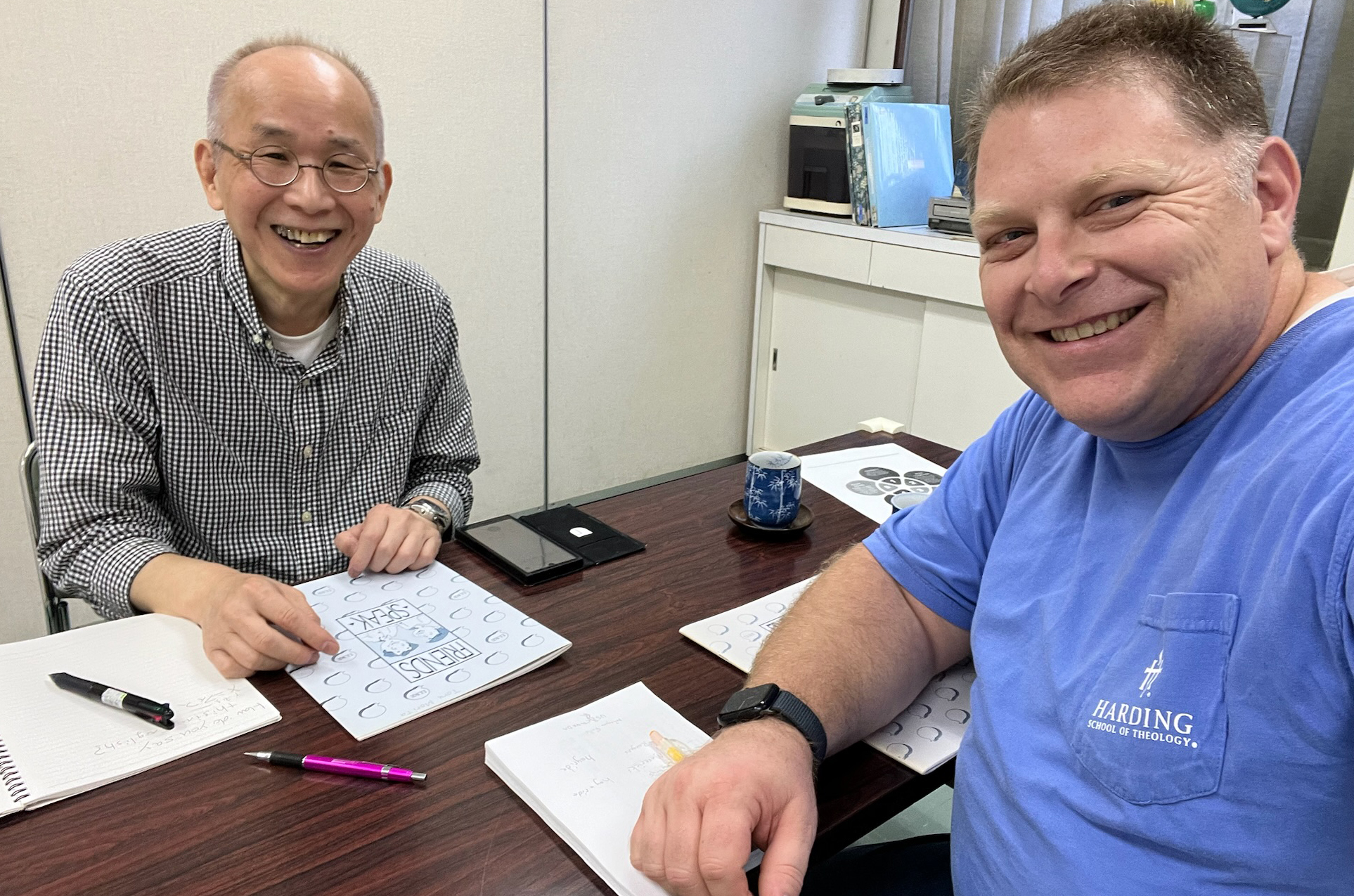
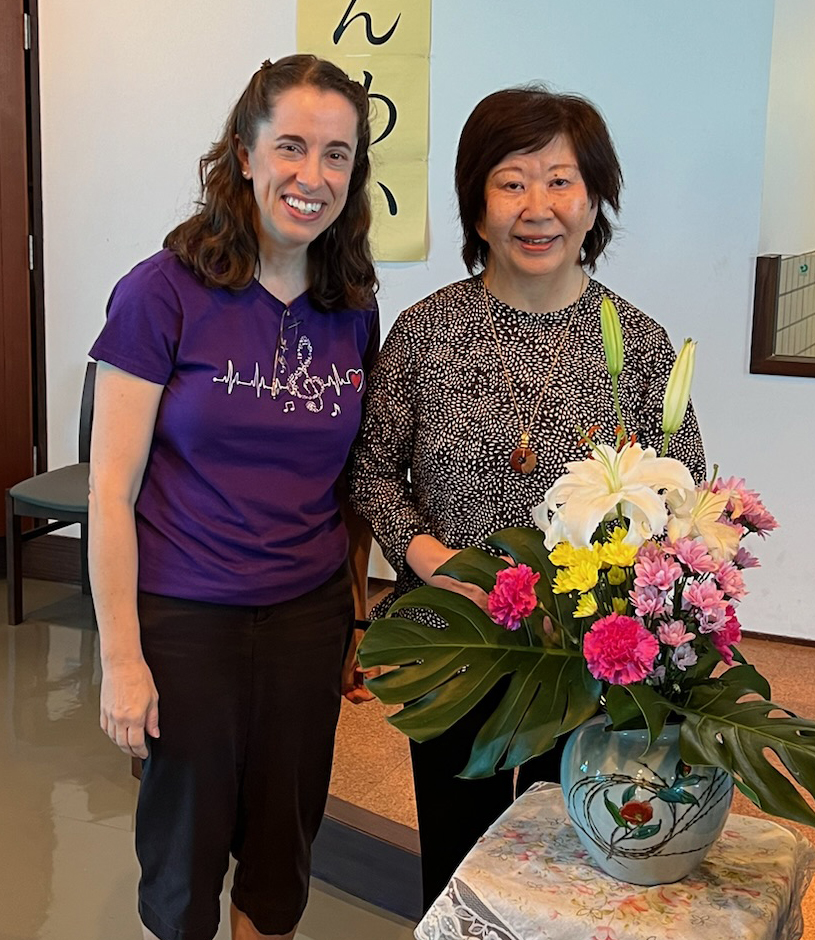
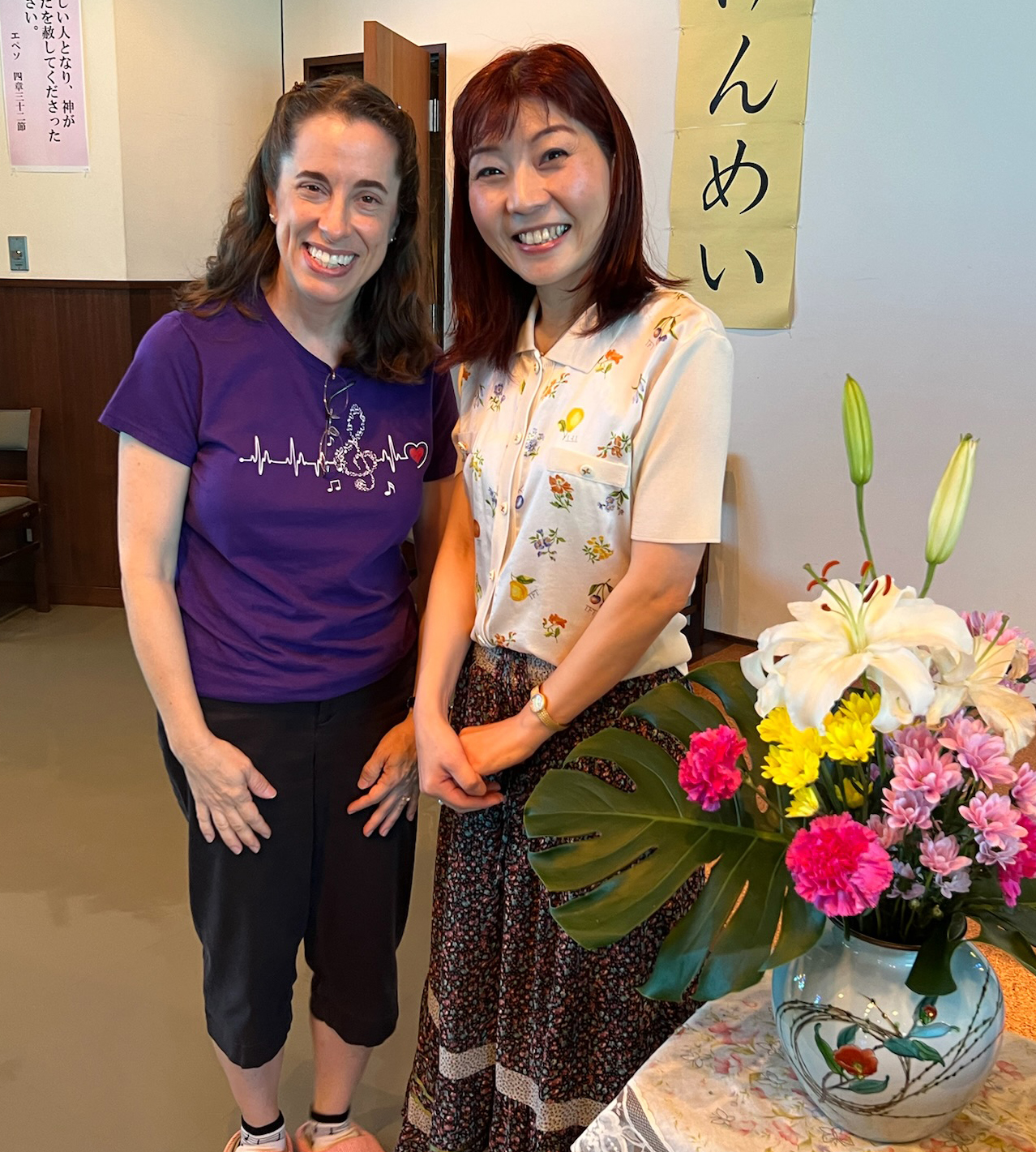
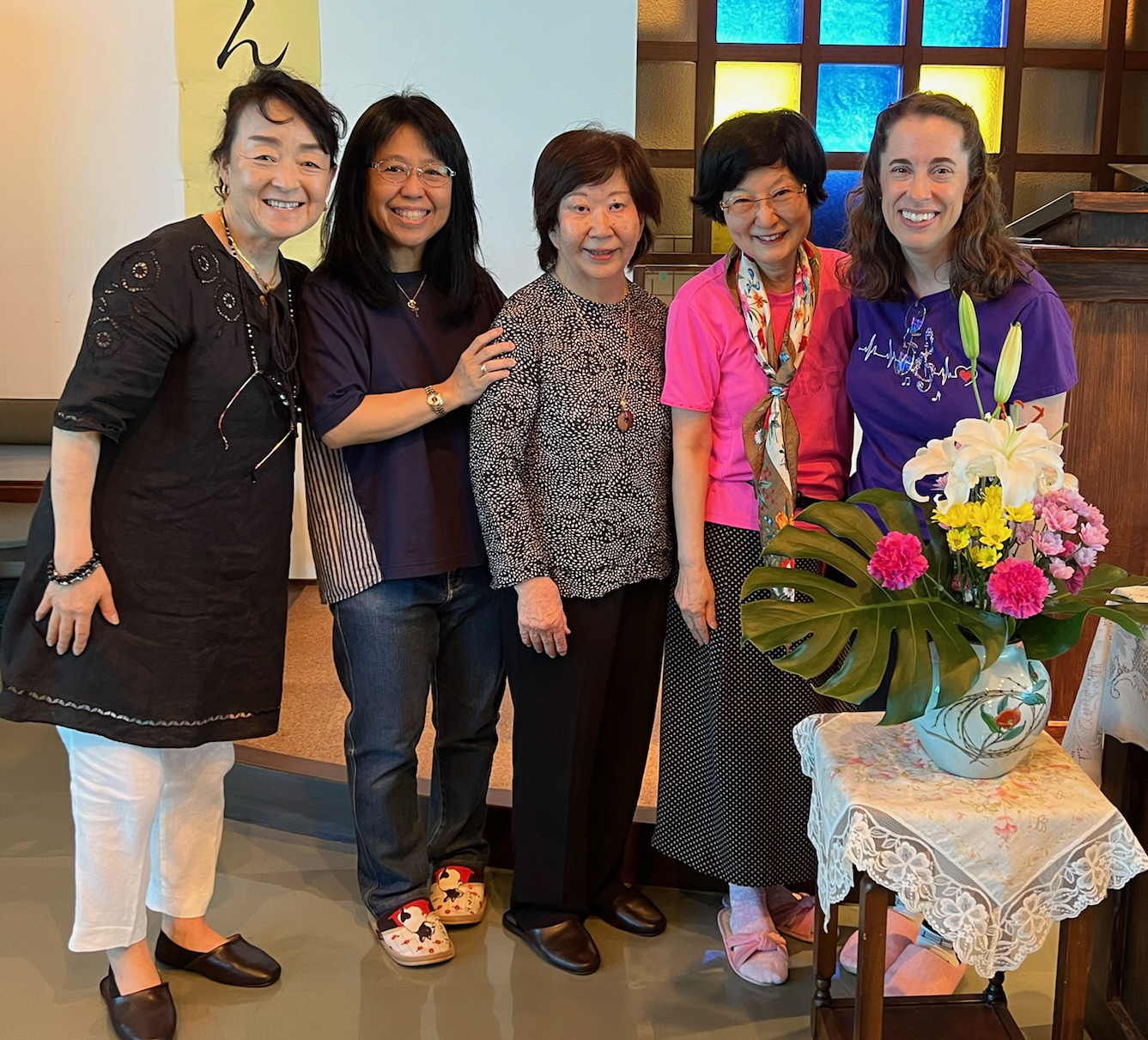
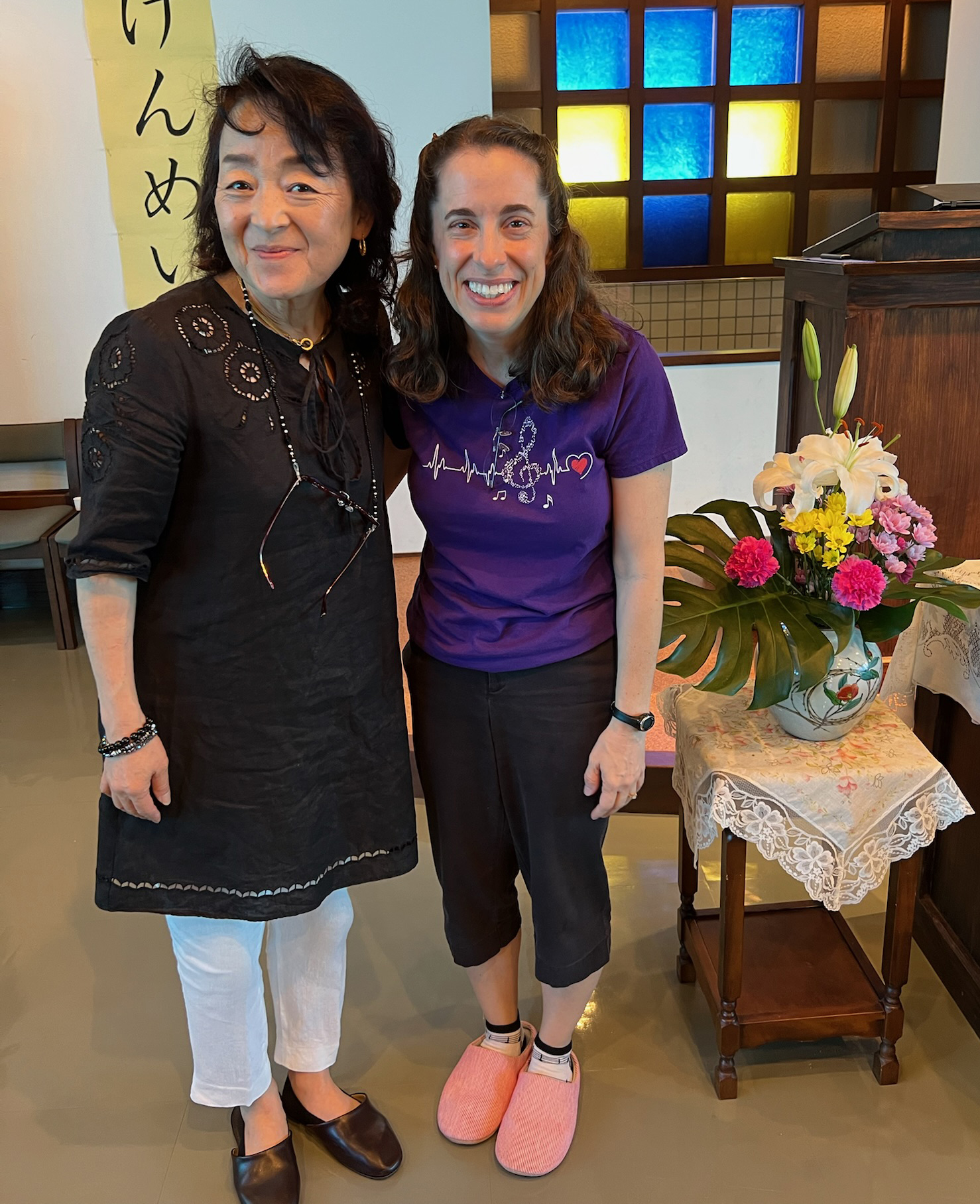
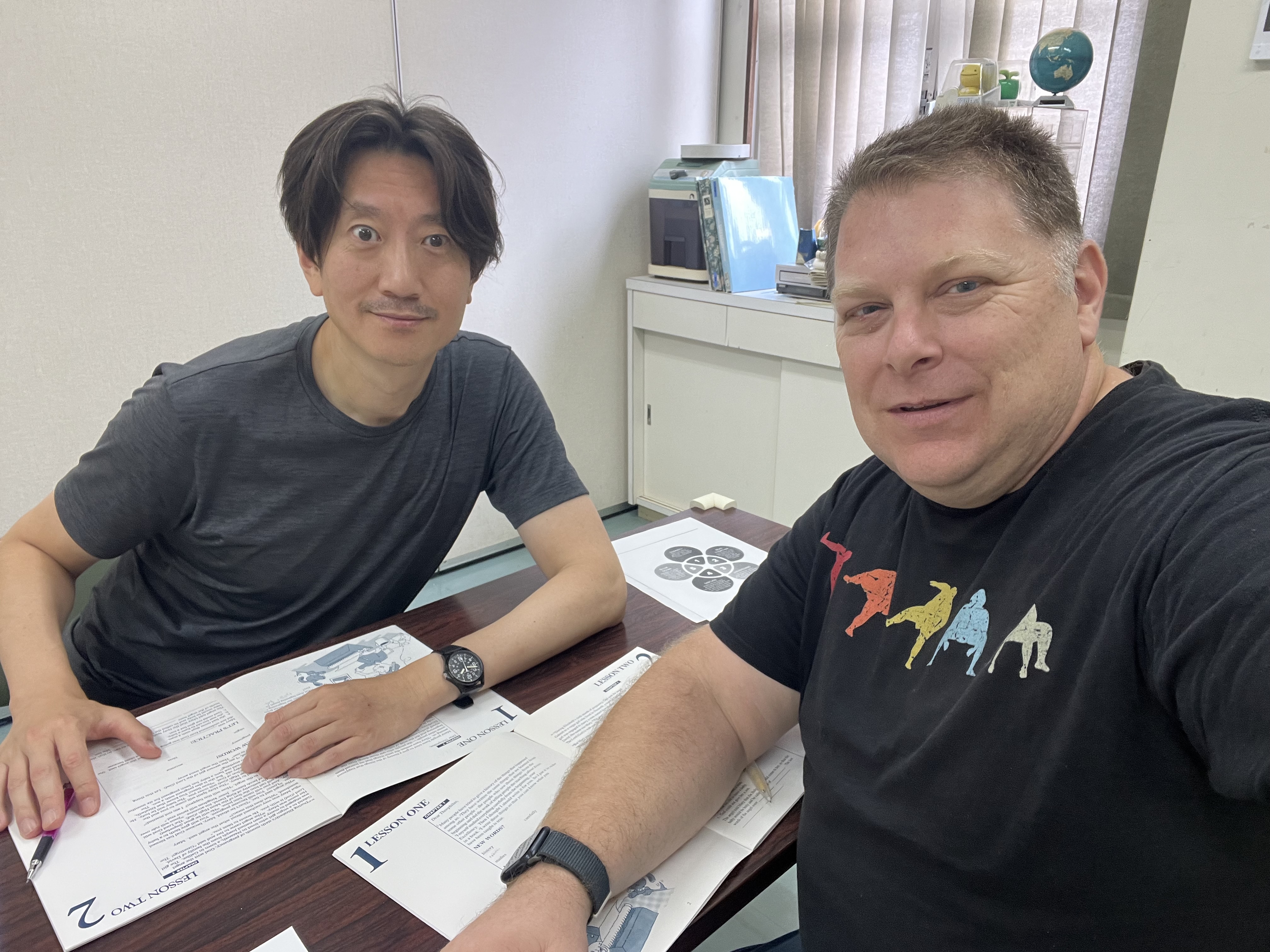
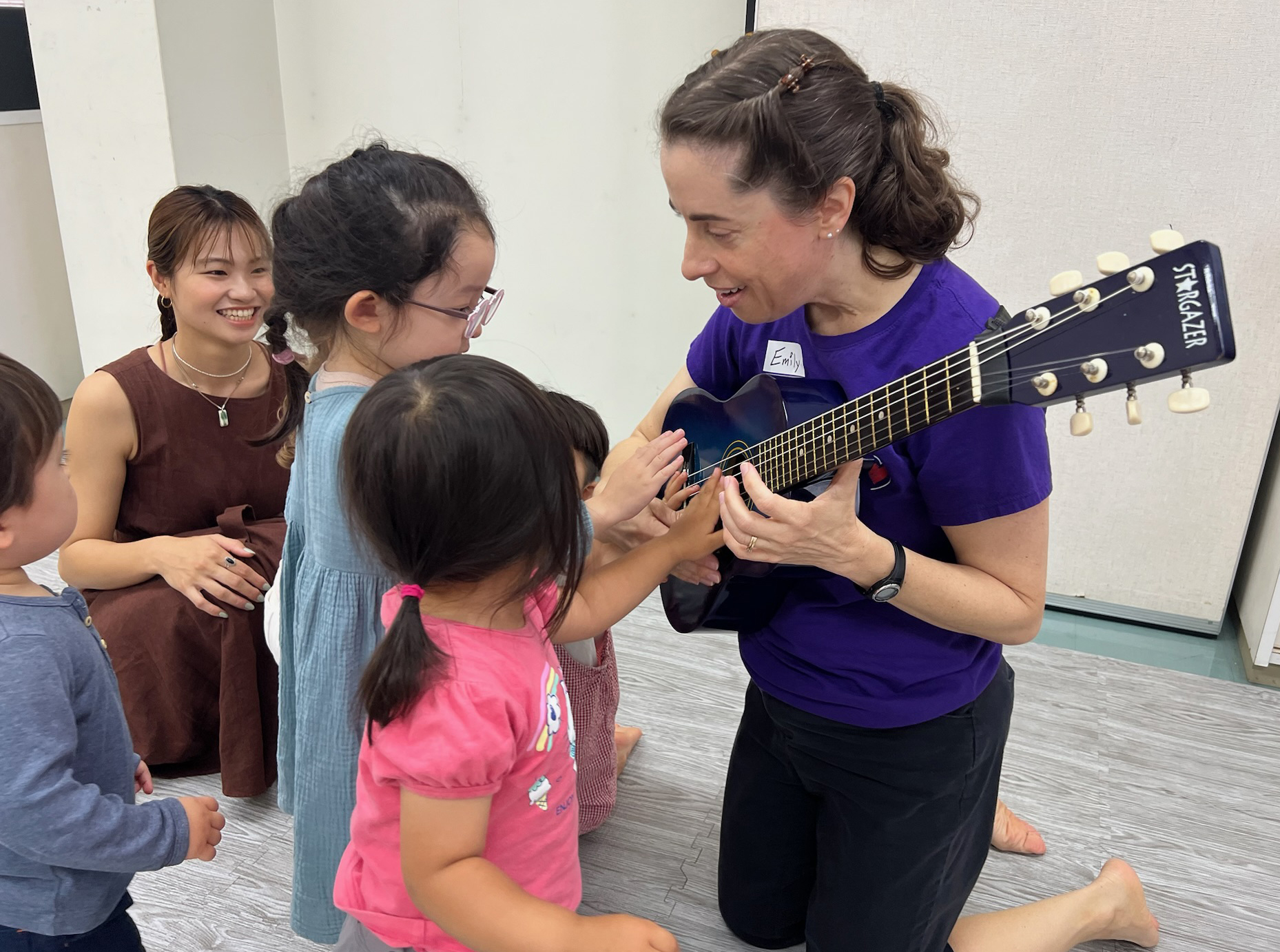
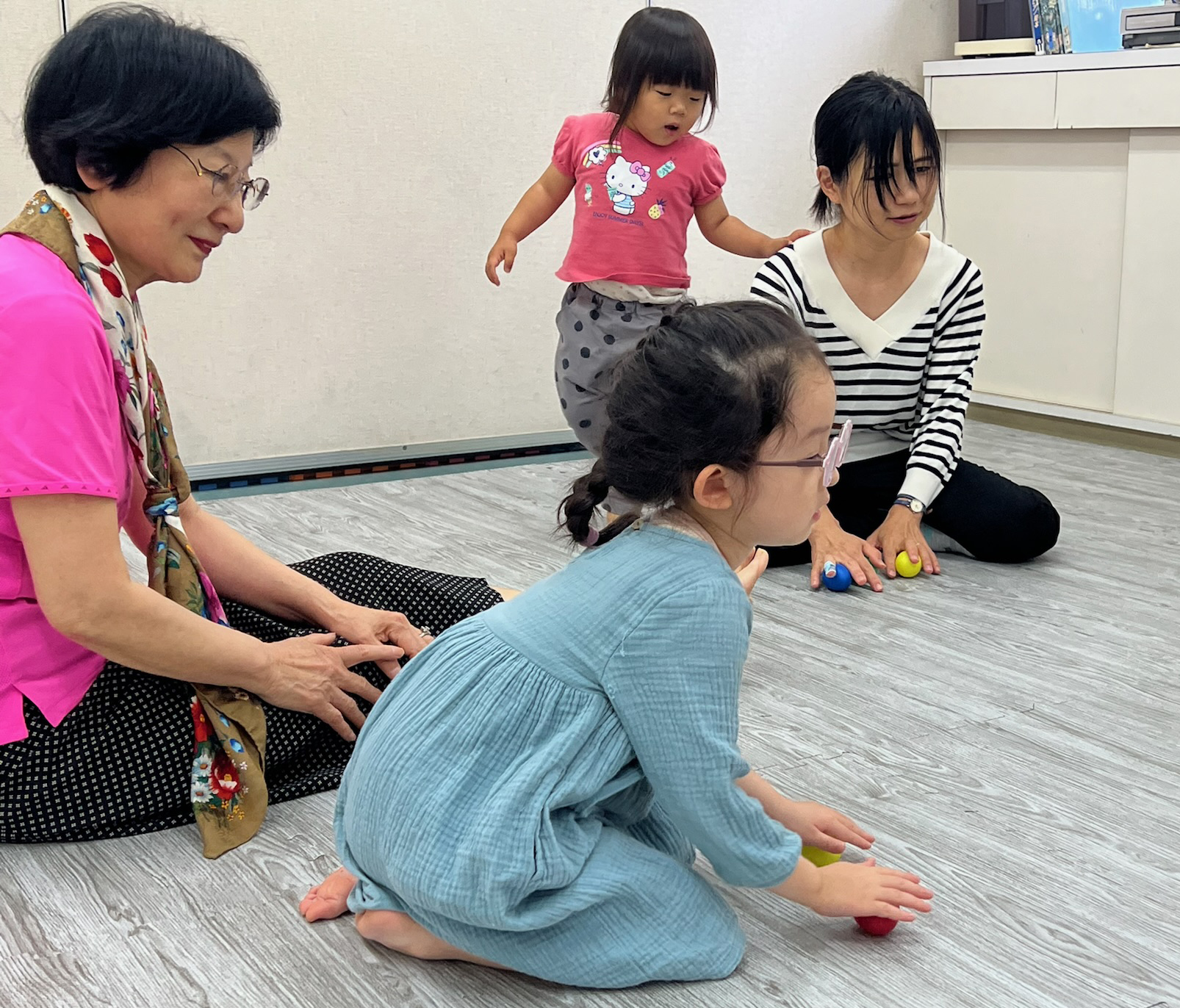
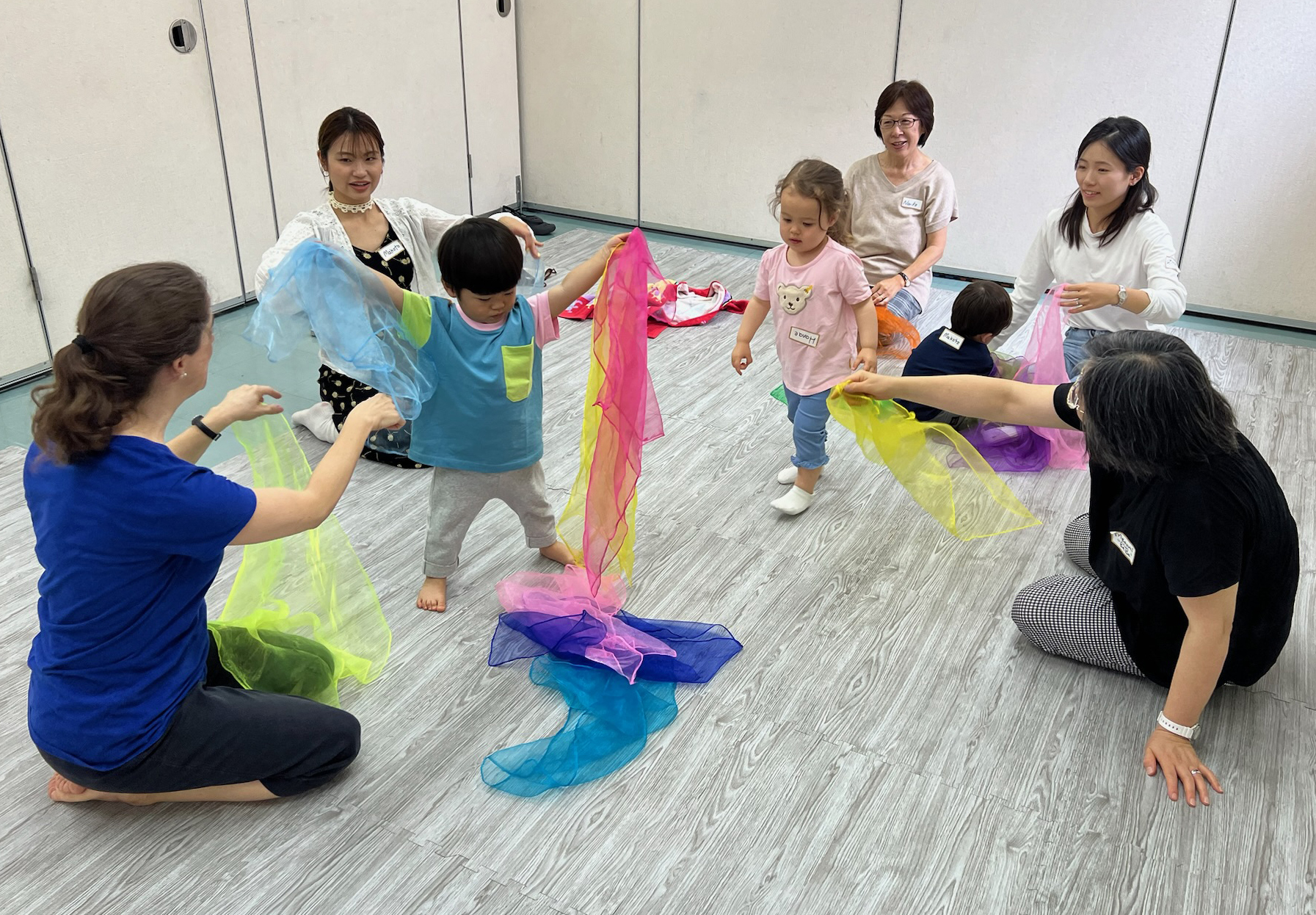
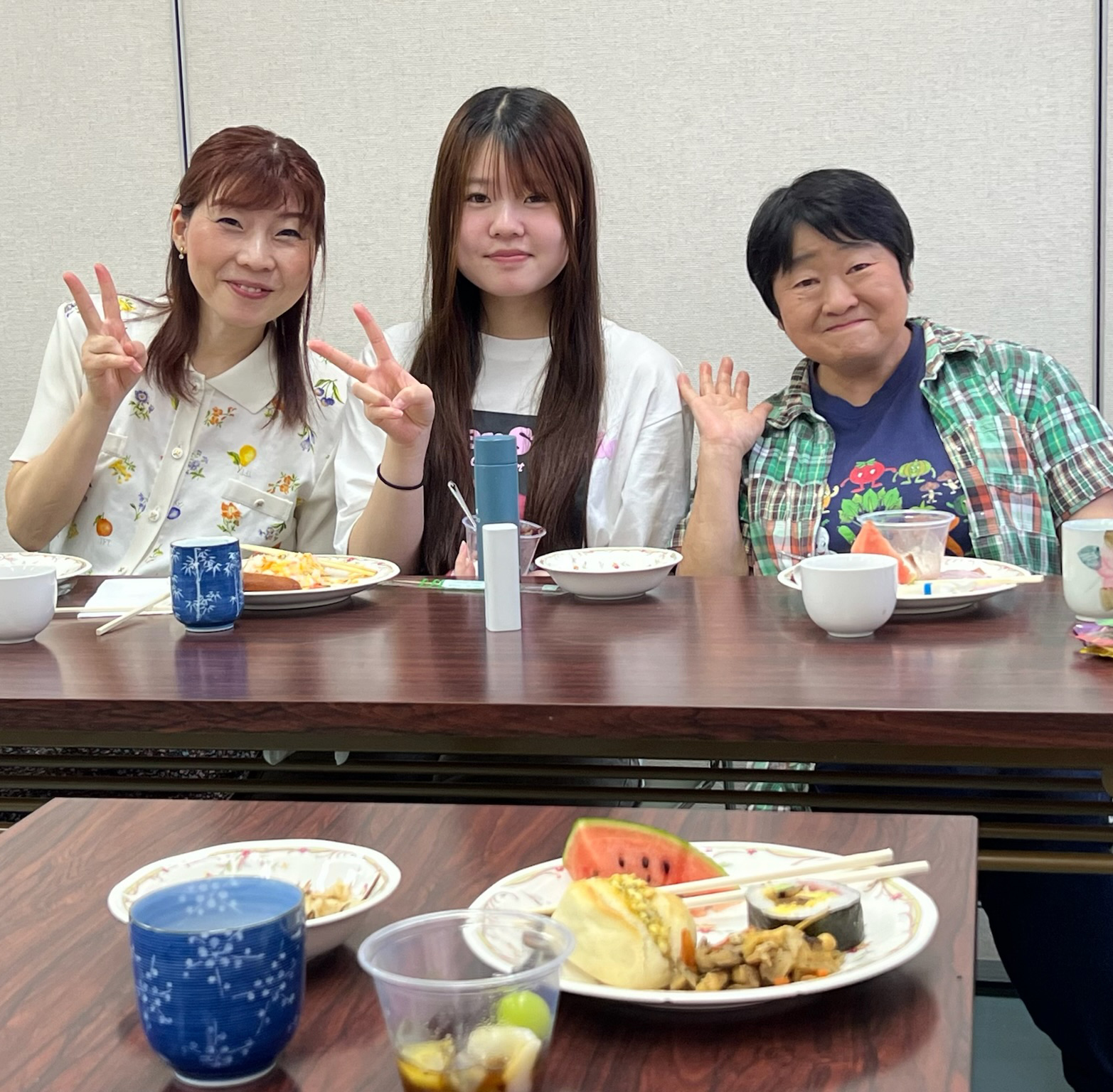
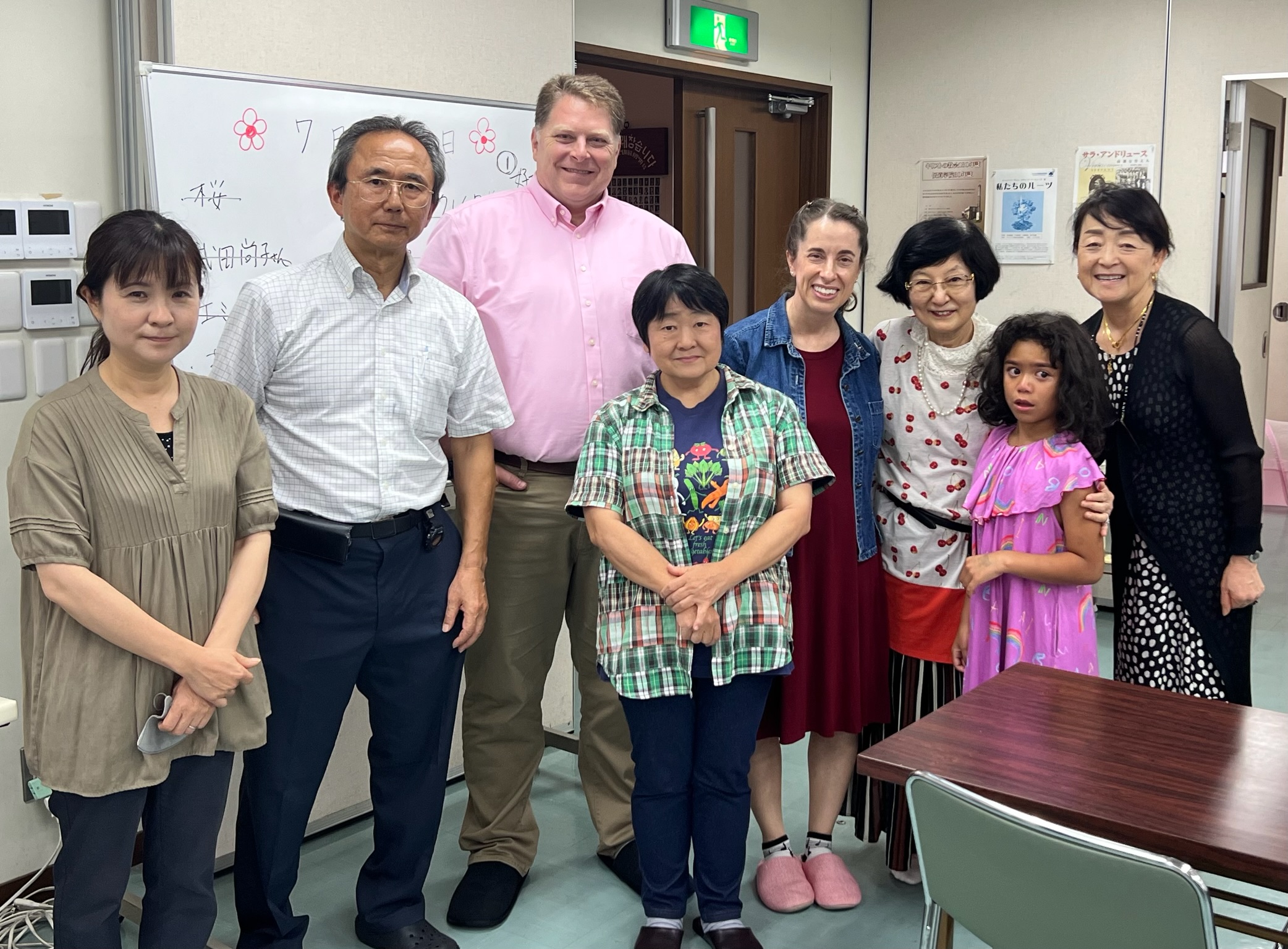
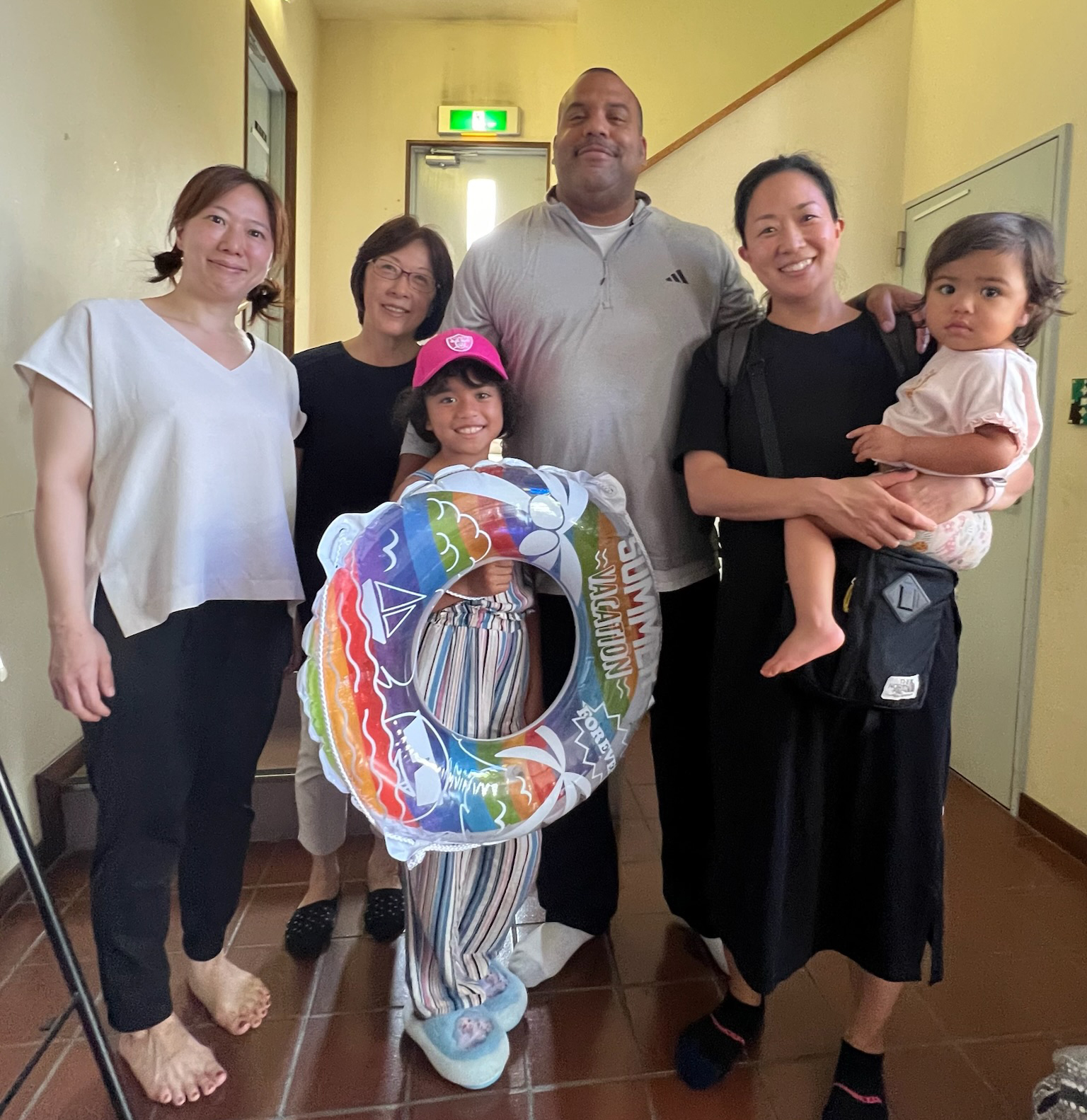
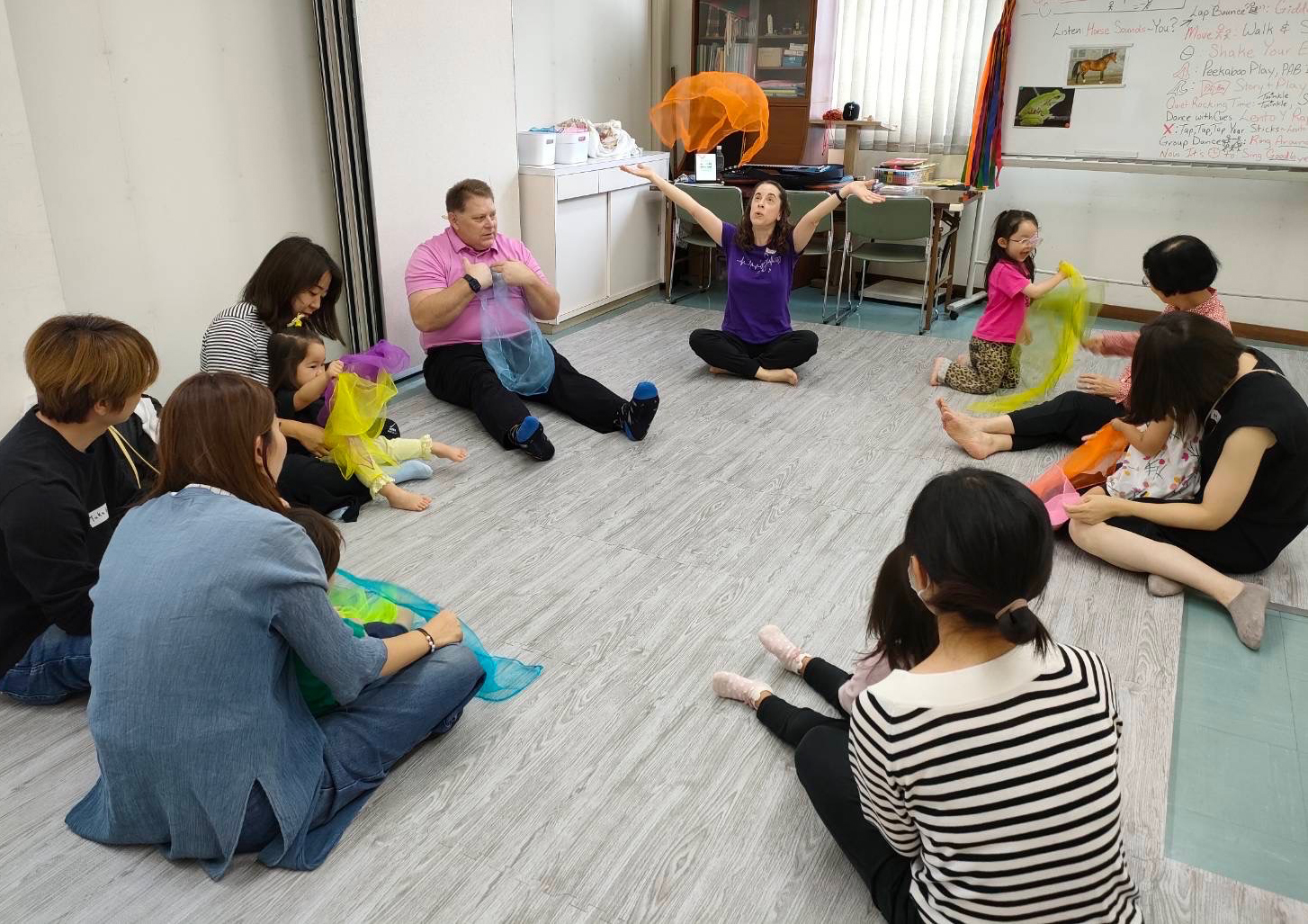
After last week’s overnight trip to Ibaraki, it was nice to be back in a groove this week with “normal” stuff going on. We managed to not get a ton of pictures, but hopefully that just means that we were present and engaged with people all the more. English readers and music class participants have been sweet times together now that we have a little more familiarity with each other. A couple of new readers started recently, so that is encouraging too. Several of our readers have started to really ask meaningful questions, and we pray that the Spirit continues to quicken their hearts and keep them thinking.

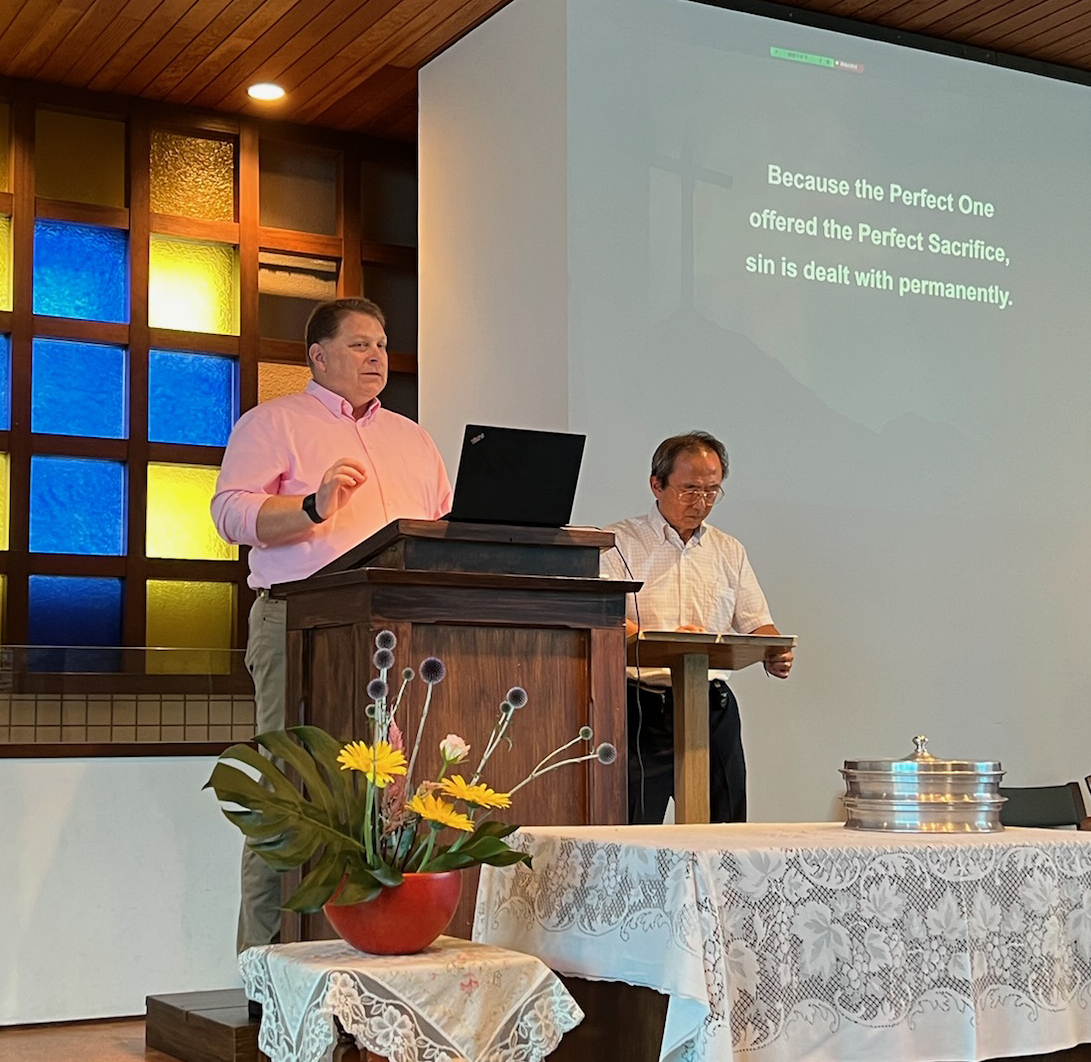
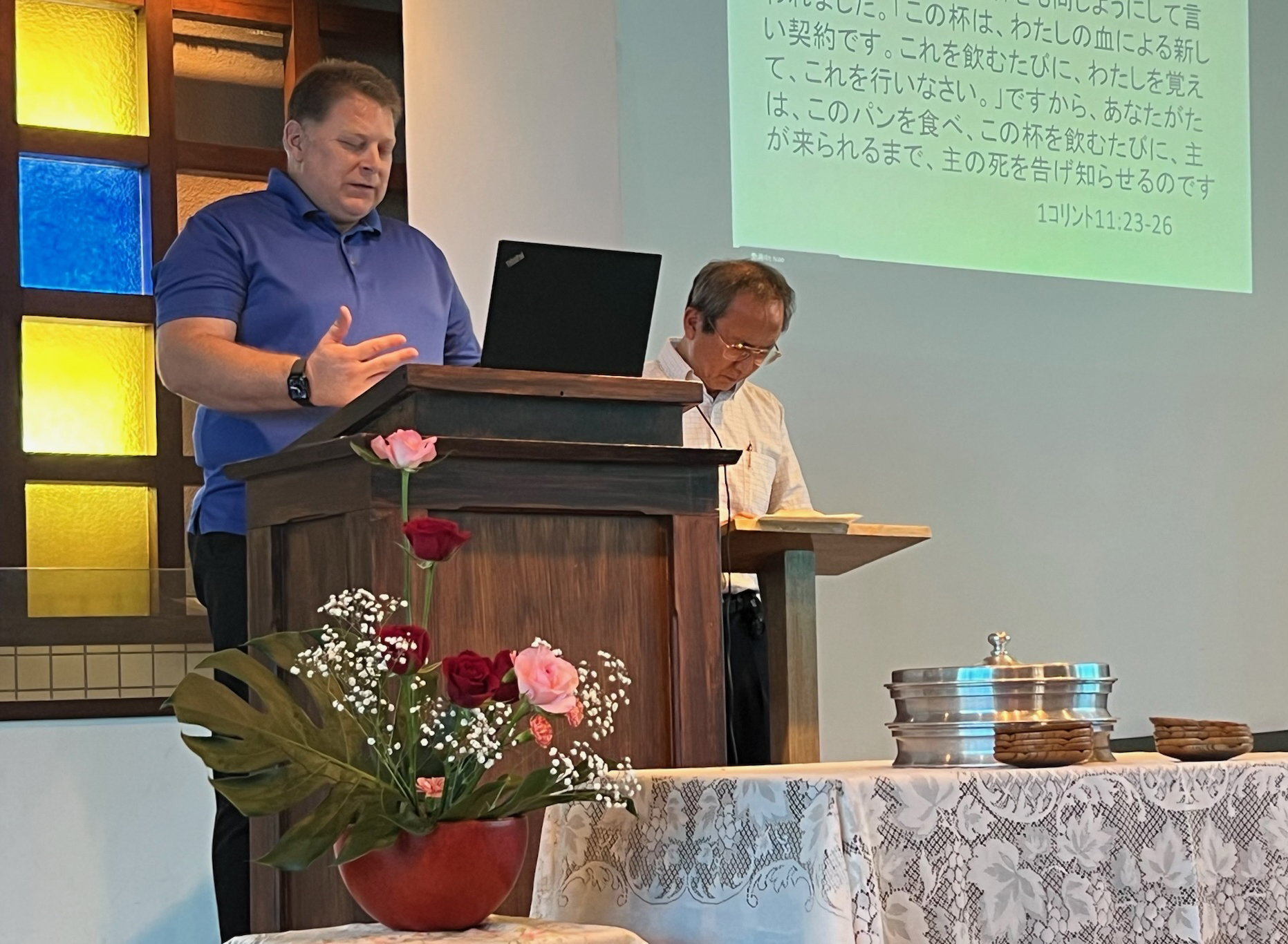
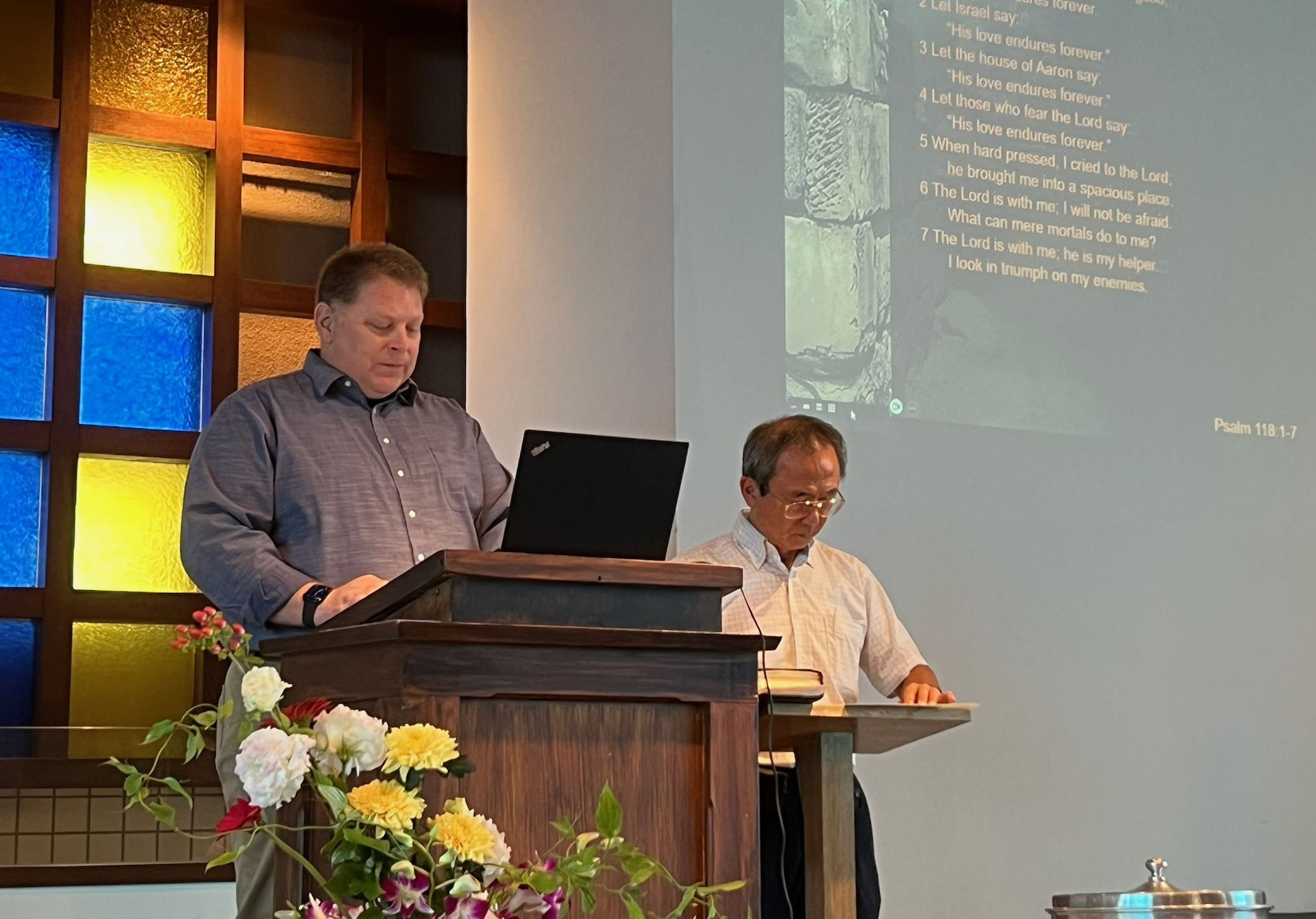
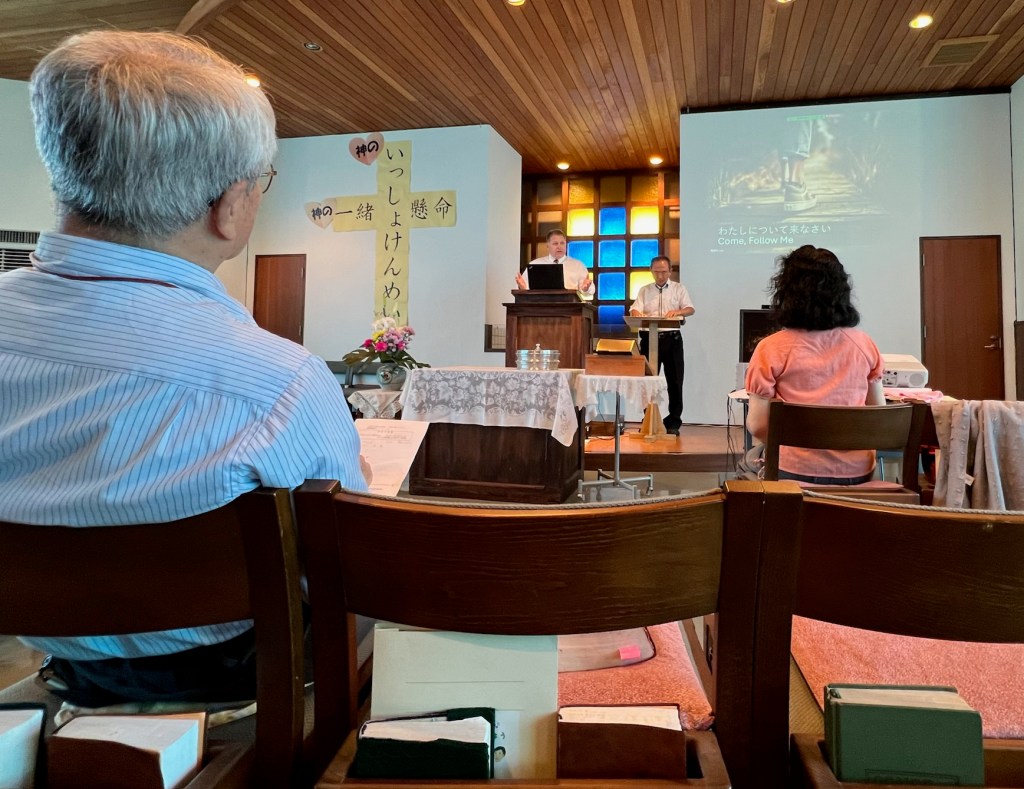
I was privileged to give the message during Worship again this week. I followed up last time’s message about following Jesus with taking a step back and looking at who Jesus is from the perspective of Psalm 118 (the stone the builders rejected, now the cornerstone). It was well received and several in attendance chatted with me afterward about how they were moved to think in new ways. Such positive feedback is always encouraging, and I am thankful for the opportunity to share from Scripture as I am able to.

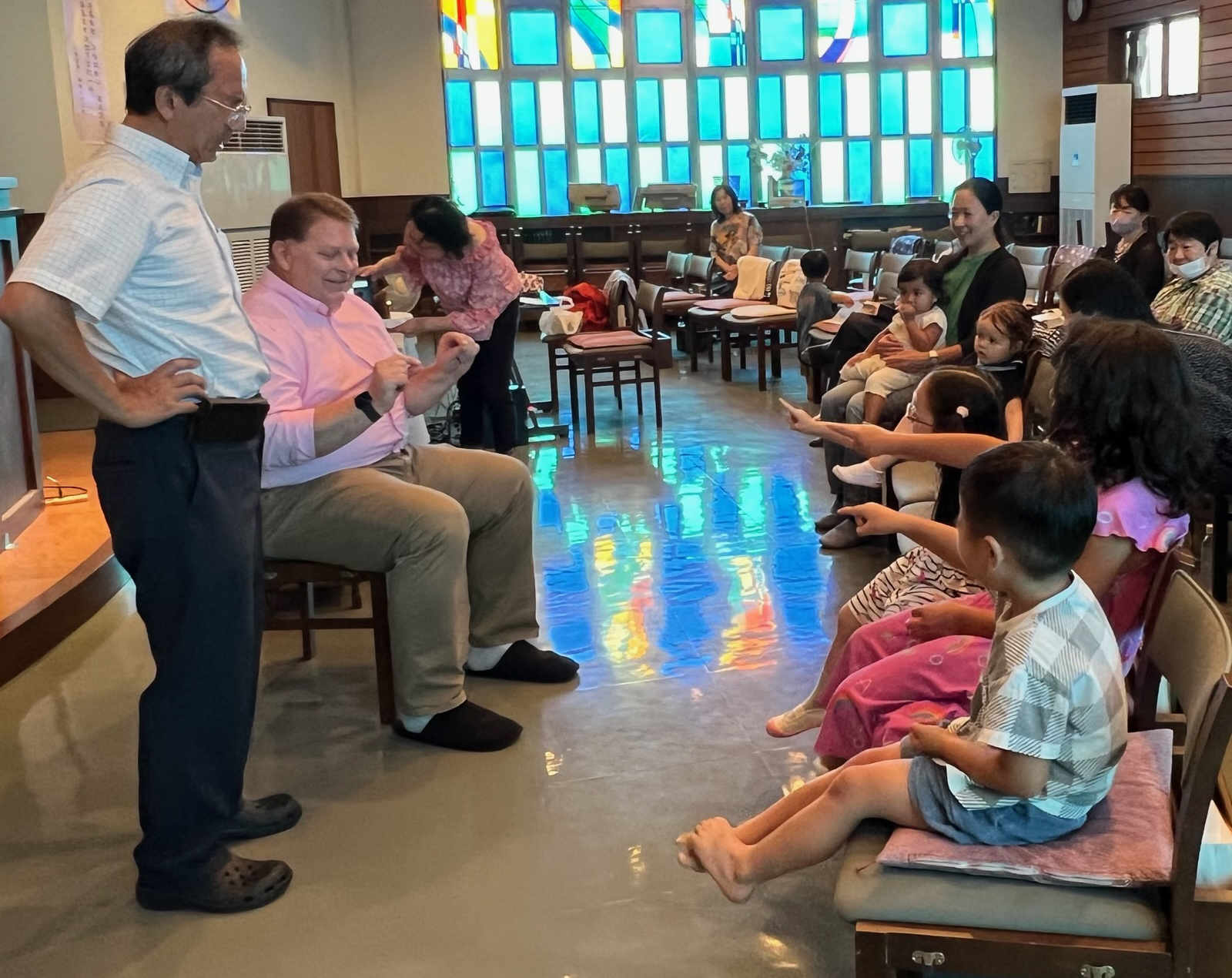
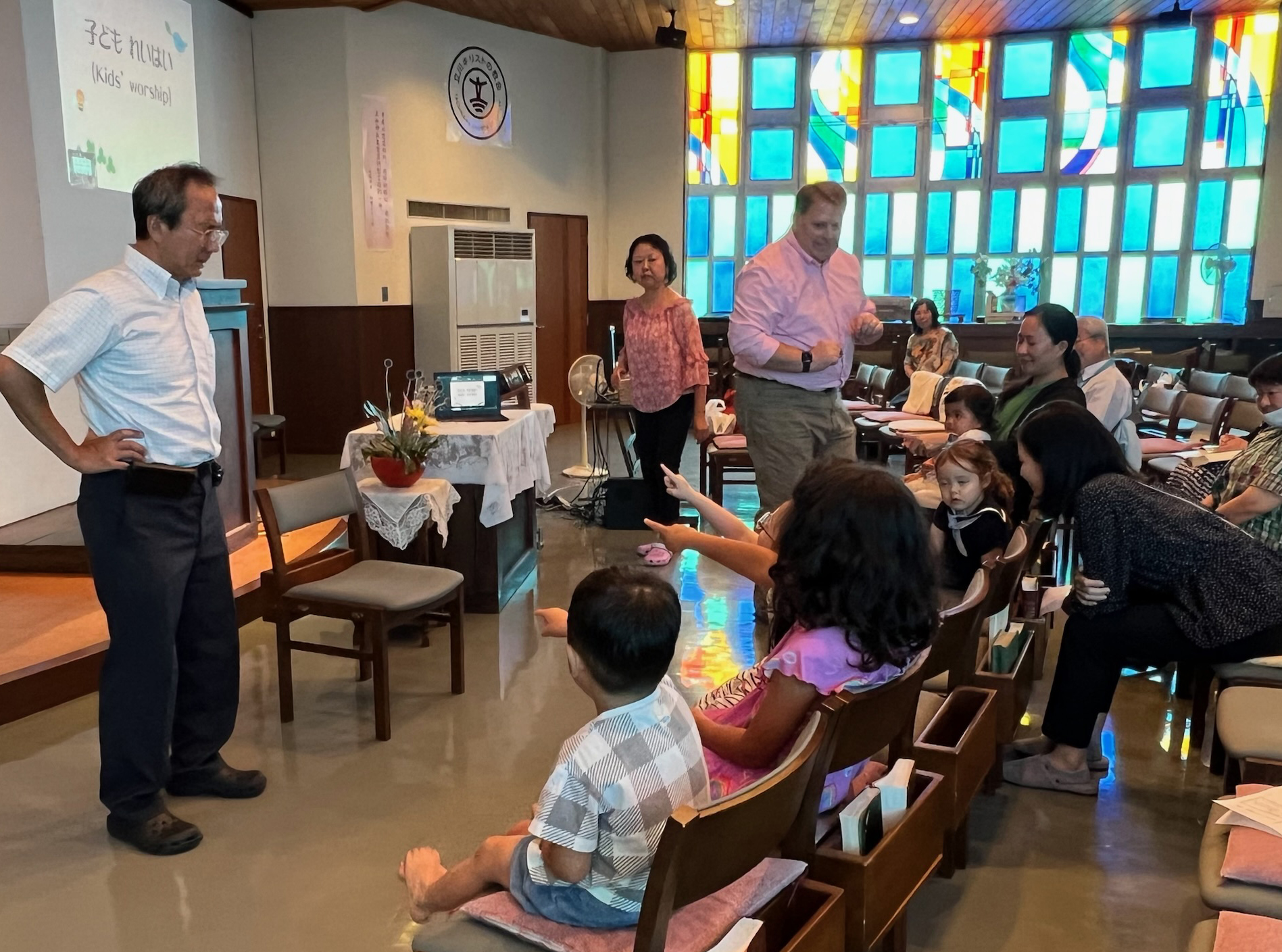
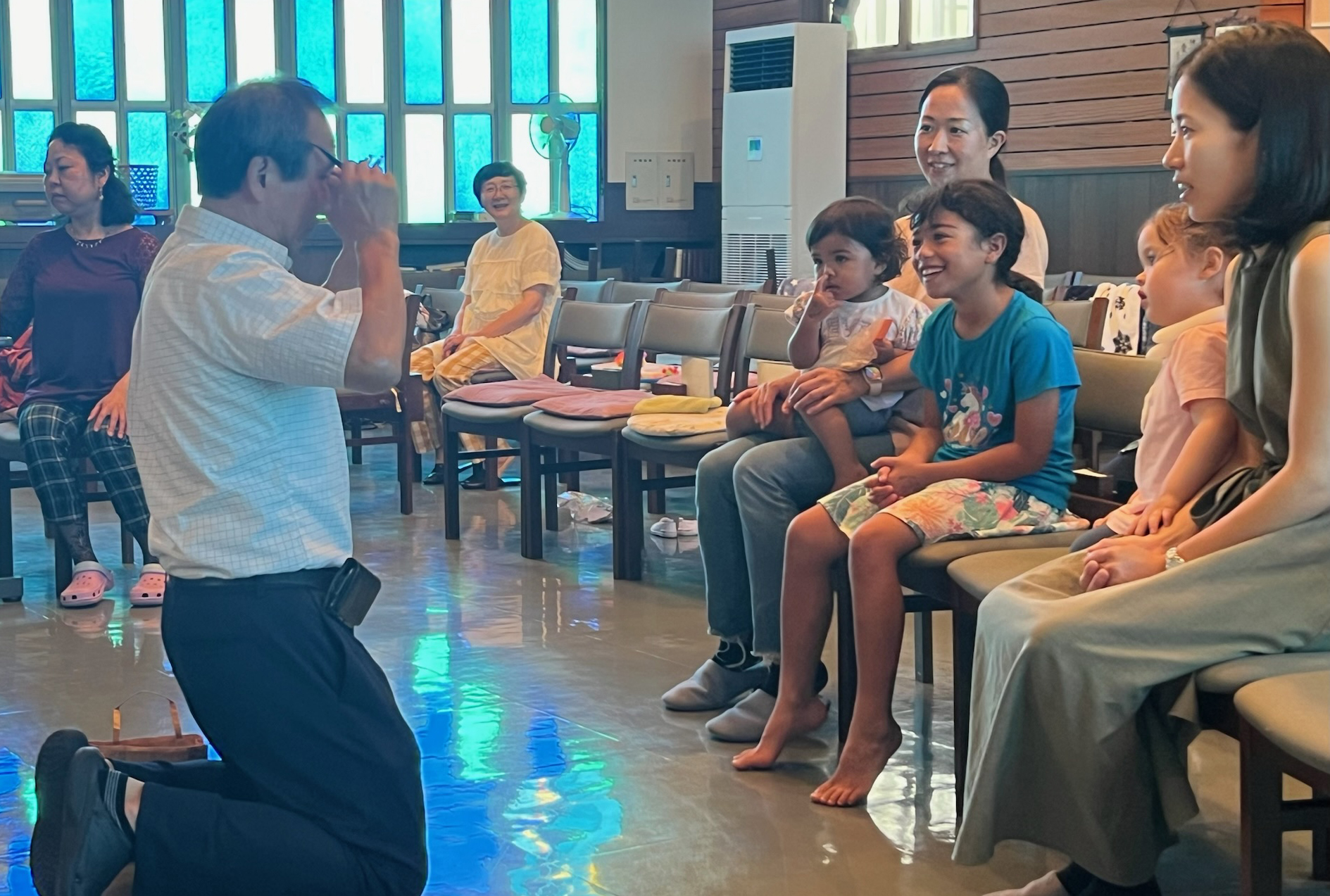
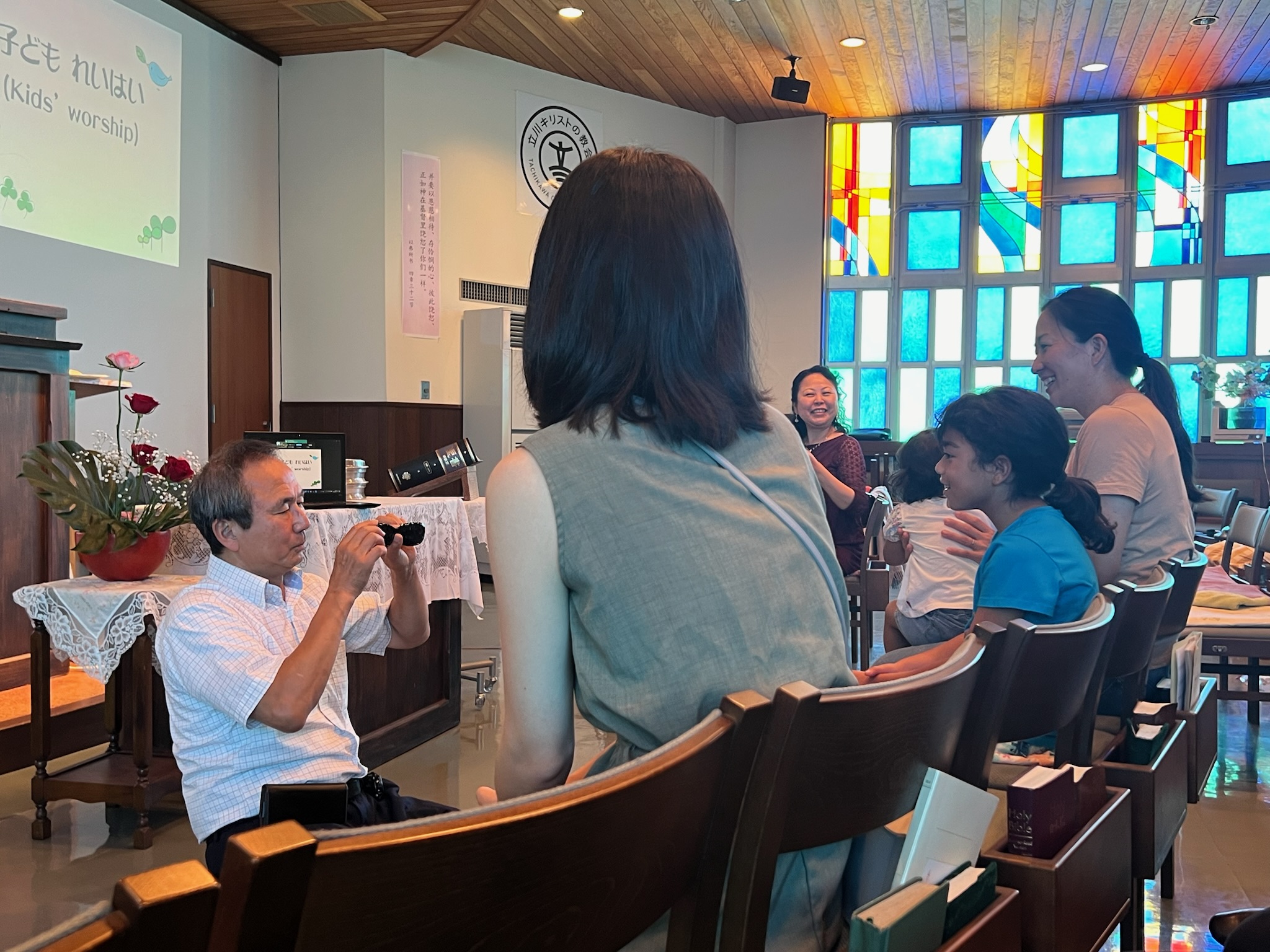
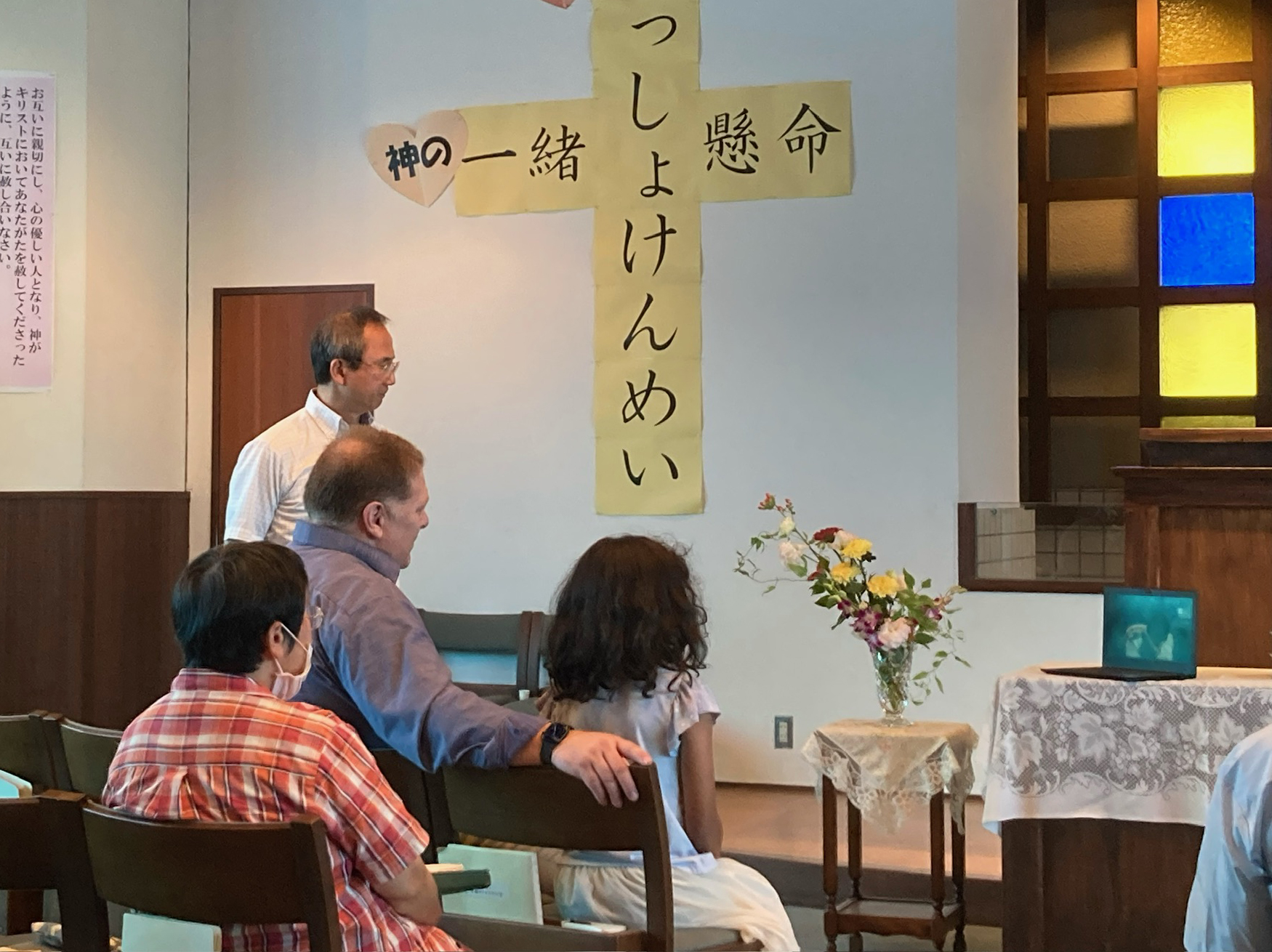
This week, I also prepared a short message for the children. Tachikawa has a worship practice of singing several songs followed by the Lord’s Supper and another song. Before the sermon, though, all of the children present come to the front row and the preacher will give a mini-sermon just for them before they head upstairs for children’s church. Of course, everyone in the room gets to listen in, but it is a sweet time to focus on the kids for a bit in a corporate way during worship. Nao-san jokes that sometimes the adults tell him later that they got more from his kids message than they did from the main sermon!

I chose to focus on the idea of rescue. Japan is no stranger to natural disasters, so I showed a few images of damage from earthquakes, fire, and flooding, but then followed each one with a picture of someone heading in to rescue people caught in those situations. Then I showed a picture of a discouraged person and explained that sometimes we are broken inside our hearts and that can lead to sin. God wants to rescue each and every person from this broken place, and so he sent Jesus to rescue us. Maybe there is something to just sticking with the kid’s version of sermons sometimes!

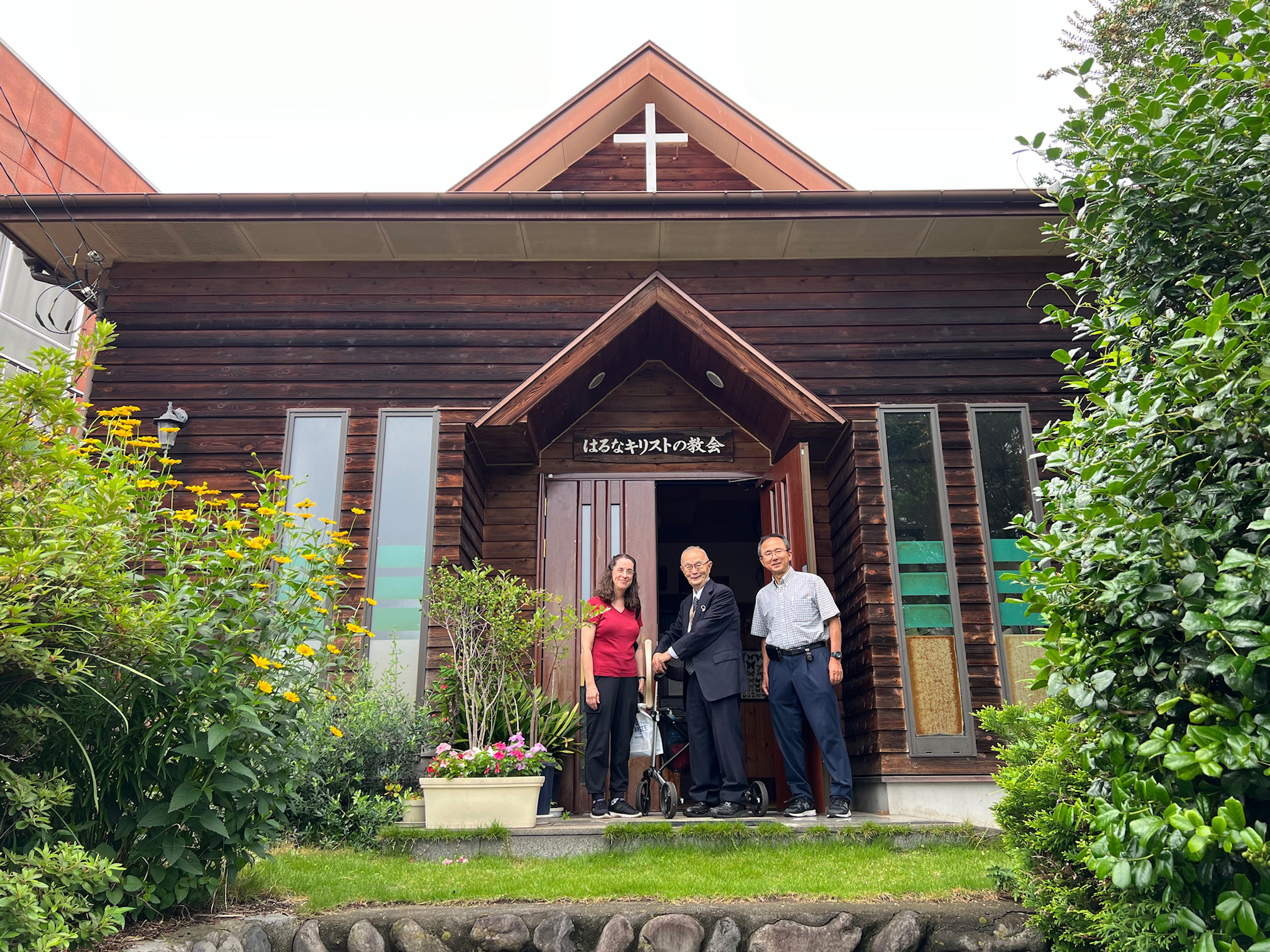
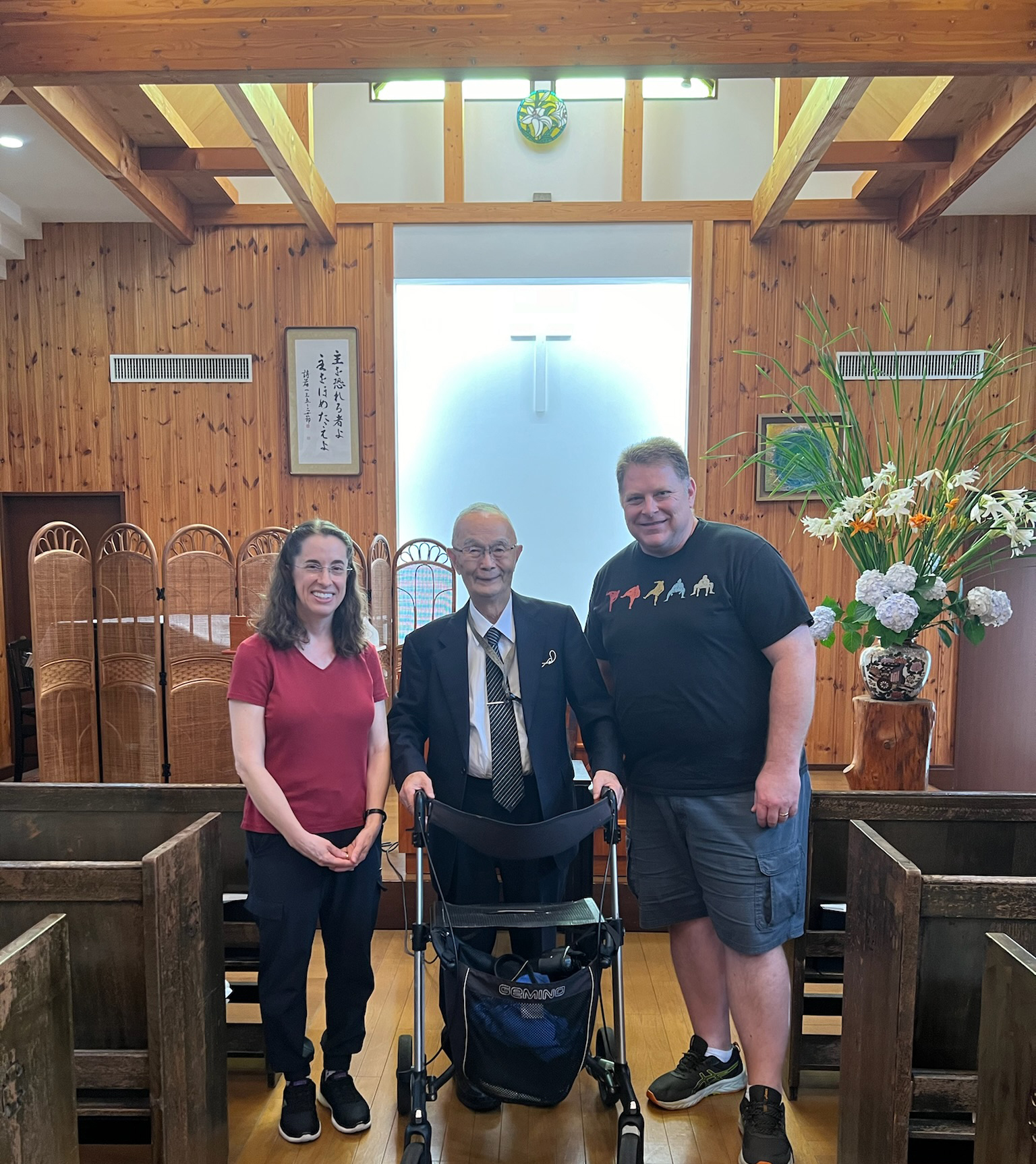
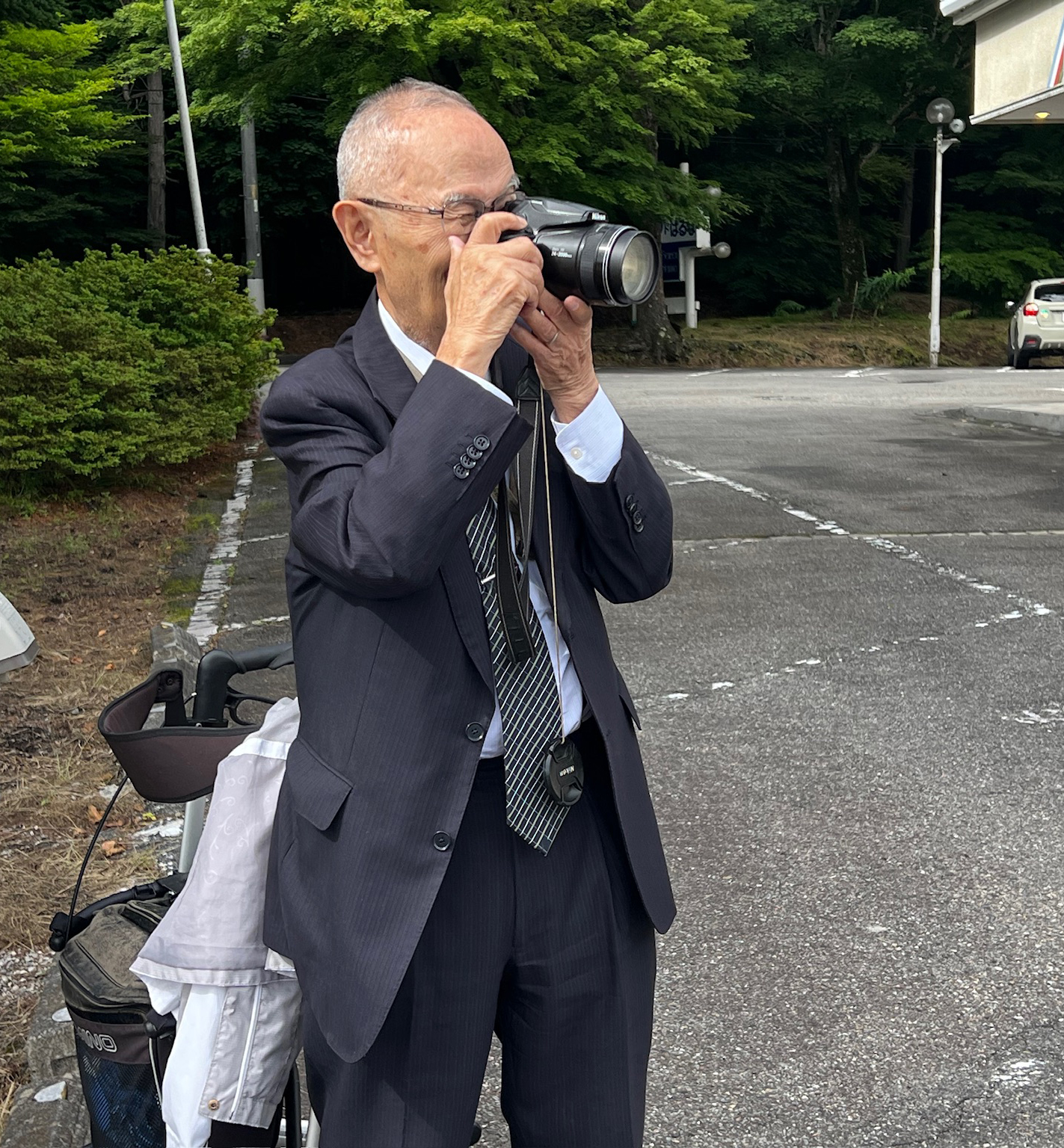
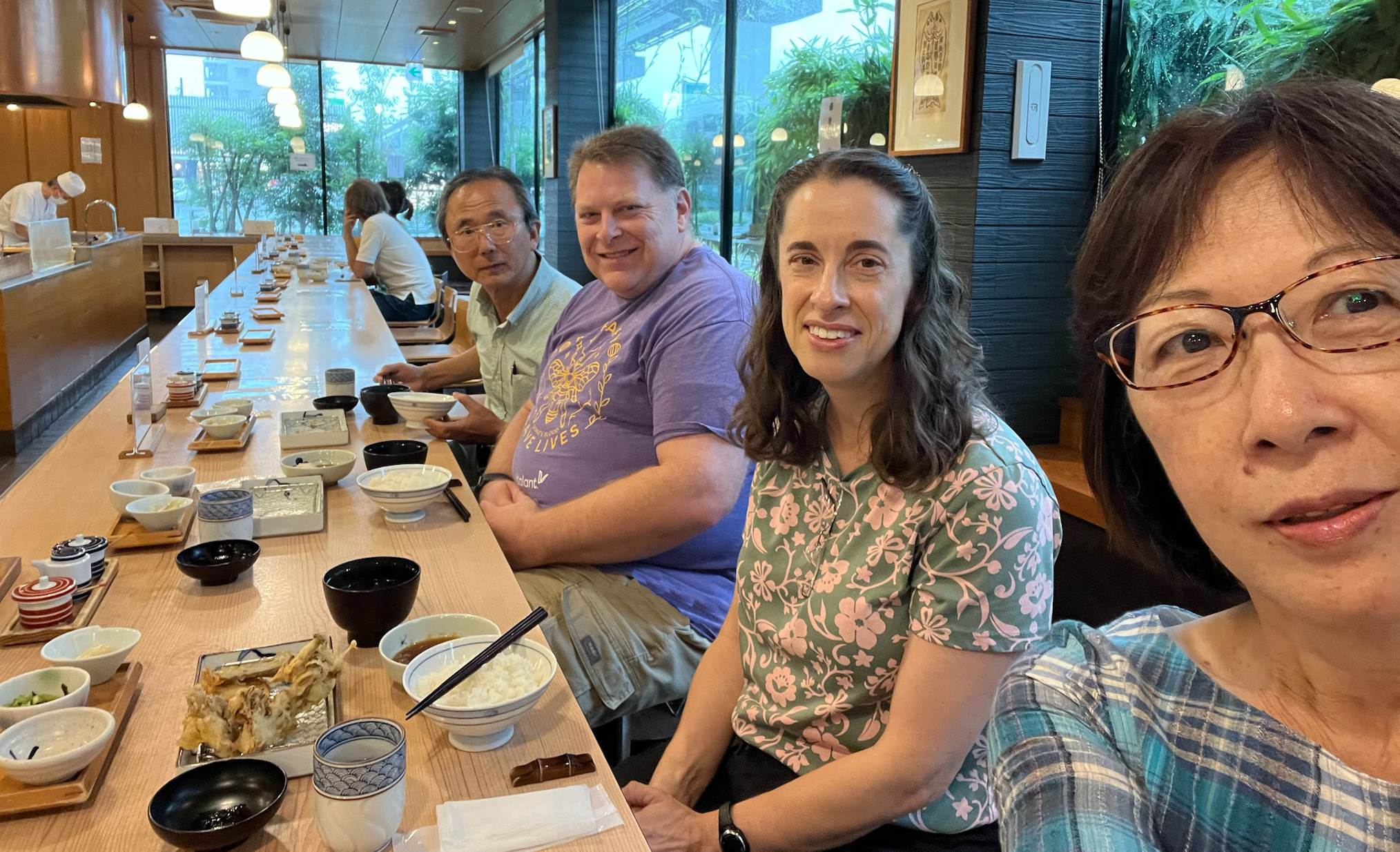
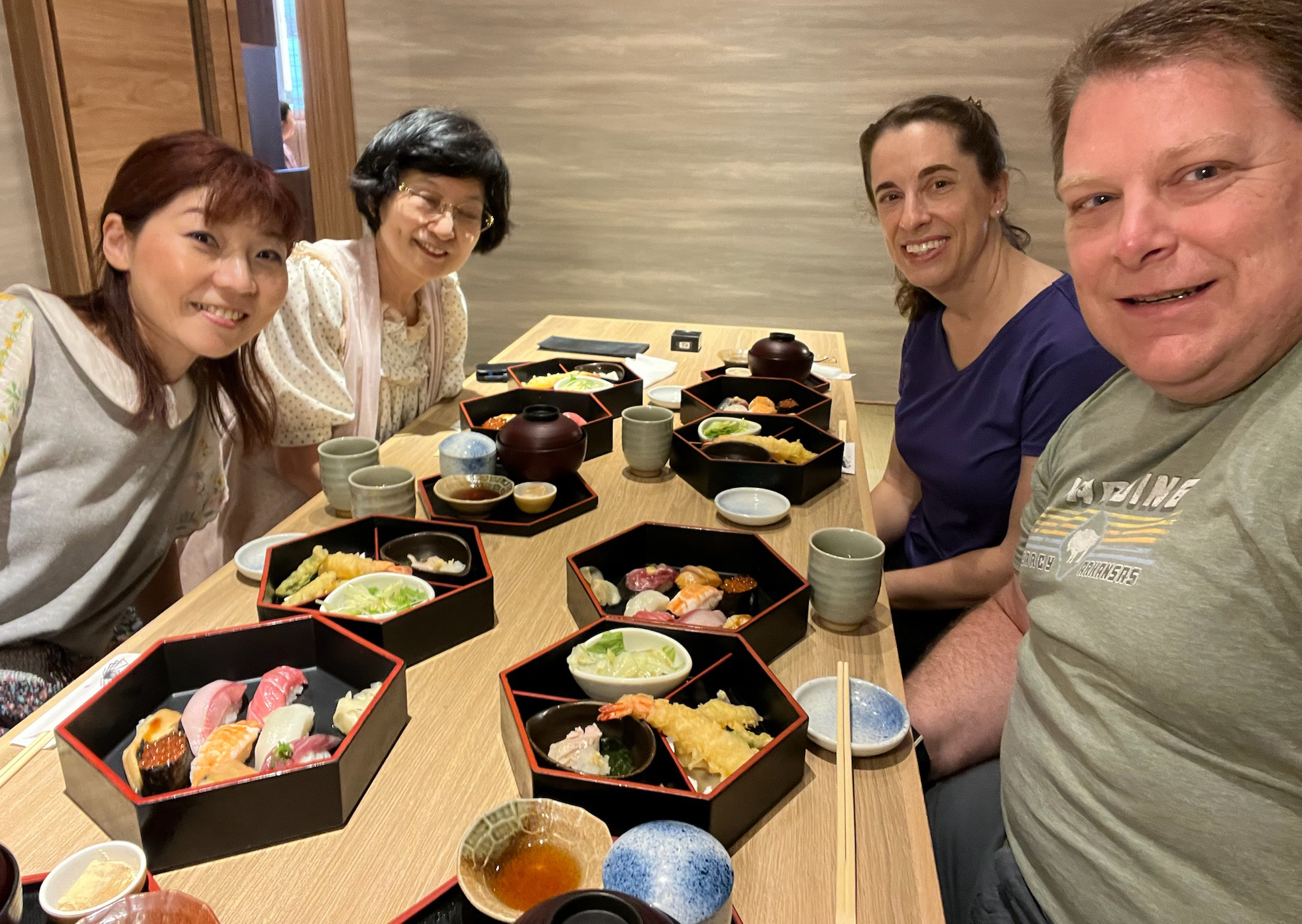
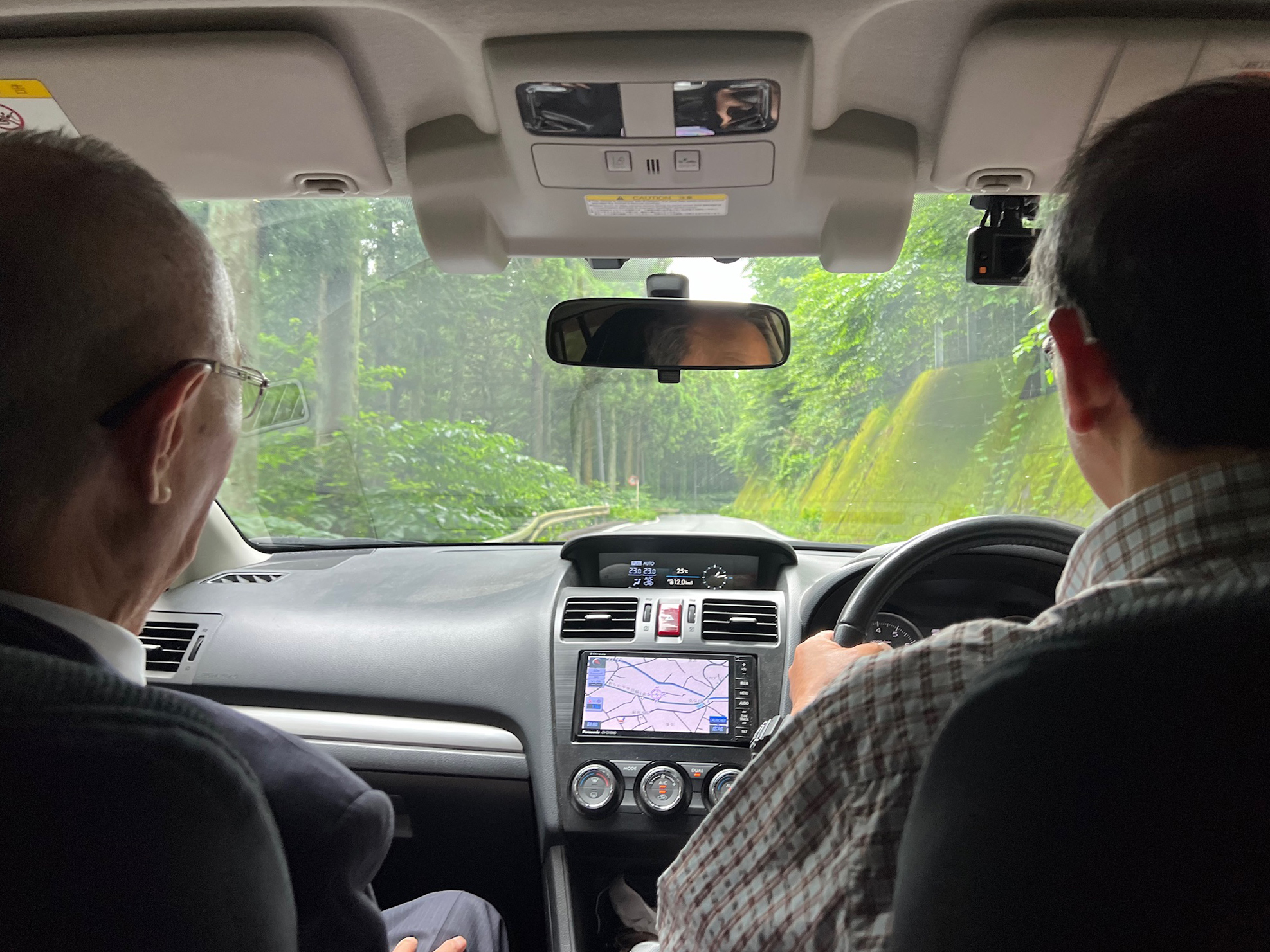
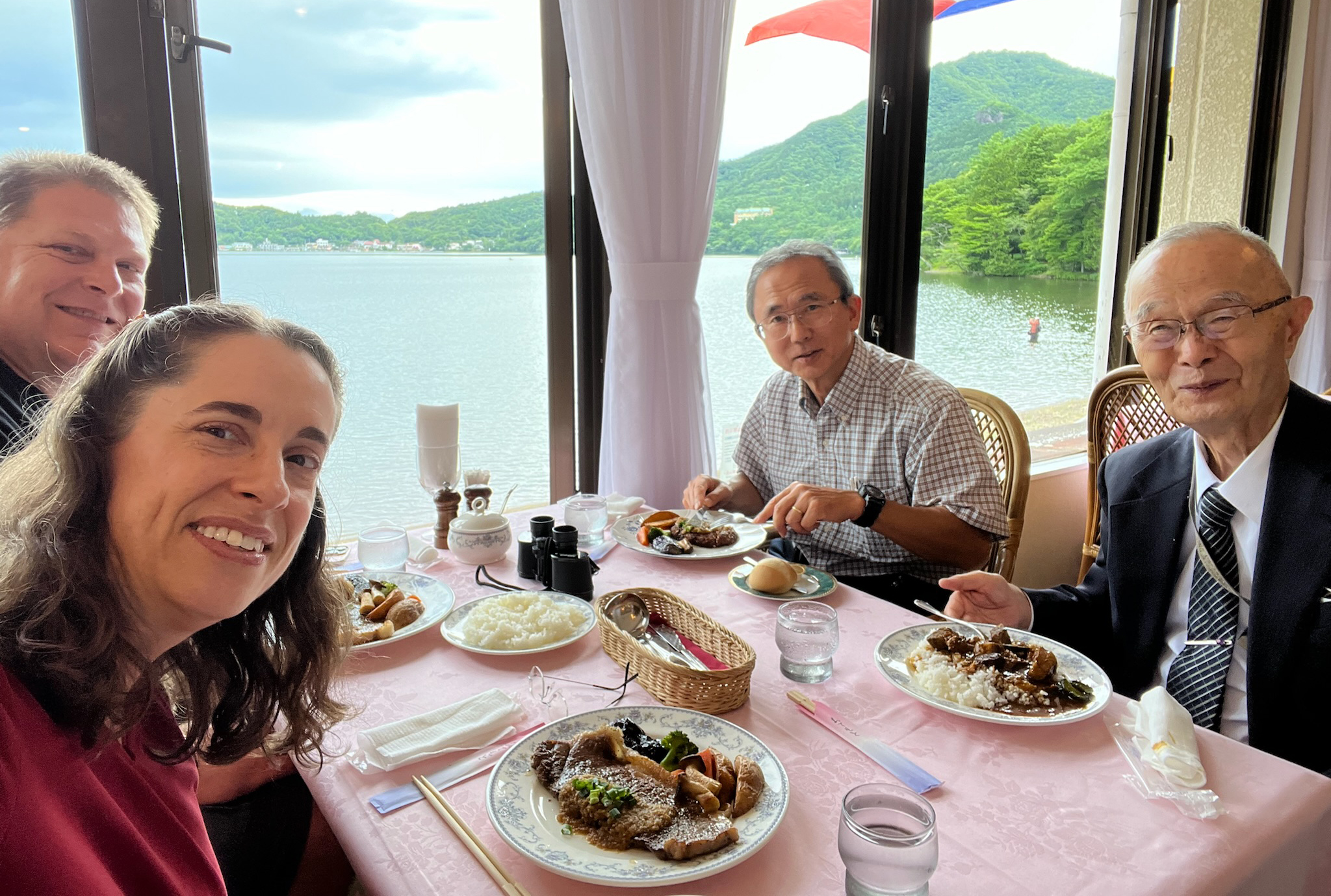
Although it was a pretty normal week in most regards, we did take the opportunity for a day trip to visit Brother Obata in Haruna. Haruna is a smaller community nestled at the edge of a mountain range North of the Tokyo area. It is a couple hours away by car, so we rode along with Nao for the day. Shiro Obata is a treasure of a man who has faithfully served the churches in Japan for decades. He turned 90 this year, but doesn’t let that stop him from preaching each week and smiling the entire time. He showed us around the Haruna church building and the many pictures and mementos that he keeps there, and then we drove further up the valley on a very winding road. There is a caldera lake near the top of Mt. Haruna and next to it one of Obata-san’s favorite restaurants. We feasted on a delicious lunch of Gunma-sourced sirloin and got to spend several hours talking about faith, church, and Japan.

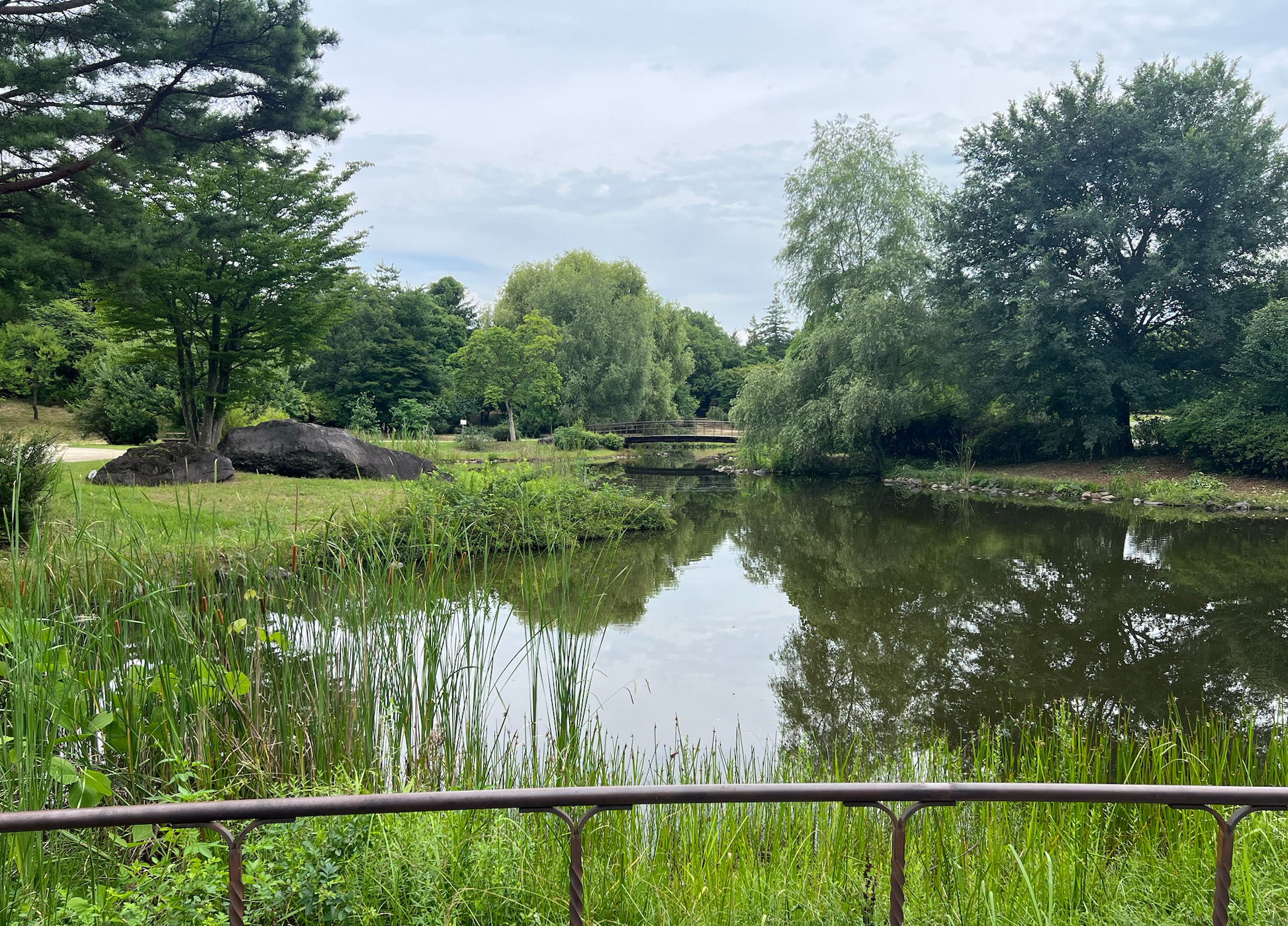
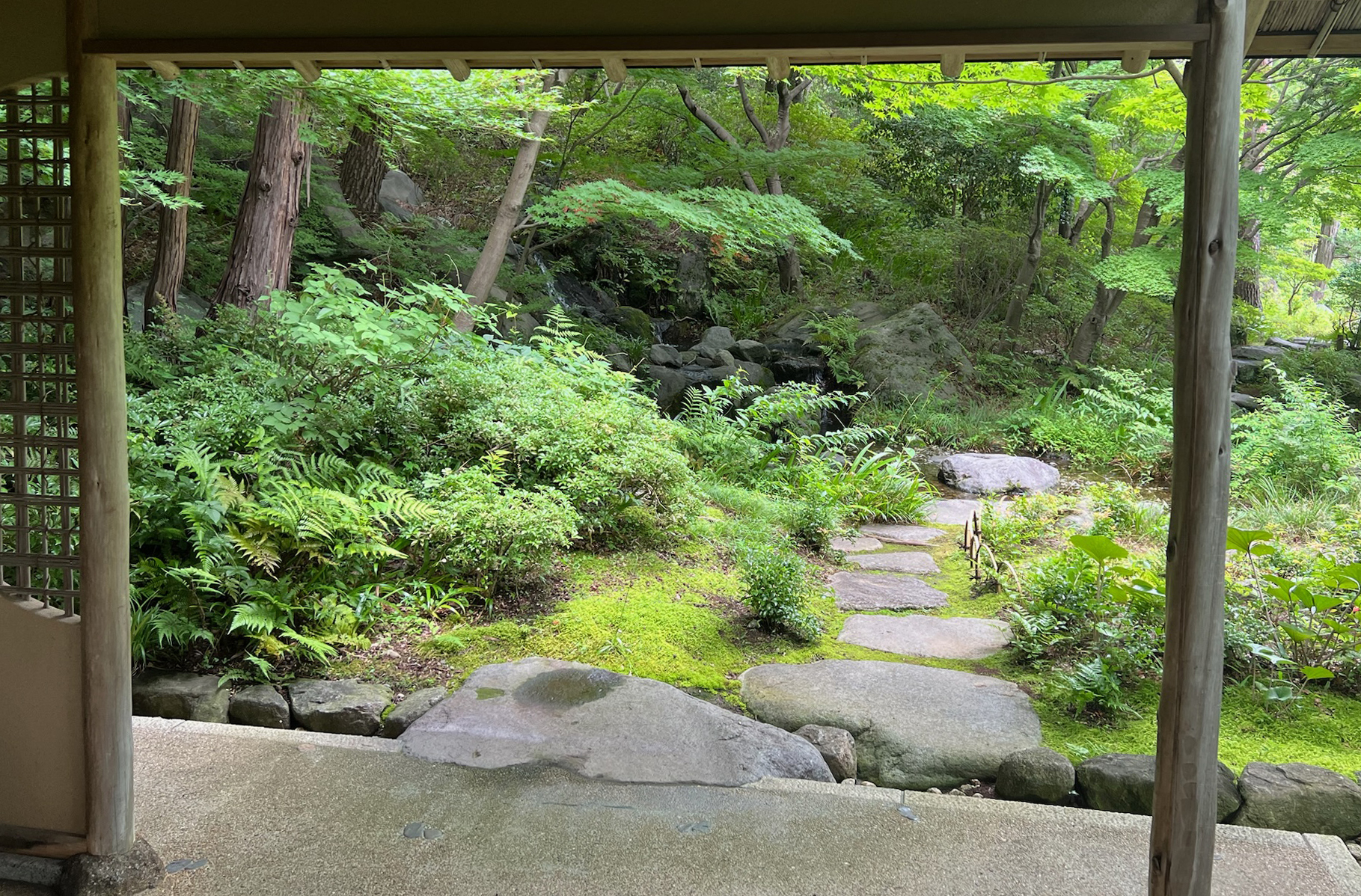
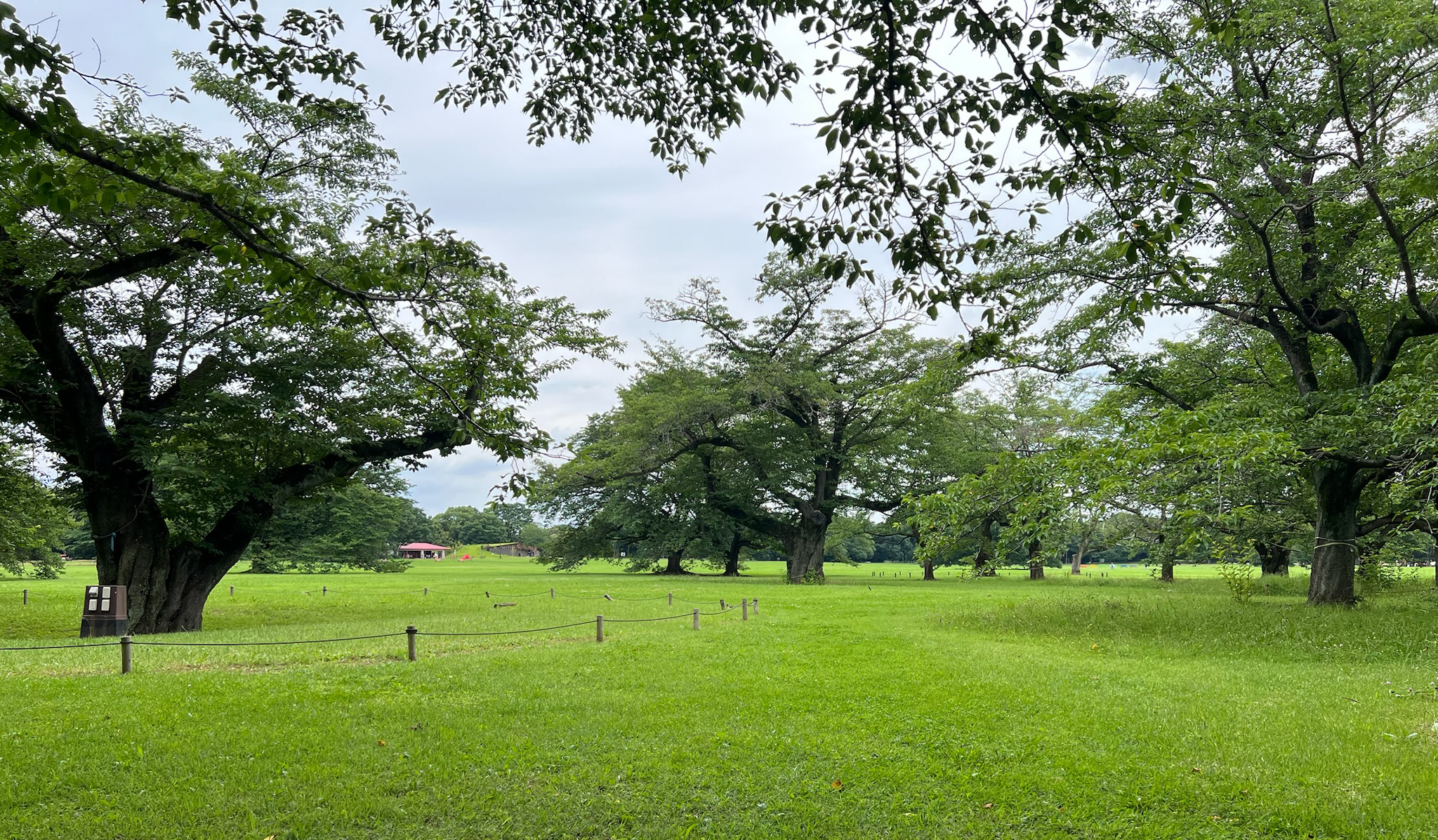
Tuesday of this week, I braved the warm, humid weather for a day spent at Showa Kenin Park in Tachikawa. As part of my Summer coursework for HST, I spent the day in personal retreat dwelling in the Word and in prayer. It was pretty muggy, but thankfully there was a bit of a breeze blowing along with plenty of shady spots to sit, read, and pray. As I have grown this past year in my faith and in my practice, it is becoming increasingly more important to make time for contemplative practices like this, and I am grateful for the opportunity to set aside the bulk of a whole day. There were few other people in the park, so it really did feel like it was just me and the Lord spending precious time together.

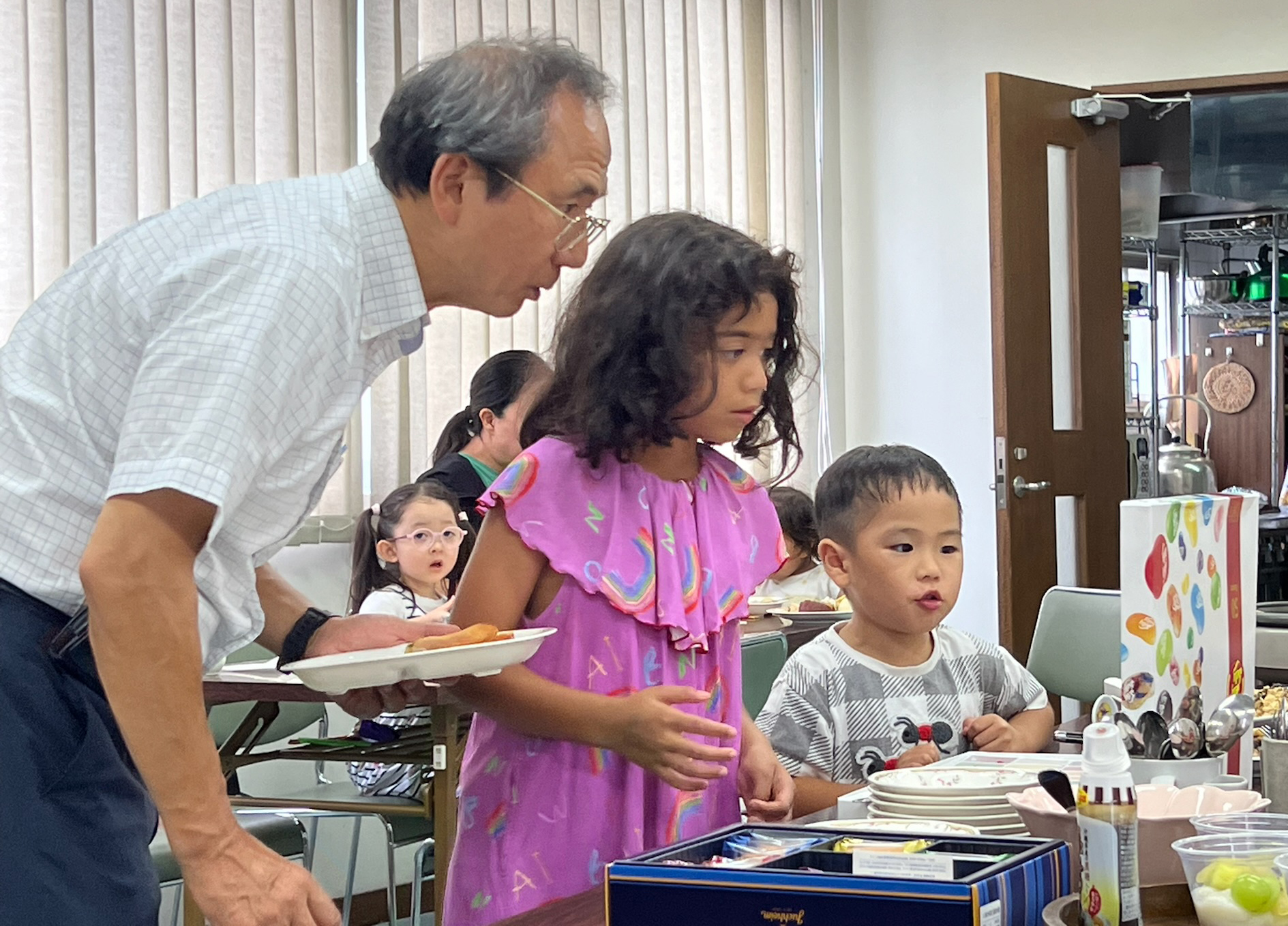
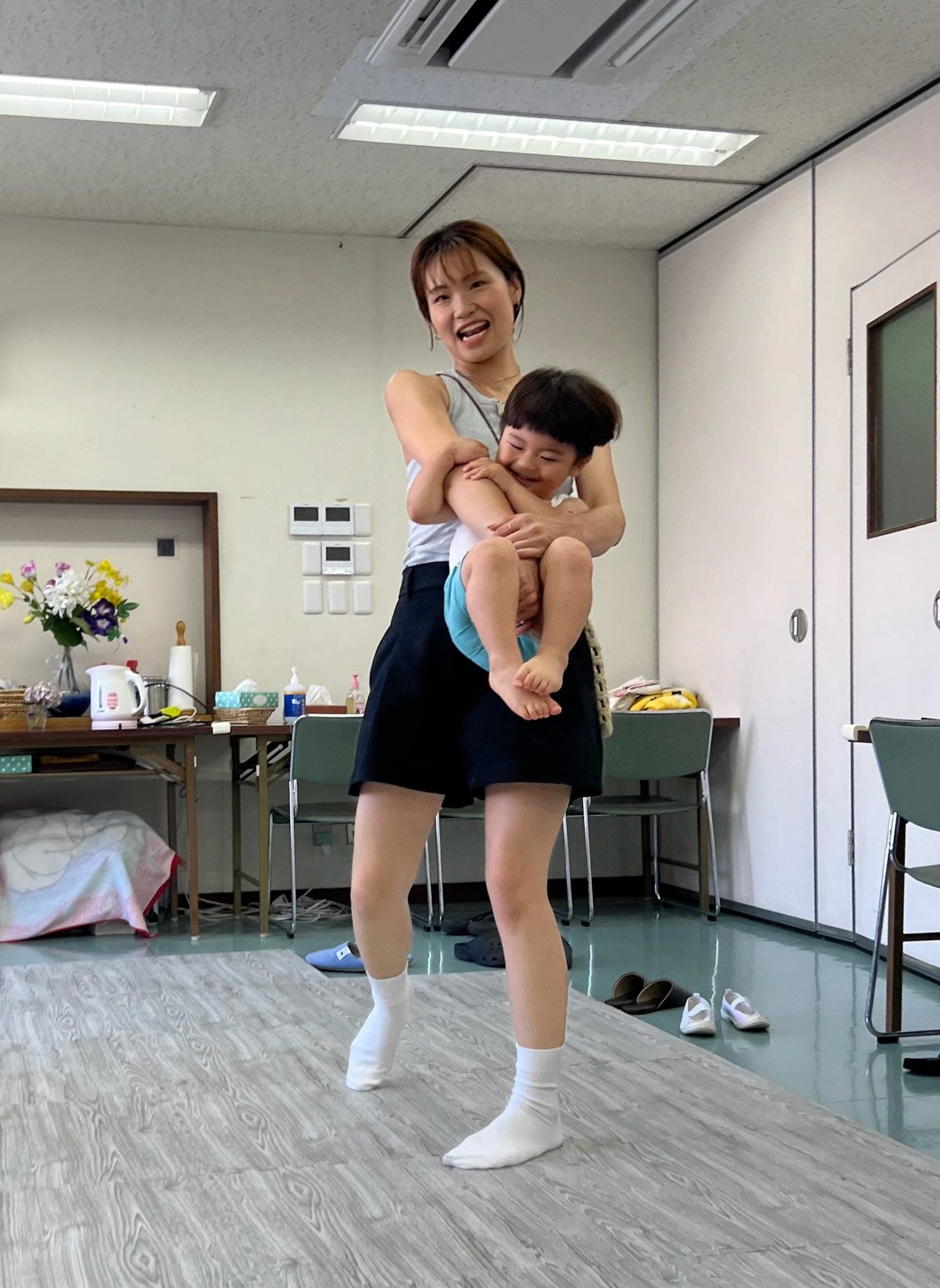
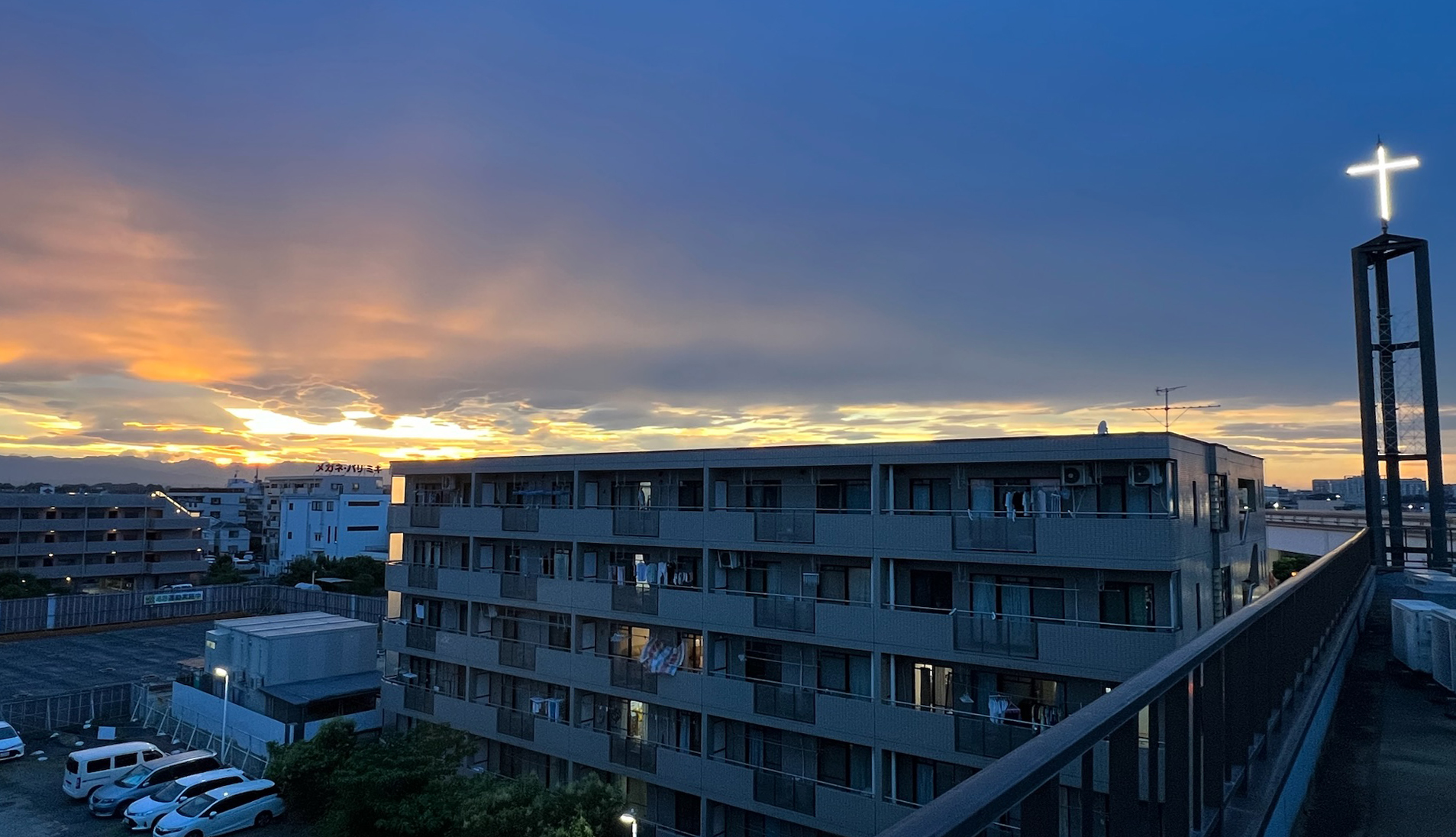
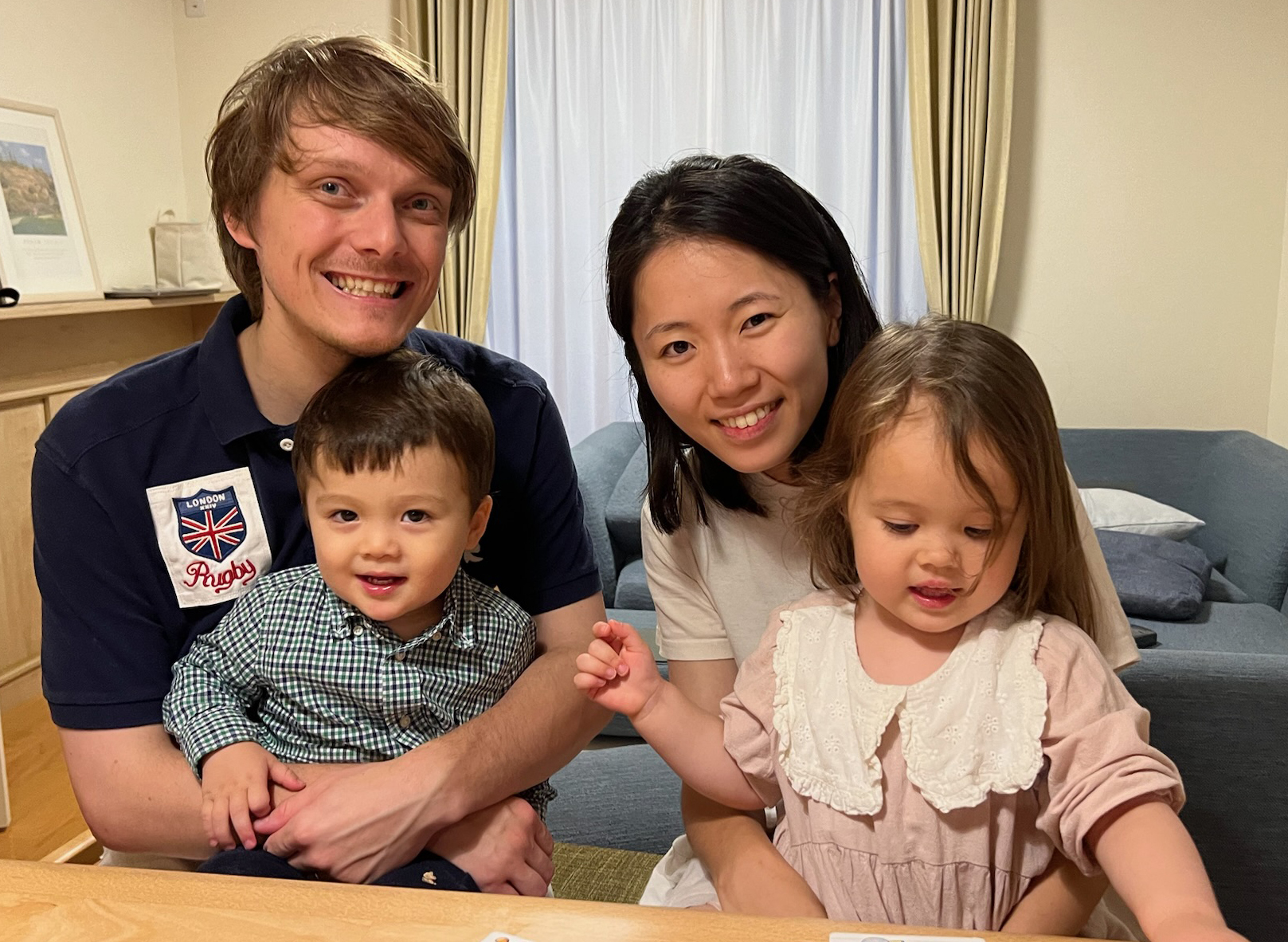
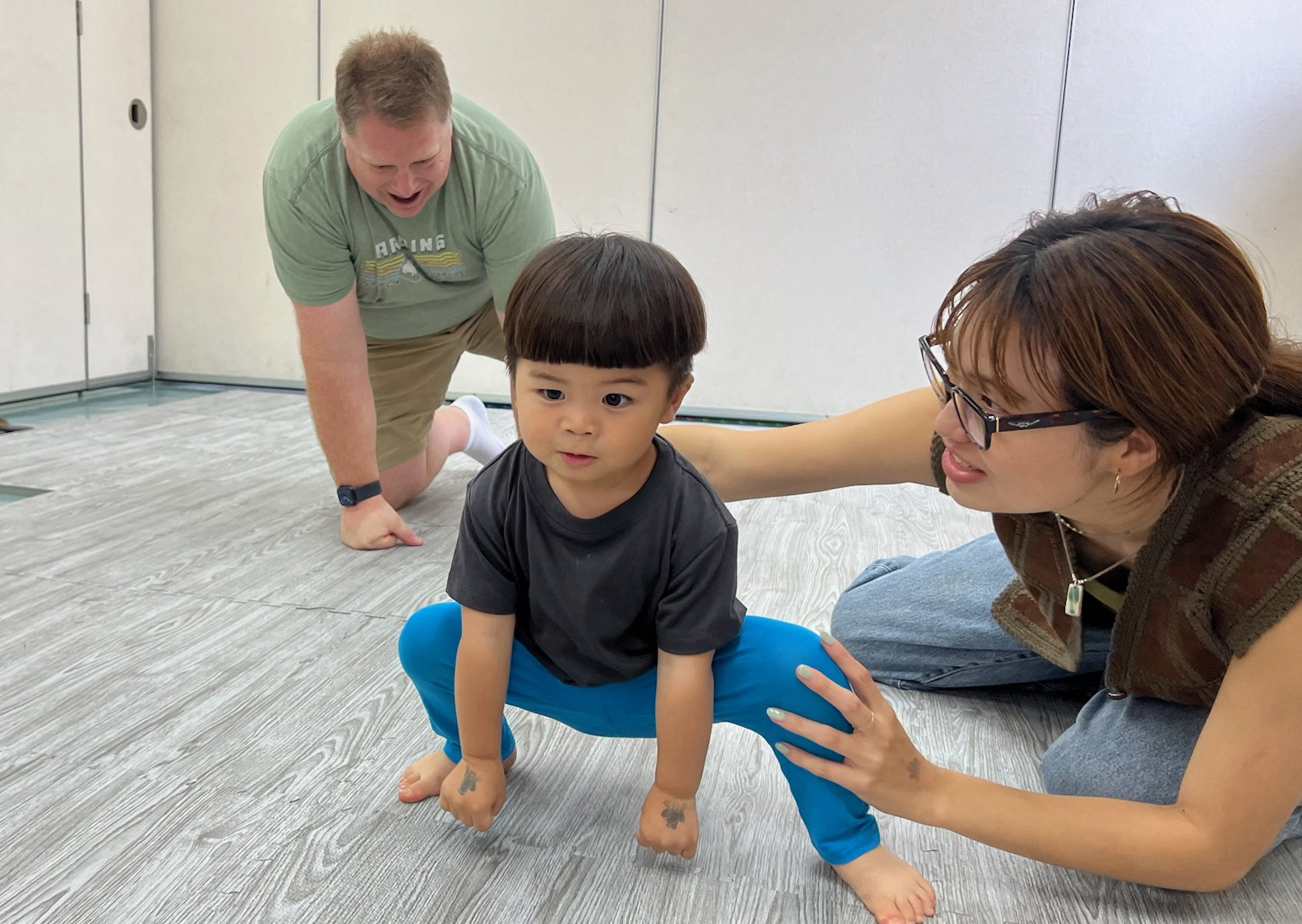
And for my parting shot this week, just take a look at this young man! He is giving his best sumo stance and he’s ready for his next bout. The wide foot placement, the angle of his back, and the fists ready to touch for the tachiai show that he means business. Most of all, you can see the determination in his face as he psychs himself up for another win. He will be sporting a top-knot in no time. You heard it here first!

はっけよい! (Hakkeyoi!)

~ Clay

<– Return to the Week Three Report

Jump to the Week Five Report –>

A Third Week Making Connections

English conversation times and family music classes have continued this week, and both have been encouraging. A couple of new readers have signed up, and some others are now coming twice a week. But the *really* big thing which God did this week was three new families for music class! Emily and I were out and about doing a little shopping in the downtown area of Tachikawa when she noticed one of the nearby buildings had rather peculiar colors and shapes built-in. We could tell enough from the signage that it had something to do with children, so she suggested we wander over there and check it out.

We entered the lobby and started looking around at some of the information inside. Before long, a Japanese lady came in from the street. Emily asked her what this building was all about, and the woman replied saying it was a training school for teachers of kids from a variety of age levels – preschool through high school. We shared with her about our backgrounds as teachers ourselves, and then described what we were doing here in Tachikawa with English conversation and music classes for young families. After a few more pleasantries, we said goodbye and returned to our shopping.

A couple of hours later, Emily and I were done shopping and sitting on some benches near the corner of a very busy intersection close by the train station. We had picked up some lunch items at the nearby convenience store, and stopped at this spot to enjoy them before getting on the monorail to head back to the church building. It’s a great spot to do some people-watching and chat between ourselves. Before long, one of the people walking by turned our way and came right up to where we were sitting, saying “Remember me?” It was the lady from the teacher training school lobby!

She explained that she has a two year-old daughter, and that she was so very glad to run into us again because she would like to attend the family music class! We figured out how to AirDrop the class flyer to her phone so that she would have all of the information, and then just marveled between ourselves how good it was to reconnect with her. To top it all off, she introduced herself and gave her name – Hanna. Originally, we assumed it was Hana, which means ‘flower’ in Japanese, but she volunteered that it was actually Hanna, like from the Bible. She is not a Christian, but her mother had some sort of familiarity with the Bible, so she chose the name Hanna. Wow!

Over the next couple of days, Hanna had registered by email for herself and her daughter. Even more, she also wanted to register for two other families! God led us to just the right places at just the right times in order to connect with Hanna and two others through her. We are thankful for the Spirit moving, and praying that these next couple of weeks will plant some seeds for the future.

After preaching in the Japanese worship service last week, Nao asked if I would be able to preach the same sermon again this week for the 3pm Chinese worship service. There is a small group of believers who use the auditorium once a month for a worship service in their native language. They also join in with some of the other Japanese church activities, such as potluck meals. I was glad to be able to connect and share the message with them. A dear sister named Sue Ling translated for me, and we enjoyed worshiping God in yet another language. Several of the members had recently returned to China for a couple of months, so the attendance was small, but it was still a sweet time focused on a common Savior.

A little later that same evening, we hosted our next ‘Casual Party’ for English readers and church members. We were encouraged by a few more attendees, and everyone really enjoyed themselves! I had some American music going in the background (Dave Brubeck!) to go with grape and strawberry-kiwi Kool-aid. Emily had also prepared a pineapple angel food cake to share, and everyone declared it was ‘Oishii!’ or ‘delicious!’ We played another getting-to-know-you guessing game and gave out a couple of door prizes at the end. It was a sweet time to connect and let the readers get to know a few of the church members a little more.

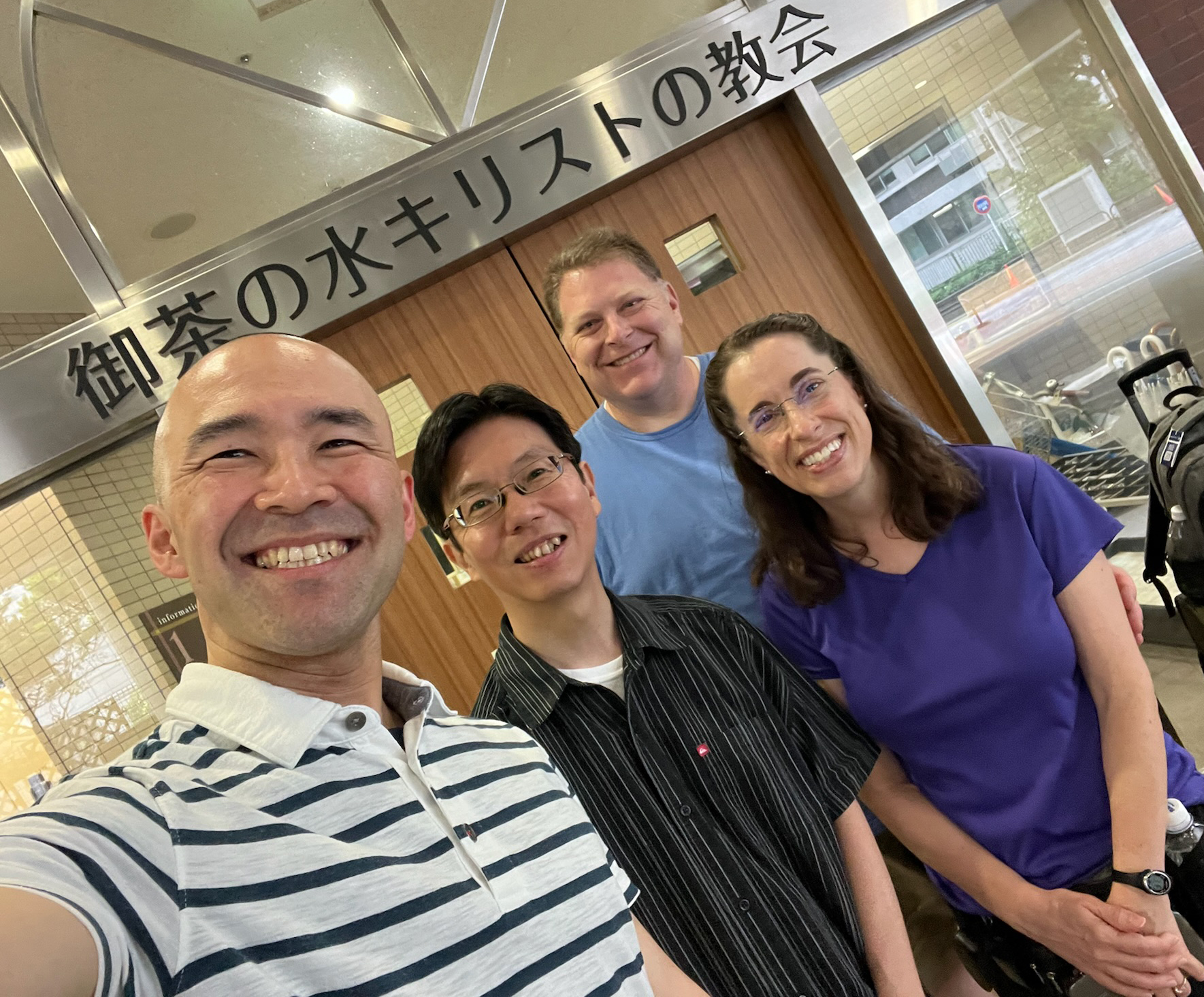
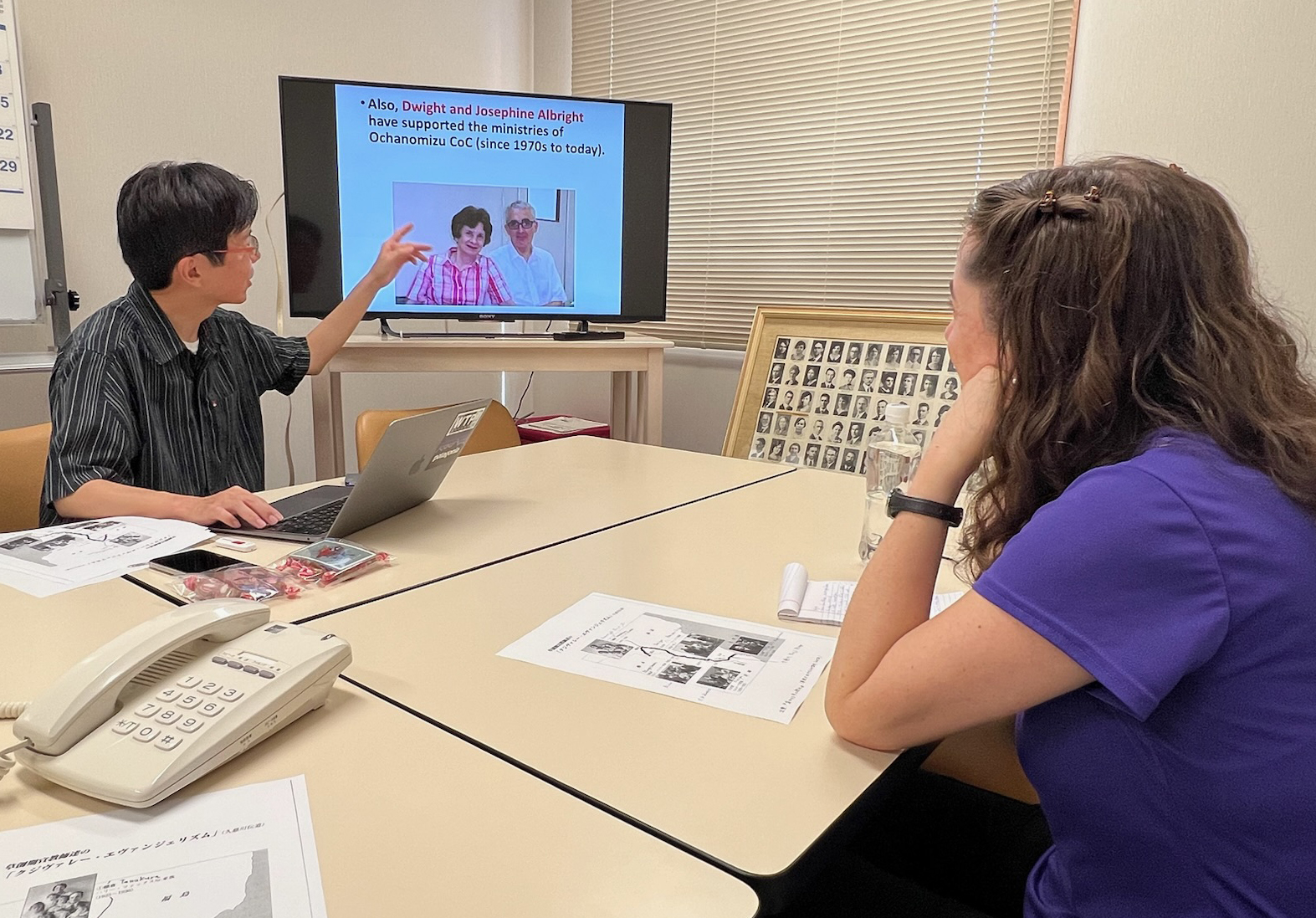
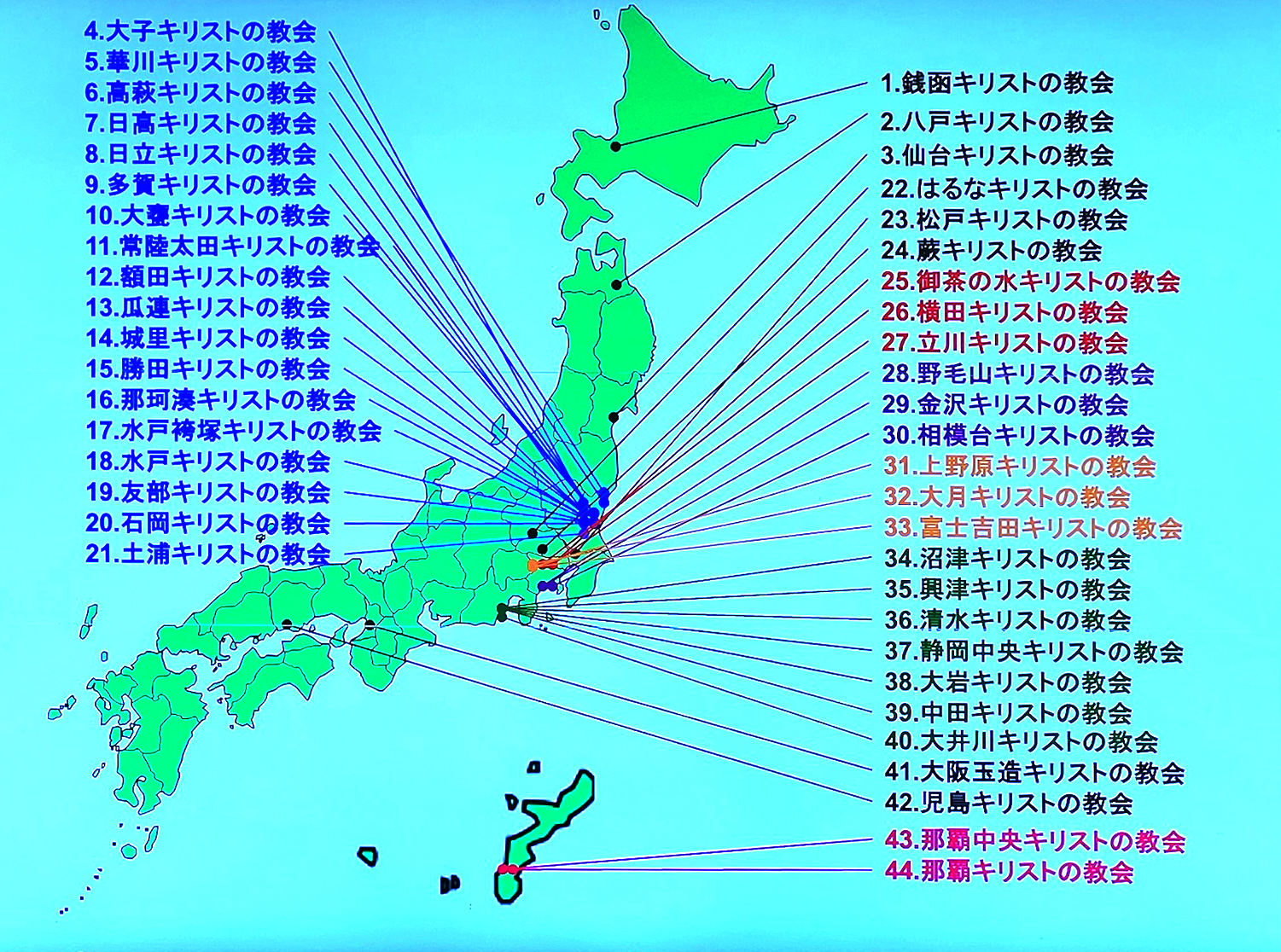
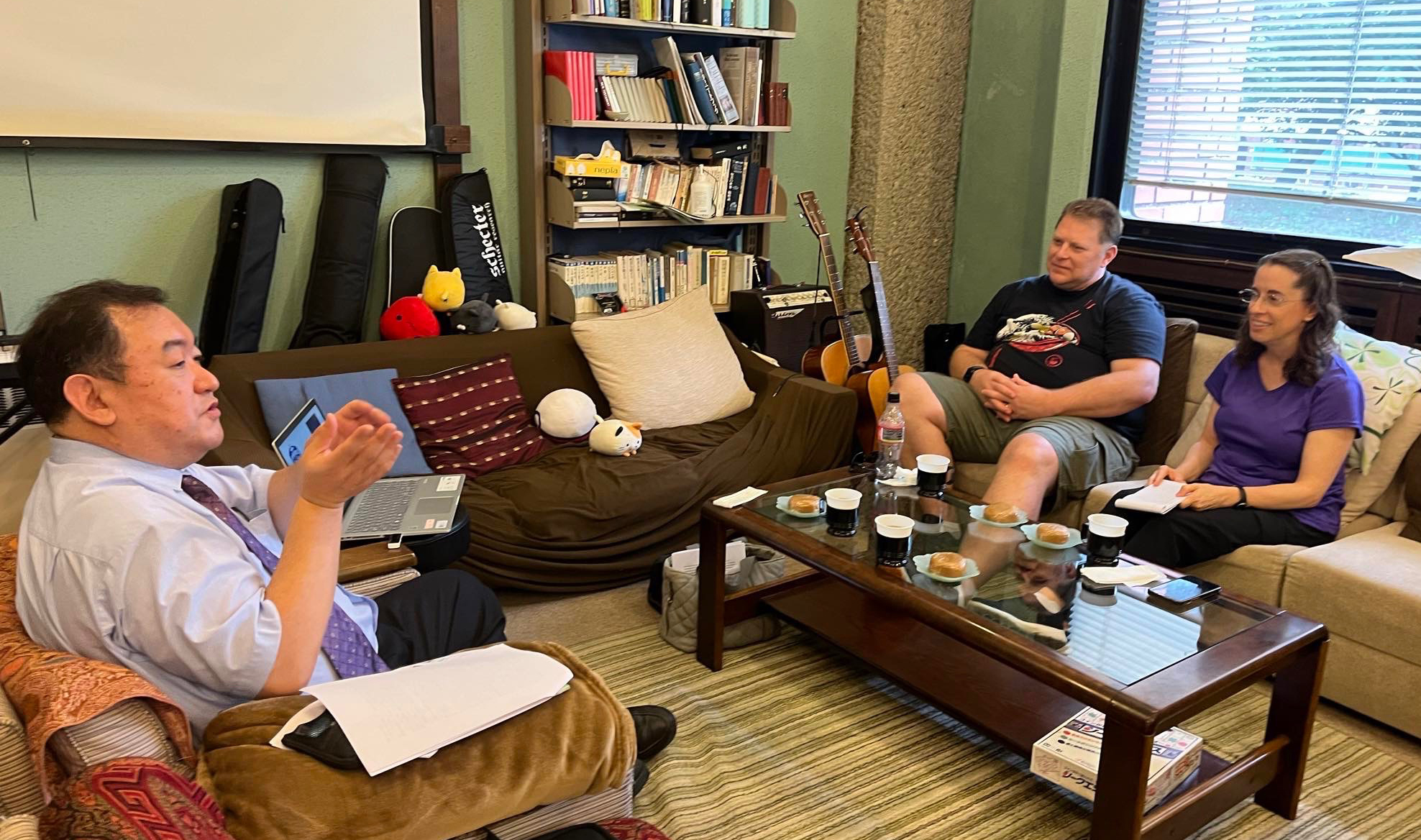
On Monday, Emily and I set out on a two-day excursion. Several people were planning to spend some time with us sharing their insights into Japanese culture and how it affects ministry and missions. They had some history of mission efforts in Japan to share with us as well. We rode the train into downtown Tokyo and headed for the Ochanomizu Church of Christ to meet with Tadayoshi Aikawa and Kazutaka Adachi. They shared some of the history of the churches of Christ, particularly in the Tokyo and Ibaraki areas, as well as some of the challenges reaching and ministering to young adults. The Ibaraki area is where most of the congregations are currently concentrated, and the map above really depicts that well. The ones listed in blue are all in Ibaraki, and the rest are scattered in clusters in a few other places. There is much work still to do!

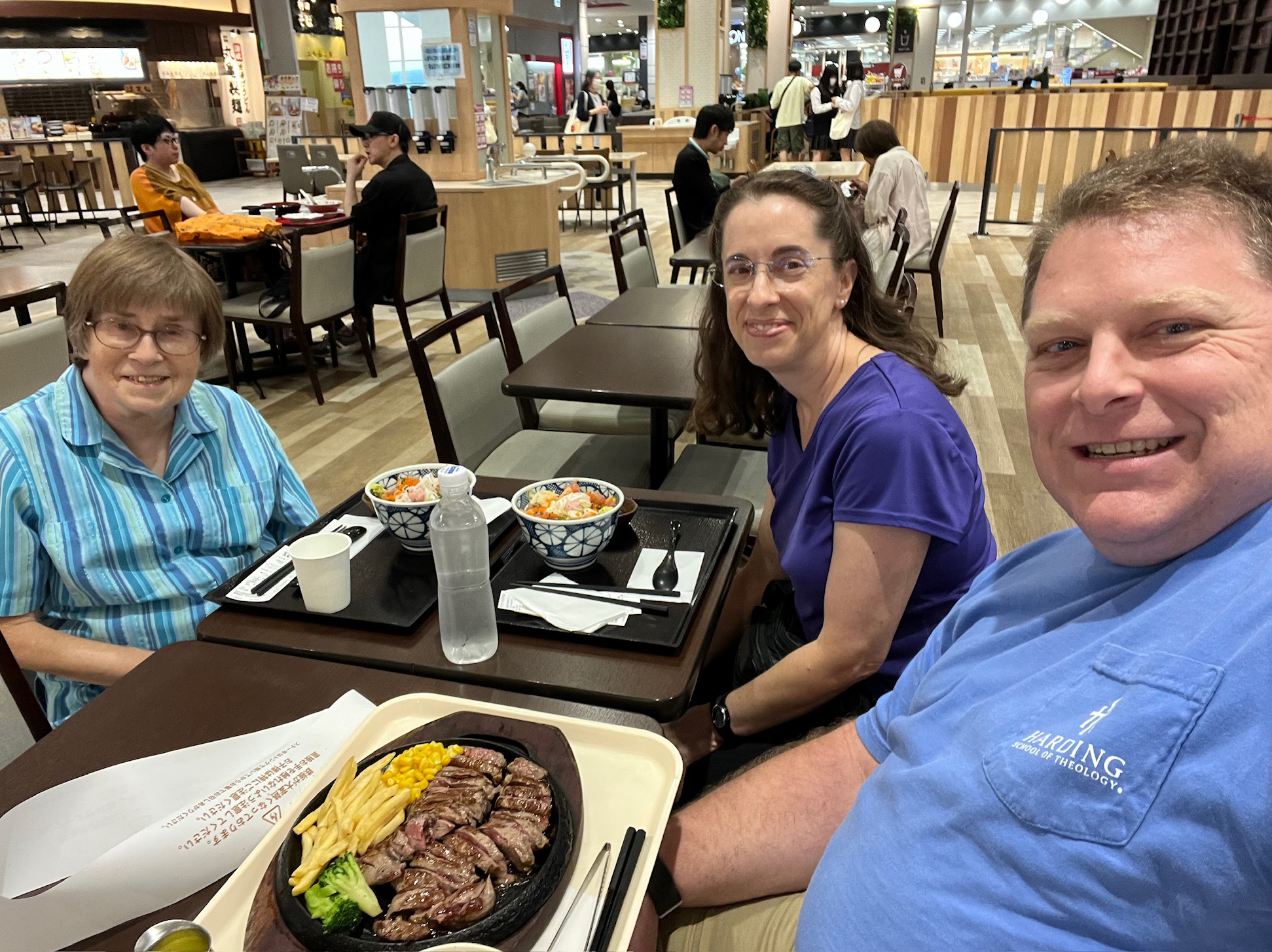
Before long, it was time to say goodbye to Ochanomizu and travel North by train to the town of Tomobe to visit with long-time missionary Jeanne Ray. We started with dinner in the local food court (pictured above). Her husband, Marlin, passed away about five years ago, but she is still continuing to work with the Tomobe congregation and stays busy with a number of outreach activities. She welcomed us into her home to stay overnight, and it was a wonderful time to relax and chat. After being in the big city for a while, it was nice to be in a place that was quieter and slower-paced. She fixed us a wonderful breakfast the next morning and delivered us to the train station for the next stop!

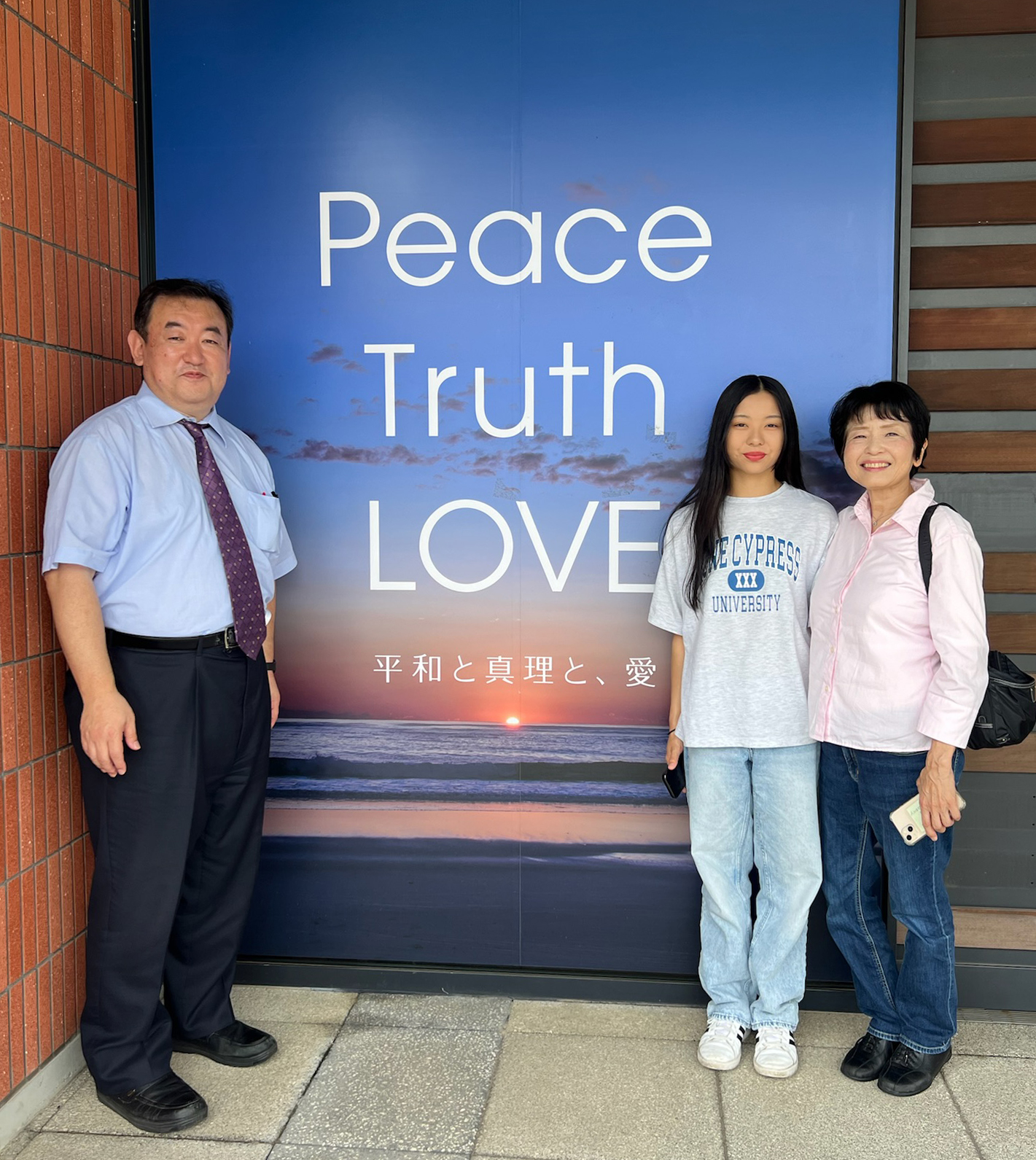
Most of Tuesday was spent in Omika, where Ibaraki Christian University is located. It is a well-known school with about 2,000 students enrolled in a variety of college programs including Education, Nursing, and Engineering. They have grade schools and kindergarten as well. However, despite the university’s name, very few students are Christians. We spent some time with Yoshiya Noguchi, who serves as the campus chaplain. He is also the main preacher for the Ochanomizu congregation back in Tokyo, for which they make the commute to Tokyo each week.

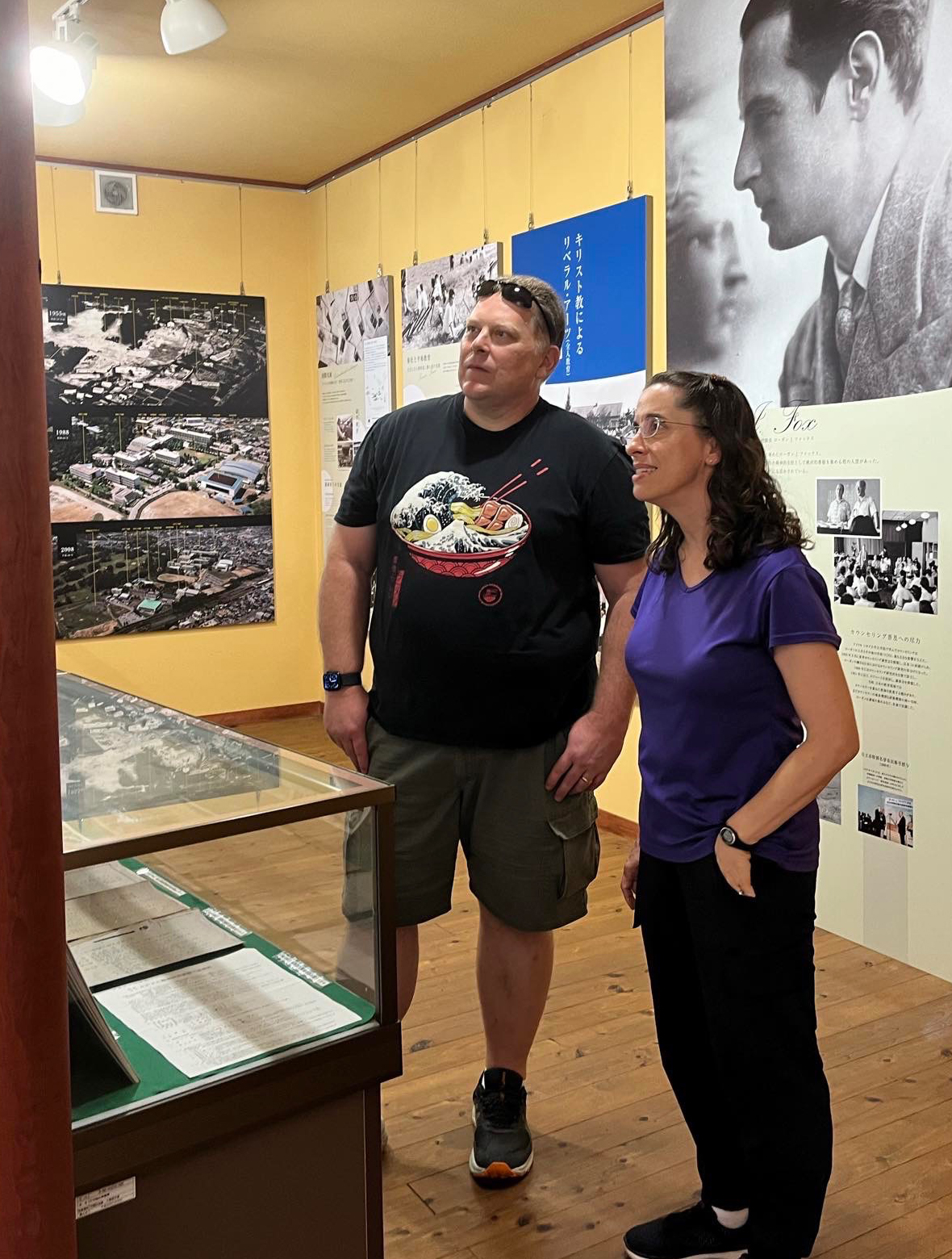
Yoshiya continued the history lesson, with emphasis on ICU and the missionaries who started several congregations in the area. We were able to tour a museum on campus which gave biographies and other information about past mission efforts. He gave us a tour of the campus (and the ocean view from the 4th floor of one of the buildings!) and also welcomed us to a sweet chapel service for the students. Though it was lightly attended, I still felt the passion that Yoshiya has toward reaching the student body here.

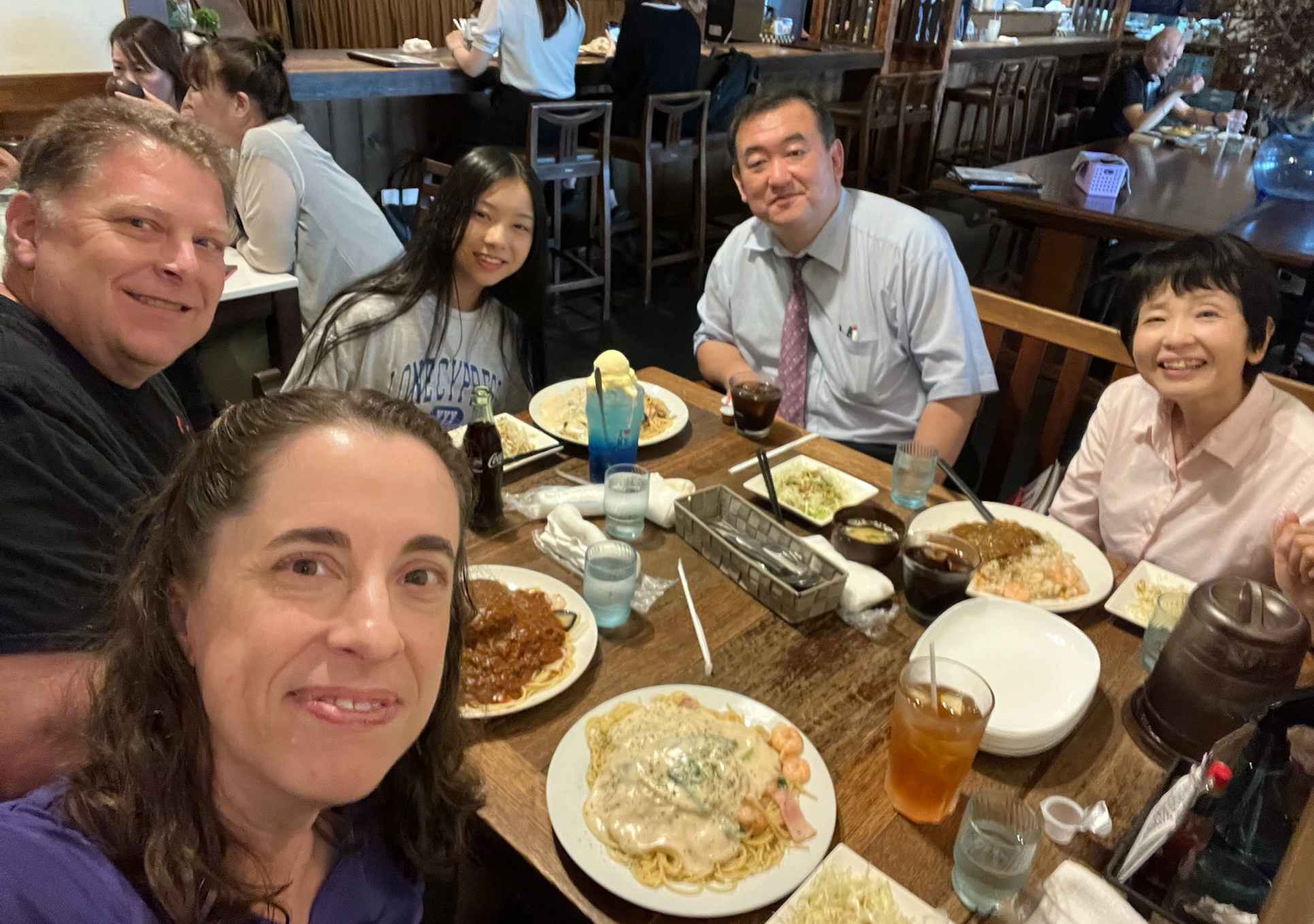
Yoshiya and Emiko’s daughter Hannah was also around, and it was good to reconnect with her a bit as well. She is attending Harding University (having just finished her freshman year), and stayed with us in Memphis on a couple of occasions when the dorms were closed for holidays. And, of course, we were treated to a wonderful spaghetti lunch (though rather Japanese-style) at a local restaurant with the Noguchi’s. None of us knew what to expect, and we were all surprised at how large the portions were! It was a delicious way to spend some time in fellowship with these dear ones.

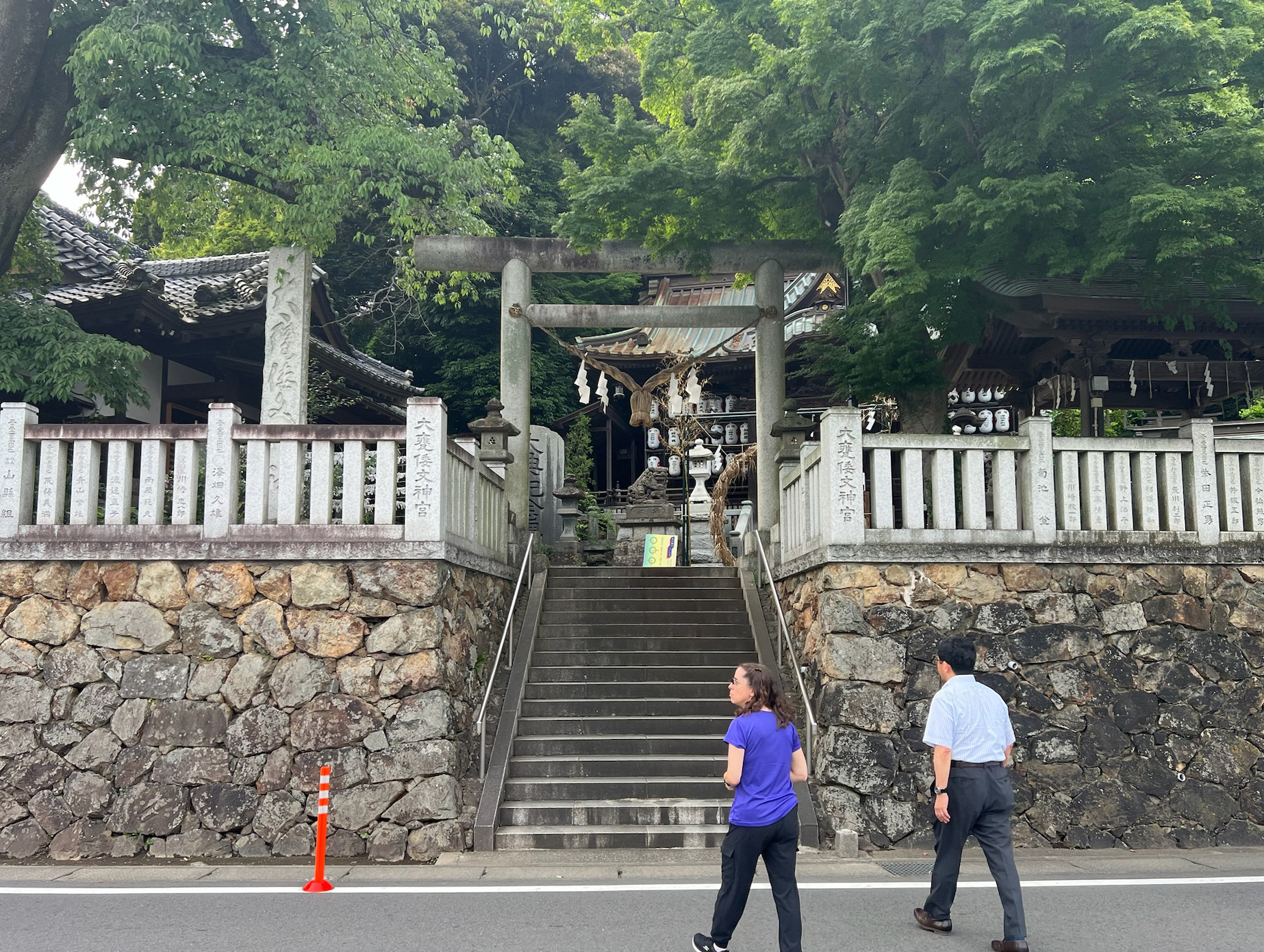
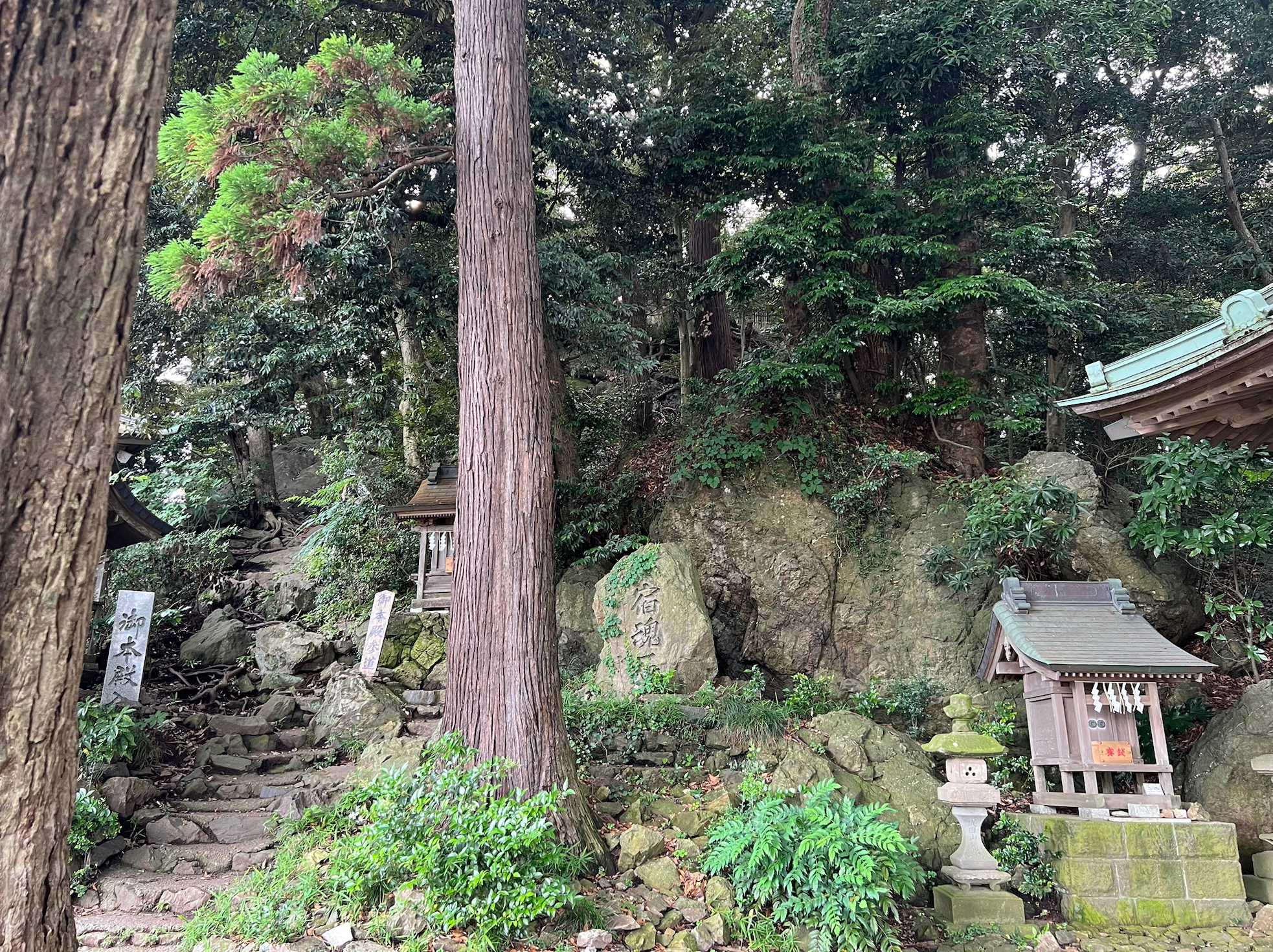
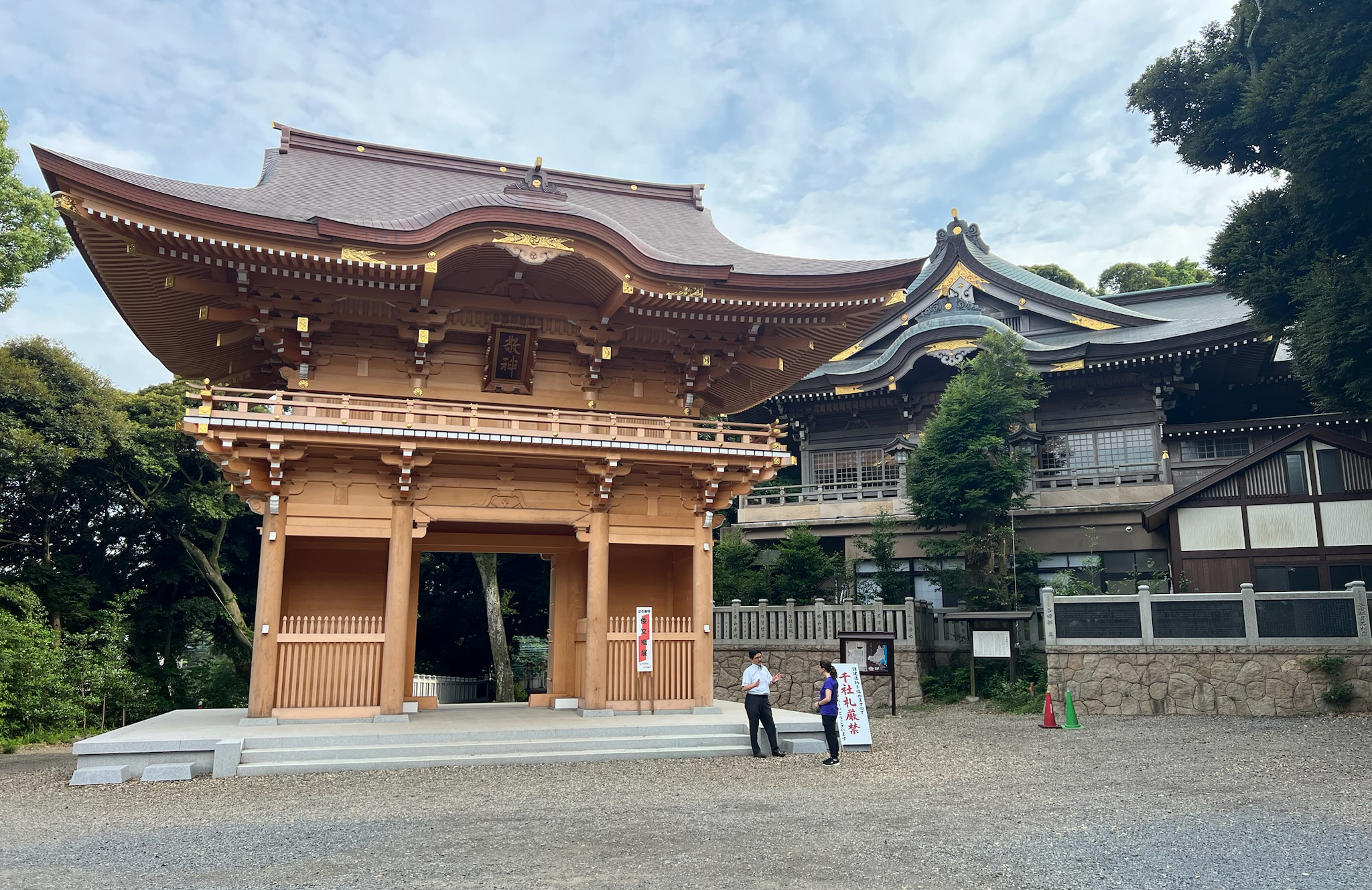
Before long, Yoshiya passed us off to Yukikazu Obata, who is one of the professors at ICU. He is a long-time church member and past preacher, and the son of Shiro Obata, minister for the Haruna congregation (and Ochanomizu for many years before that). Yukikazu brought one of his elementary education students with him, and we chatted about what it takes to be a teacher in the US vs Japan, and some of the cultural influences that make it different both ways. Afterwards, we toured the nearby Omika Shrine. This is a Shinto shrine that some people claim has been around for over 2,600 years. The current buildings aren’t that old, of course, but if you look closely at the second picture there is a stone stairway that leads up to a large boulder at the very top of the hill. Natural formations which are particularly conspicuous are venerated in Shinto with some people believing that a deity must inhabit such a unique structure. Many of the buildings there were indeed old, but they had also just erected a new gate structure (the golden-brown one) in the last several years to add to the importance of the site.

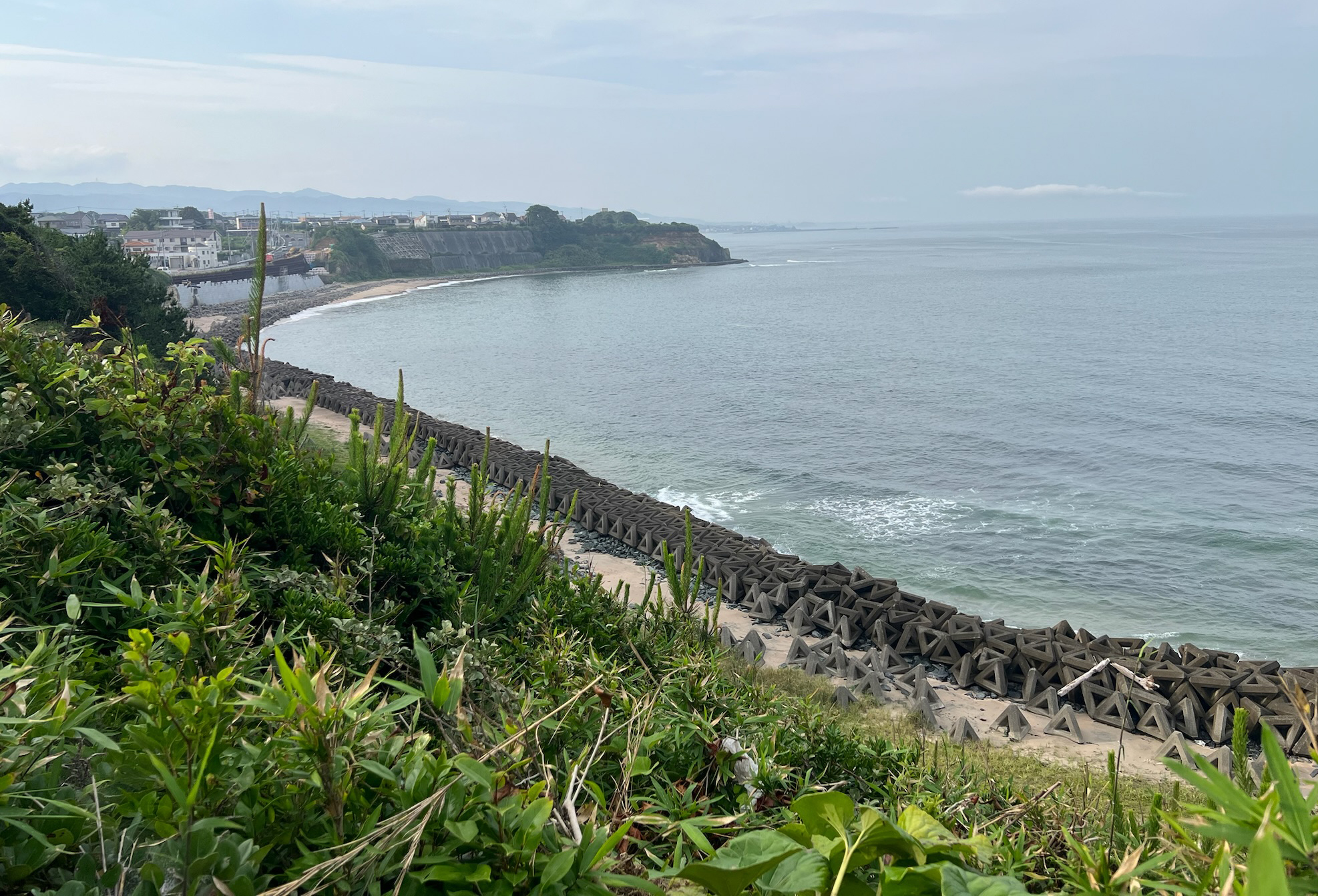
Yukikazu helped us understand just a little bit more about the Japanese mind when it comes to religion and culture. For many Japanese people, Shinto isn’t really thought of as a religion at all. Instead it is just part of being Japanese. It is still quite a mystery to us western-style thinkers, but we are learning slowly. After walking the shrine grounds, we visited a park overlooking the ocean and continued talking about Japanese culture. It was a pleasant afternoon, and we enjoyed the time together.

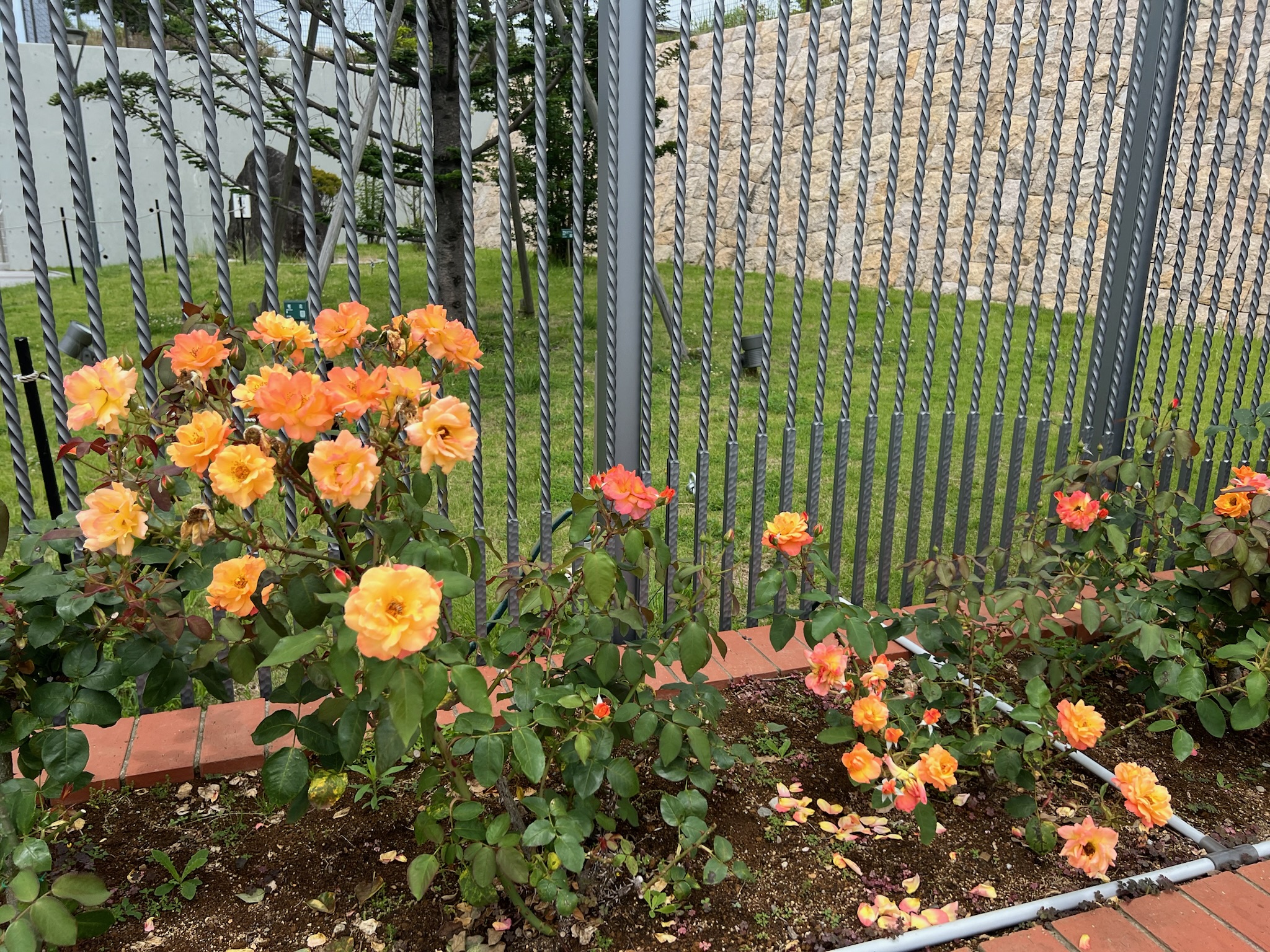
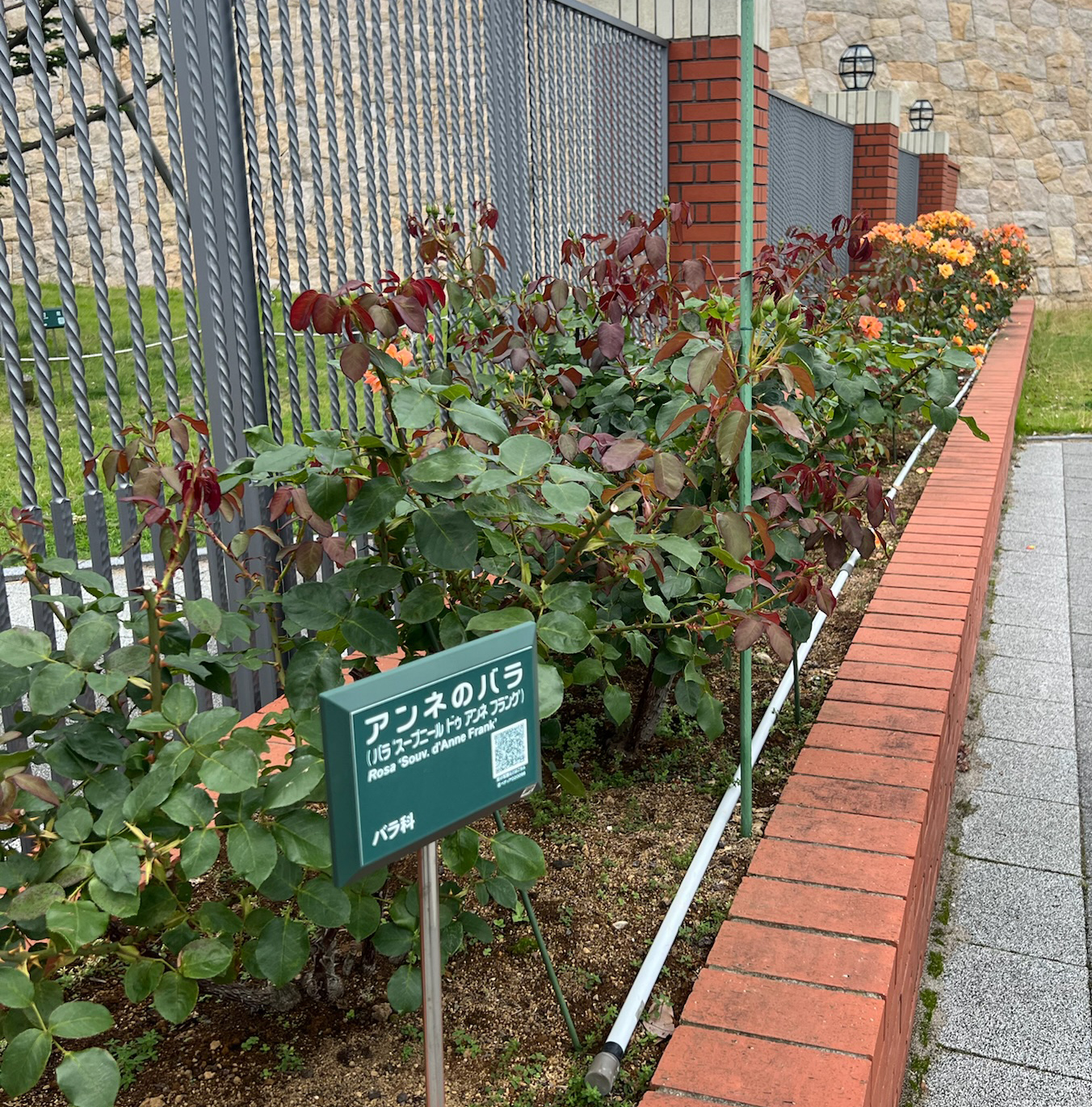
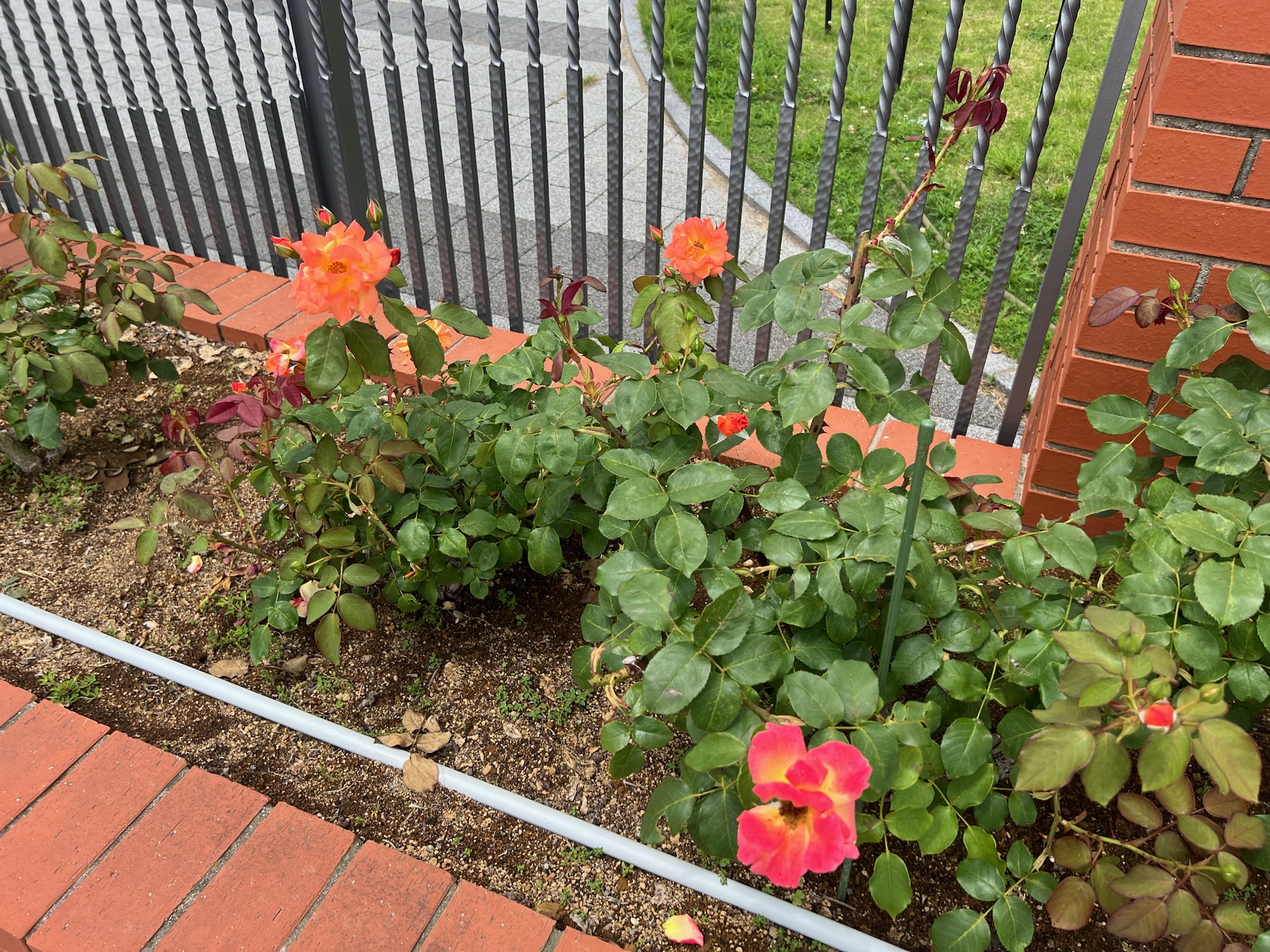
And for our parting shot this week, here are some images of the “Anne Frank Roses” at the front gates to the Ibaraki Christian University campus. This species of rose was developed in Belgium in the 1950’s, and was eventually named after Anne Frank in hopes that its blooms would inspire peace around the world. It is an interesting variety because its flowers change color over time. The bud starts out dark red, then it is a vivid orange when in full bloom. Over time, as it is exposed to sunlight, the petals shift toward a pale salmon pink before returning to a shade of red. There are blooms in each stage at any given time, so it makes for a neat variety of colors and textures. Also, it is a rose that blooms year-round, making it a great reminder of the need for peace in the world. For Yoshiya Noguchi, it is also a reminder of the peace between God and man offered by faith in Jesus. Amen!

~ Clay
<– Return to the Week Two Report

Jump to the Week Four Report –>

A Beautiful Second Week

Clay preaching, Nao Fukushima translating

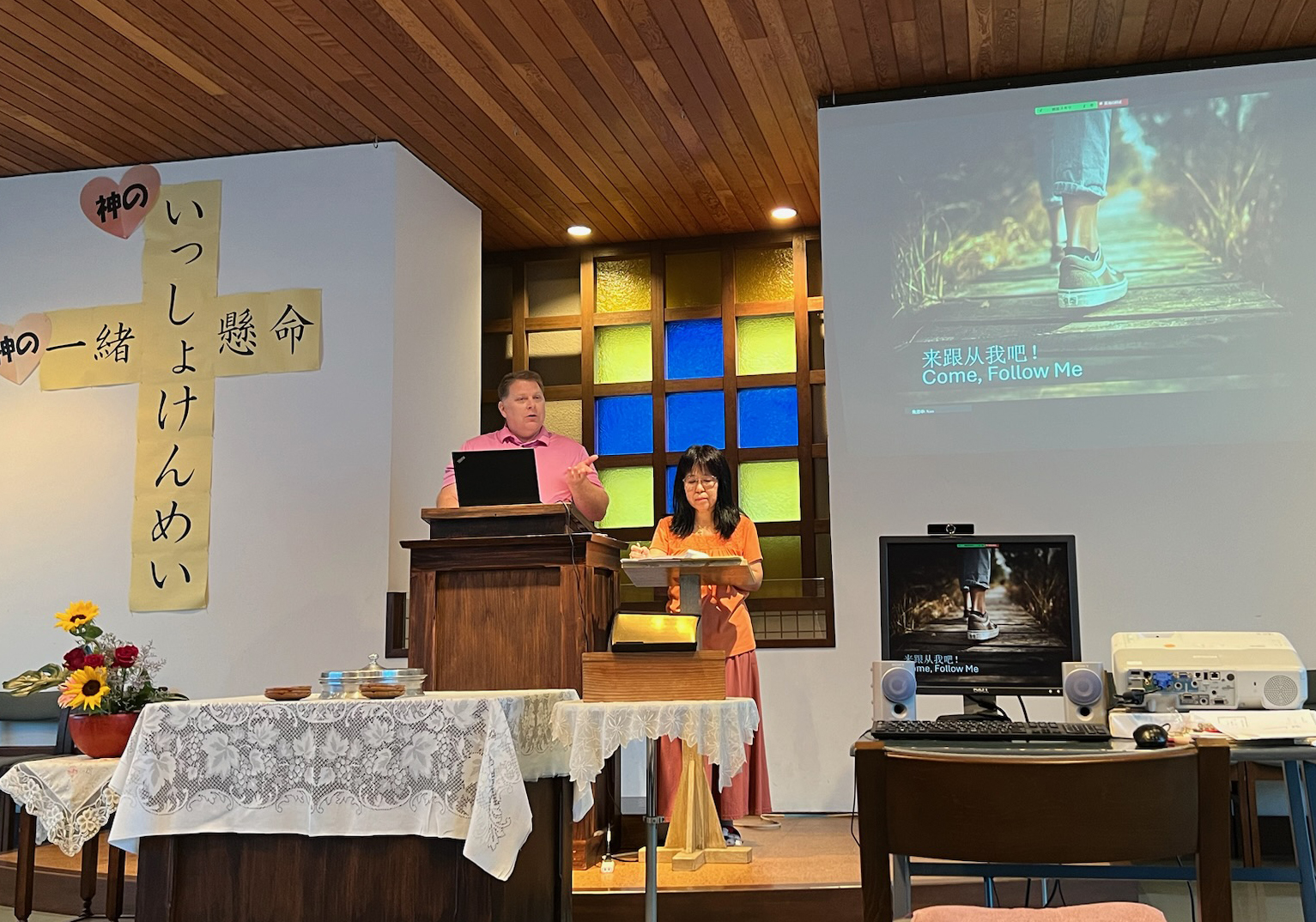
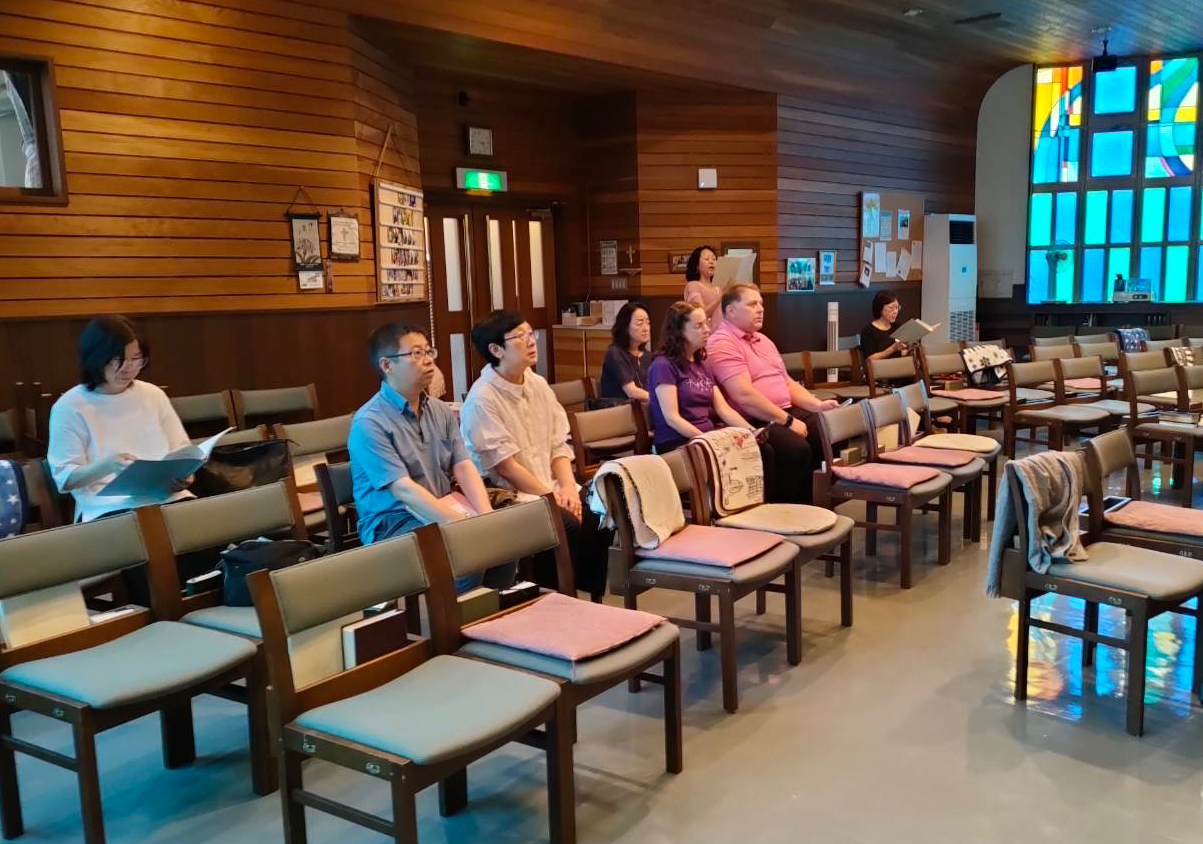
Our second week in Tachikawa held some wonderful moments, both planned and serendipitous. I will be preaching three Sundays while we are here, and this week was the first of those. “Come, Follow Me” was the title and I hope I was able to effectively communicate how following Jesus’ call is much more than simply attending church on Sunday and waiting for heaven. We follow Him best when we do the things He did and become fruitful parts of the church whole. Several members were eager to chat afterward about the message, and they expressed how it encouraged their faith. God be praised!

This week saw the beginning of our English conversation times. While the number of people who signed up isn’t overwhelming, God has placed a number of individuals before us and we are thankful. Emily and I have thoroughly enjoyed getting to know each one, and the interactions we get to have are sweet and encouraging. I know that many of you are praying for them by name, and we are grateful for your participation in this ministry from wherever you are! We continue in prayer for these precious souls that they gradually begin to see God’s love for them through time spent with us.

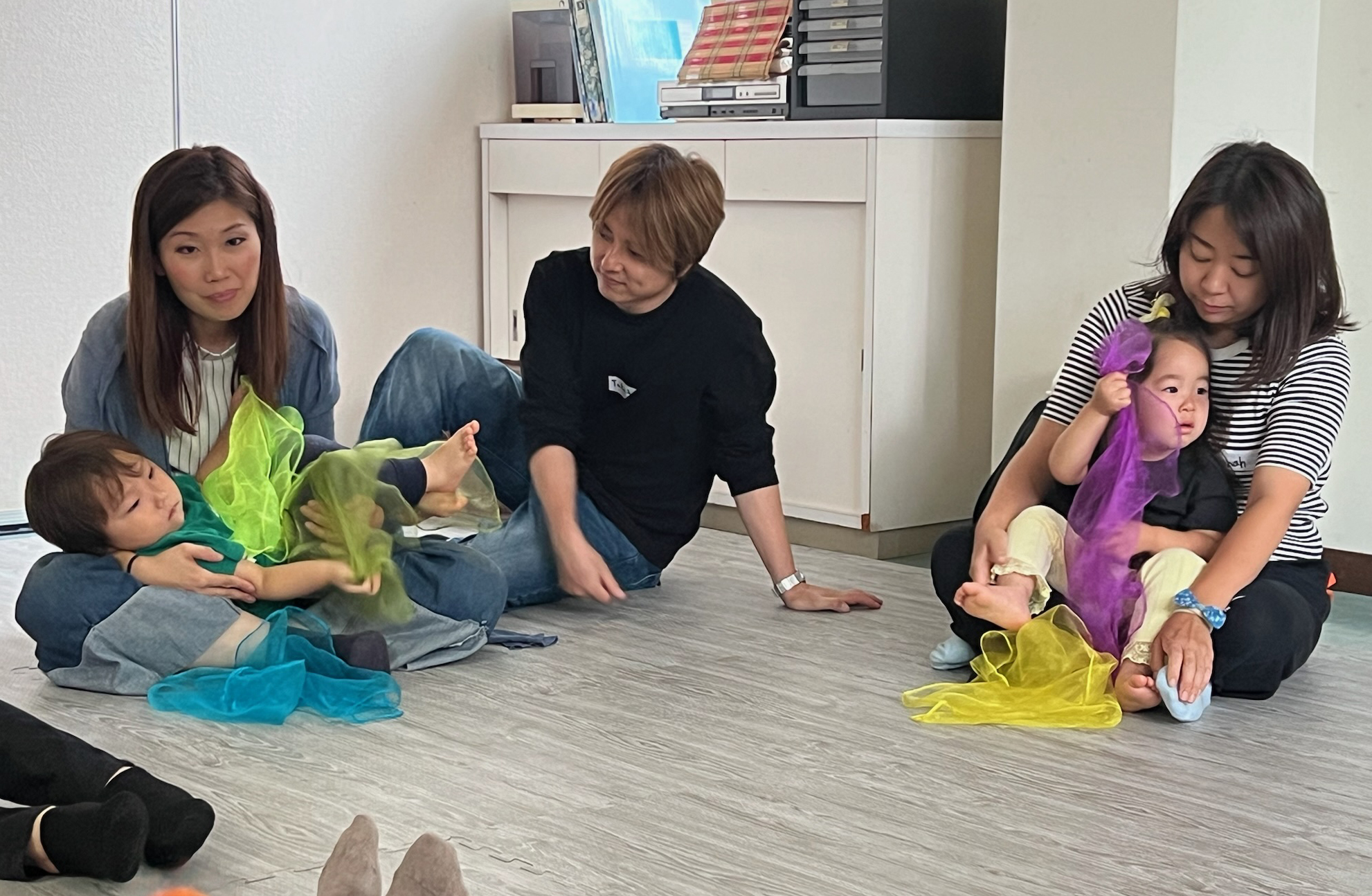
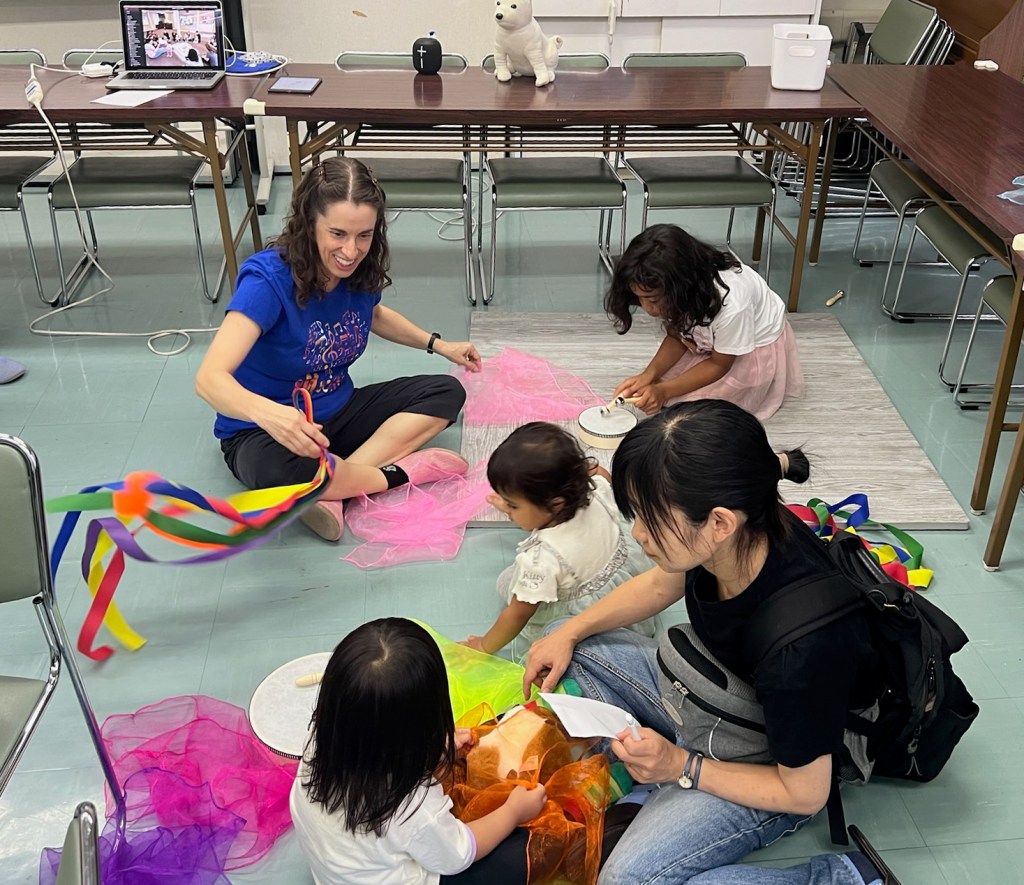
Family music classes also got off to a great start! It is a brand new experience for all of these children, but they jumped right in and sang and danced and enjoyed themselves greatly. I saw plenty of smiling mom and grand-mom faces as well! Music has such a power to bridge gaps between people, and we are hopeful for some of the relationships which can be formed or strengthened during this time. In particular, we pray that two of the moms who are church members can deepen friendships with the other young mothers who are coming. After Emily and I return to the US, this would be the greatest outcome of our trip if these relationships persist going forward. Please pray to our Father that this can be so!

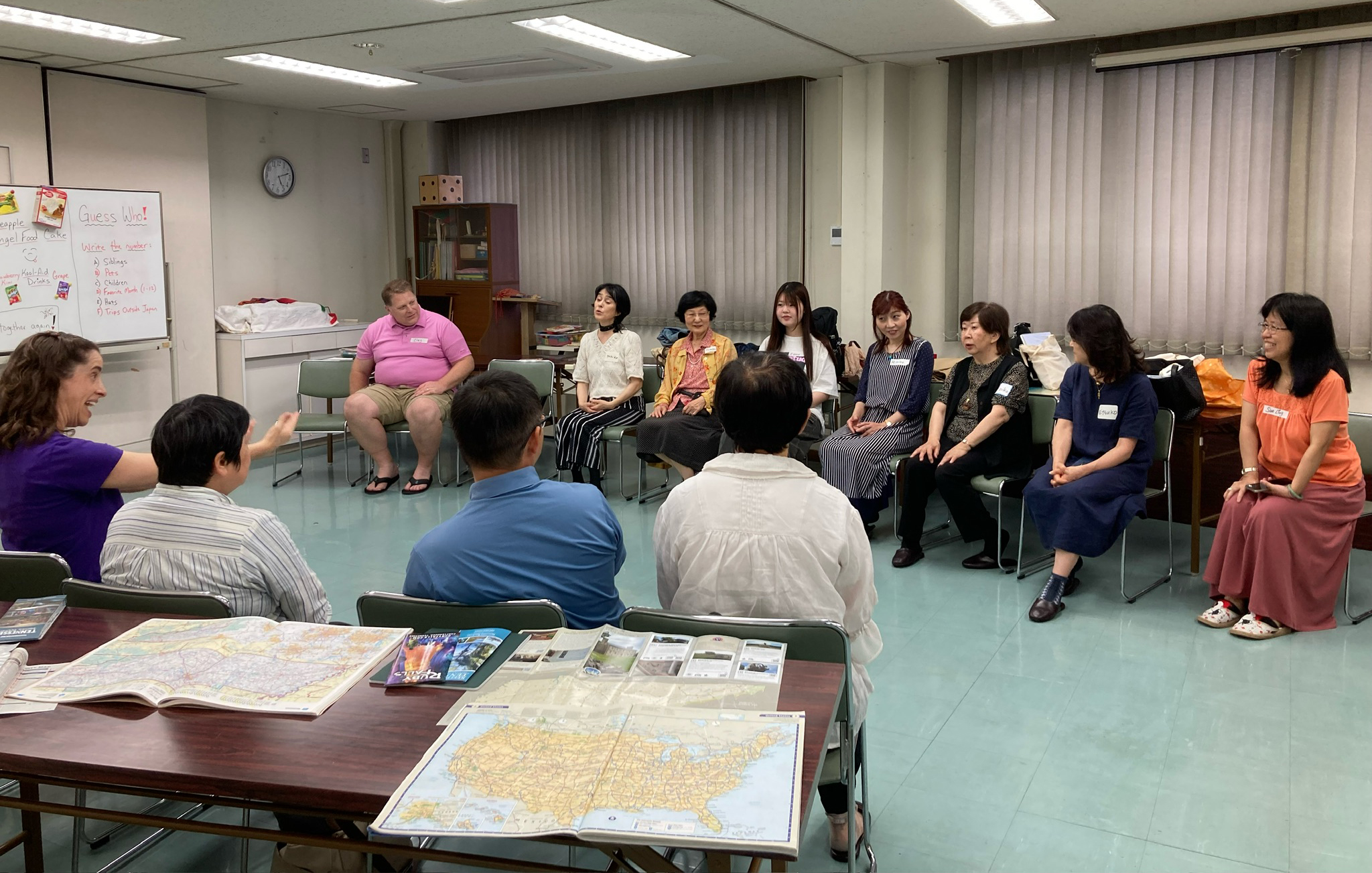
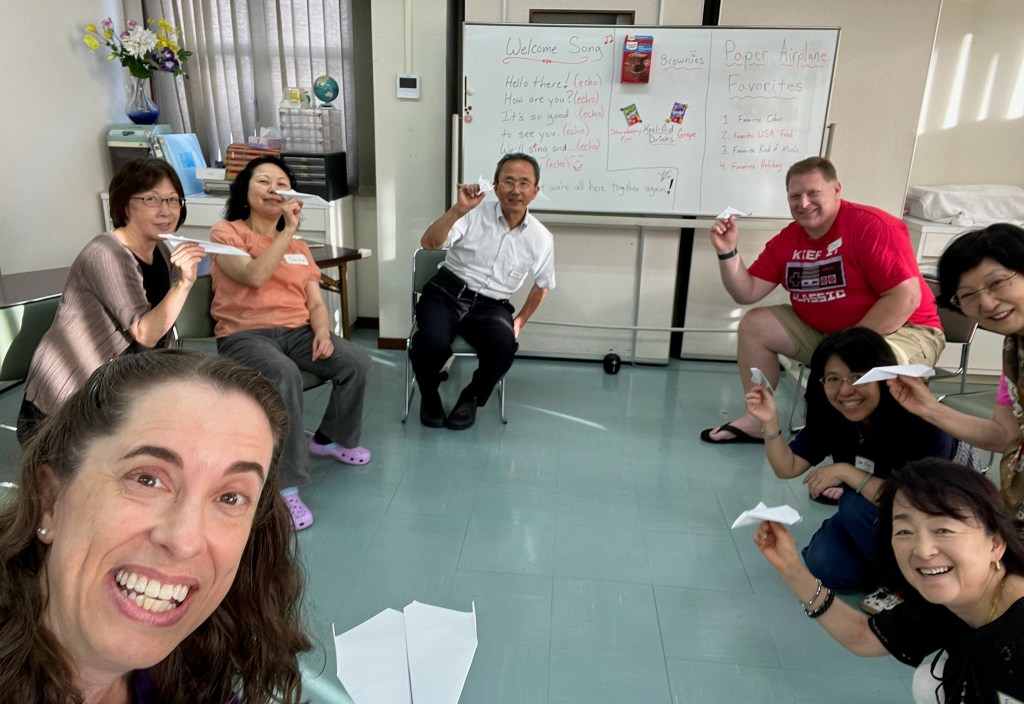
Each Sunday afternoon, we are hosting a “Casual Party” and hoping that both English readers and Tachikawa church members will come for fun, games, and fellowship. We have a small American snack prepared and spend time chatting and getting to know each other as well as playing some “getting-to-know-you” games. This week we each anonymously answered four questions about ourselves, folded the answers into a paper airplane, then sent the page flying across the room. Everyone picked up the airplane that landed closest to them and unfolded it, and then we went around the room reading out the answers and trying to guess who had thrown that piece of paper. Everyone had such a good time! We are hopeful that more readers and church members can join us in the coming weeks.

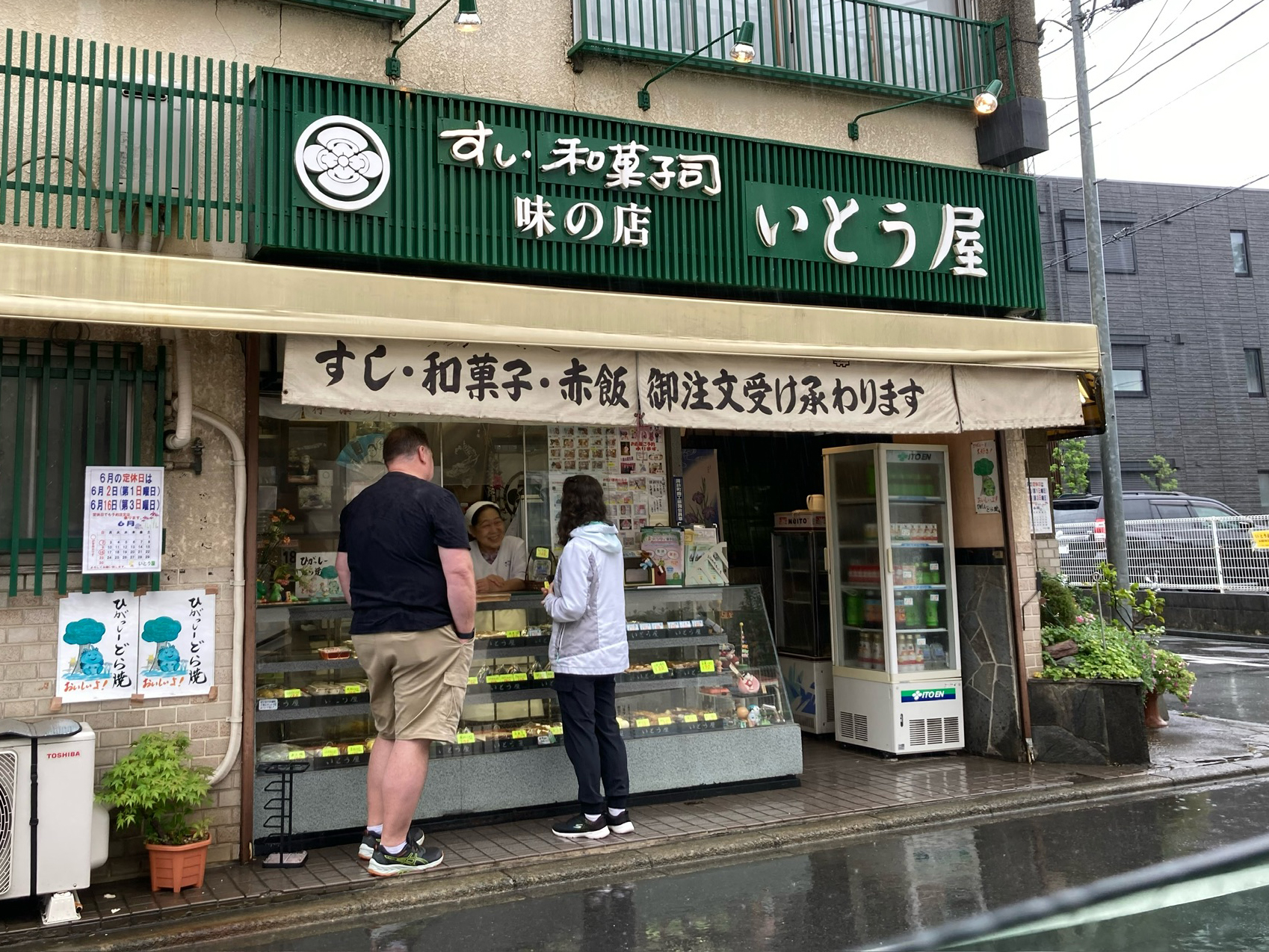
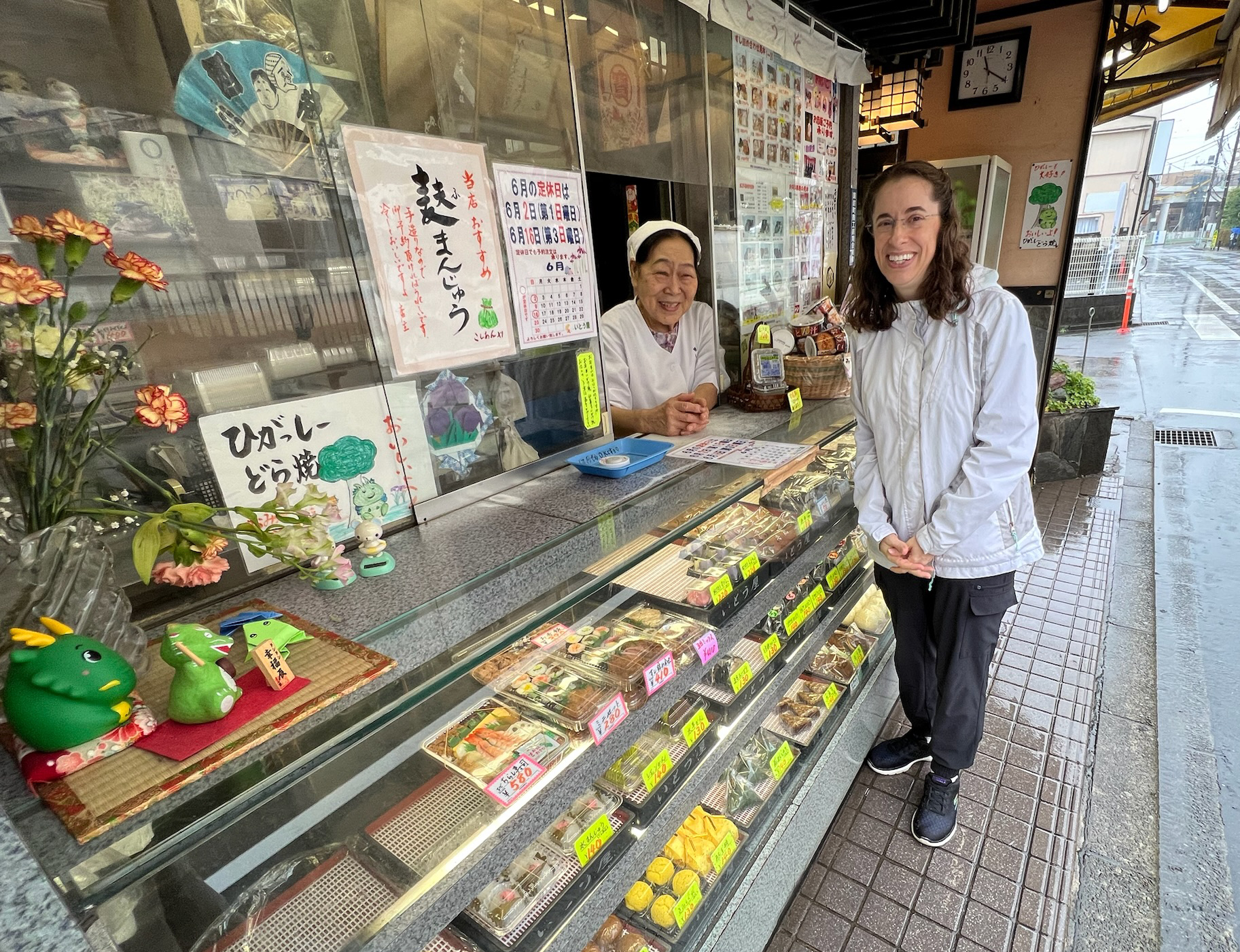
Although the main focus during our time here is working with our English conversation and family music friends as well as encouraging the Tachikawa church, we have had a couple of chances to get out and about. Many of you know that Emily spent a large part of her childhood in Japan. Part of that time, they lived in Higashimurayama, another Tokyo suburb near Tachikawa. Often, they would walk past this “wagashiya” (Japanese snack shop) and sometimes get a little something on the way to or from the train station. When we came as a family in 2017, we were able to find it again and the sweet family that runs it was still there. So, this week Noriko Fukushima drove us by to check it out and we stopped by for a little visit. Such a sweet lady! We bought a few munchies, but then she bundled up several more free of charge. Her mother, who would probably have recognized us better, was doing well at age 88 but no longer comes in the shop everyday. It was fun getting to see the place again and feel the warm encouraging smile that this woman gives out daily.

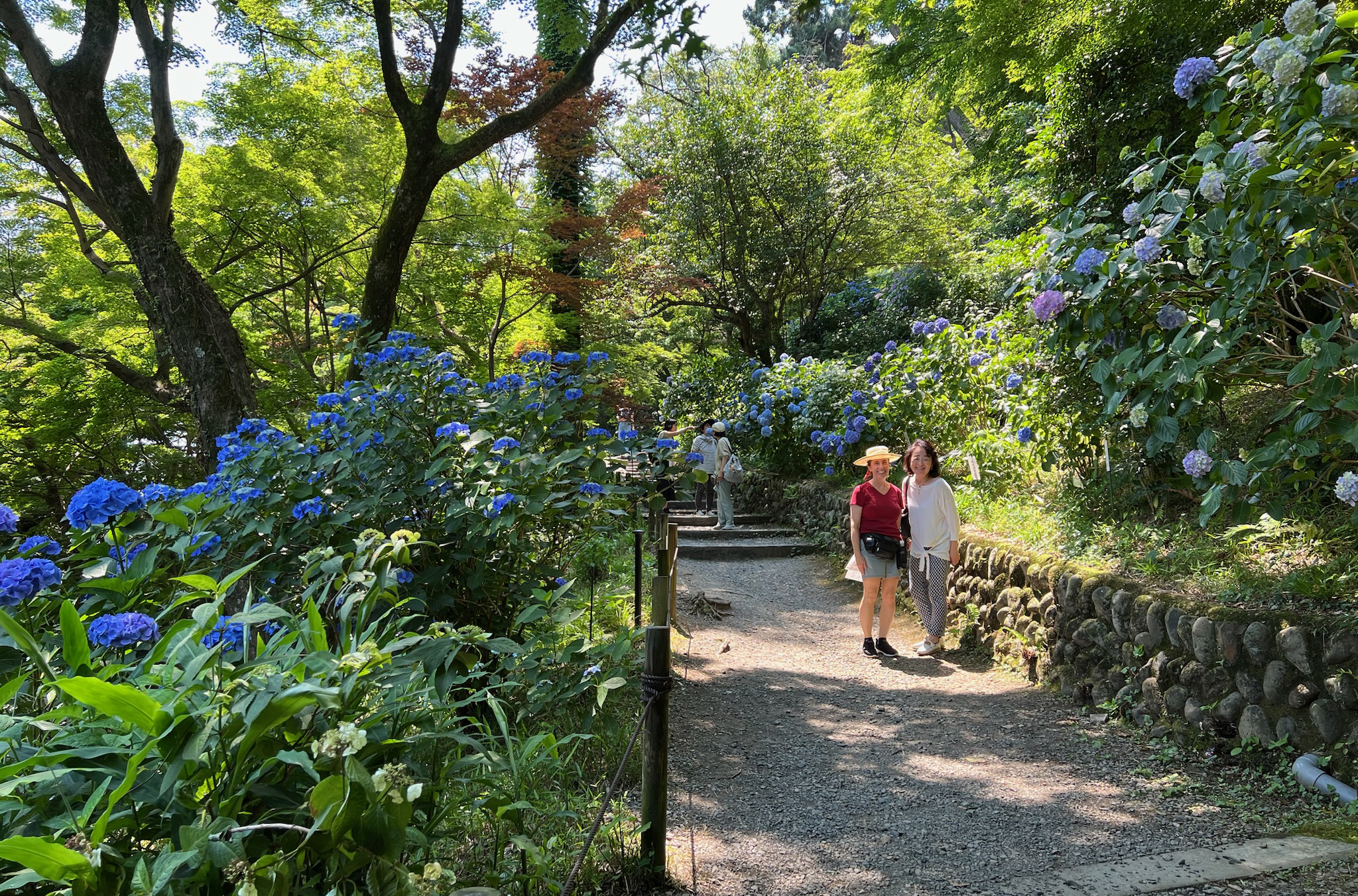
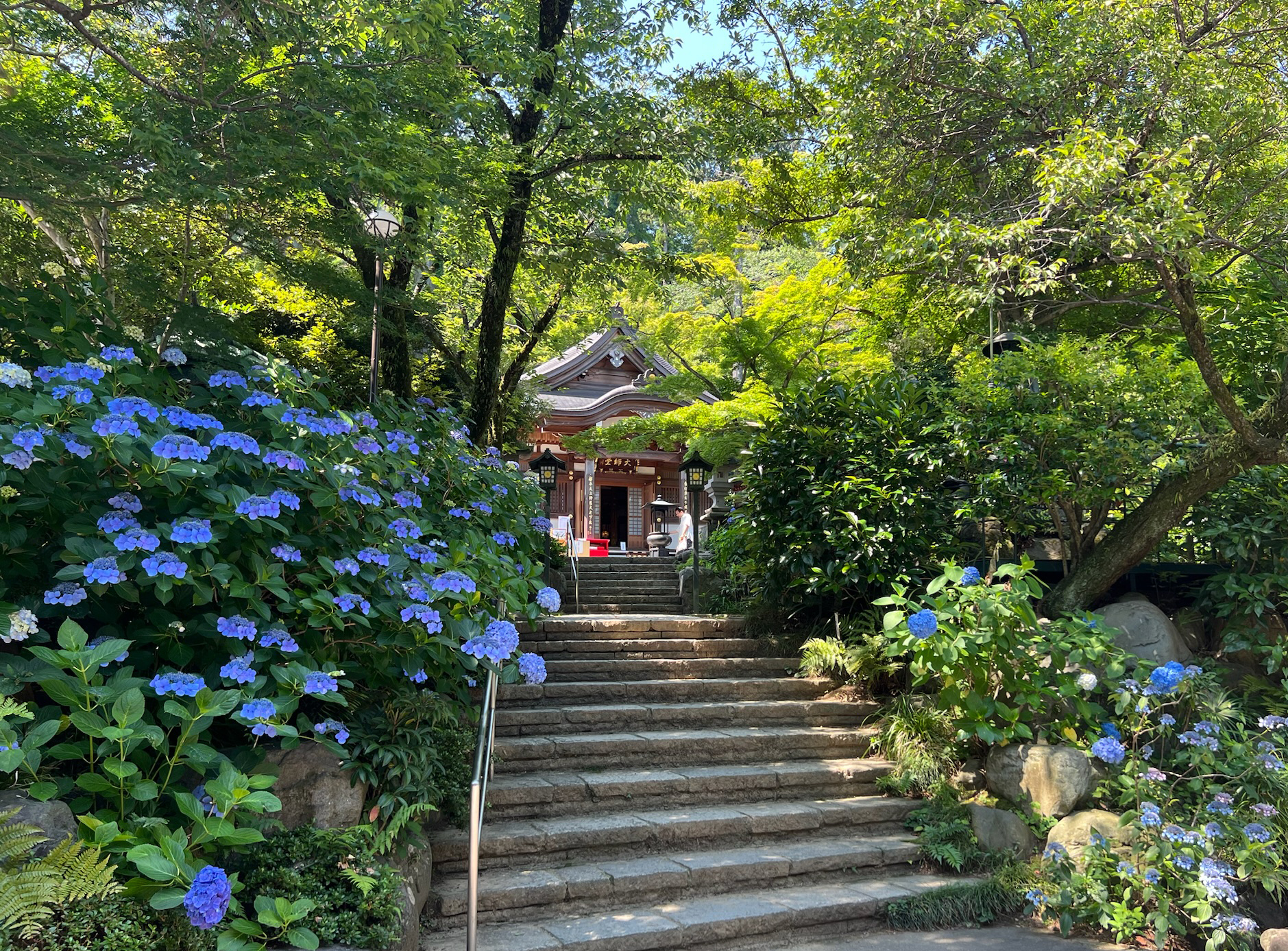
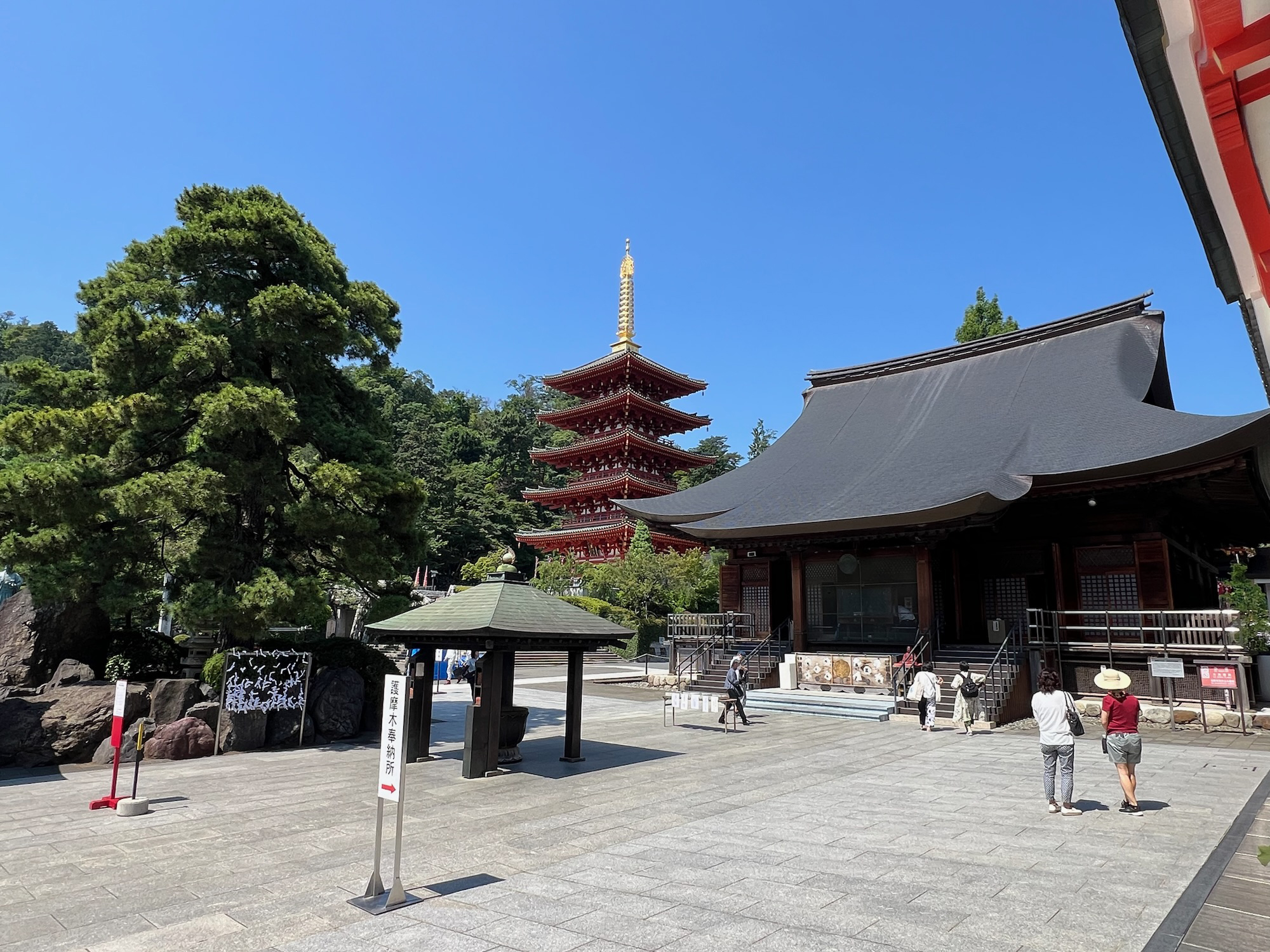
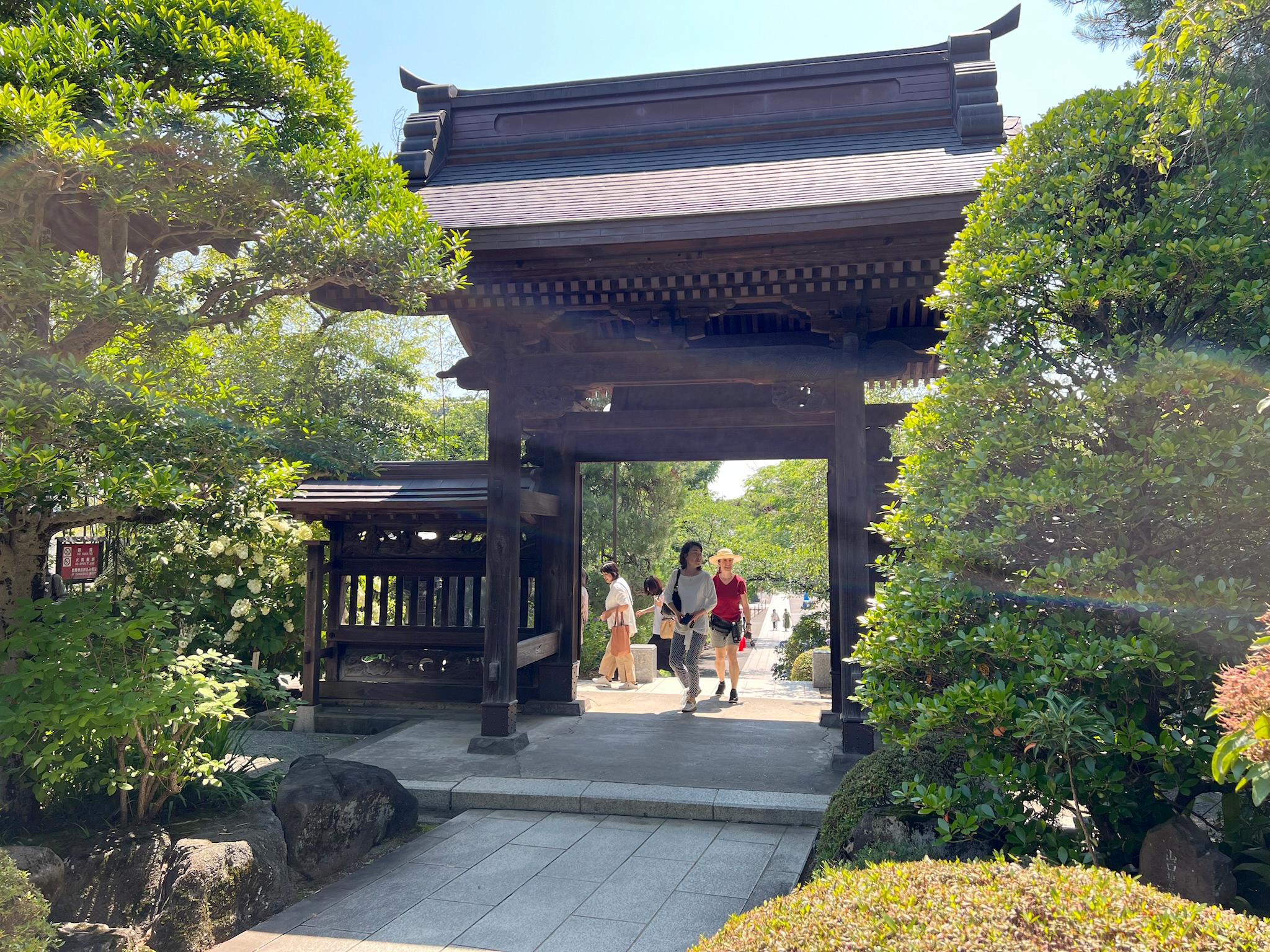
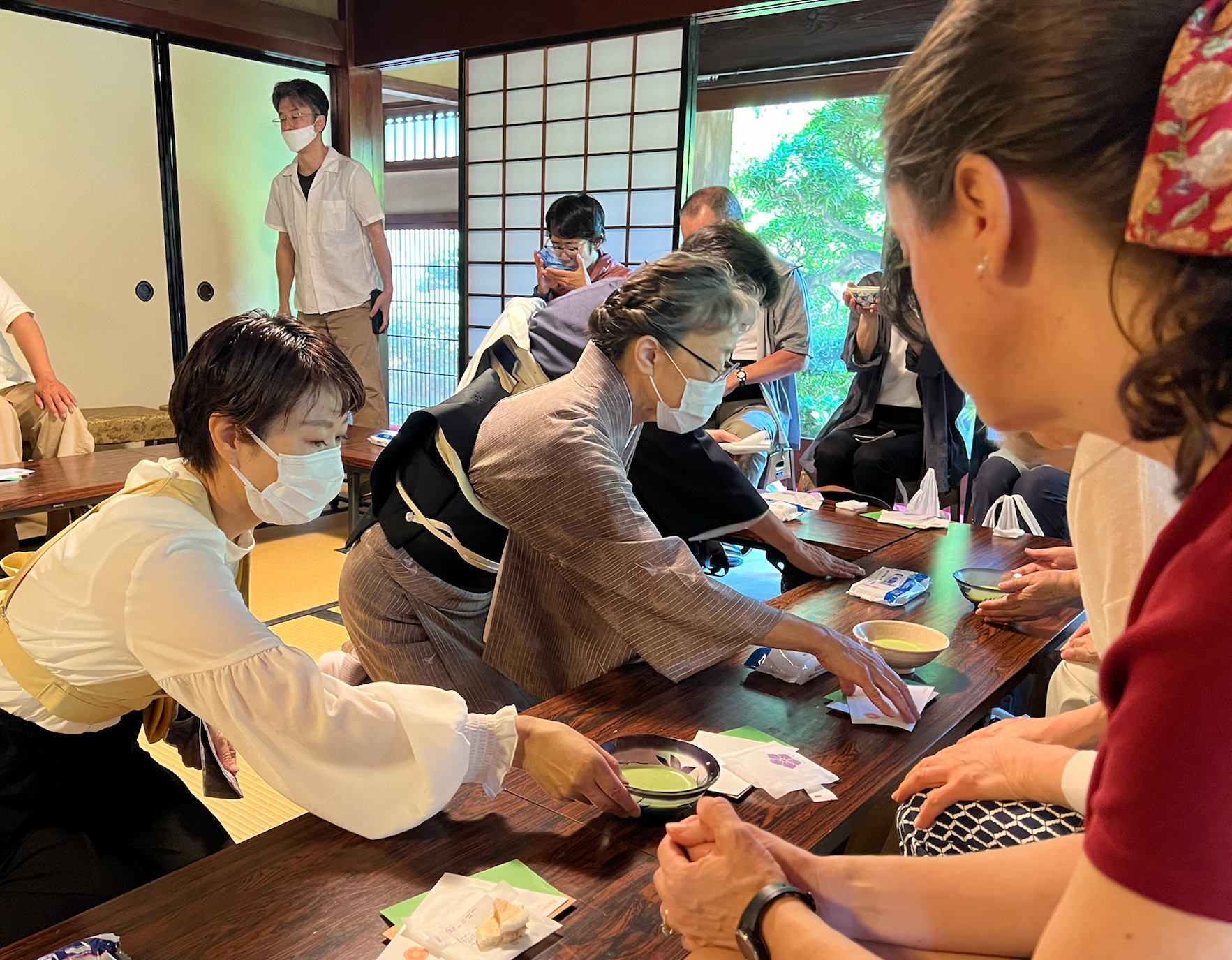
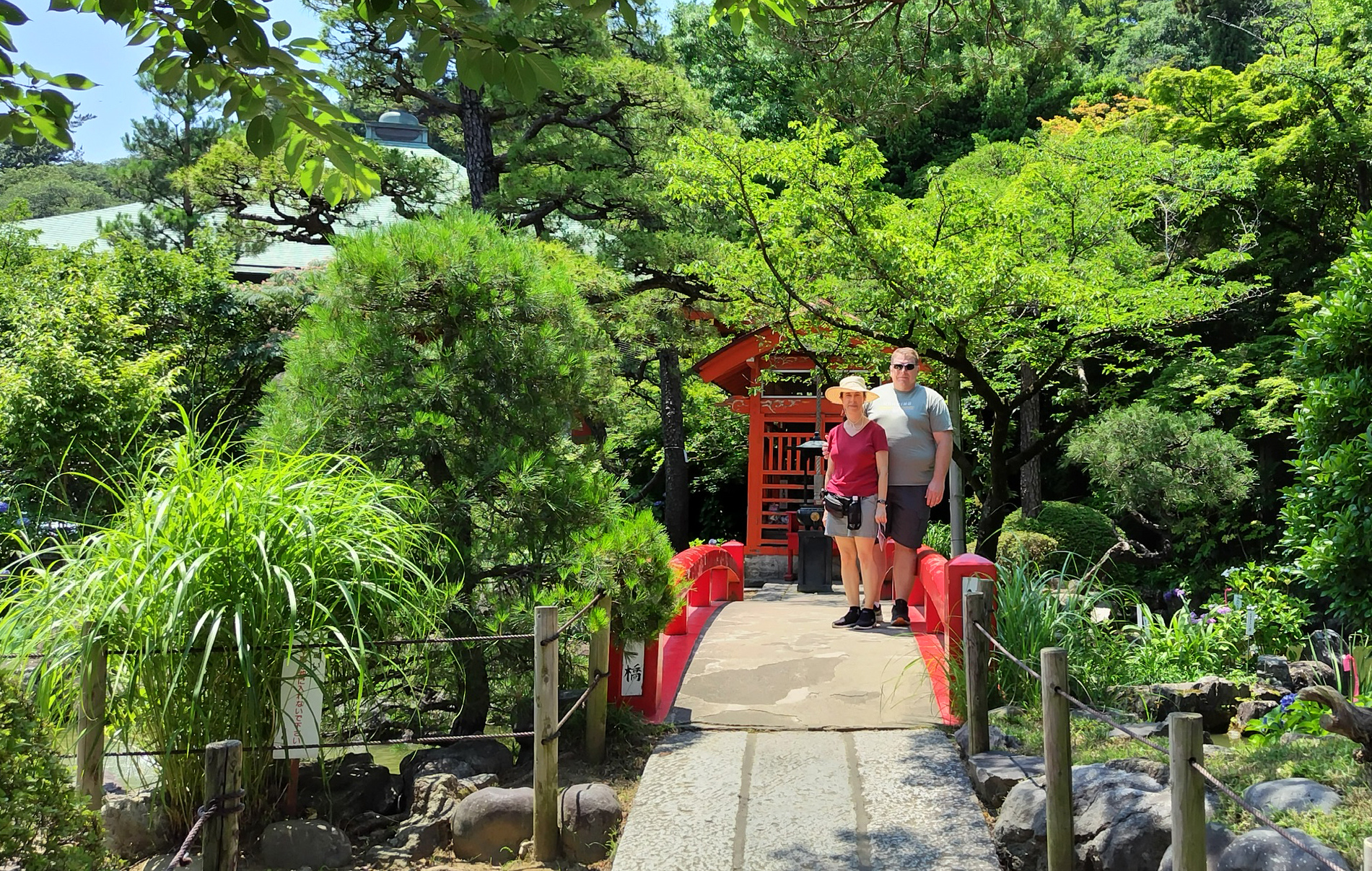
One of Emily’s readers (who began visiting Sunday worship just two weeks before we arrived) invited us to spend a morning viewing the “ajisai” (hydrangea) near her home. The Takahata Fudoson shrine and temple complex is well-known for their ajisai gardens, so it was also a chance for us to experience some Japanese culture. Some of the buildings are over 1,000 years old. It’s a little sobering thinking of the head start that Shinto and Buddhism have in this culture, but our Lord is King and we have faith that He is sovereign, and that includes Japan. The grounds were beautifully arranged with blooms of many different colors and we enjoyed seeing the great variety – sometimes right on the same plant! We also participated in a traditional Japanese tea ceremony while we were there. It was a beautiful morning spent with this precious faith seeker, and we are hopeful that she will grow in her response to the Spirit’s prompting in her heart.

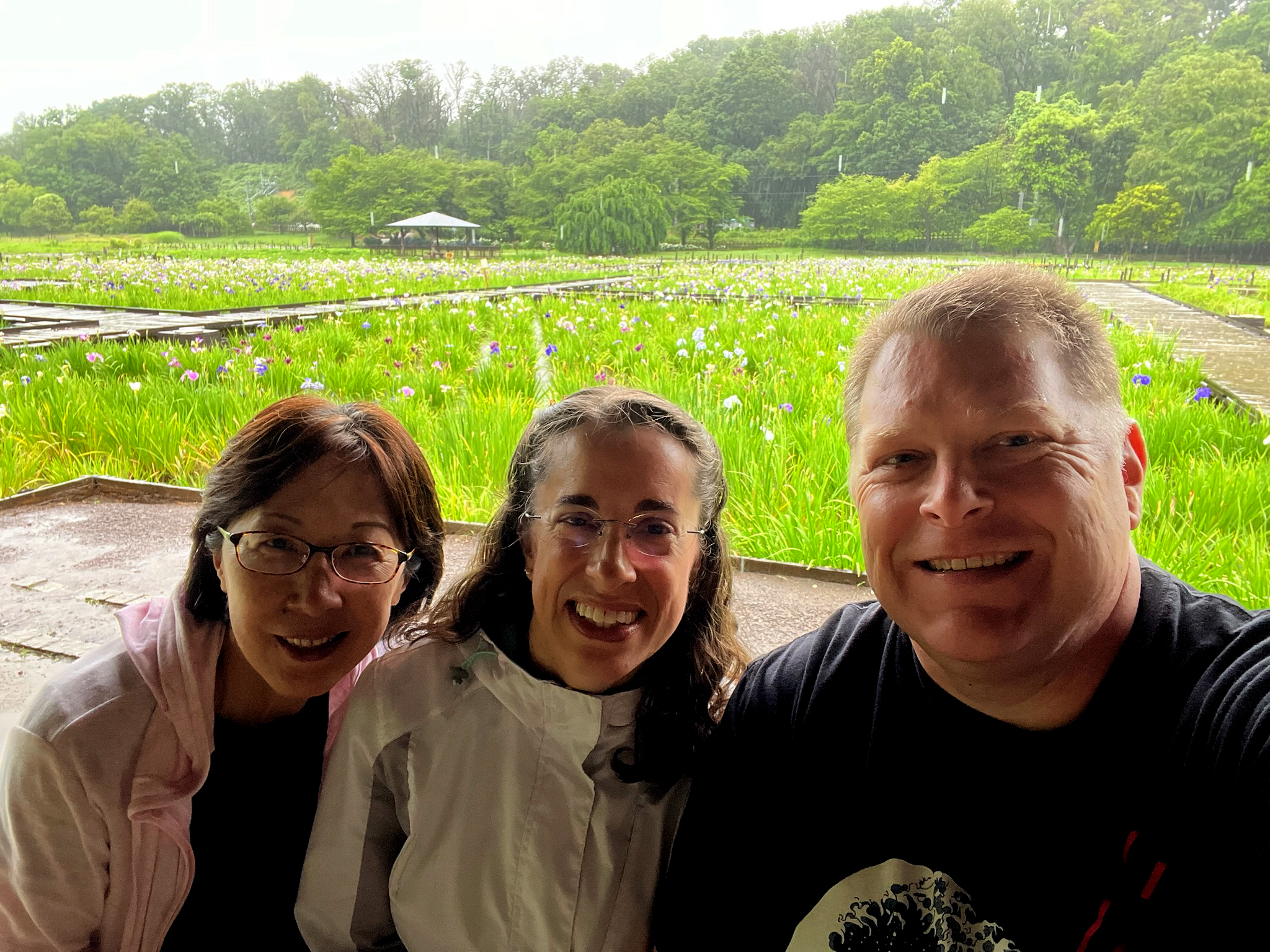
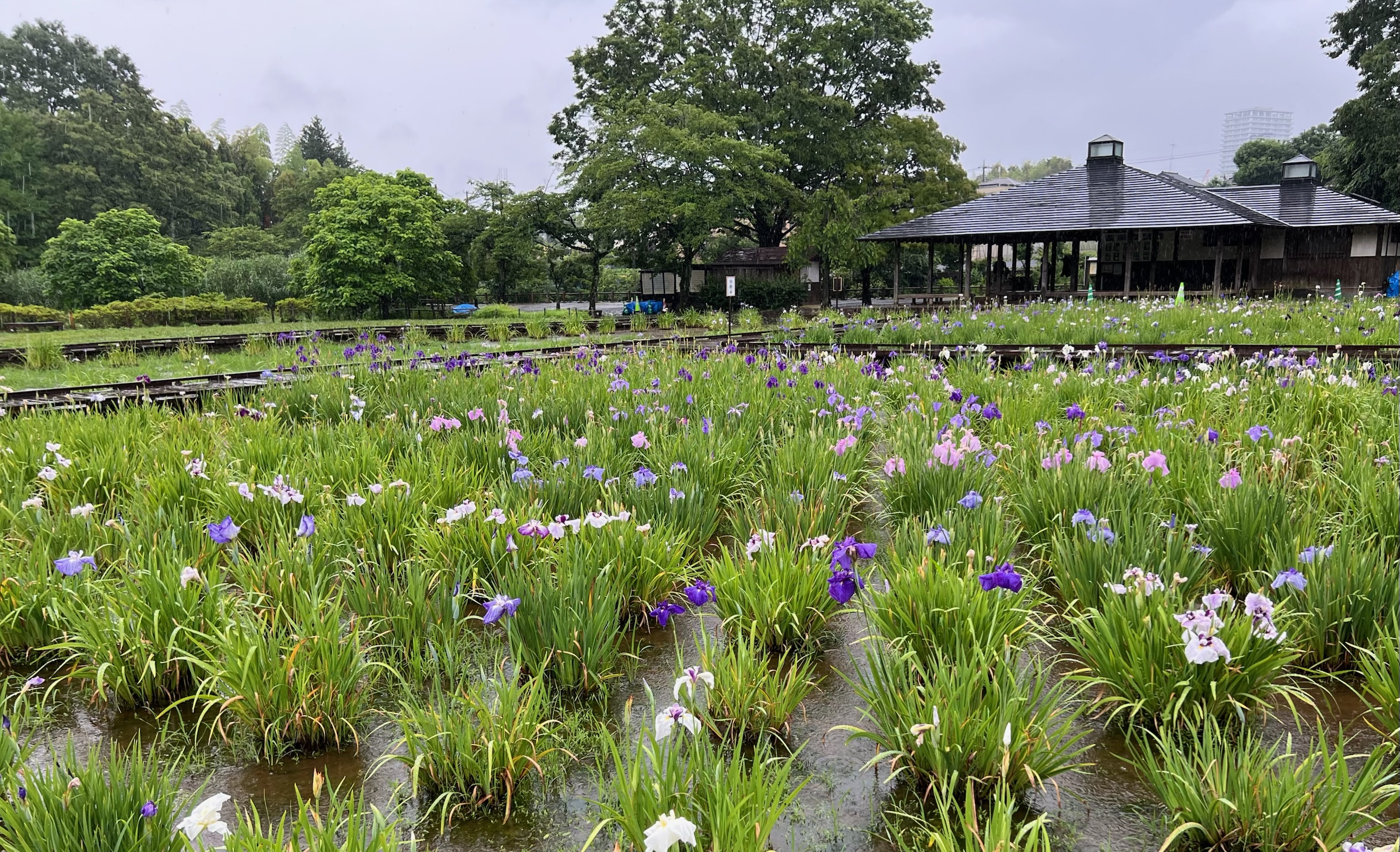
While in Higashimurayama, we stopped by another location Emily remembers from her childhood. Kitayama Park has a great variety of iris beds with raised boardwalks throughout. It was a rainy morning, which meant the crowds were gone and the temperature was cool. The two-week long iris festival had been over for a couple of days, and you could tell a few varieties were a little past their peak time for blooming. All the same, it was a very pleasant morning looking at some of God’s handiwork. We even found a few ducks, frogs, and crawdads along the way. 🙂

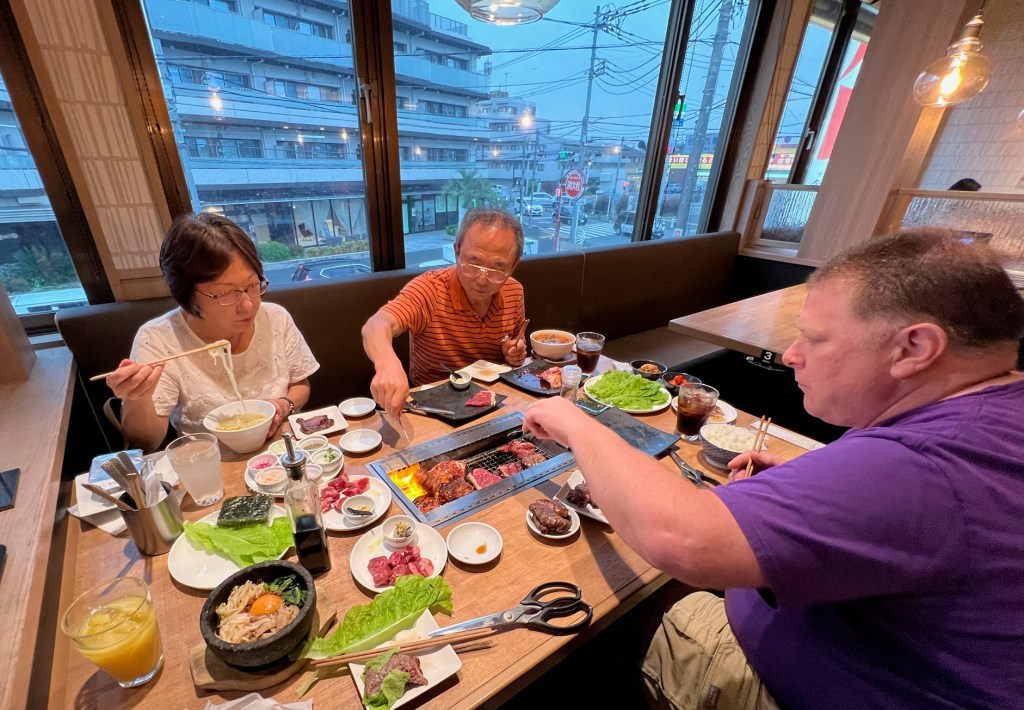
Yakiniku! It’s all you can eat and you grill it just how you like it

And finally, here is this week’s parting image, a sweet church member wanted to treat the four of us to a special meal. Nao and Clay both really enjoy yakiniku, so it was a great opportunity to try out a place that was new to the Fukushimas. Just punch in what you want on the e-tablet and it arrives at your table ready to be grilled to perfection! It was a wonderful evening of tasty morsels, trying new flavors, and most especially spending time with this dear couple.

Emily and I are blessed to be surrounded by such an encouraging cloud of witnesses. You all play a vital role in this ministry through your prayer and encouragement! We pray that the Christians here in Tachikawa may feel such a cloud surrounding them as well to encourage their faith walk. COVID and other factors have taken their toll on the congregation in recent years, and we want you to know so that you can continue to pray for all of the brothers and sisters here (and in other challenging places). May God be glorified in all that we do!

~ Clay
<– Return to the Week One Report

Jump to the Week Three Report –>

A Wonderful Week 1

Tired, but glad to be through customs and immigration. Welcome to Tokyo!

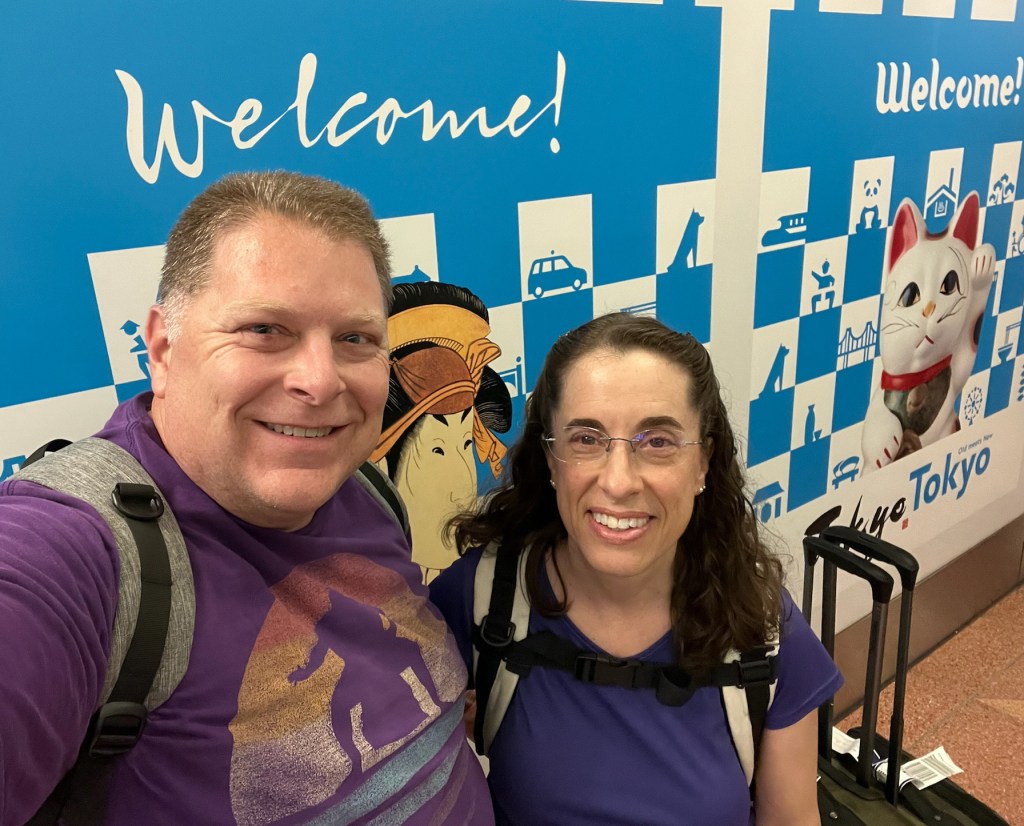
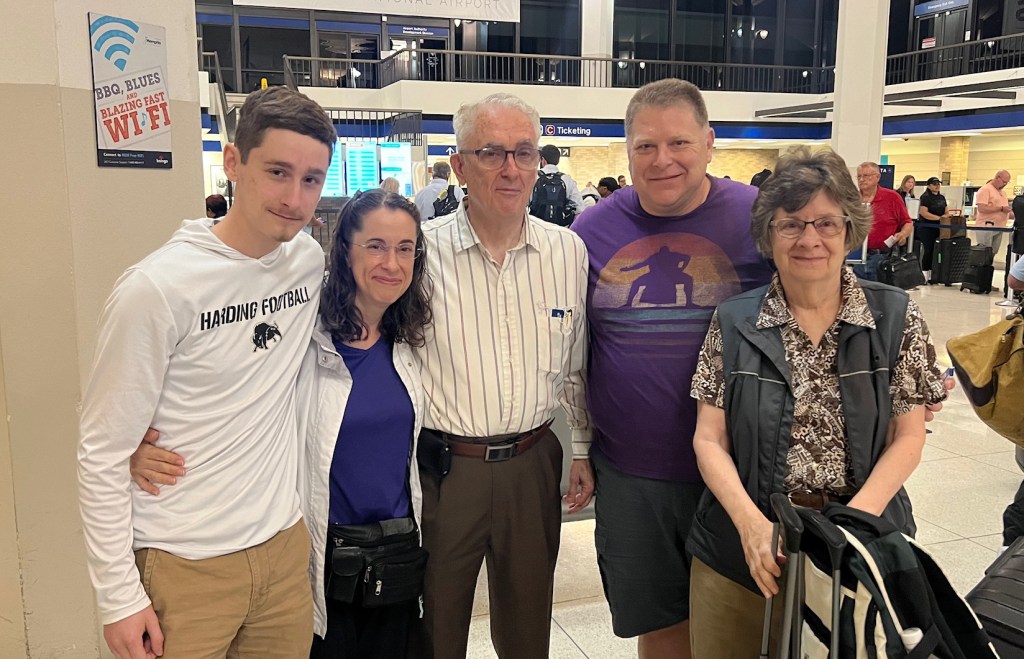
Greetings from Japan, everyone! It hardly seems possible that it’s already been a week since we arrived. Emily Rachel and I are grateful to each of you who have been praying for our safe travels, and we are happy to report that God directed us AND our luggage through all of the planned connections. That’s always a great start to any trip, but especially one with several steps along the way. We got up super-early the morning of Monday, June 3rd, and made it to the airport in plenty of time to get everything checked and secured. Our son, Ben, was there to see us off as well as Emily’s parents, Dwight and Josephine Albright.

Ben, Emily, Dwight, Clay, and Josephine at Memphis International

It was particularly sweet to be there with Emily’s parents because we have done this very thing for these seasoned travelers on a number occasions over the years, and it was finally our turn to swap places! The flight from Memphis to Detroit turned out to be uneventful. For a little while, we weren’t sure because there was very heavy fog in Detroit and the pilots opted to circle in a holding pattern for about 20 minutes hoping it would clear off enough to land. There was even mention of diverting to Toledo, Ohio, if conditions didn’t improve in time. Thankfully, visibility opened up just enough for us to go on and land in Detroit without issue. Whew!

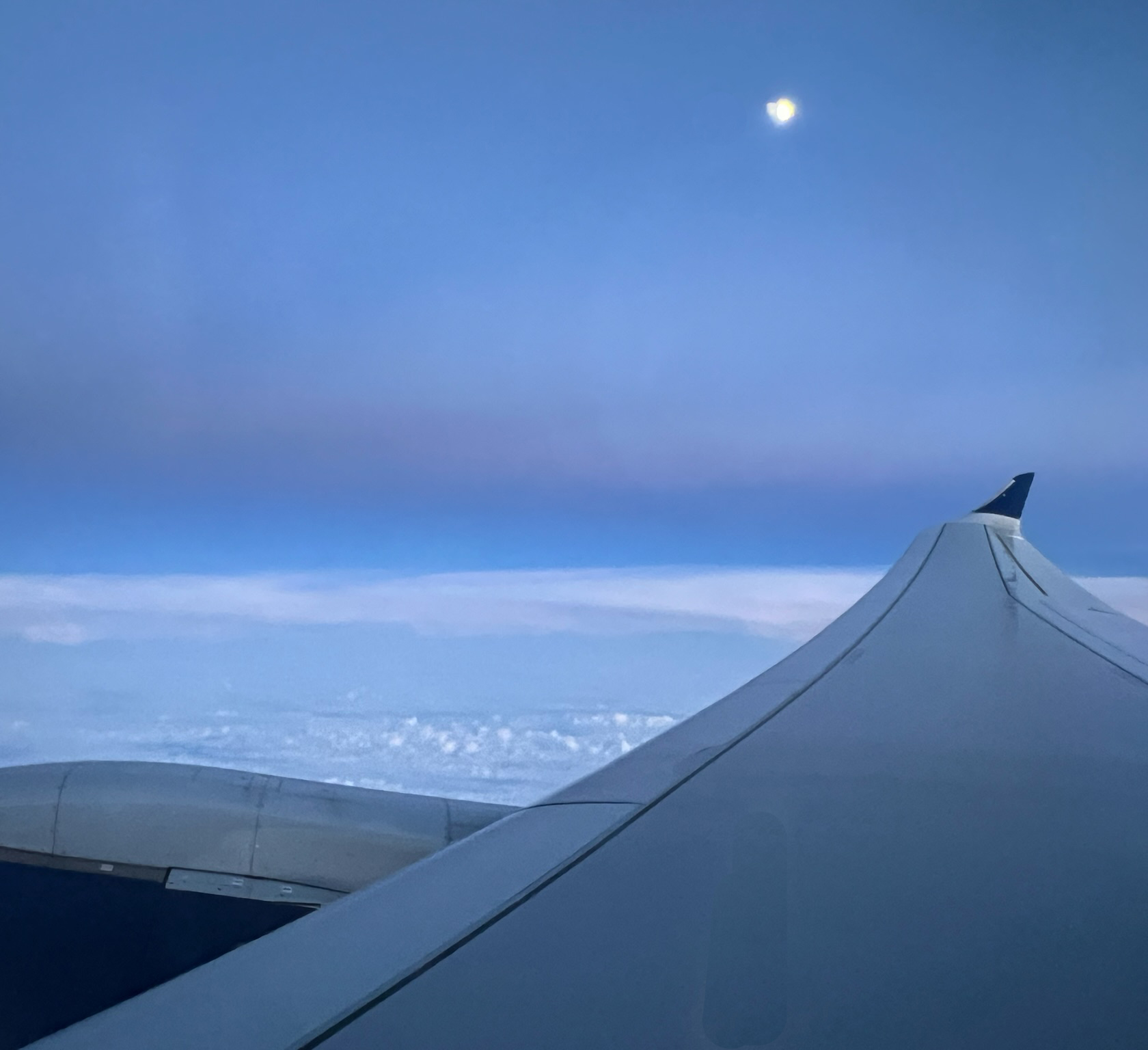
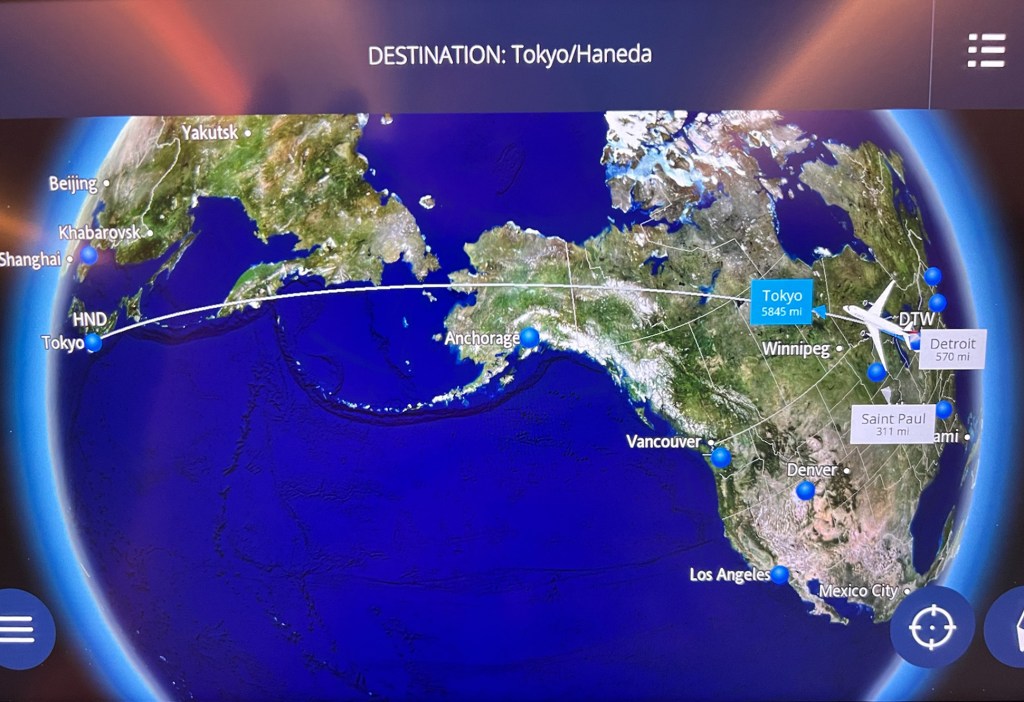
After exploring the terminal for a few hours in Detroit, we finally boarded the plane and settled in for the longest portion of the trip. Due to favorable winds, the estimated time between takeoff and touchdown was only 12 hours and 40 minutes. Before we left, a number of you asked about which direction the flight goes, and I tried to describe how much the flight path goes to the North. We took off and headed through Canada and Alaska before coming back down through (or near) Russia toward Japan. It sounds pretty round-about when picturing it in my head, but in truth it’s a pretty straight shot. I grabbed a picture of the in-flight map on the plane and it looks much straighter from this angle! I imagine going this way also avoids a great deal of headwind from the jet stream.

Overview of the flight to Tokyo from Detroit

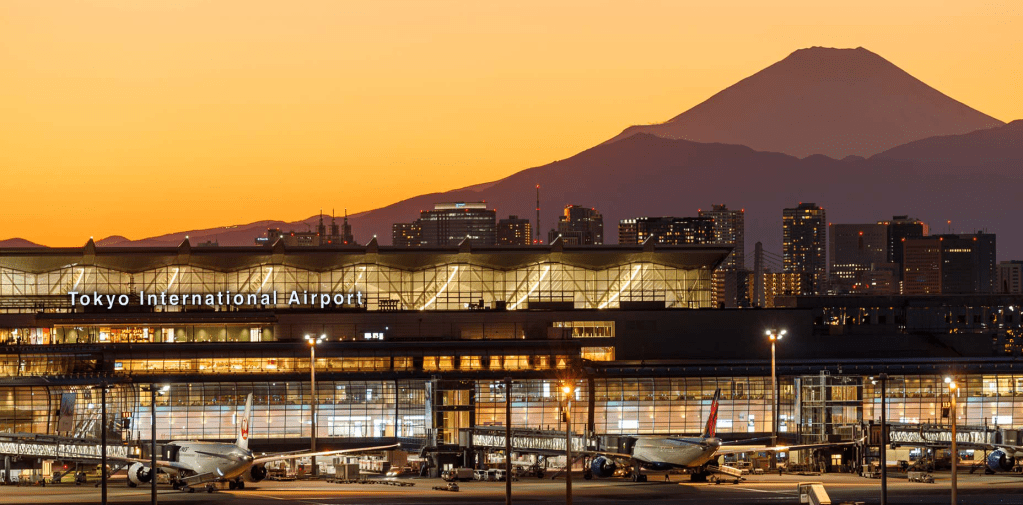
Our flight landed at Haneda airport in Tokyo a little ahead of schedule, but we didn’t really notice. Since we crossed 10 time zones and the international date line, our Monday morning had become Tuesday evening! Overall, it was a pretty smooth trip. We are thankful for the ways God has gone ahead of us.

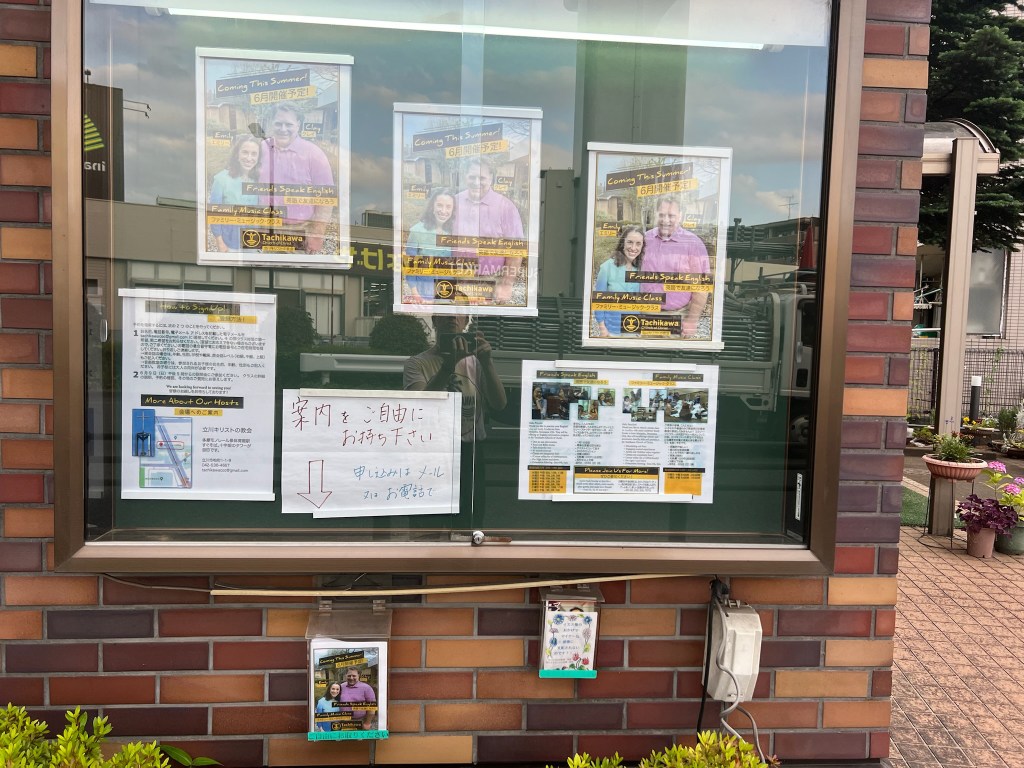
Our first couple of days consisted of taking it slow, adjusting body clocks, setting up housekeeping here, and generally trying to make preparations for when English and music times start up. The brothers and sisters here at the Tachikawa church are genuinely excited that we are here, and we have felt their warmth and hospitality deeply. They have also been busy with preparations of their own for our arrival! Nao and Noriko Fukushima distributed a great many flyers advertising our ministry around the local neighborhood as well as enlarged the flyer’s front page to use as posters. There is a glass information board outside the building facing the sidewalk, and we are prominently featured.

Posters and flyers announcing our time with the Tachikawa community

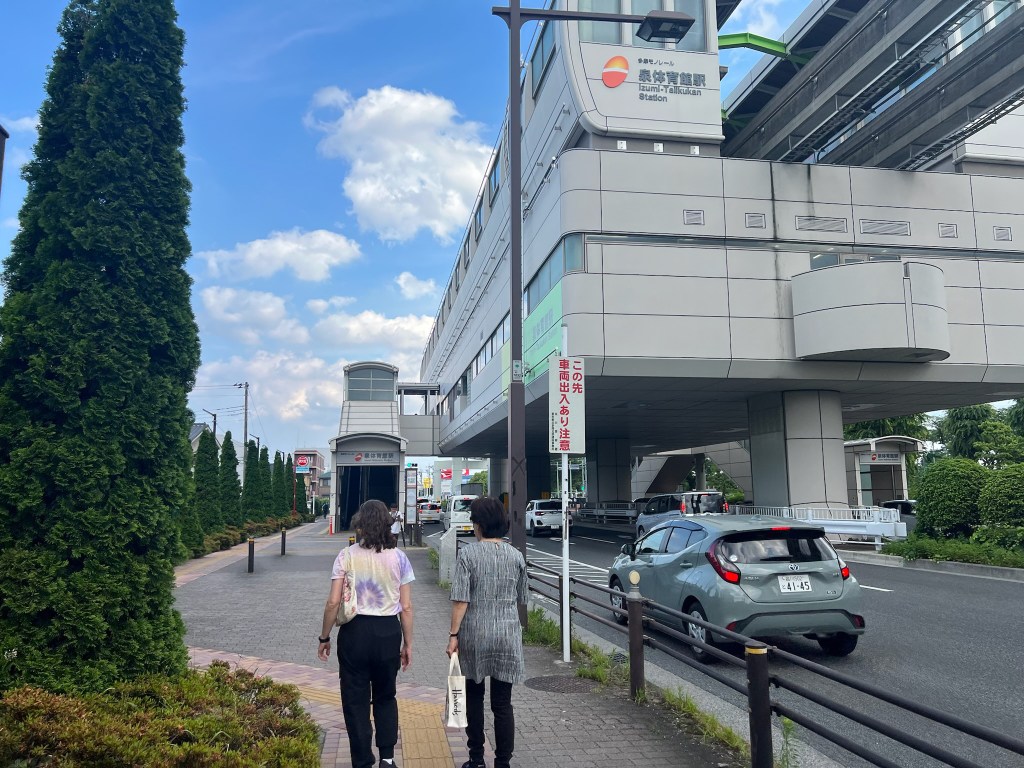
The Fukushima’s are such wonderful hosts! They have seen to our every need, and we are so encouraged by their Spirit-led service to the church here as well as their heart for reaching the Tachikawa community at-large with the life-saving message of the Gospel. Not long after we arrived, we took a break from unpacking to walk the neighborhood nearby to spread the word about our offerings. We stuffed flyers into many mailboxes in the area, and visited a couple of daycare locations around pick-up time hoping to chat with some young mothers who might be interested in coming for the music classes.

Emily and Noriko walking by the monorail station while distributing flyers

Noriko also gave us a lift one morning so that we could visit the 100¥ store for some containers to use during the music classes as well as a trip to Costco to stock up on some staples. The Costco was about like you would expect it to be, and as I walked around there were a number of times I almost felt like I was back in the US. Just as soon as I did, though, there would be a little something so completely Japanese to help me remember. We enjoyed lunch, got what we needed, and then were on our way.

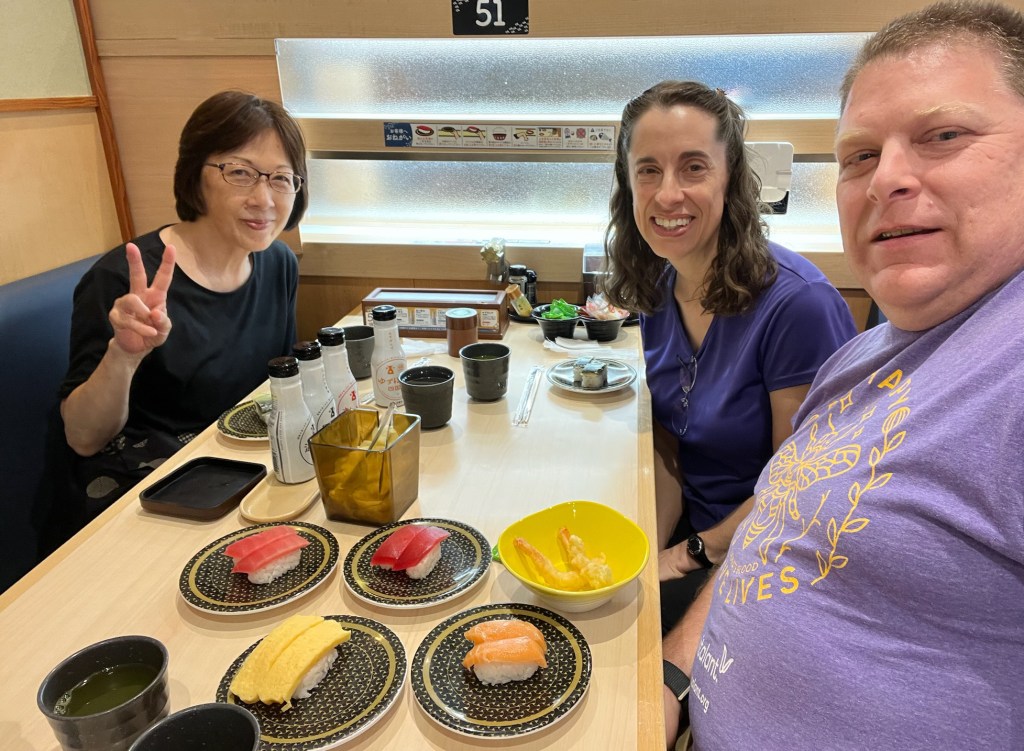
For the first couple of days, Nao was out of town attending the Japan Minister’s Retreat at a camp facility near Nagano, so Noriko was gracious enough to take us to their preferred conveyer belt sushi restaurant, Hama-Sushi. It was delicious! We took just one picture, and that was at the very beginning (before the plates started adding up!). It was a pleasant chance to chat and catch up over a splendid array of sushi options (and more!).

Noriko, Emily, and Clay enjoying table fellowship (and sushi!)

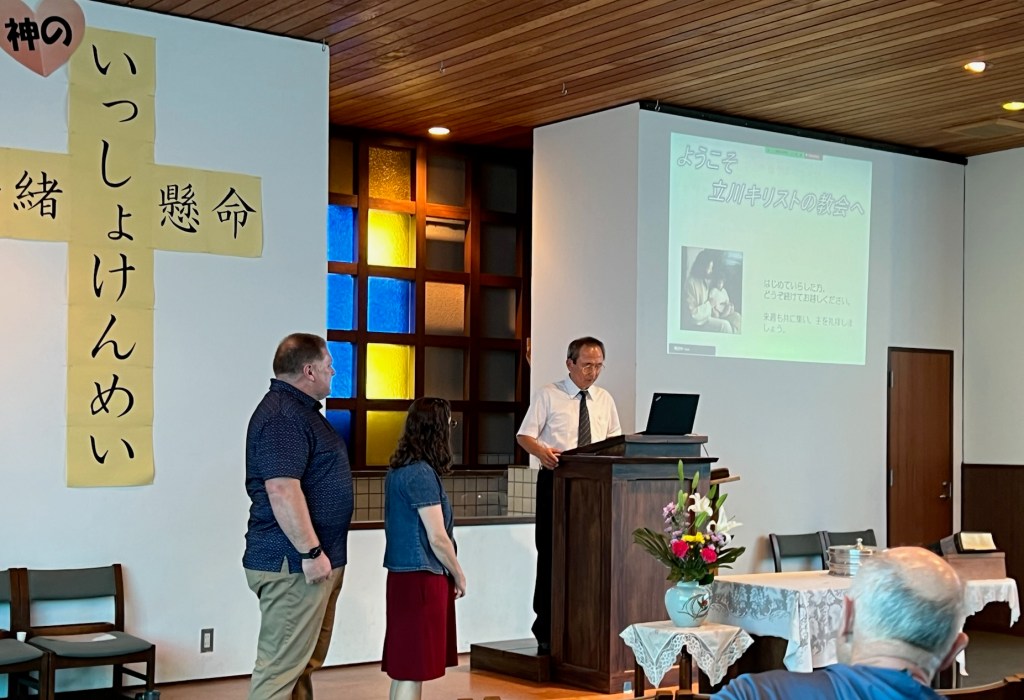
June 9th was our first Sunday at Tachikawa, and we were blessed by the faithful members who gathered for worship. Nao preached and led singing, and though the congregation gathered might seem small to many back home, there was an eagerness to worship God and an anticipation to hear the Word that encouraged me very much. I was able to follow the songs a little better than I was the sermon, due to my limited language ability, but it was a blessing all the same knowing that the same Spirit moves among these people as it does back home. Nao formally introduced us to the congregation during the service, and several were eager to come chat with both Emily and me afterward.

Nao introducing Clay and Emily during worship

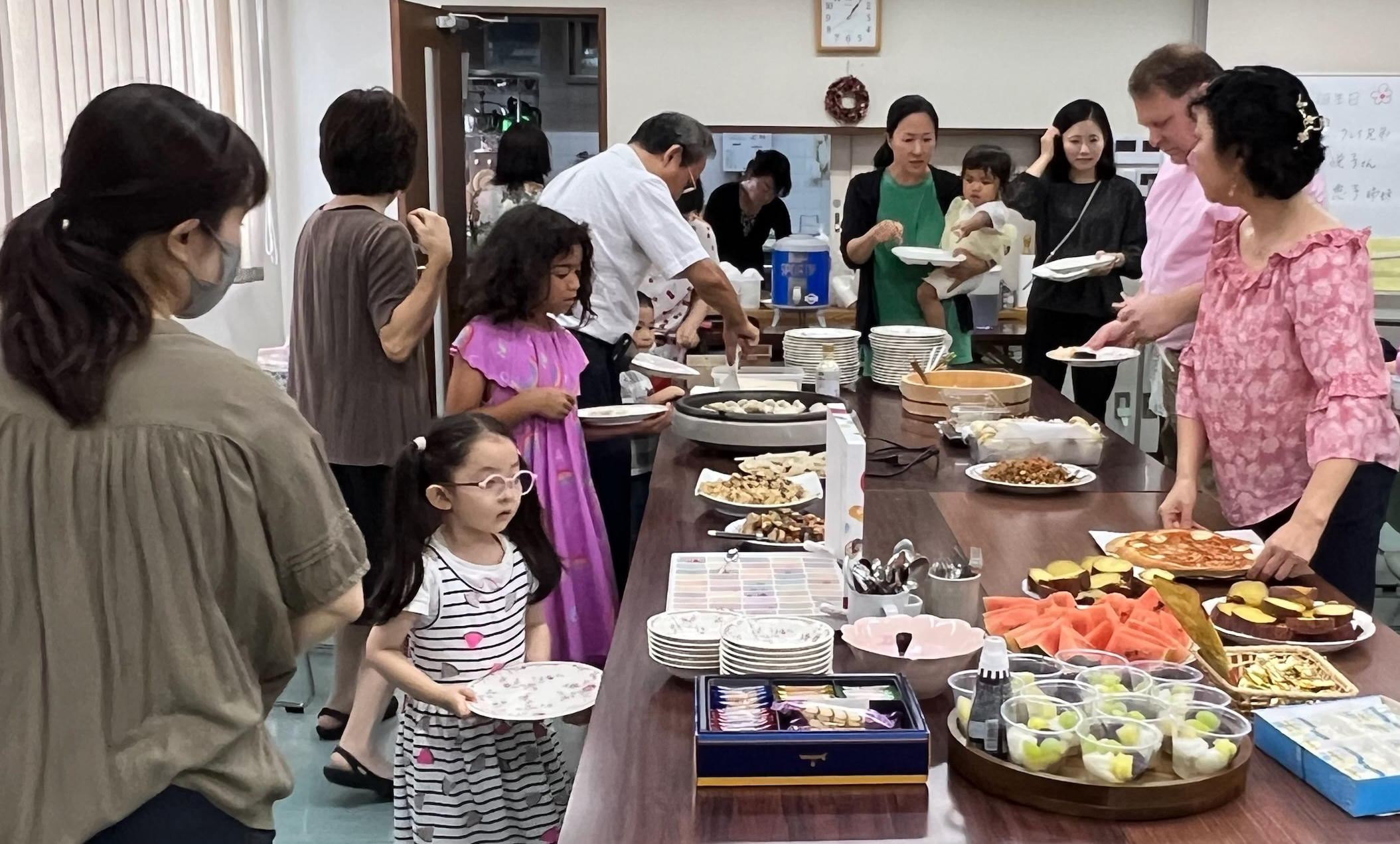
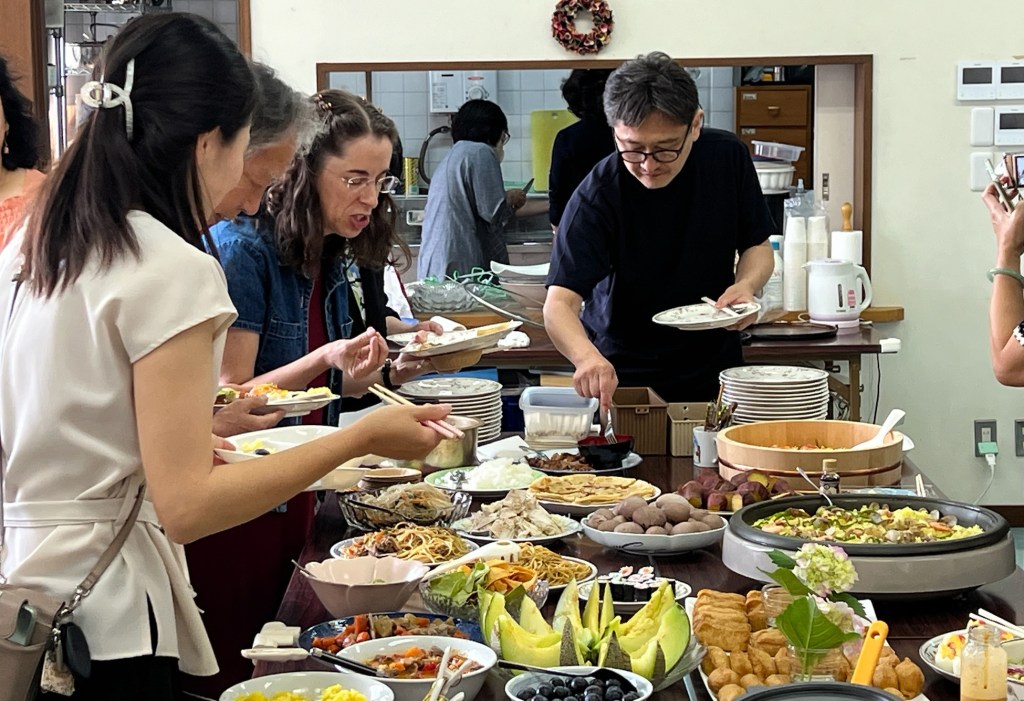
Speaking of after worship, the congregation planned a potluck meal in our honor as a way to welcome us to Tachikawa. We all adjourned up to the 2nd floor fellowship space where a delicious spread was prepared. There is a Chinese group of believers who meet in the Tachikawa building one Sunday afternoon per month, and they joined in the potluck meal as well. We ate and laughed and enjoyed time together, and eventually we each went around the room and introduced ourselves. The atmosphere was homey and genuine, and we loved every minute (and the food was great, too!). Afterward, a number of takeout trays were filled with food ready for everyone to take home for later.

Just how church potlucks are supposed to be!

Our first official activity for this trip occurred later that evening at 5pm. We hosted a come-and-go orientation meeting for everyone who had signed up for the English conversation times or for the family music classes. A number of individuals came and we were able to greet them in person, answer any questions they might have, and confirm their preferred time of the week for coming back to study or have class. Emily also had a selection of instruments from the music class available as a “petting zoo” for anyone interested to get a taste of what she uses in her classes. The kids who came really had a good time checking it all out!

Checking out the instrument “petting zoo”

Near the end of the evening, there was one really sweet moment that touched us. One of the young girls who came with her mother started off very shy. She was wary of the people around, hesitant to be more than an arm’s length away from mom, and just not sure what to make of it all. But by the time things were starting to wind down, and just before she and her mom headed out the door, she came right up to Emily and gave her a big hug! It truly is amazing what effect being around Spirit-filled people can have.

Our second week will see the start of English reader sessions as well as the first family music classes, so we are looking forward to telling you all about how they go in the next edition. We also have some opportunities while we are here to make a couple of day-trips to see other ministers in Japan and encourage them in the Faith and be encouraged in return. In the meantime, we highly value knowing that you are thinking of us and praying for these individuals. May the seeds we are planting today one day produce healthy, vibrant Spiritual fruit in the future.

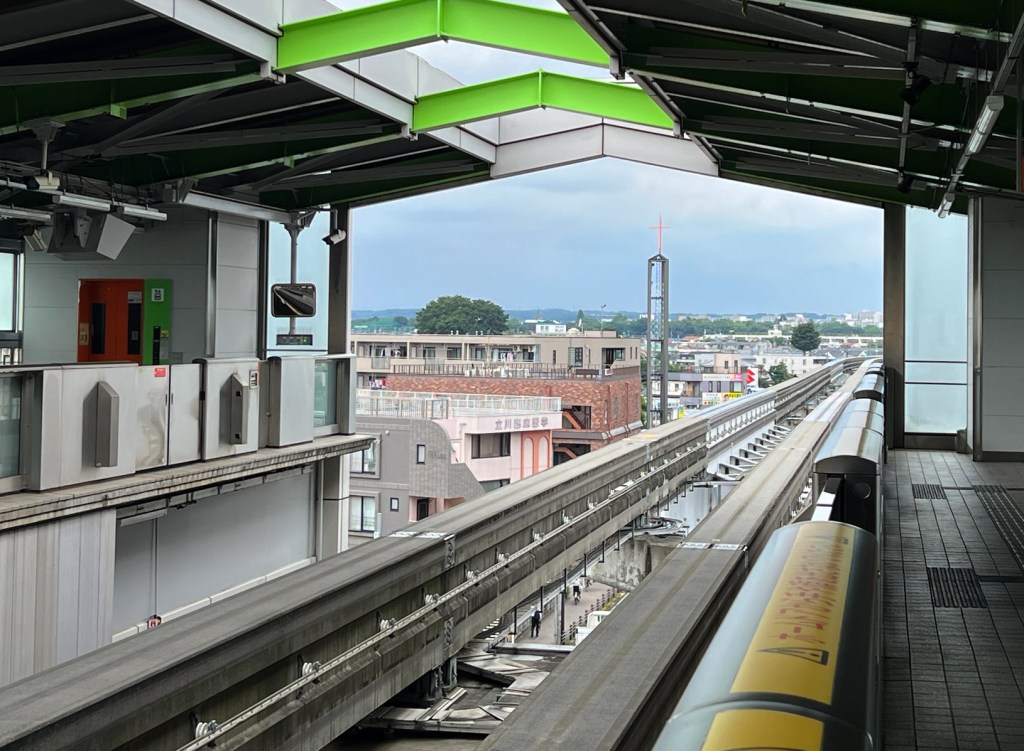
View from the monorail platform at Izumi-Taiikukan station

As a parting note, I leave you with an image. This photo was taken facing North from the platform of the nearby monorail station. The red brick building is the Tachikawa Church of Christ and next to it is a free-standing tower with a red cross on top. After dark, the cross is outlined with bright white lights. It is a landmark clearly visible from both the street below and the monorail above. God is present, though He sometimes feels far away. We simply look to the cross and follow Jesus, wherever that may lead.

~ Clay

<– Return to the Pre-Trip Overview

Jump to the Week Two Report –>

It’s about time!

We gotta set our clocks early for this one. Tomorrow morning (June 3) we will set out for the airport in Memphis at 4:30am. I’m yawning just thinking about it! We have a 6:30am flight to Detroit, then we will hang around a little over 4 hours before getting on board the flight to Haneda Airport (Tokyo). We should be in the air about two hours for the first leg, and then 13.5 hours for the big jump across the Pacific. After passing customs, we’ll have a bus ride of about 1.5 hours to get to Tachikawa where we will meet our ride. By the time we arrive, it’ll be Tuesday evening local time. Sounds easy, right?!

We are grateful for all of you who have mentioned you’ll be praying for safe travels. It is through the grace of God that we are able to make such a trip, and we hope that everything we do will ultimately glorify Him alone. We look forward to encountering people and showing them a glimpse of how much God loves them. Thank you to each of you who have helped fund this trip and for those of you who continually pray on our behalf.

The next post should be from the land of the rising sun!

~ Clay
Language Spotlight: Kibo (Hope)

Note: As I continue to learn the Japanese language and culture, these Spotlight posts seek to highlight things I find curious, interesting, and meaningful. The relationship between language and culture runs deep. In fact, there are many points where it gets hard to tell one from the other. “Language is not merely an indifferent mechanism for cataloguing men’s experience but the language itself affects the cataloguing process…. The language system of each culture is a fluid factor in culture; it varies with each generation and serves as clue to its thinking as well as actually coloring and molding this thinking.” In other words, if I am going to learn how to reach Japanese people, I need to understand how Japanese people think. The process of how they think is intimately intwined with the language they use. Unfortunately for us, it goes far beyond simply using “Google Translate” to come up with the right vocabulary. Language embeds the foundational concepts of culture into everyday interaction. So, deeper we go into this wonderful world of language exploration! Much of this information comes from Charles Corwin’s Biblical Encounter with Japanese Culture (Tokyo, 1967).

For English speakers, the word ‘hope’ has a great variety of levels. Some use it when they really mean ‘wish’ and others use it when they actually should say ‘want.’ Hope can refer to something trivial and fleeting, such as “I hope I’m able to get a nap later today.'” We also use it when we desire to express a deep longing, even on behalf of someone else: “We hope that you find fulfillment and renewal as you begin retirement.” Frequently, we view ‘hope’ in terms of our own perspective. It is hope for some thing to appear (or disappear) or some circumstance to change in our favor.

Yet there is a more foundational way that we use the word ‘hope’ – one that sounds more like it is a noun. The well-known hymn comes to mind: “My hope is built on nothing less than Jesus’ blood and righteousness.” Not to suggest that hope is a thing which may be possessed, but more like a state of being in which we can live. Often when I pray, I express to God my deepest gratitude that as adopted sons and daughters we enjoy the privilege of living our lives from a basis of hope rather than fear. It is a foundational component of how we orient our lives day in and day out.

The Japanese word kibo (hope) is comprised of two characters. One character often can mean ‘rare’ and the other usually means ‘want’ or ‘request.’ Together, Kibo is often understood as a longing for something which is beyond one’s capability of obtaining or longing for something that is nearly hopeless.

In the Old Testament, there is no neutral concept of expectation. An expectation is either good or bad, namely hope or fear. Trust in things or situations is perilous – riches, righteousness, friends, religious inheritance – they all are inadequate grounds for confident Hope. Hope is instead found only in God Himself. The believer is called on to not fix his hope on things which are controllable, but on God who is uncontrollable. This is why Israel could have hope even when in exile in Babylon. Her hope was grounded in belonging to Jehovah.

This root concept is carried forward into the New Testament. Hope as used by the NT writers is not the vague, utopia-type thinking common among first century Greek philosophers. It is rooted in the understanding of the unchangeable God and His covenant with His people. It is a sense of expectation but with a strong nuance of counting upon. True Christian hope is grounded on the historical facts of Christ’s resurrection. The Resurrection of Christ is God’s mightiest act and it has created our faith. Paul says the non-Christian has no hope, not in the sense that he has no concept of a future beyond this life, but rather such hope has no well-founded basis for trust.

The concept of hope in Japanese thinking is at best something similar to the original Greek concept – it is easily and so often deceived or disappointed. With a hope like that, man is advised to pin his hopes on that which can be detected or proven by visible means. Hope in this sense does not go far beyond the human horizon. Biblical hope pierces beyond present situations, either of blessing or misfortune, to the person of God and Christ’s saving acts. The one who has fixed his hope upon Christ and His salvation as revealed in Scripture is given a hope which produces trust, expectation, and patience toward the future.

This hope is not an emotion stirred up within man by his own wishful thinking or even his erratic strivings of faith. Rather it is a divine gift, implanted in his heart by the God of hope, that is, the God who bestows hope to those united to Him (Romans 15:13).

I pray it so for each of you as well.

~ Clay
Strike Up The Band

I was in the Band in my younger days. I played fourth part french horn. It isn’t a glorious part, on the whole. Most often, it doesn’t even resemble the music played by the first, second, and third part horns. It’s almost as if the composer didn’t quite know what to do with a fourth horn part since the interior notes of the harmonies were already covered. So, often times us fourth part horns found ourselves simply playing along with whatever the bass line was playing – usually the euphoniums or tubas. That’s ok, though. I was still in the band! I got to participate in every concert and contribute my part (however inaccurately my paltry level of practicing allowed) to the whole of the sound. We played some fantastically beautiful pieces both in high school and in college, and I treasure the many concerts we gave sharing that music with whoever was in the audience to hear.

There’s just something special in the way a group of people (in my case, teenagers) can come together and produce such a wonderful collaboration. No single one of us could come anywhere close to producing such a sound on our own, of course. Only by bringing our talents together could we sound so pleasing. Naturally, we had to be playing our parts as the composer had envisioned, and that is a key element, but we each had individual influence over how our parts were played as well. There is a great spectrum of expression available to a musician, and how they choose to express that melody is as unique as the artist interpreting the notes on the page. When it all comes together, though, it can be truly breathtaking.

There is a sense in which the musicians are doing it for their own gratification. It is immensely satisfying to be on stage in such a concert contributing your small part to the whole, and letting the music just course through you – knowing what notes are coming and understanding how all of the melodies and harmonies interact. Yet there is a performative dimension as well. Others are watching and listening closely, hoping that what you are about to do will bring them great joy as well. We could simply keep rehearsing in the band hall and really enjoy the music ourselves. It is much more gratifying to put all of that hard work to use over in the concert hall where it can benefit so many more people as they watch and listen to the fruits of our labors.

Scripture, to oversimplify, paints a grand picture of God’s desire for us to work in concert with each other. Through narrative, poetry, song, and history, this timeless collection of writings that we love so much shows us over and over again how God’s people can work together to make beautiful music from the score that He has composed. Scripture doesn’t pull any punches, though. It is also full of examples of just how badly we can mess things up when we refuse to do so. Yet each time God consistently pursues His beloved creatures anyway. It is a story of ultimate faithfulness to humans beyond our ability to reciprocate. God’s pursuit of us is rooted in love, not vengeance. That is the truly remarkable part. In return, to the extent that we are able (flawed as we are), we are called to return this faithfulness and love by becoming the humans that God created us to be. In other words, we are called to join with each other and strike up the band! God has composed the most beautiful and masterful score, and simply asks that we use the gifts He has given us to play our music in harmony.
There have been a handful of times when God has chosen to reach out directly to a human. Moses at the burning bush is a prime example. Yet the vast majority of the time, God prefers to reach out to us through other people. I have not experienced any burning bushes in my lifetime, nor have I met anyone who has. But I definitely give God credit for putting certain mentors in my life. God has worked through former employers, teachers, coaches, band directors, co-workers, family members, and friends. God prefers that we join Him as co-laborers. Sure, God has the ability to directly talk to each one of us, like he did for Moses. Yet how much more powerful is it for my story to be intertwined with your story? How much more meaningful is it for us to work together to further His kingdom? Yes, God could accomplish it – every bit of it – all by himself. He chooses to conduct a symphony of followers instead.

If you profess to follow Christ but aren’t exercising your gifts in concert with fellow believers, are you really following Him? Jesus was clear that He came from the Father, and that they are one in heart such that speaking to one is functionally as good as speaking to the other. It is in working together as a church that we produce truly beautiful wonders of the kingdom. My encouragement is for you to find your instrument and practice your scales. Develop your musicality with the gifts you have been given. But don’t stop there.

Find a band to join and make music together. Even if you find yourself in a 6th grade beginner’s band full of people who consistently crack the notes and come in at the wrong time. Everyone had to start somewhere. The important thing is to keep playing! You will play better with time and practice and the patience of our gracious conductor Jesus.
Strike up the band!

~ Clay
Cue the Anticipation!

Tomorrow will be two weeks left until we hit the skies for this Summer’s trip to Japan! The suitcases are laid out in the spare room and Emily is already well ahead of me in the packing department (as usual!), so things are starting to get a little more real around here. We are grateful for our many friends and family who have asked about this trip and have committed to pray regularly that God will be glorified by our activities in the Tachikawa community. Thank you one and all for the way you encourage us!

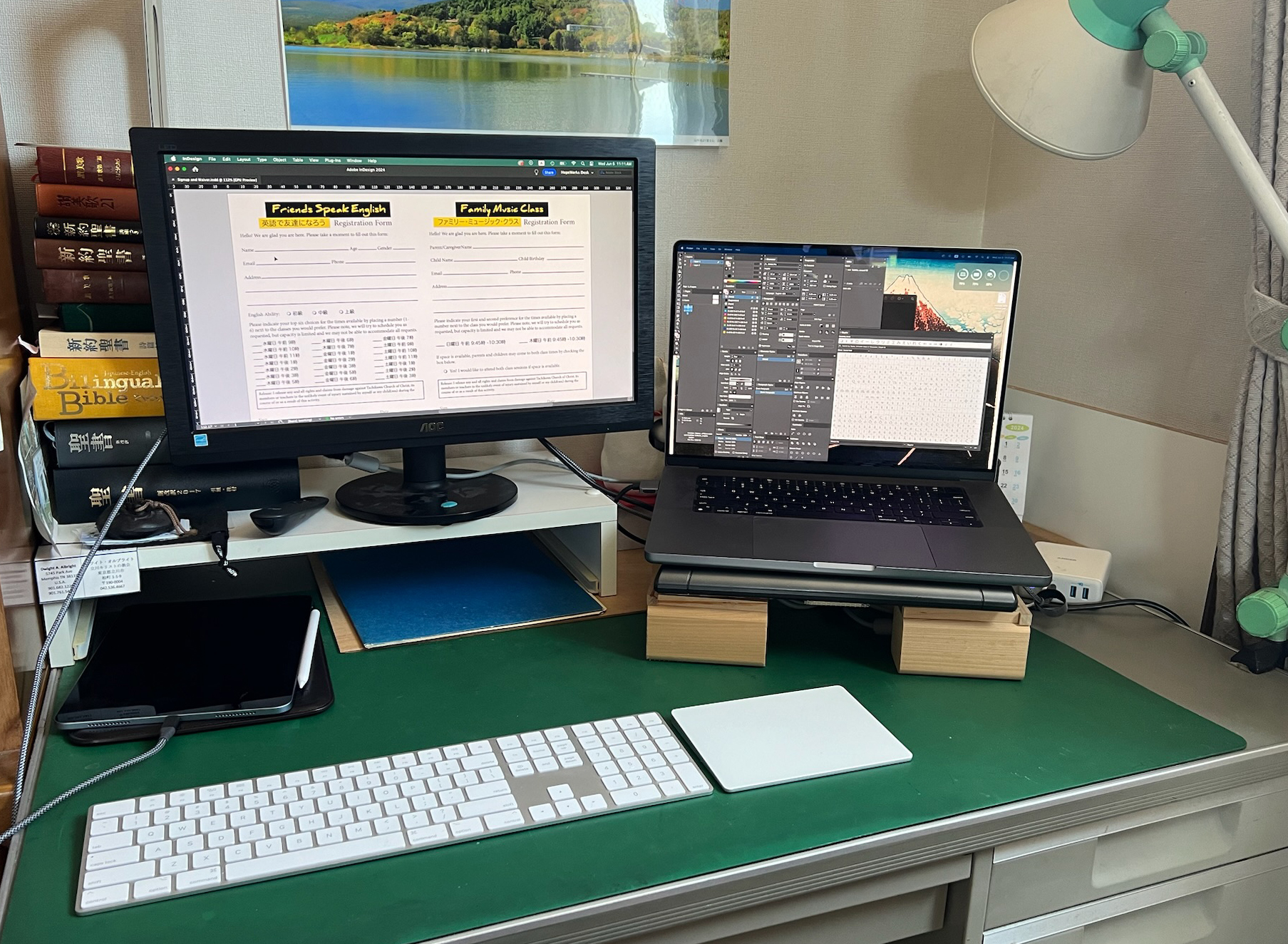
I wanted to provide a brief update now that we have a few more details pinned down. At the Tachikawa Church of Christ’s invitation, Emily and I will be providing outreach to the surrounding neighborhood in hopes that new people will discover this steadfast community of faith and connect with the Japanese Christians there. We will be doing this primarily through two efforts – English conversation for adults and family music classes for those with young children.

Friends Speak English

Between Emily and I, we will be offering about 36 different time slots each week for individuals to experience a 45-minute, one-on-one conversation based around an easy-to-read version of Luke or Acts. Through interaction with the powerful word in Scripture, it is our hope that these readers are prompted by the Spirit to want to know more. Although we aren’t officially conducting a Let’s Start Talking campaign, this effort will be very similar. These individuals will initially be coming to simply practice their English a little, but we believe that they are created in the image of God and their hearts will recognize His presence in the text and prompt them to consider more.

Family Music Classes

As a licensed Kindermusik® Master Teacher, Emily brings over two decades of experience teaching music classes to young children, so I am personally very excited that Tachikawa has asked her to bring that expertise to Japan. We will be offering two different mornings per week for young families to come and spend some time together learning music and movement concepts in a fun, creative way. Though they won’t be Kindermusik classes in a formal sense, many of the underlying principles and universal concepts of music and early childhood learning will carry over into her custom class sessions. We are hopeful that a number of young families will come.

…and Then We Mingle!

Each week on Sunday afternoon, we will be hosting casual fellowship times for everyone to come back and enjoy party games, light refreshments, and a chance to make new friends and get to know each other better. More importantly, it is an opportunity for Tachikawa church members to gather with those coming from the community in hopes that new friendships might be kindled which could continue after Emily and I return to Memphis. We think this is a critical part of short-term missions. While interactions with Emily and I may serve to plant some seeds, it will really only be fruitful to the extent that our activities are integrated in some way with the local church.

Oh, and There’s That Too

We do have a few other items on our agenda as well. I’ll be preaching during the Tachikawa morning worship three of our six Sundays present. We are hoping to take some history classes with Japan School of Evangelism faculty members in both the Tokyo and Ibaraki areas highlighting past missionary efforts and landmarks. We are also eager to renew and deepen some existing friendships with brothers and sisters in Christ and welcome new ones as well.

Above All…

As Paul writes, “Rejoice always, pray continually, give thanks in all circumstances; for this is God’s will for you in Christ Jesus.” (1 Thess 5:16-18) We love and appreciate each of you, and may God receive all of the glory.

~ Clay

Language Spotlight: Shinjitsu (Truth)

Note: As I continue to learn the Japanese language and culture, these Spotlight posts seek to highlight things I find curious, interesting, and meaningful. The relationship between language and culture runs deep. In fact, there are many points where it gets hard to tell one from the other. “Language is not merely an indifferent mechanism for cataloguing men’s experience but the language itself affects the cataloguing process…. The language system of each culture is a fluid factor in culture; it varies with each generation and serves as clue to its thinking as well as actually coloring and molding this thinking.” In other words, if I am going to learn how to reach Japanese people, I need to understand how Japanese people think. The process of how they think is intimately intwined with the language they use. Unfortunately for us, it goes far beyond simply using “Google Translate” to come up with the right vocabulary. Language embeds the foundational concepts of culture into everyday interaction. So, deeper we go into this wonderful world of language exploration! Much of this information comes from Charles Corwin’s Biblical Encounter with Japanese Culture (Tokyo, 1967).

Truth is a vitally important concept in Biblical thought, so it would stand to reason that Shinjitsu is a Japanese word that I need to become familiar with. Japanese concepts of truth stemming from earliest meanings of “straight” and “full” to the present usage as “genuine” and “inner part” lays stress upon the dualistic contrast with that which is false, crooked, exterior. The word finds its standard in man; he is either “true” or “false.” Man has inherently within him the capacity for truth; he can be “shinjitsu” if he speaks sincerely and in accordance with the facts as he knows them. Buddhist philosophical notions concerning different grades of truth underpin this term, yet very few Japanese have this concept when using the word. Originally it did have a point of reference, the way of Buddha, but now it does not. Hence there are ambiguous notions about absolute standards or tests for truth. Pressed farther “shinjitsu” means to the average man, “What I think and feel is right.” Truth then is not sifted through the Western screen of (a) logical consistency, and (b) fitting with facts, but is sifted through Japanese sentiment and notions built in through tradition and custom. The test for truth, for the Japanese, lies within the emotional framework of the reader.

Biblical truth finds its locus in the character of God. God’s nature is all comprehensive of fact and goodness, and so is, all in all, the source, support, and objective of all concrete being. The will of God thus reveals, persuades to, and achieves the ideals and ends of complete existence. The term truth, therefore, is sometimes nearly equivalent to the revealed will of God. Hence truth, as expressive of His will, qualifies His relations and activities. It is the guarantee of His constancy, the ground for confidence in His promises. Men thus find the source and test for truth in God and His revelation, whether it be the inscripturated or the incarnate Word. Man himself has a proclivity to falsehood, hypocrisy, lying, and vanity. The Bible constantly warns men against men and suggests setting up criteria for truth, e.g., by their actions, by the actual fulfillment of their words, or by orthodox confession of Christ. Men can only become “of the truth” by the supernatural work of the Spirit of Truth.

Japanese “truth” finds its nexus in man; Biblical truth finds its nexus in the character of God. A very important distinction!

~ Clay
The Nature of Our Worship

The first chapter of Luke describes the scene in which Gabriel, the angel of the Lord, speaks to a young woman named Mary, sharing God’s miraculous plan for how the Messiah will come into the world. God, like He so often does, chooses those who are lowly in the eyes of the world as the means of accomplishing His will. The narrative concludes with a passage that has become known as Mary’s Song or more formally, The Magnificat. She describes in a truly poignant way how God has deemed her worthy of such honor as being the mother of Jesus despite her humble status. Mary goes on to proclaim that this is par for the course for God: His mercy extends to those who fear Him, He scatters those who are proud, He brings down rulers yet lifts up the humble, He fills the hungry, and more. It is a theme that runs through scripture all the way from the Garden of Eden through to the pronouncements given to the seven churches in Revelation.
And Mary said:
“My soul glorifies the Lord
and my spirit rejoices in God my Savior,
for he has been mindful
of the humble state of his servant.

~ Luke 1:46-48

In her song, Mary states that her soul “glorifies” the Lord. This word can also be translated “magnify” (which is where we get the word “magnificat” in the formal name). In doing so, she humbles herself and gives thanks for God’s mindfulness of her position. It is a posture that we are keen to emulate! We too should humble ourselves and “magnify” the Lord. It is an issue in every area of our Christian walk, and it is particularly important when it comes to our Worship.

When we watch a movie or stage play, it sometimes becomes obvious when the actor or actress is trying too hard. Maybe they are a bit too dramatic for that scene, or maybe in some other way their performance just goes over the top. Instead of conveying a believable sense of that character, the story gets warped when the actor or actress shows himself or herself off a little too much. Unfortunately, we can sometimes fall into the same trap when it comes to our worship of the Lord.

Yoshiya Noguchi, minister at the Ochanomizu Church of Christ in Tokyo, Japan, recently wrote that when Japanese people encounter such an actor’s performance, they characterize it as “stinky”. He explains that the Japanese kanji for “stinky” (臭) is actually a combination of two simpler kanji for the words “self” and “large”. Meanwhile, the kanji for “beautiful” (美) is a combination of the simpler kanji for “lamb” and “large”. Yoshiya writes that this suggests that when we make ourselves too large we end up becoming stinky before God and those around us. In contrast, it is something beautiful when we allow the Lamb to be large in our lives instead.

As we praise the Lord, whether in a corporate worship setting or in every other form of worship we employ with our daily lives, let us remember the posture of Mary and remain humble while we magnify the Lord.

~ Clay