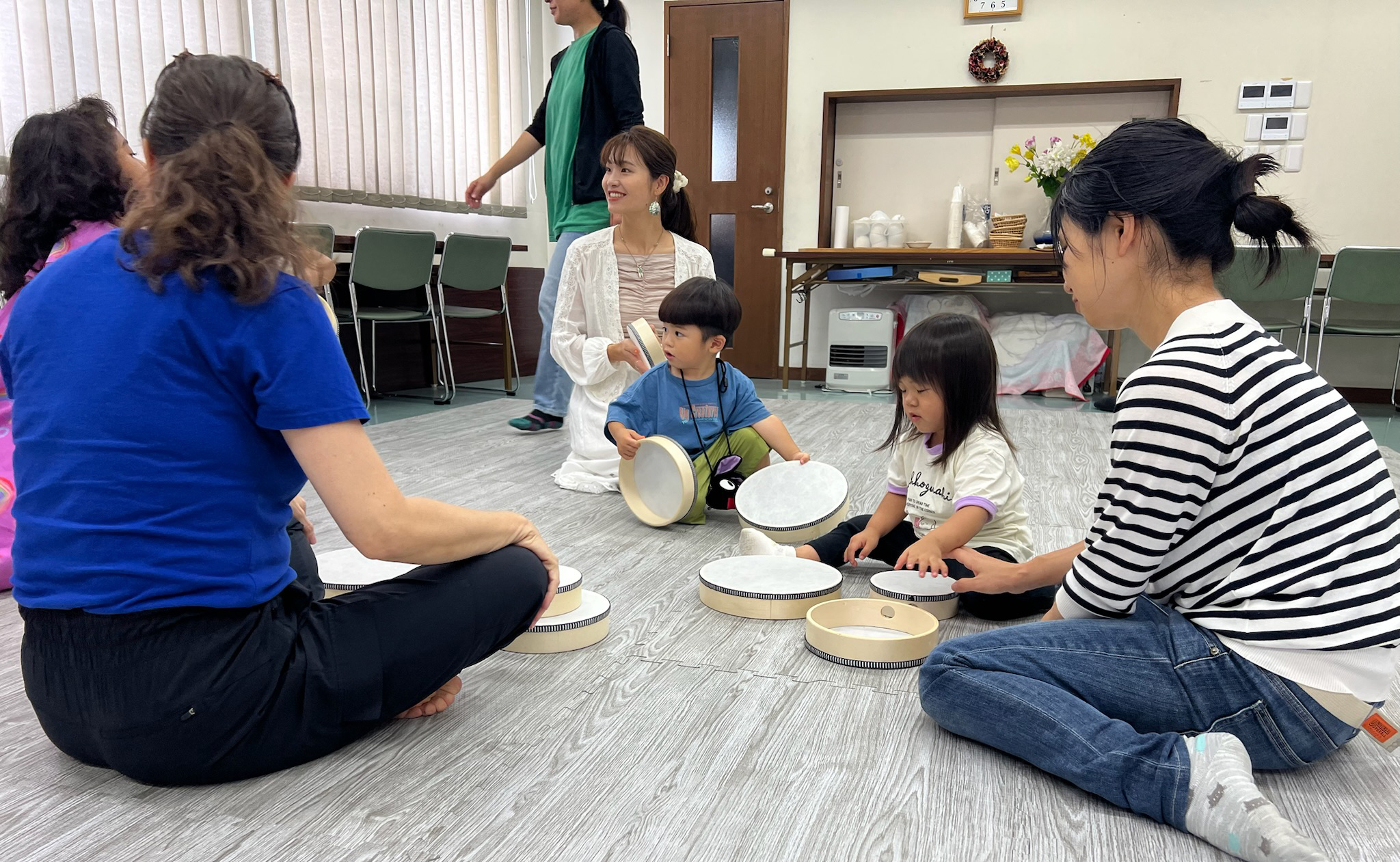
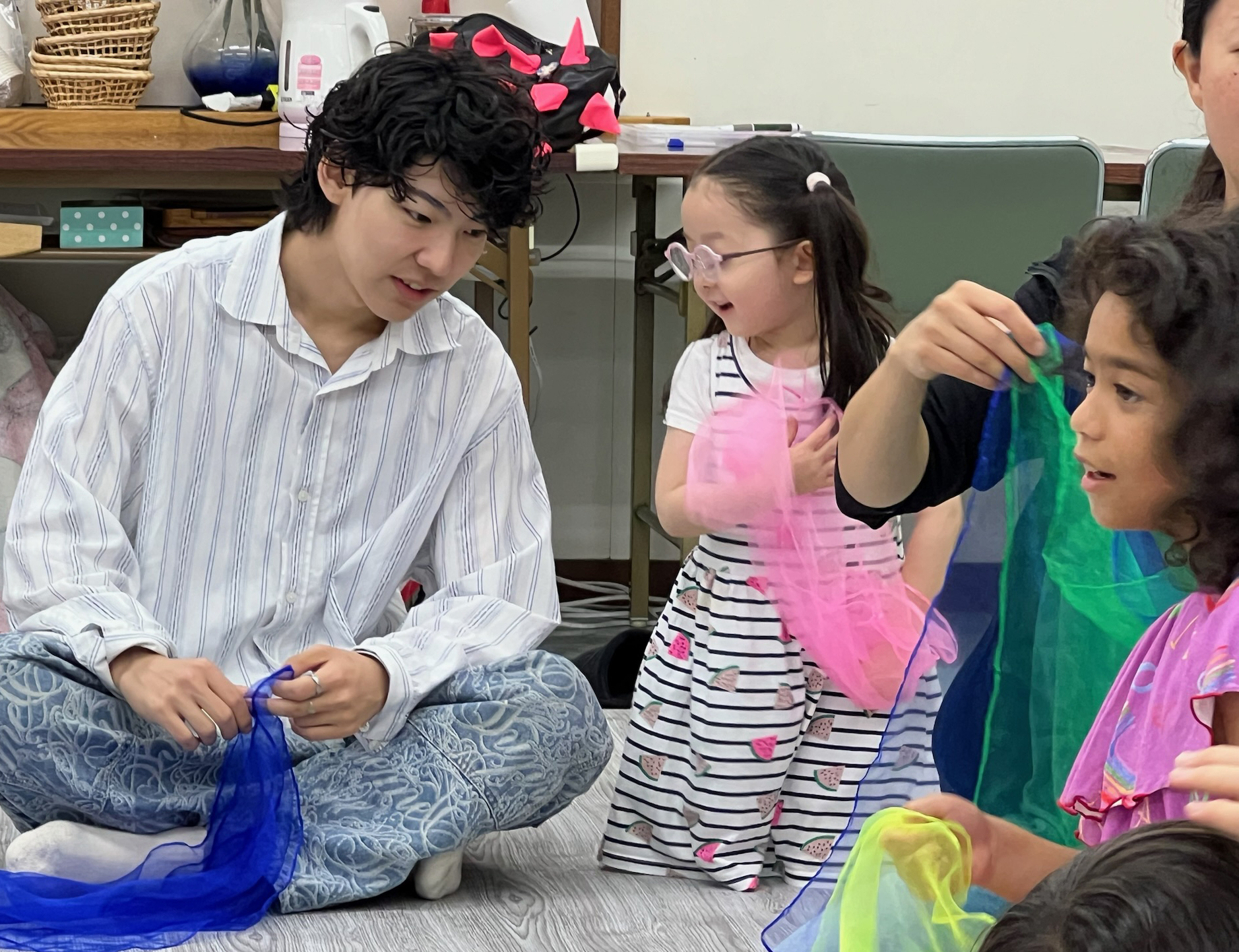
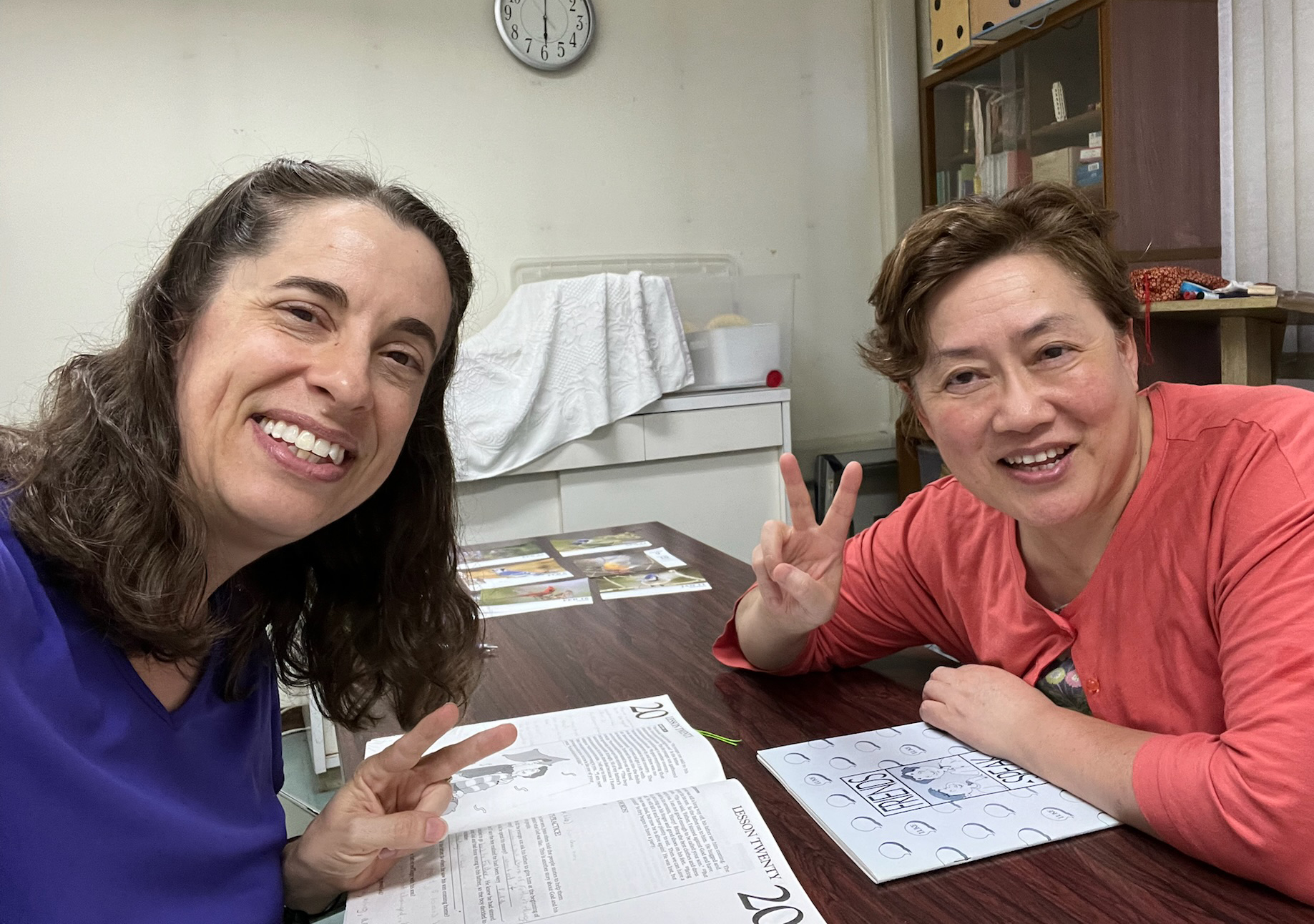
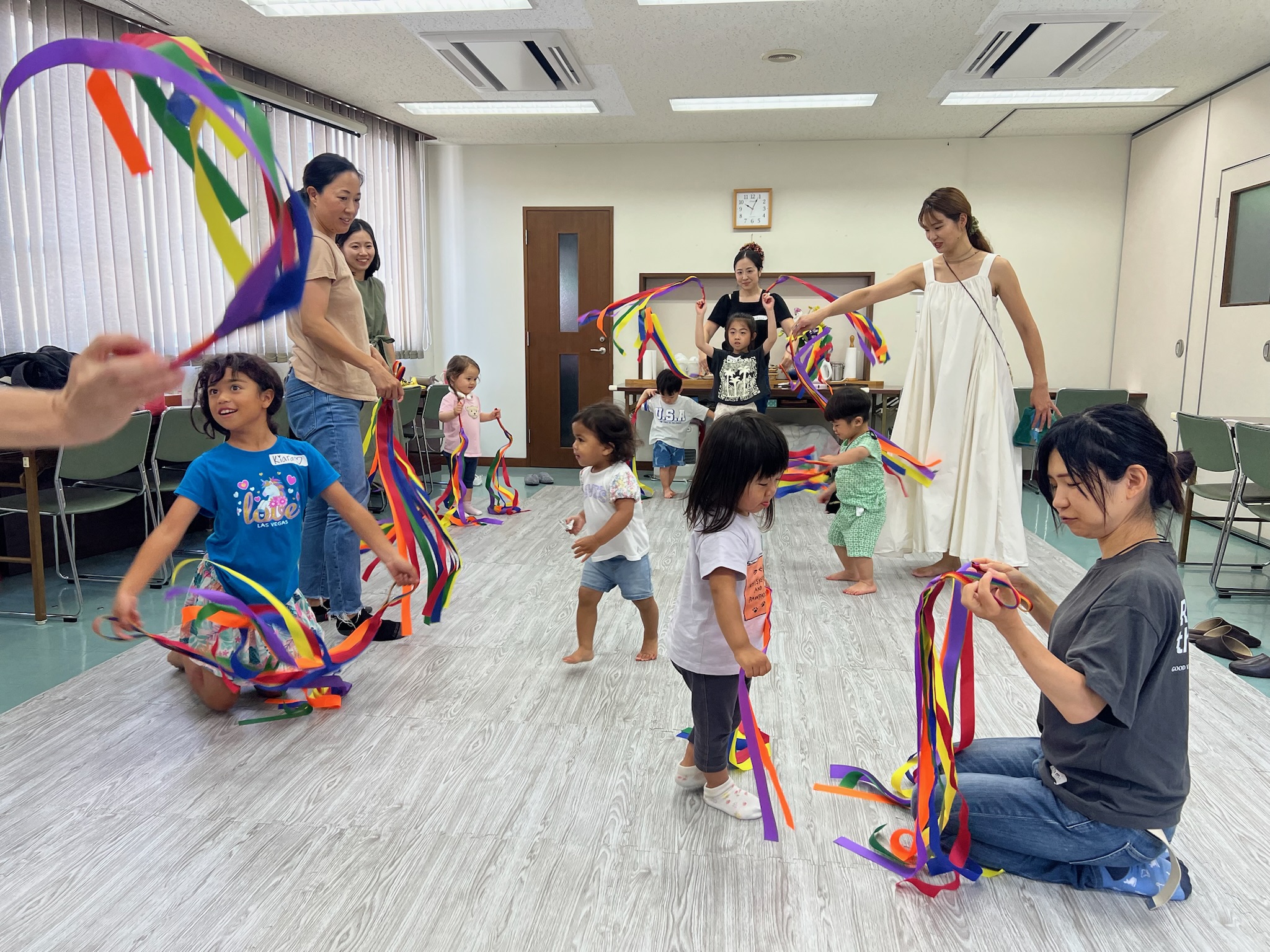
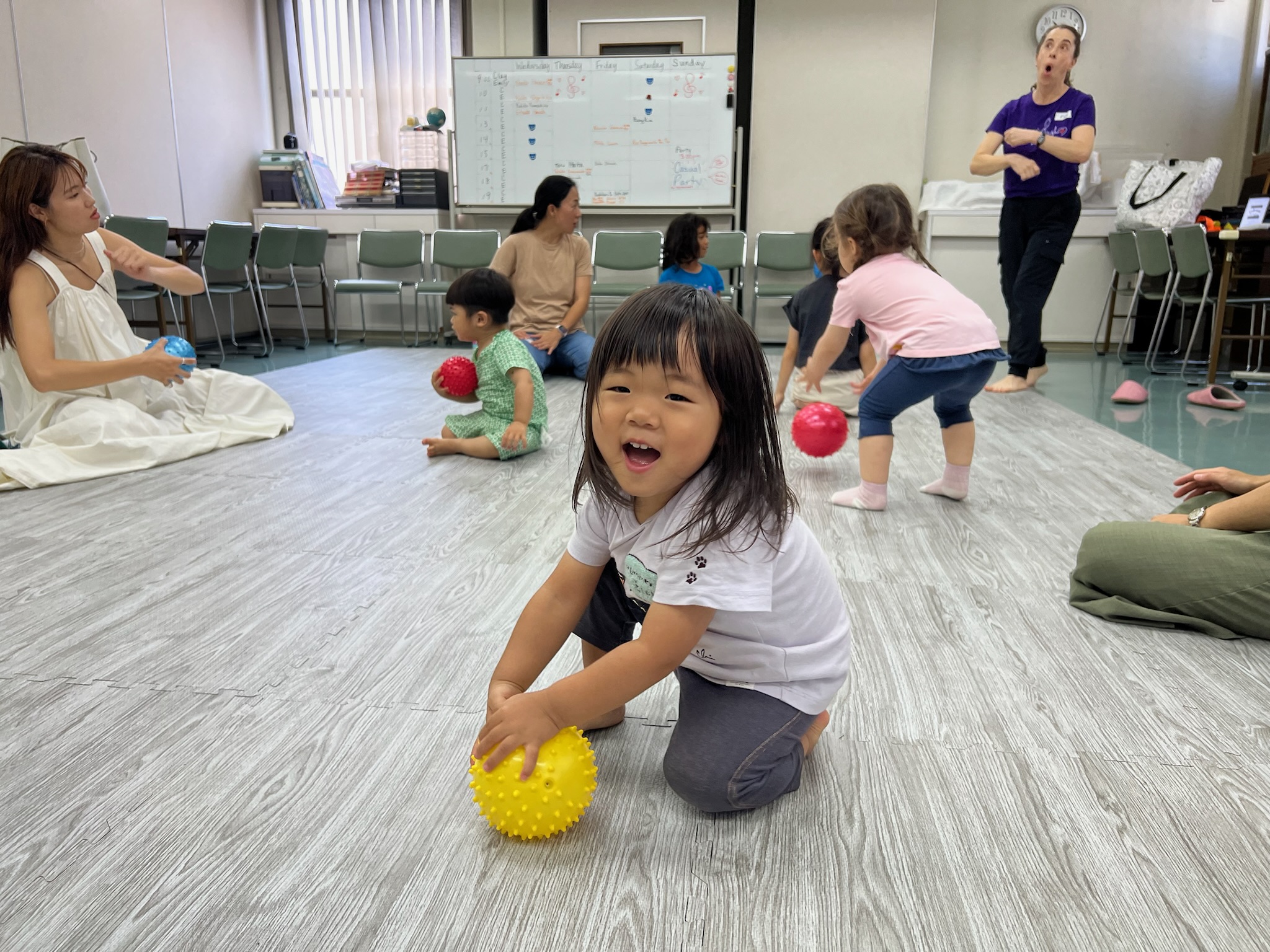
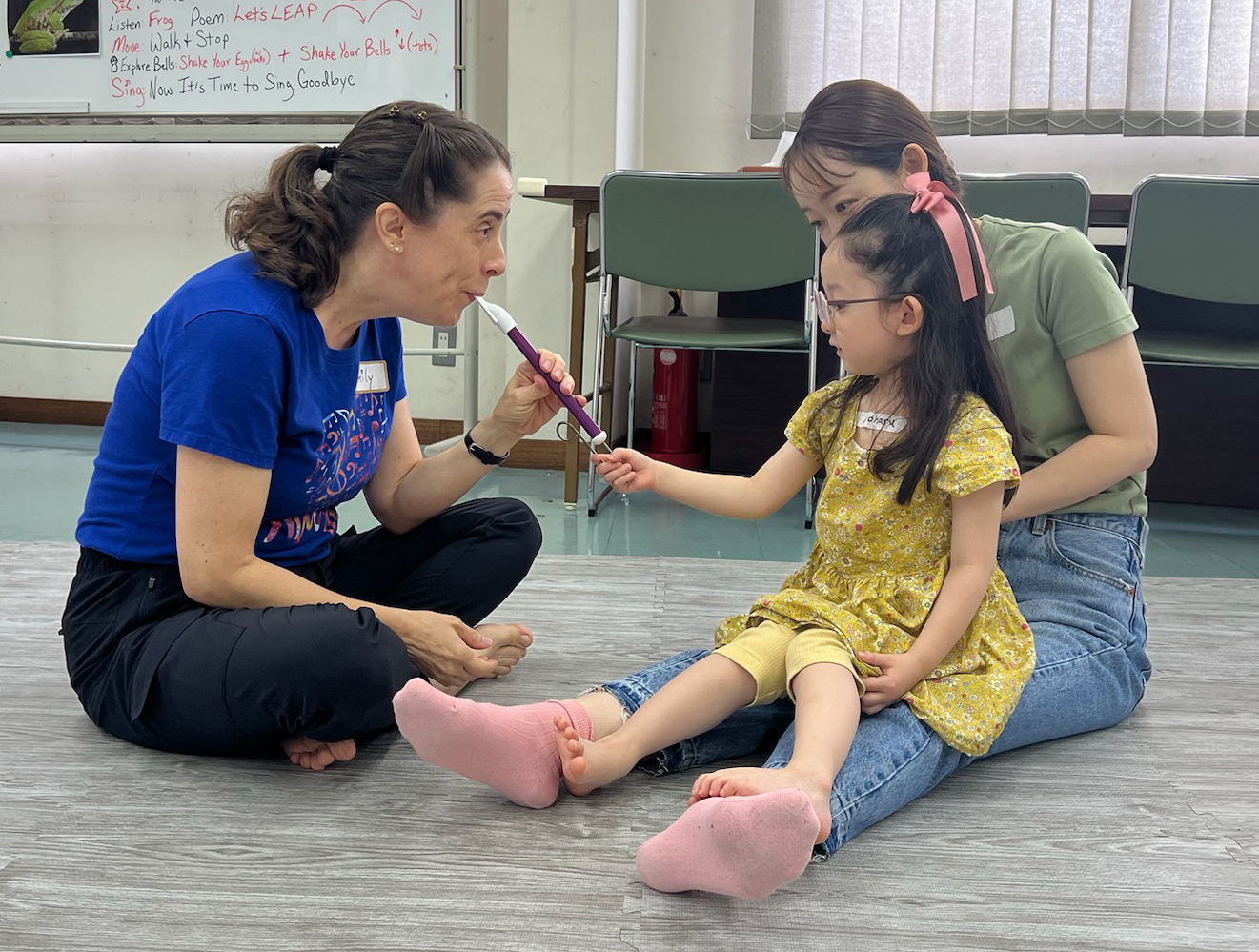
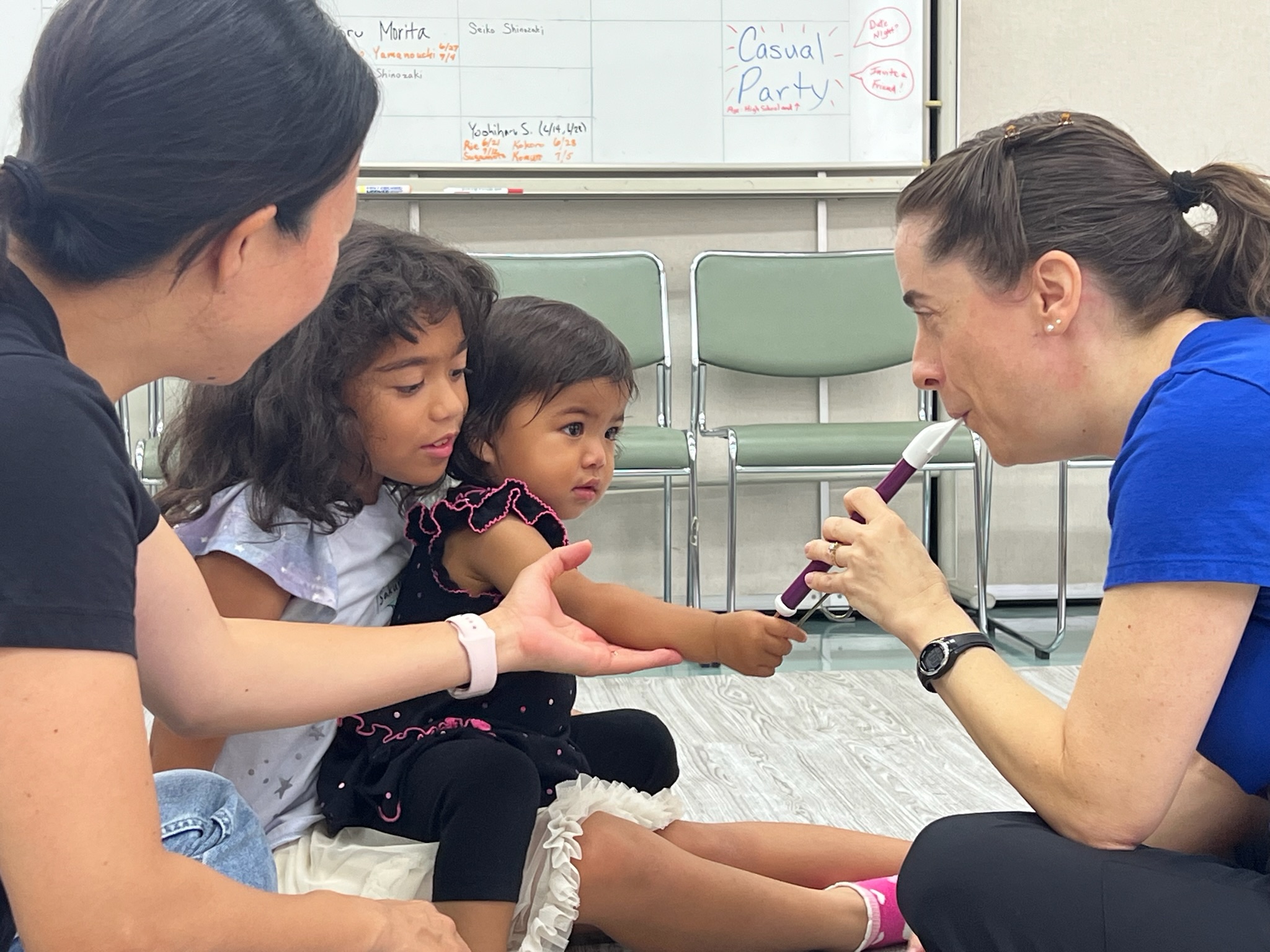
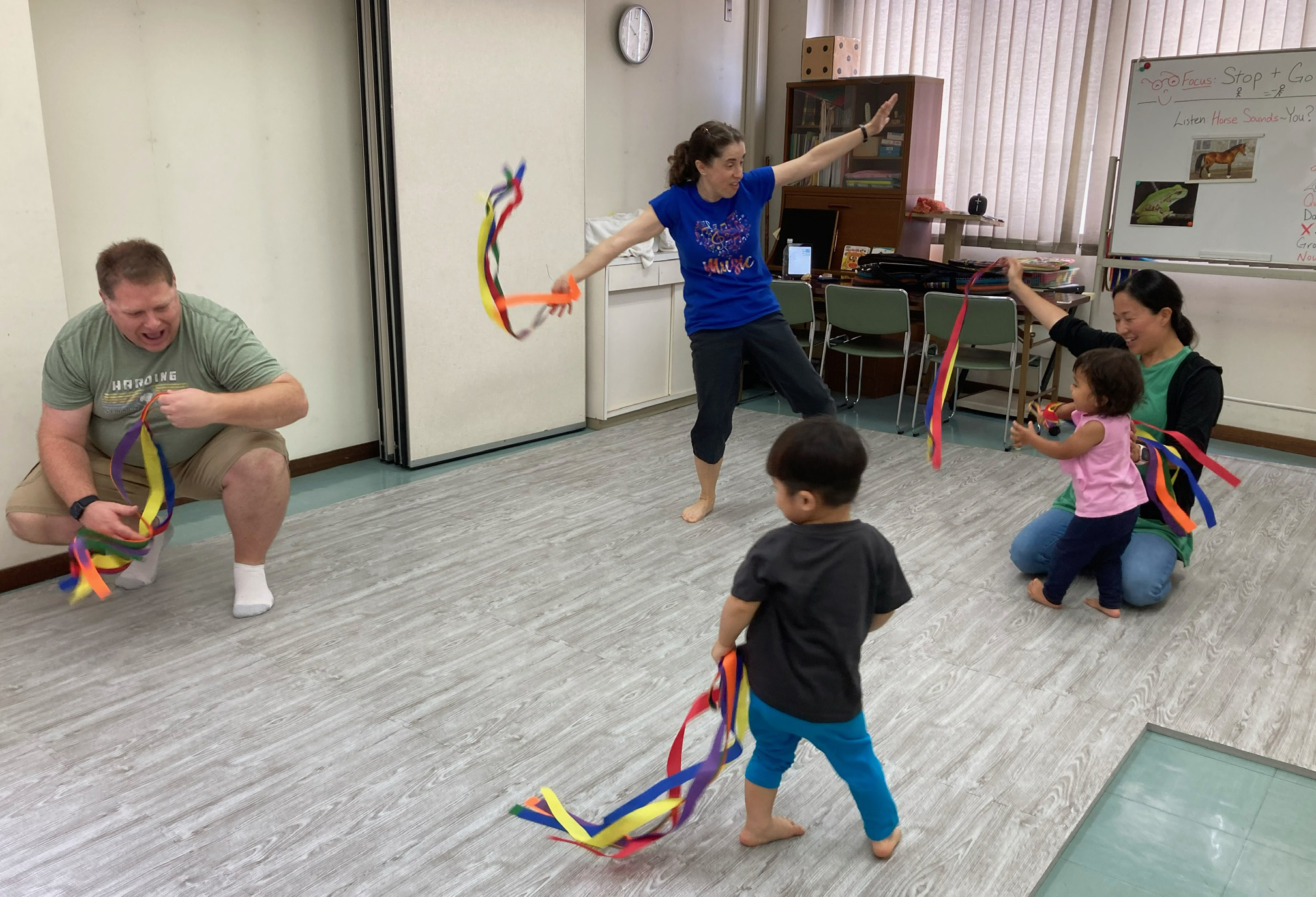
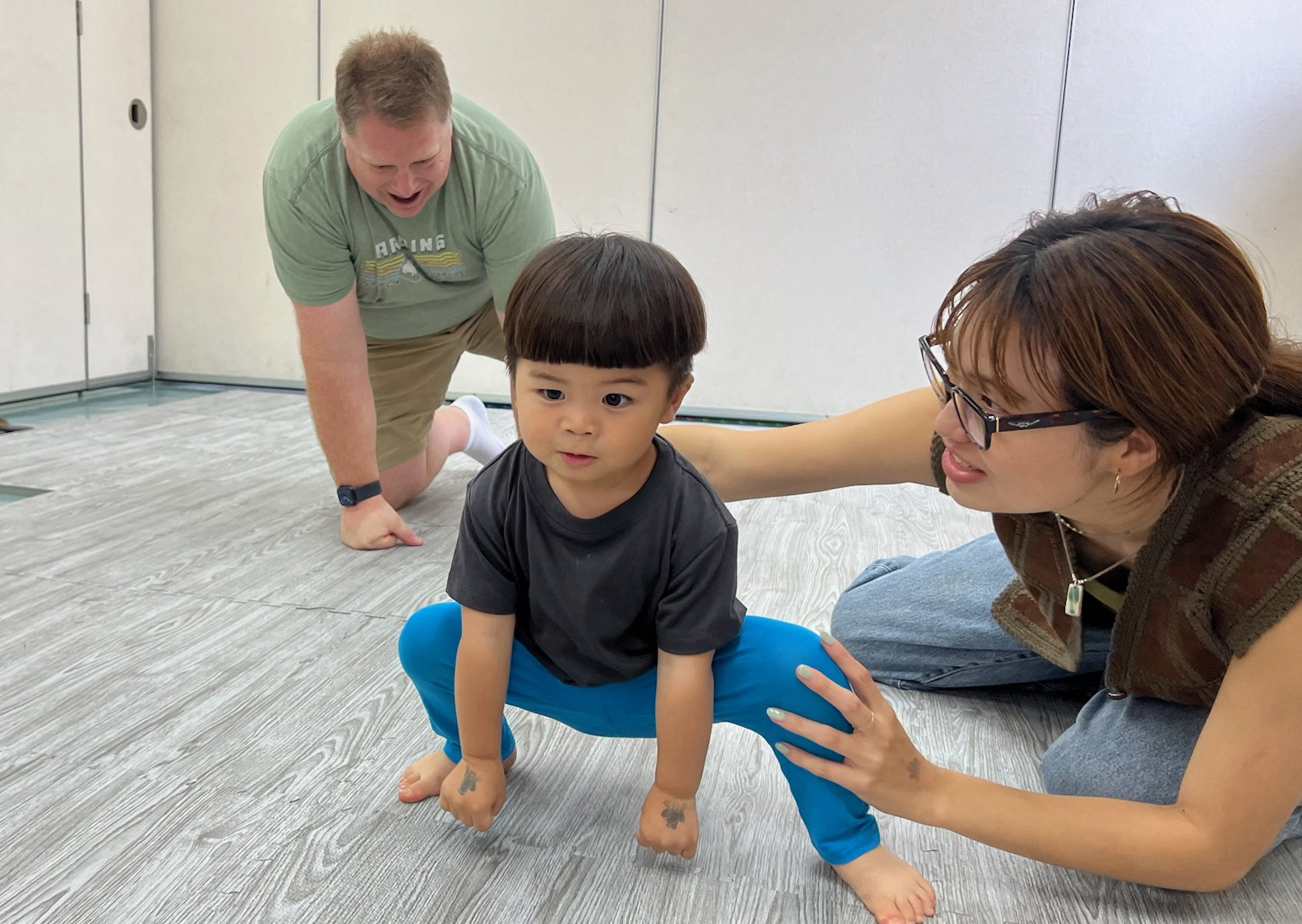
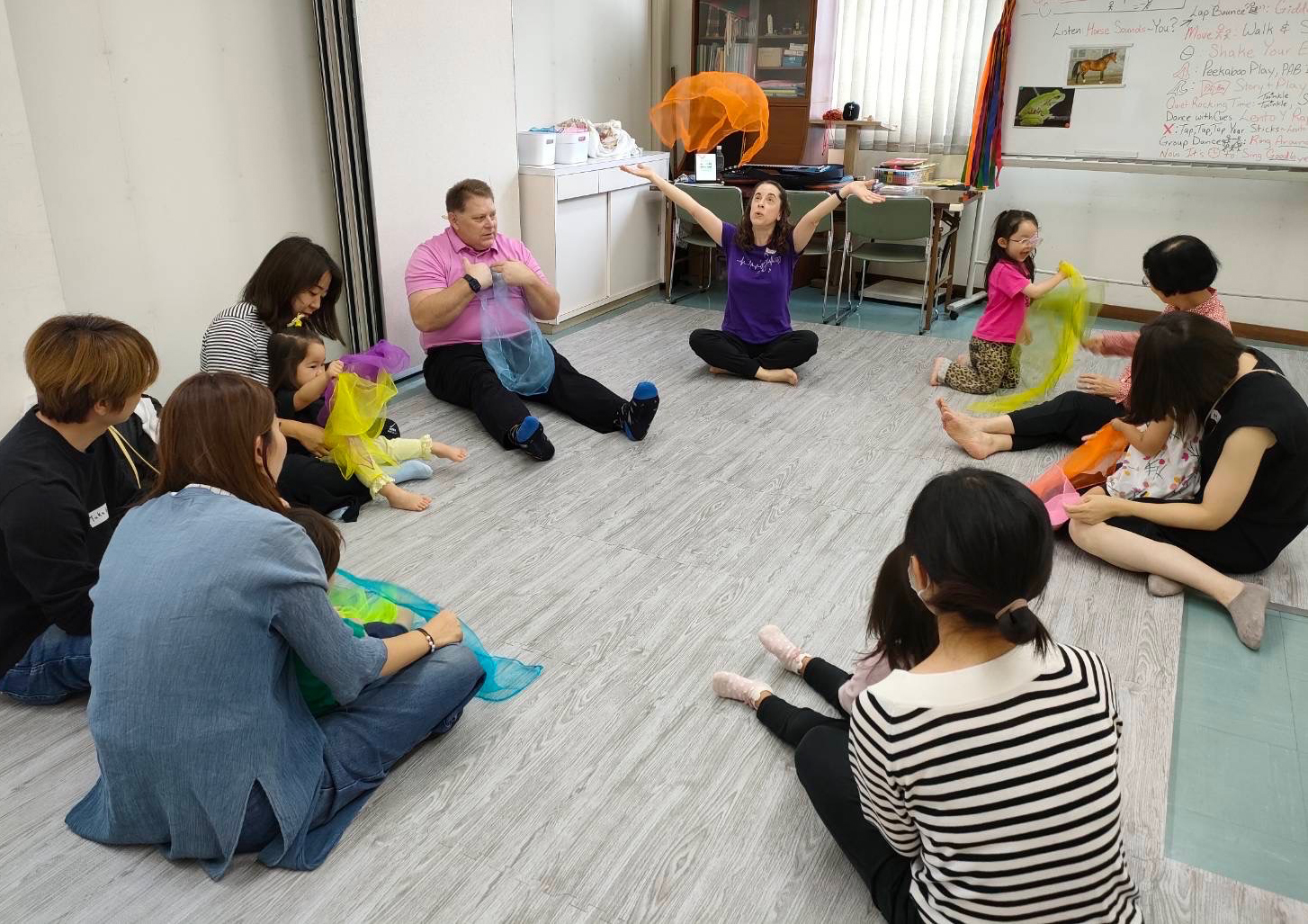
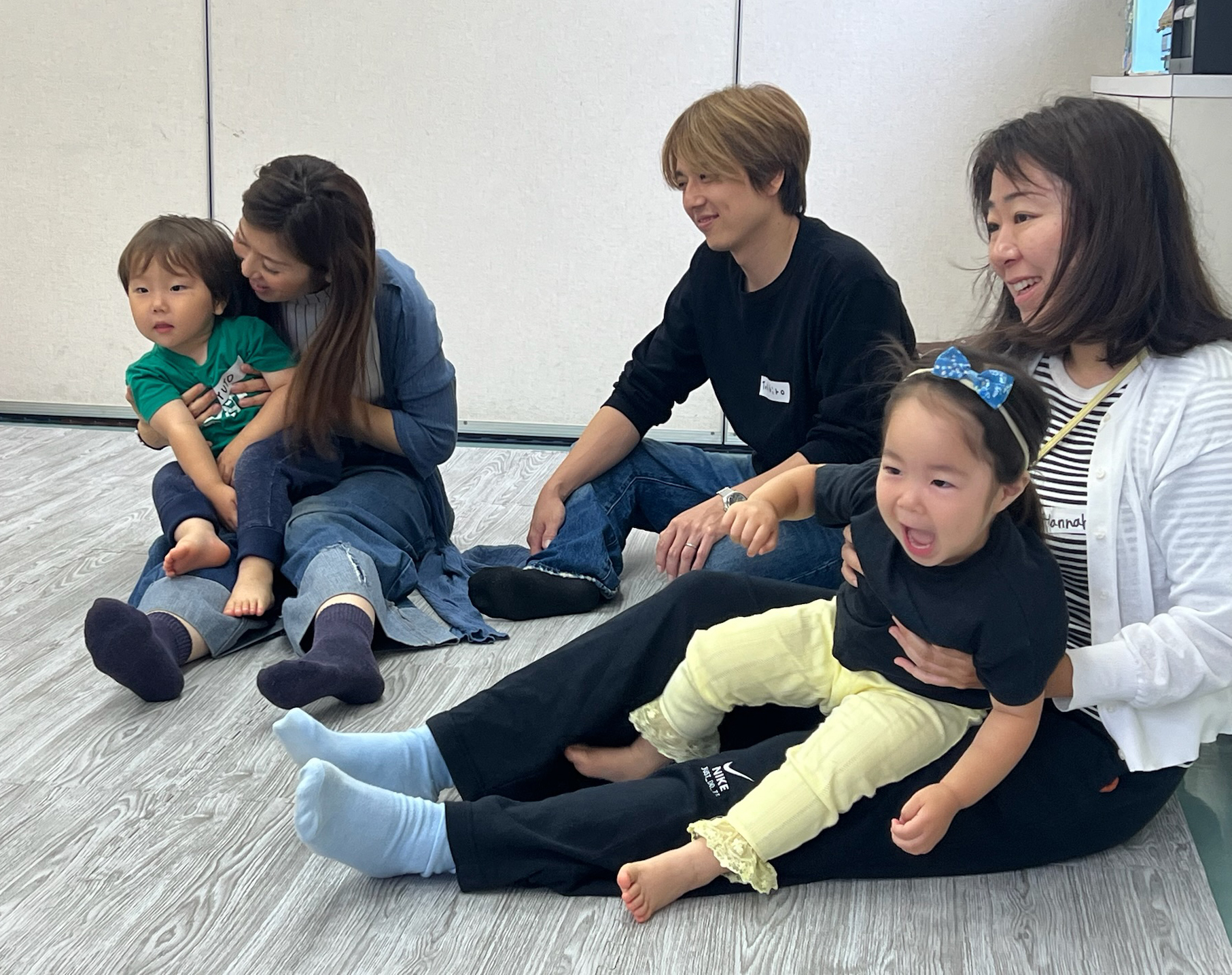
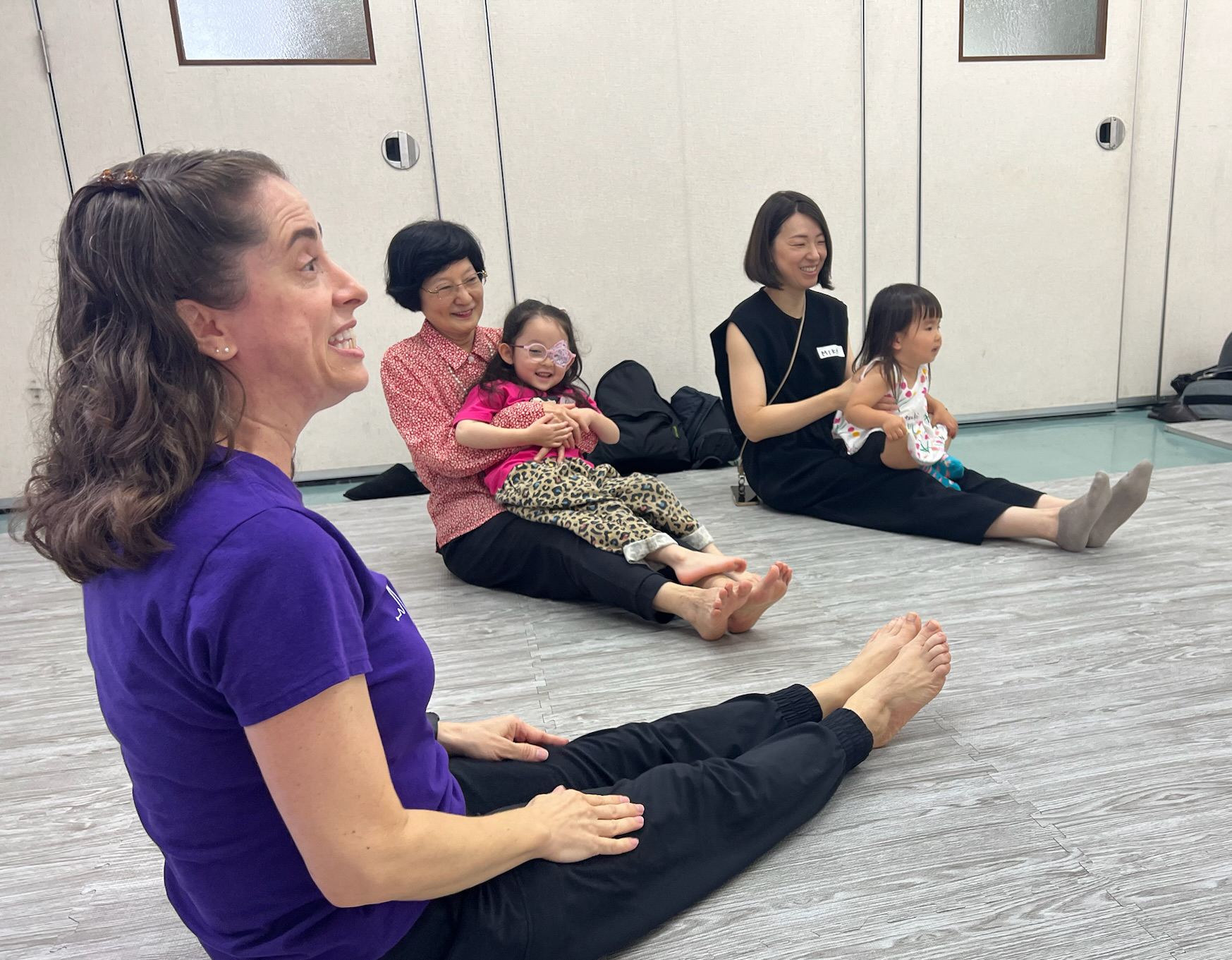
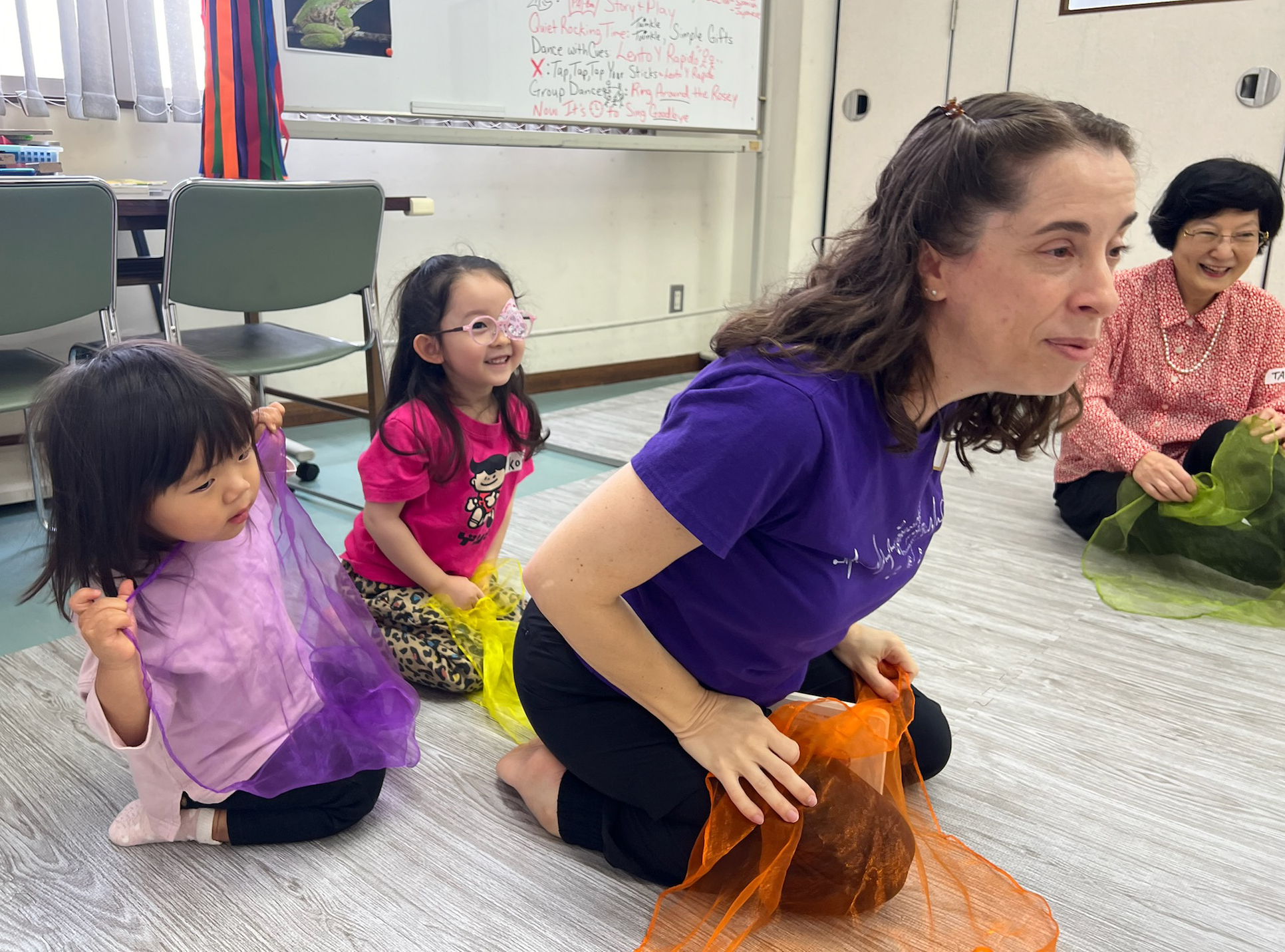
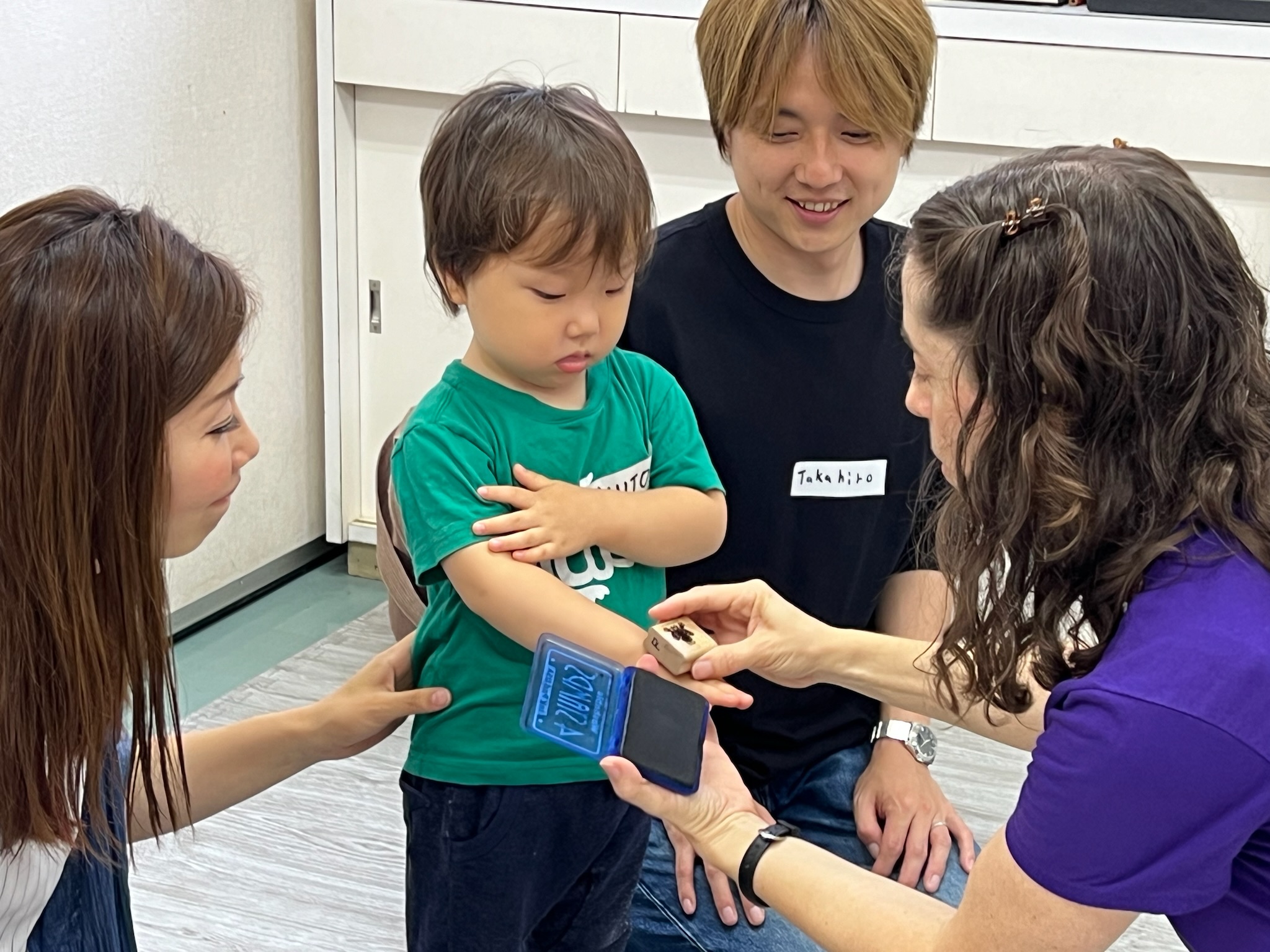
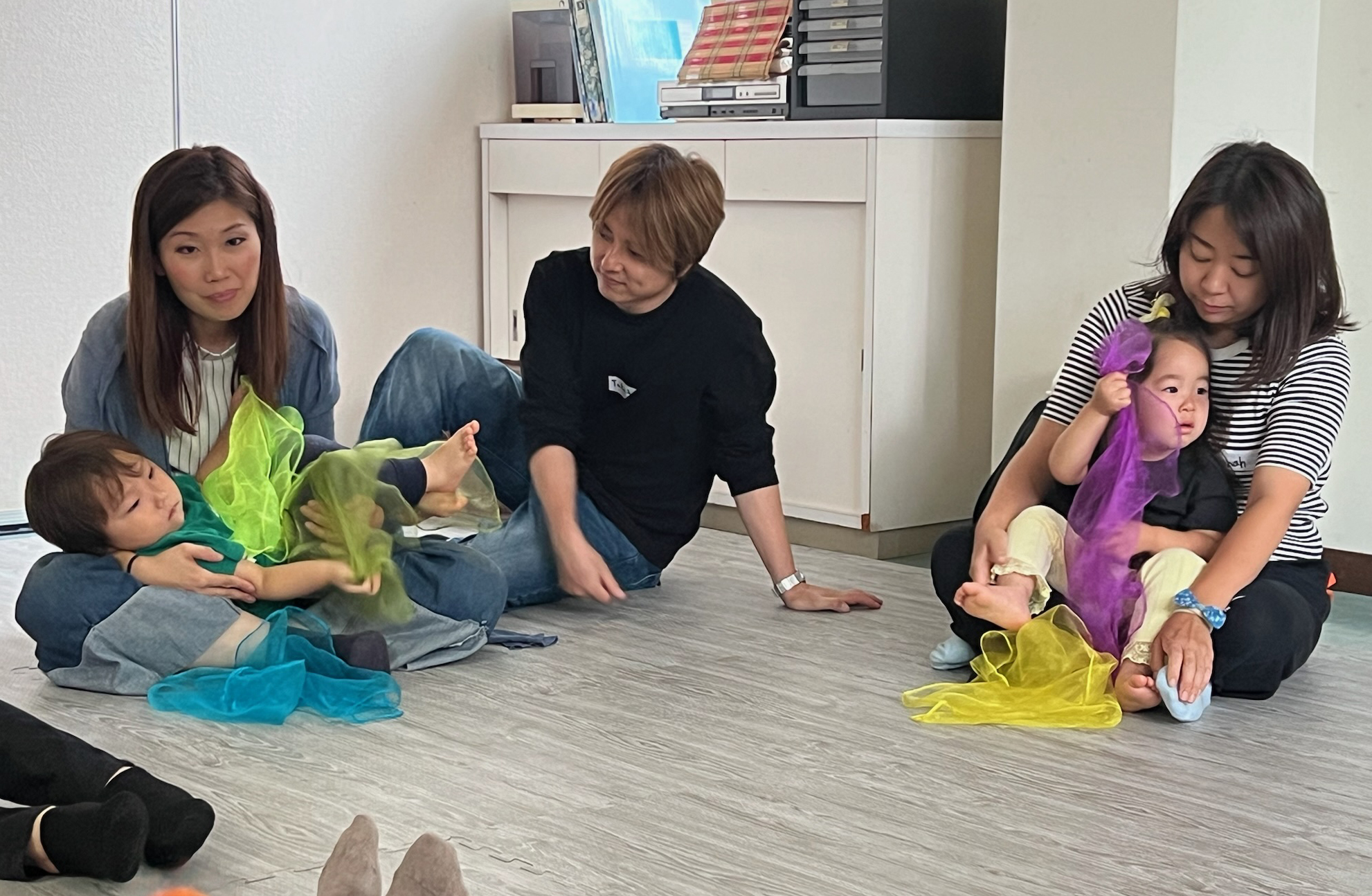
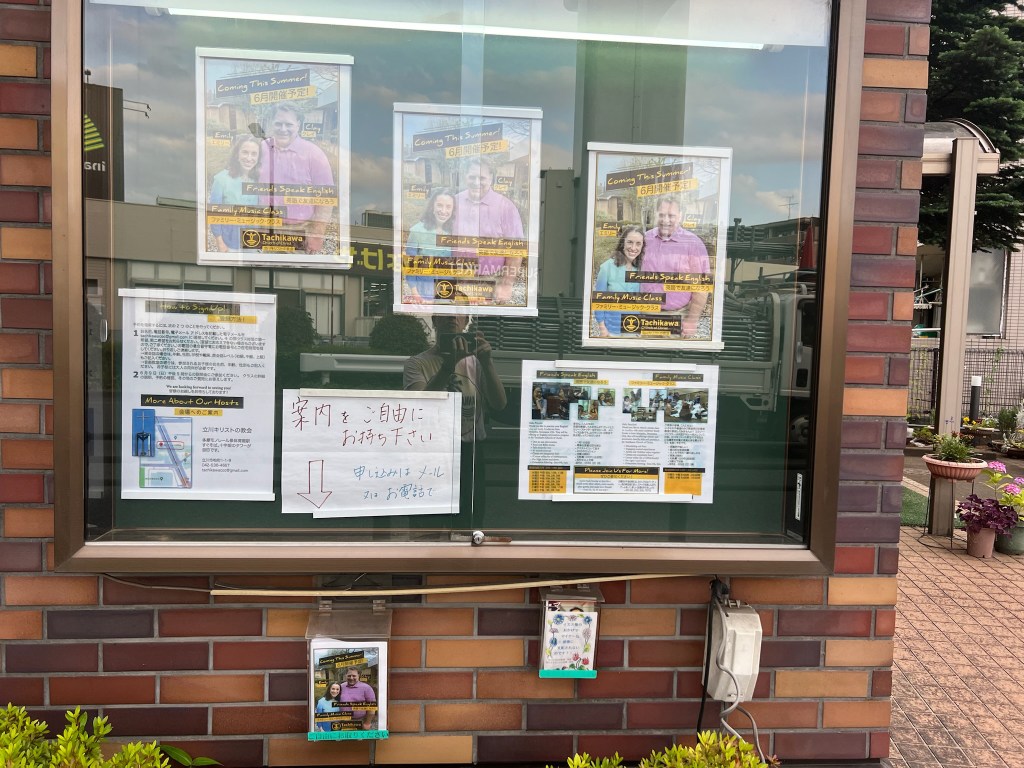
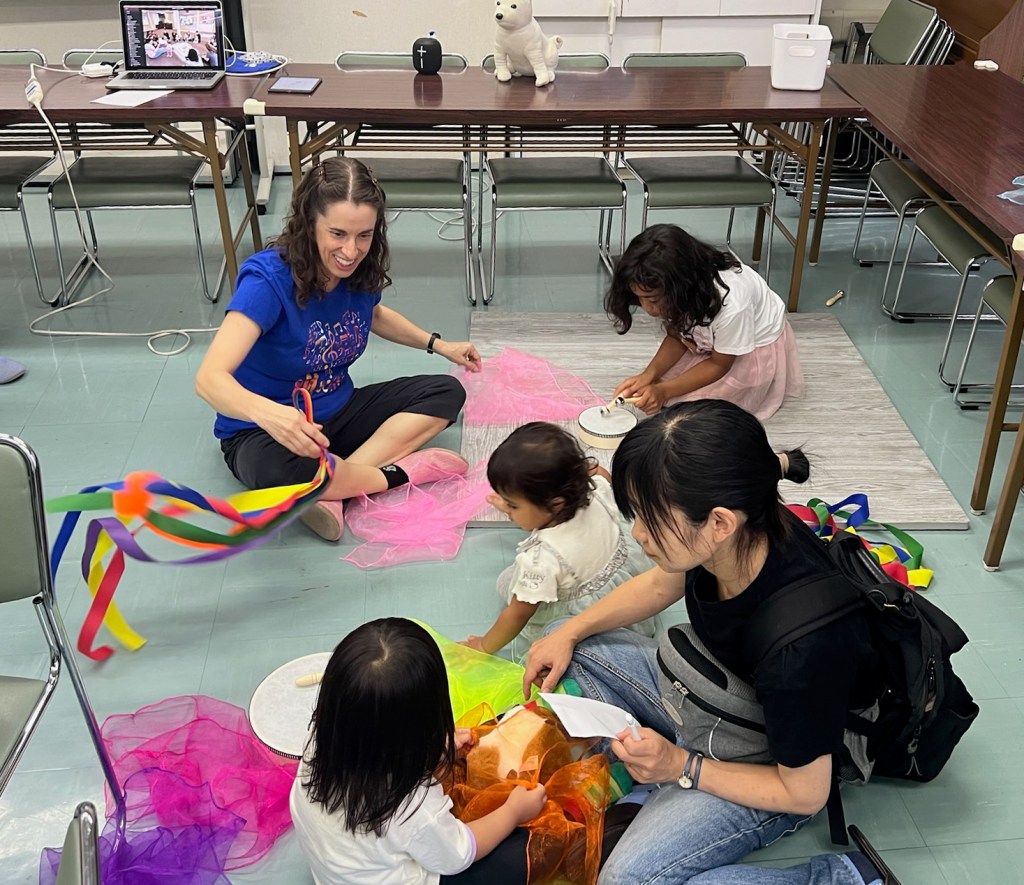
English conversation times and family music classes have continued this week, and both have been encouraging. A couple of new readers have signed up, and some others are now coming twice a week. But the *really* big thing which God did this week was three new families for music class! Emily and I were out and about doing a little shopping in the downtown area of Tachikawa when she noticed one of the nearby buildings had rather peculiar colors and shapes built-in. We could tell enough from the signage that it had something to do with children, so she suggested we wander over there and check it out.
We entered the lobby and started looking around at some of the information inside. Before long, a Japanese lady came in from the street. Emily asked her what this building was all about, and the woman replied saying it was a training school for teachers of kids from a variety of age levels – preschool through high school. We shared with her about our backgrounds as teachers ourselves, and then described what we were doing here in Tachikawa with English conversation and music classes for young families. After a few more pleasantries, we said goodbye and returned to our shopping.
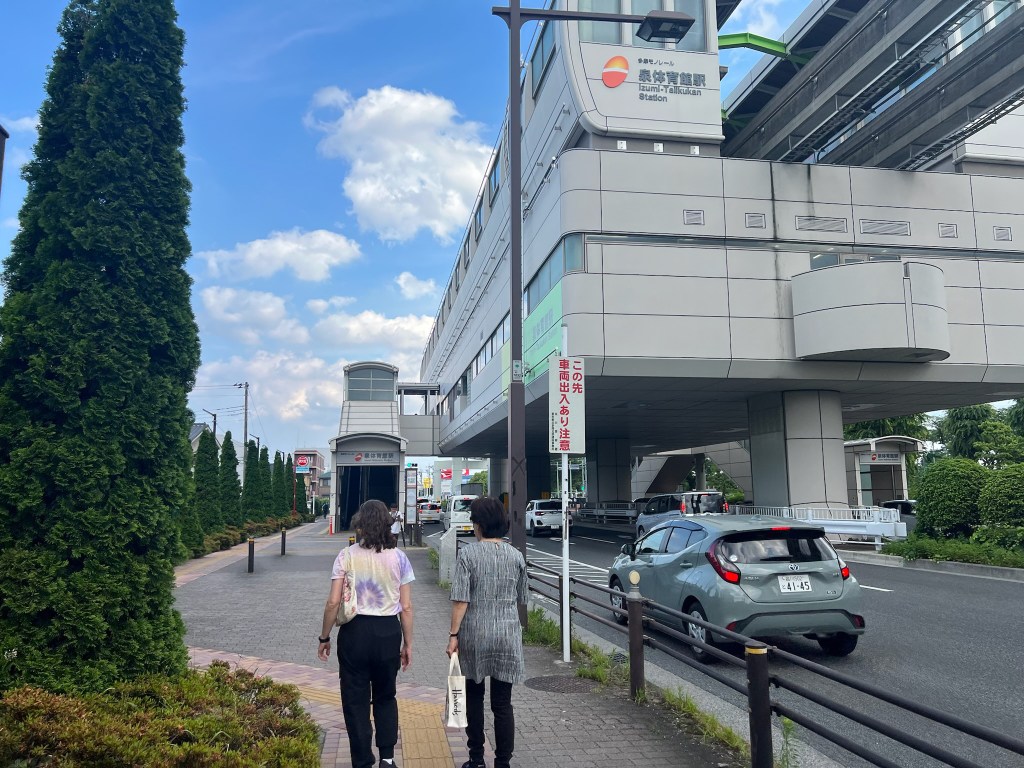
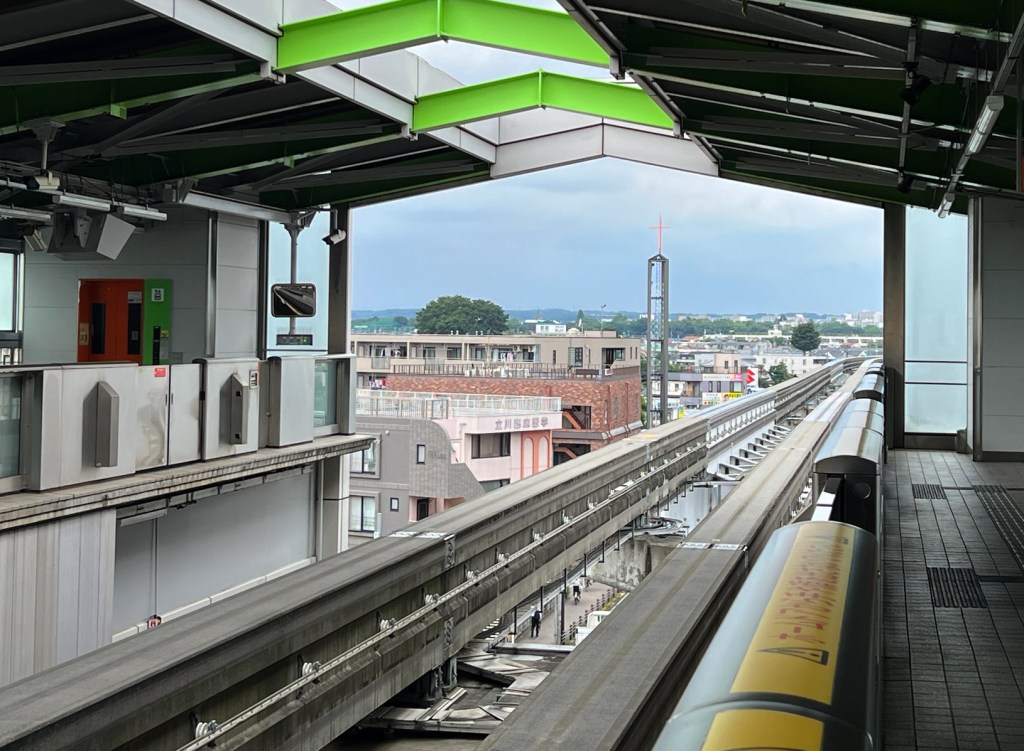
A couple of hours later, Emily and I were done shopping and sitting on some benches near the corner of a very busy intersection close by the train station. We had picked up some lunch items at the nearby convenience store, and stopped at this spot to enjoy them before getting on the monorail to head back to the church building. It’s a great spot to do some people-watching and chat between ourselves. Before long, one of the people walking by turned our way and came right up to where we were sitting, saying “Remember me?” It was the lady from the teacher training school lobby!
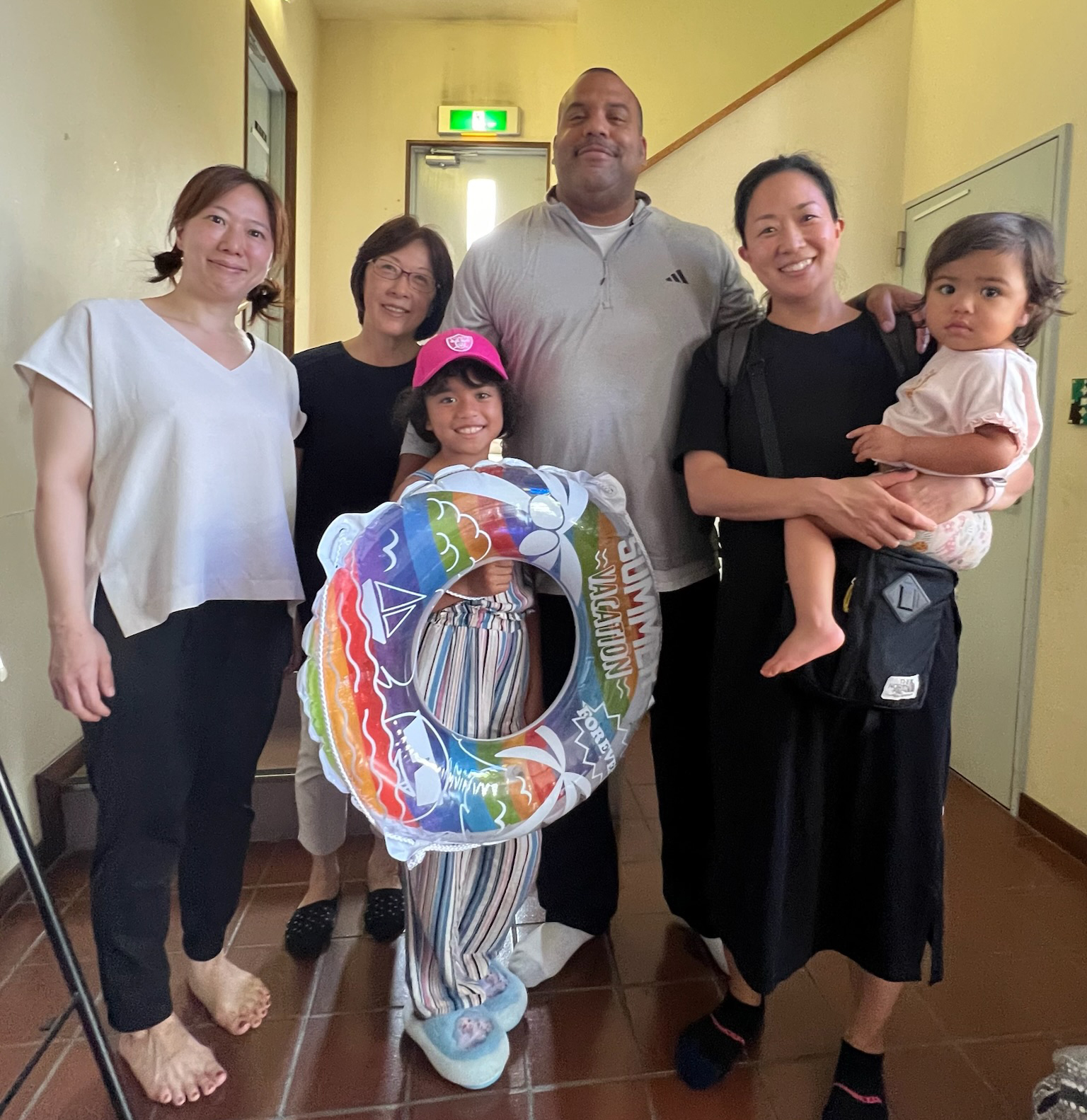
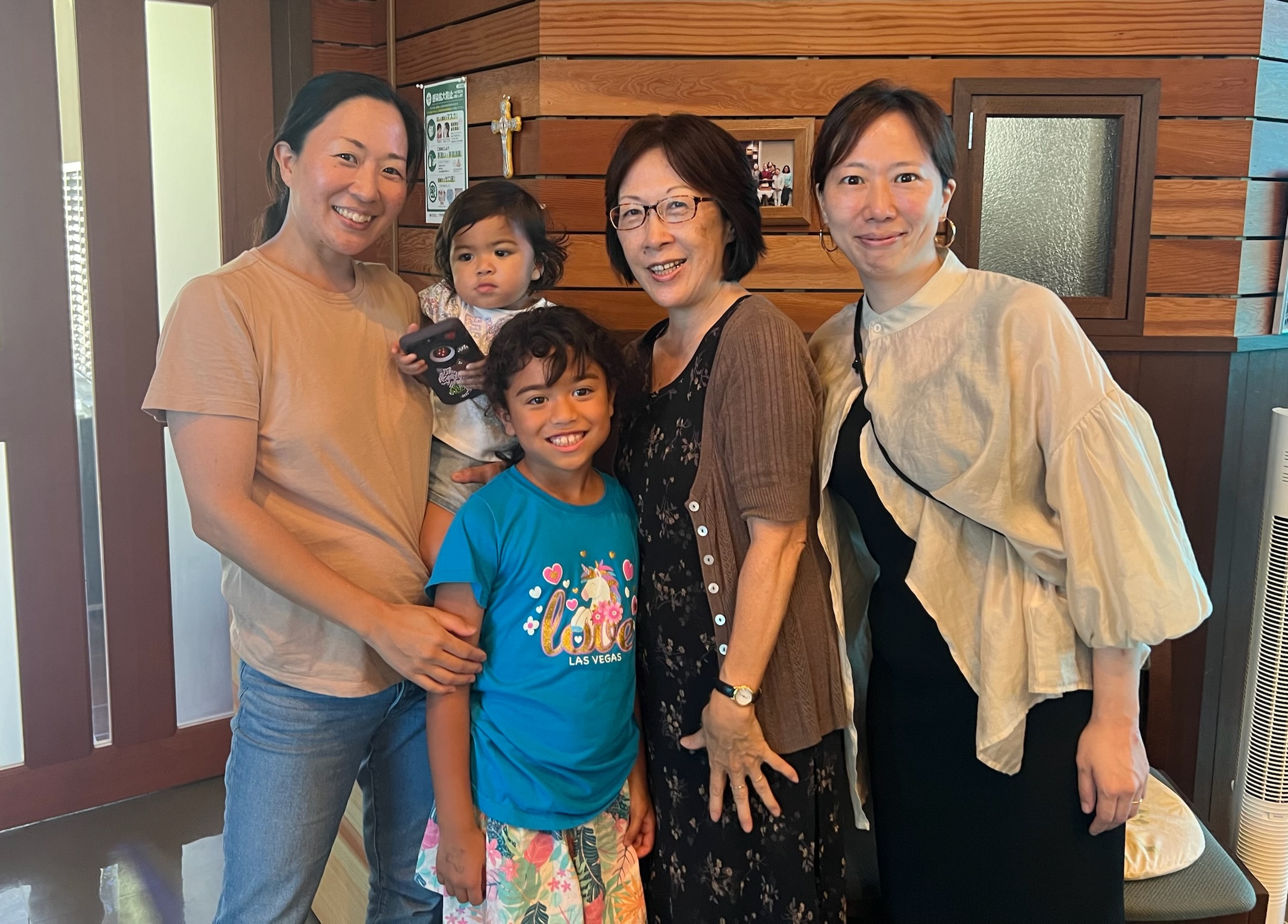
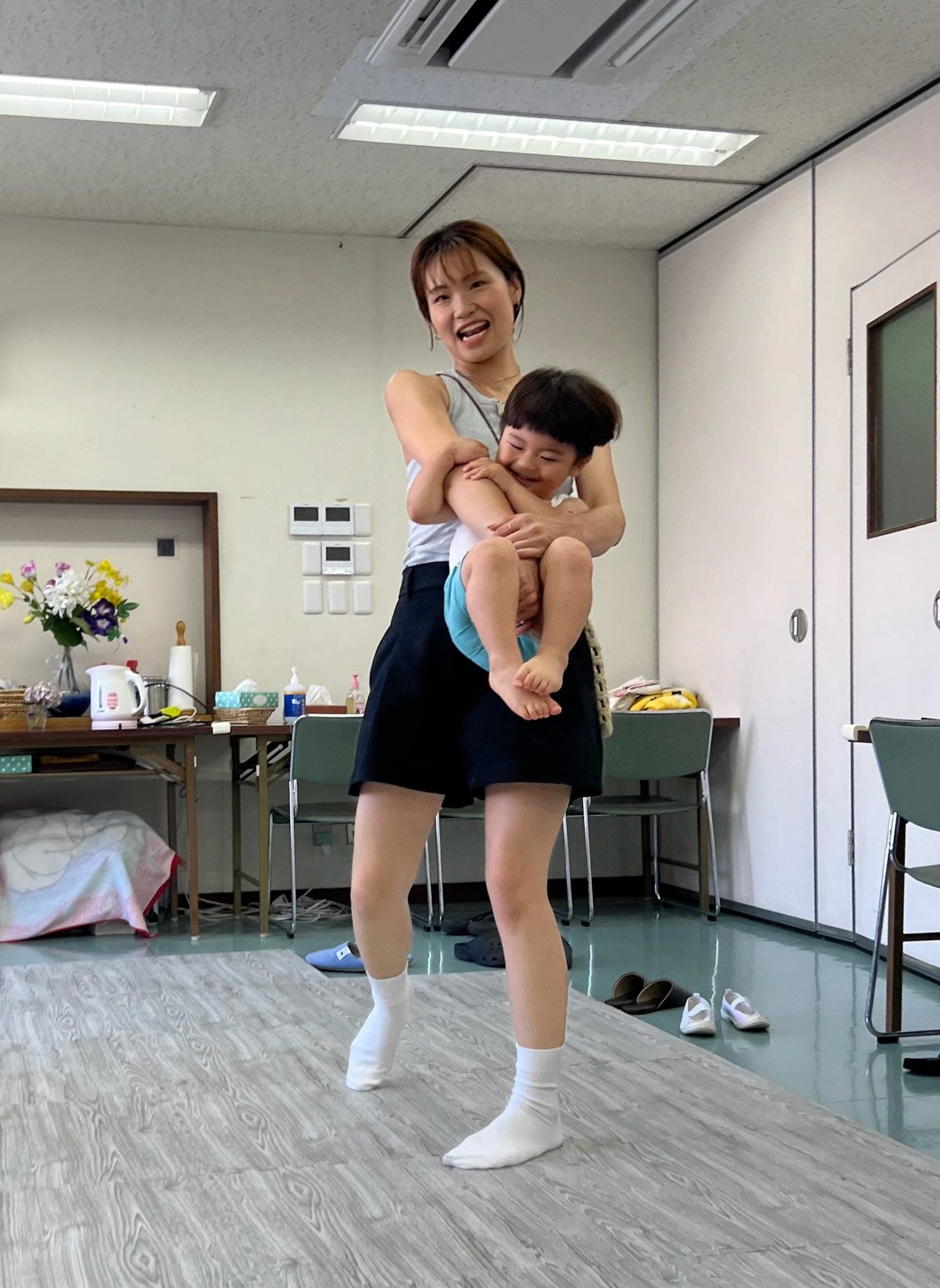
She explained that she has a two year-old daughter, and that she was so very glad to run into us again because she would like to attend the family music class! We figured out how to AirDrop the class flyer to her phone so that she would have all of the information, and then just marveled between ourselves how good it was to reconnect with her. To top it all off, she introduced herself and gave her name – Hanna. Originally, we assumed it was Hana, which means ‘flower’ in Japanese, but she volunteered that it was actually Hanna, like from the Bible. She is not a Christian, but her mother had some sort of familiarity with the Bible, so she chose the name Hanna. Wow!
Over the next couple of days, Hanna had registered by email for herself and her daughter. Even more, she also wanted to register for two other families! God led us to just the right places at just the right times in order to connect with Hanna and two others through her. We are thankful for the Spirit moving, and praying that these next couple of weeks will plant some seeds for the future.
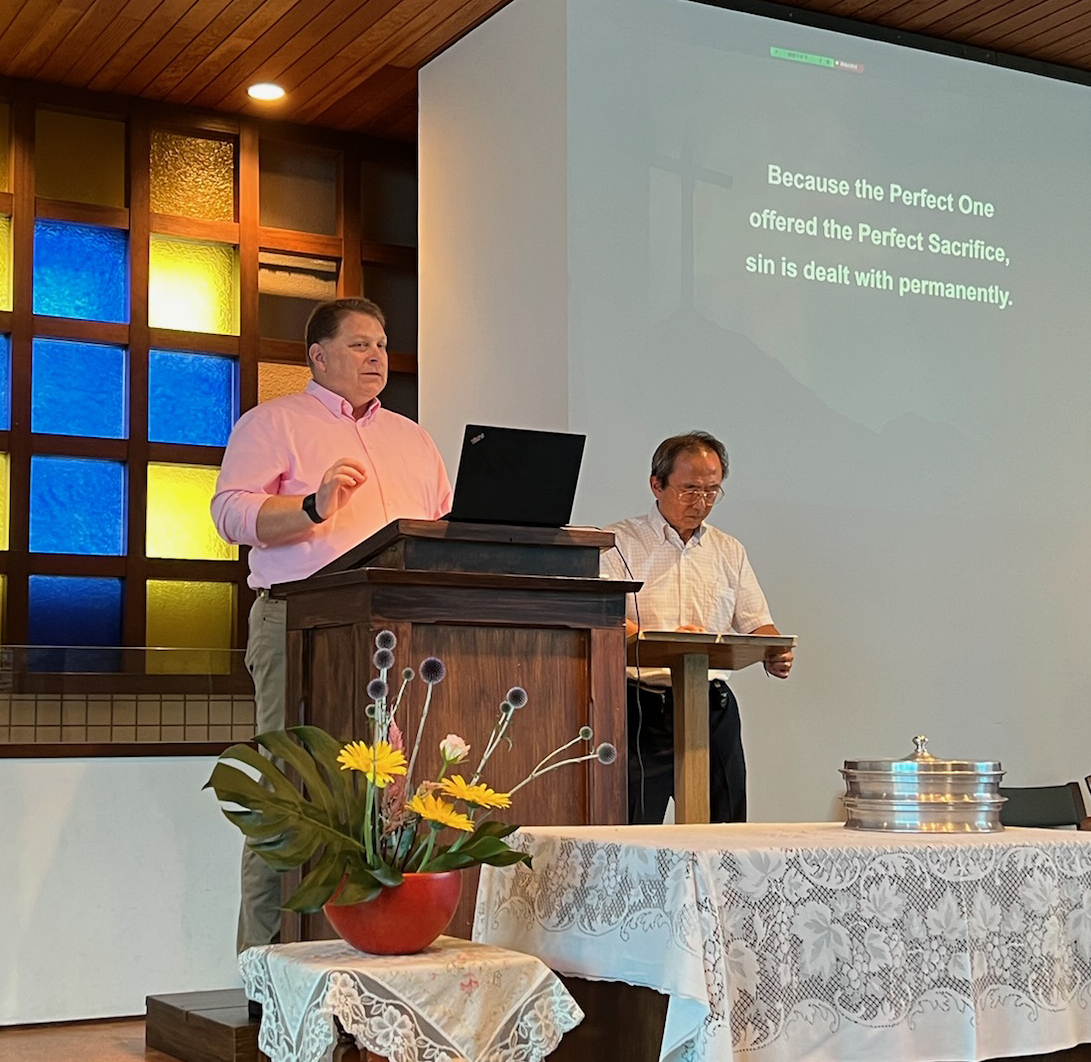
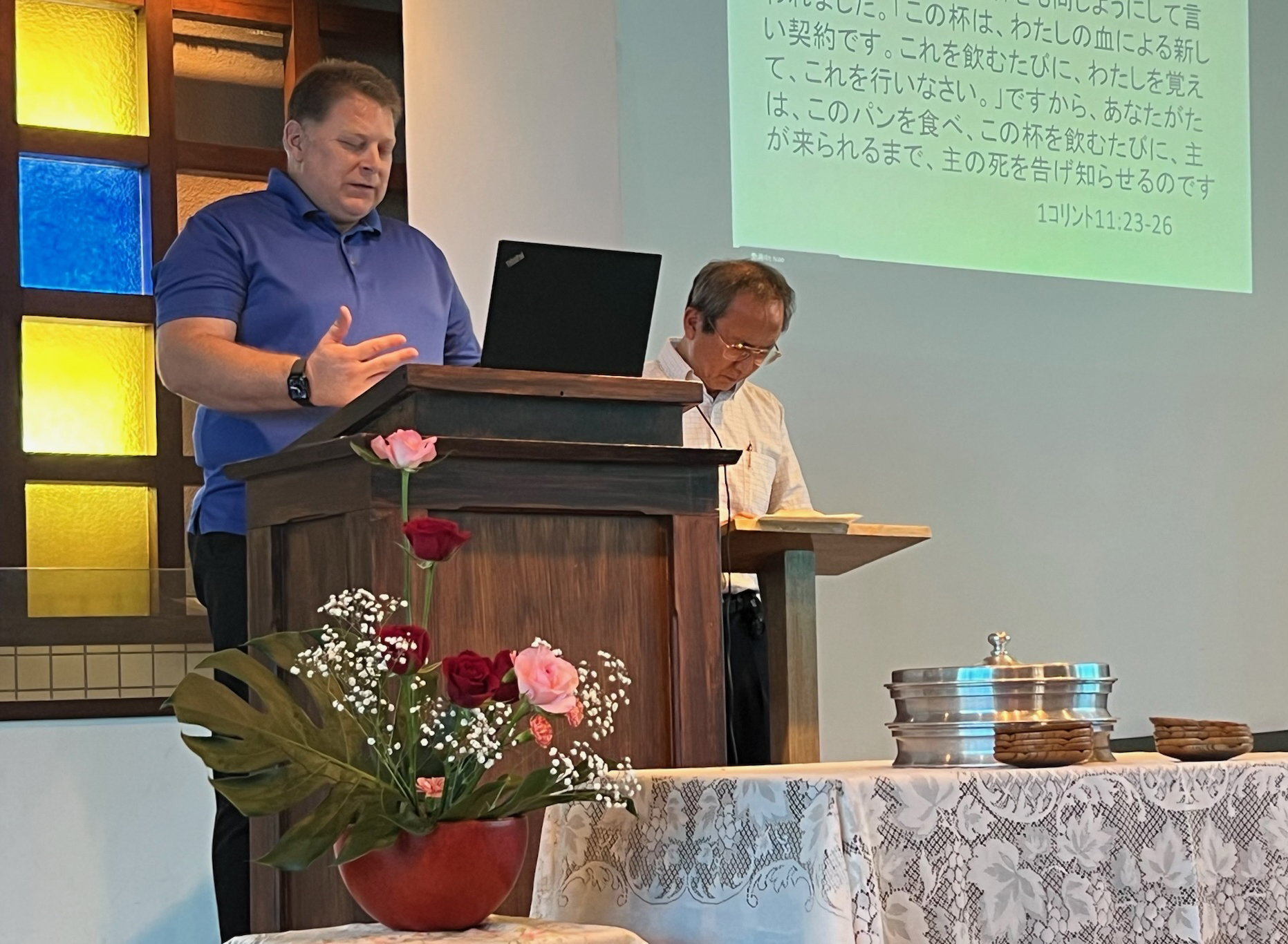
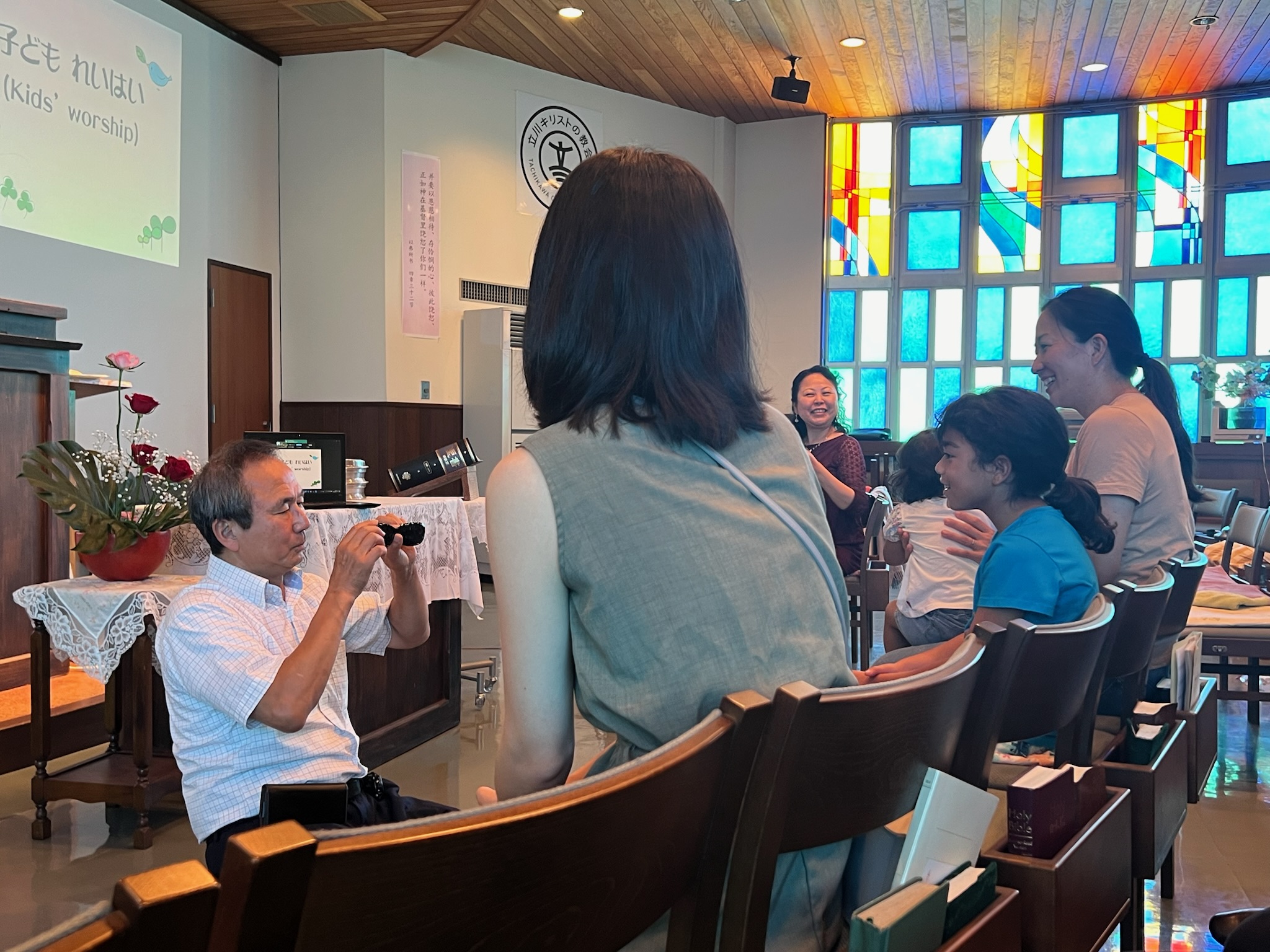
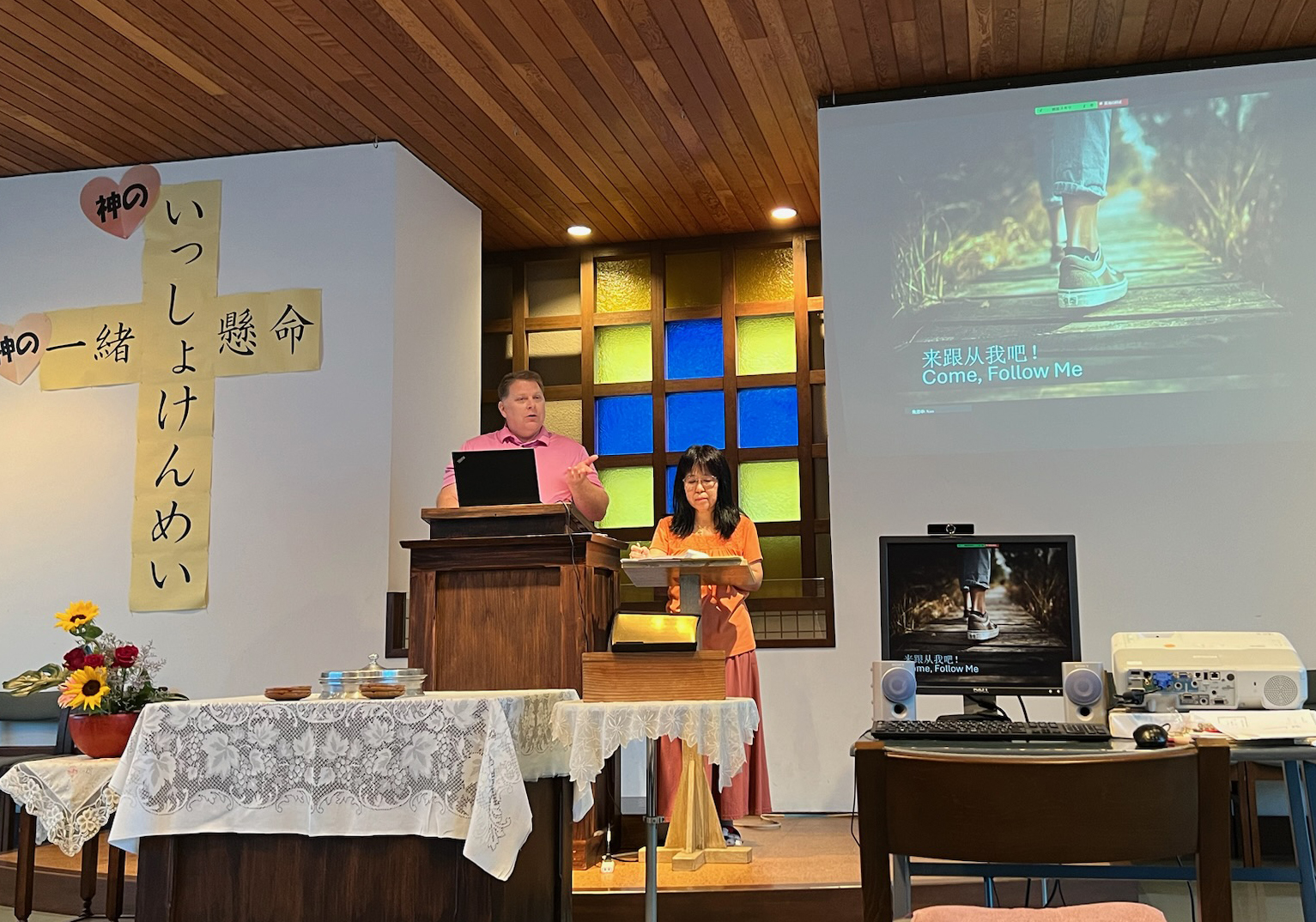
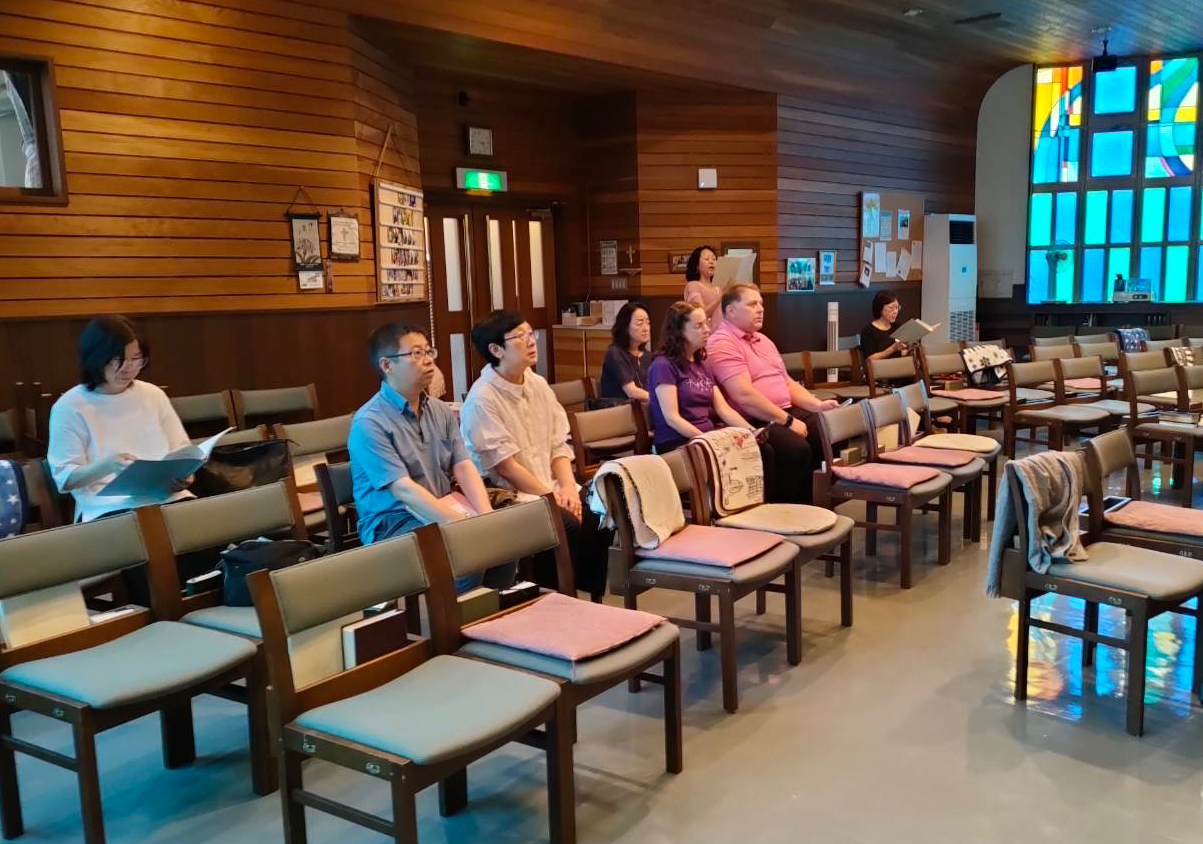
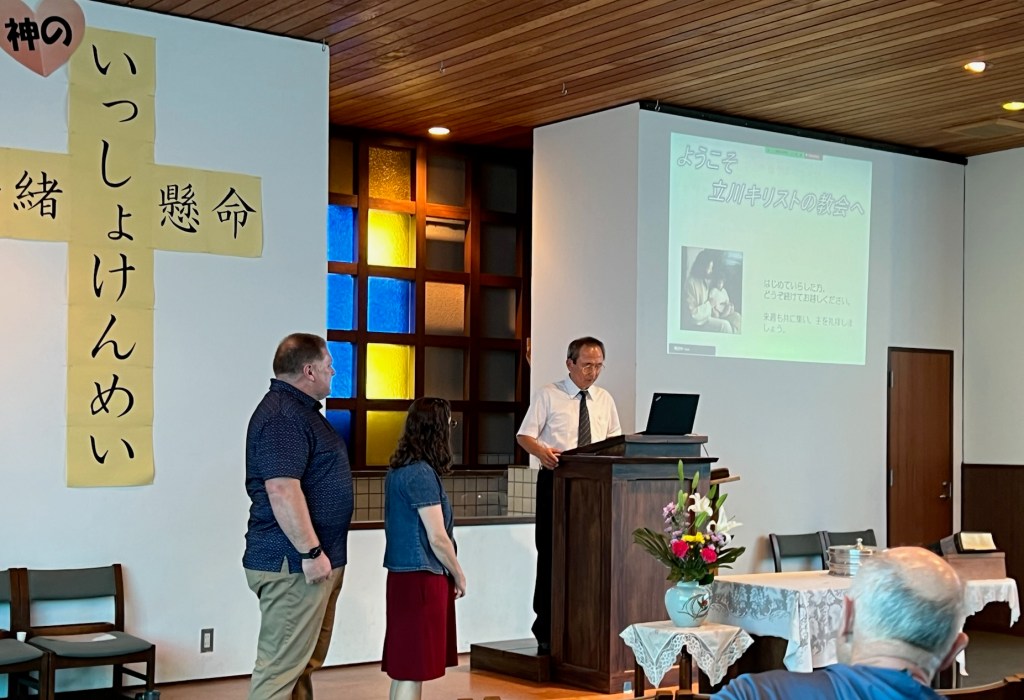
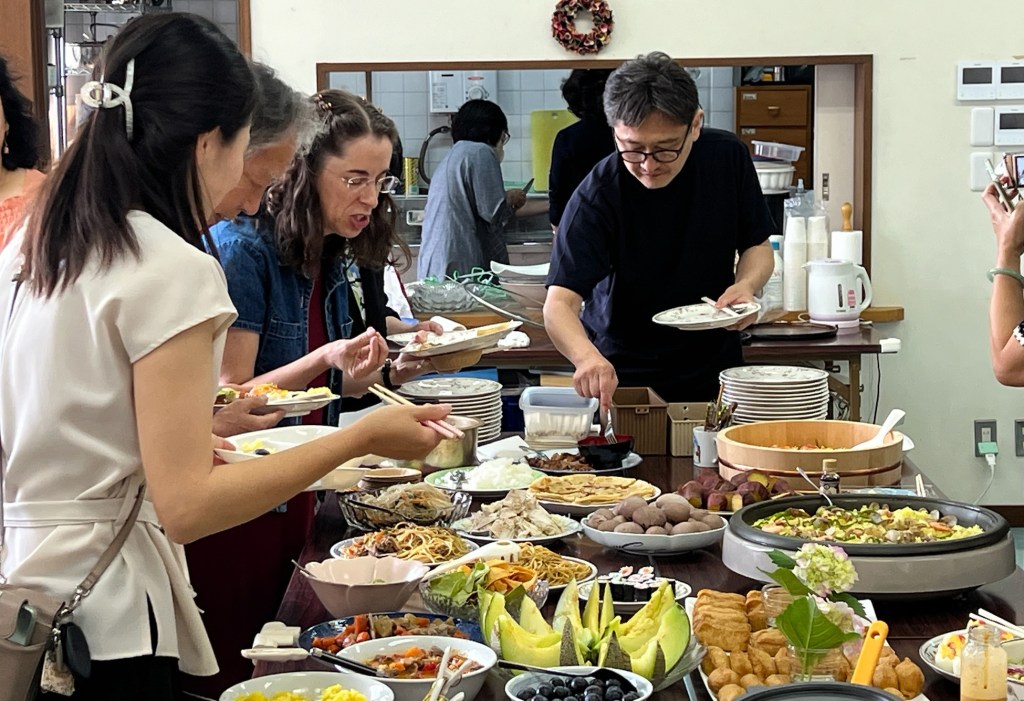
After preaching in the Japanese worship service last week, Nao asked if I would be able to preach the same sermon again this week for the 3pm Chinese worship service. There is a small group of believers who use the auditorium once a month for a worship service in their native language. They also join in with some of the other Japanese church activities, such as potluck meals. I was glad to be able to connect and share the message with them. A dear sister named Sue Ling translated for me, and we enjoyed worshiping God in yet another language. Several of the members had recently returned to China for a couple of months, so the attendance was small, but it was still a sweet time focused on a common Savior.
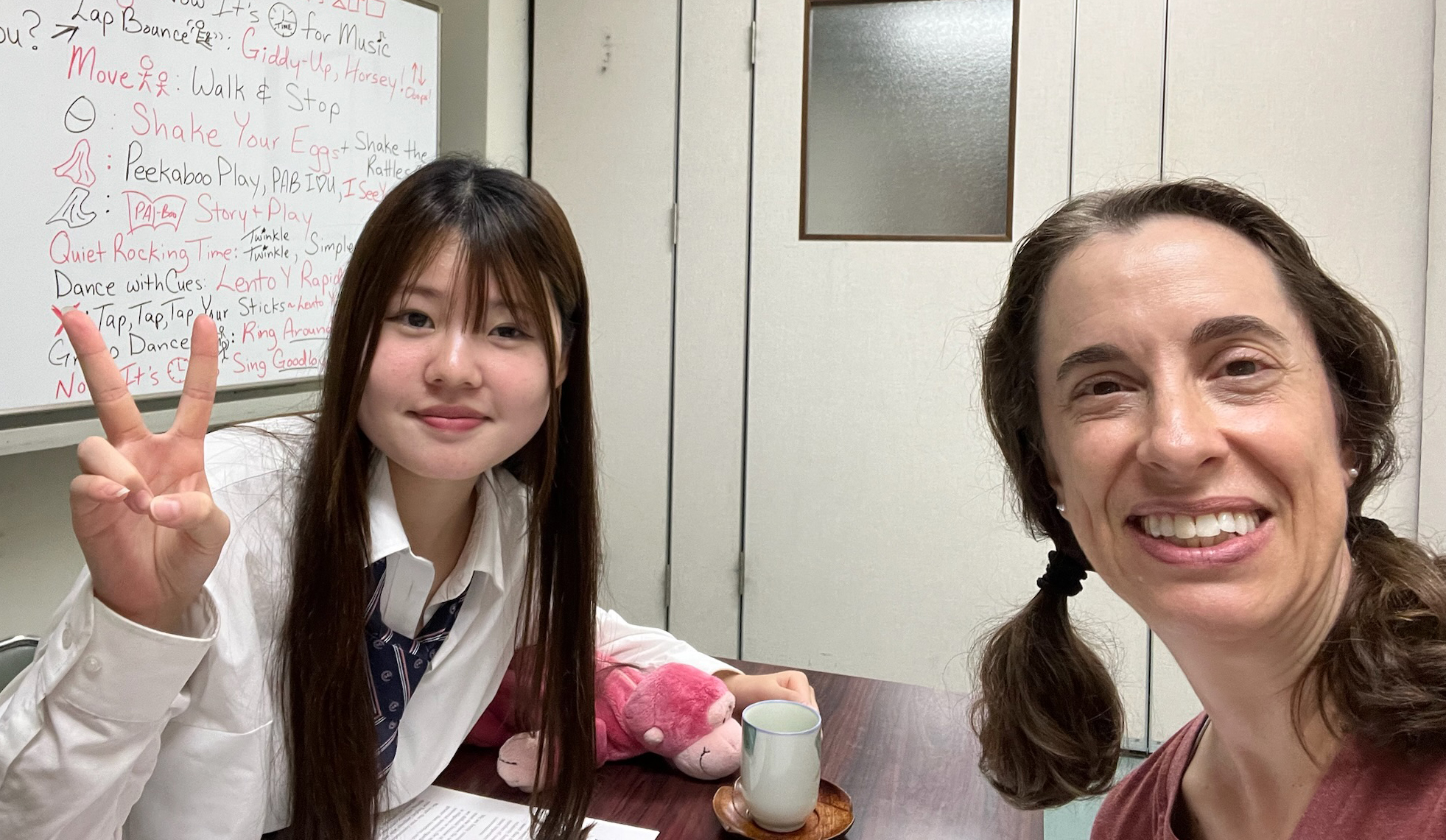
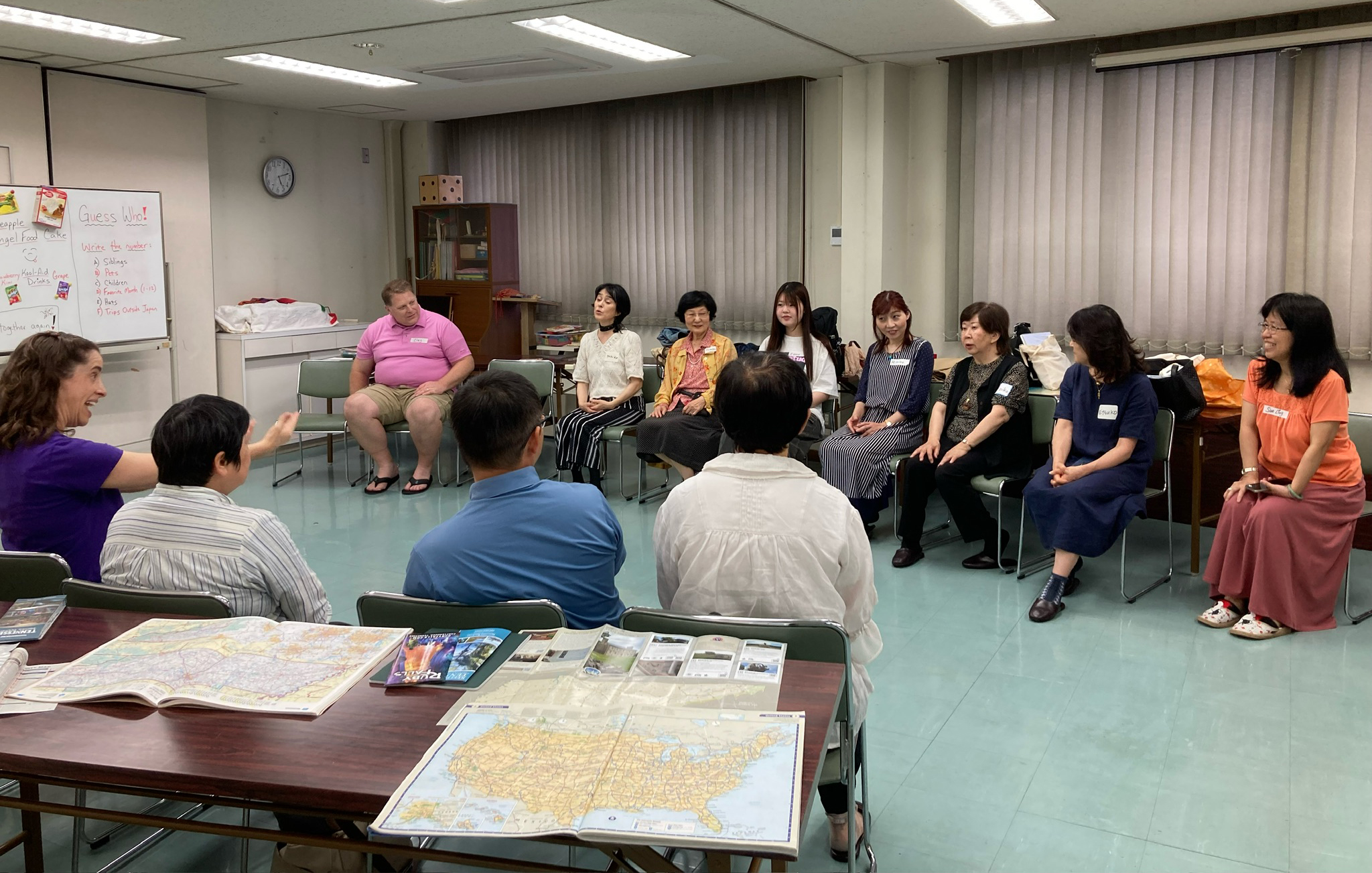
A little later that same evening, we hosted our next ‘Casual Party’ for English readers and church members. We were encouraged by a few more attendees, and everyone really enjoyed themselves! I had some American music going in the background (Dave Brubeck!) to go with grape and strawberry-kiwi Kool-aid. Emily had also prepared a pineapple angel food cake to share, and everyone declared it was ‘Oishii!’ or ‘delicious!’ We played another getting-to-know-you guessing game and gave out a couple of door prizes at the end. It was a sweet time to connect and let the readers get to know a few of the church members a little more.
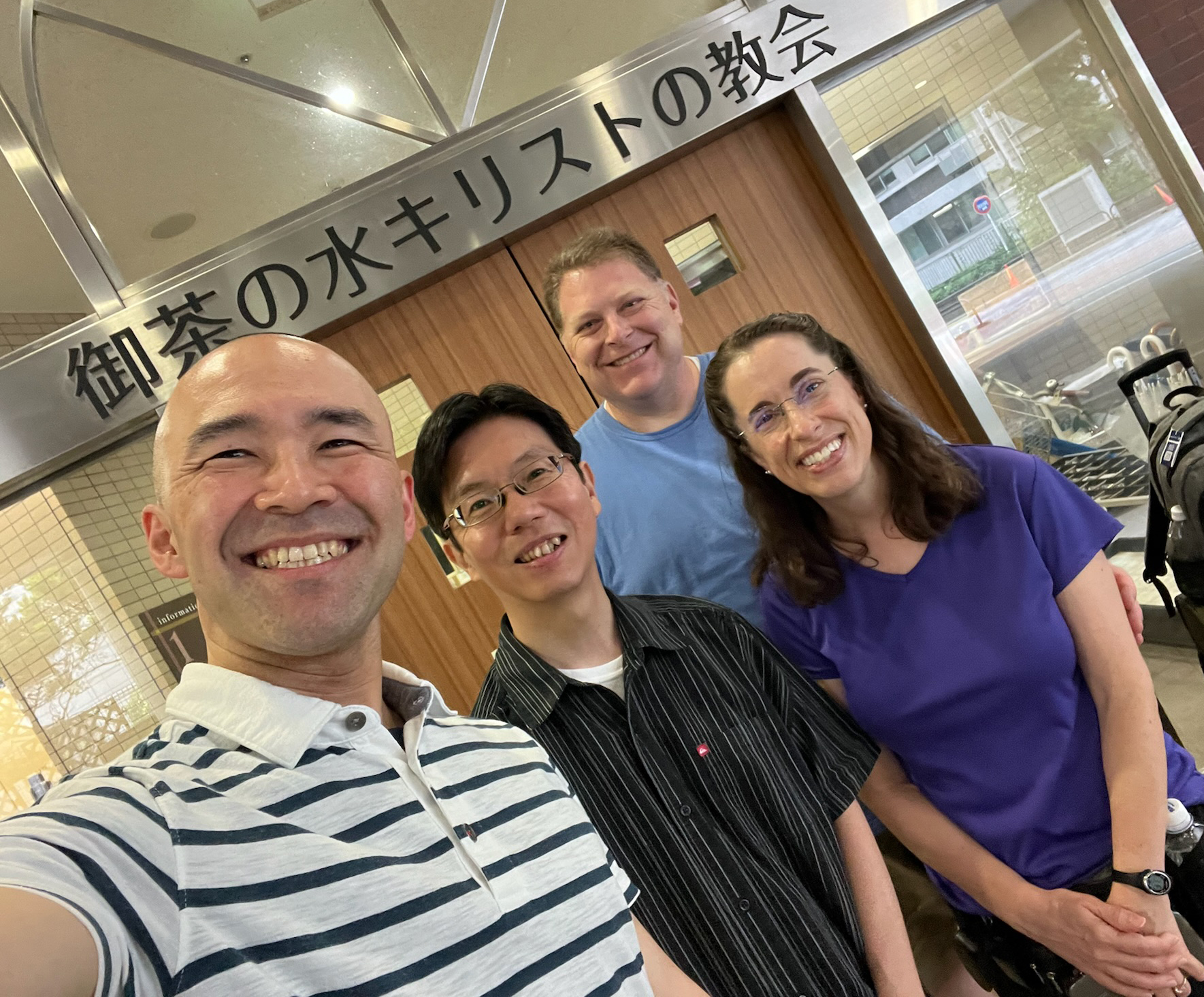
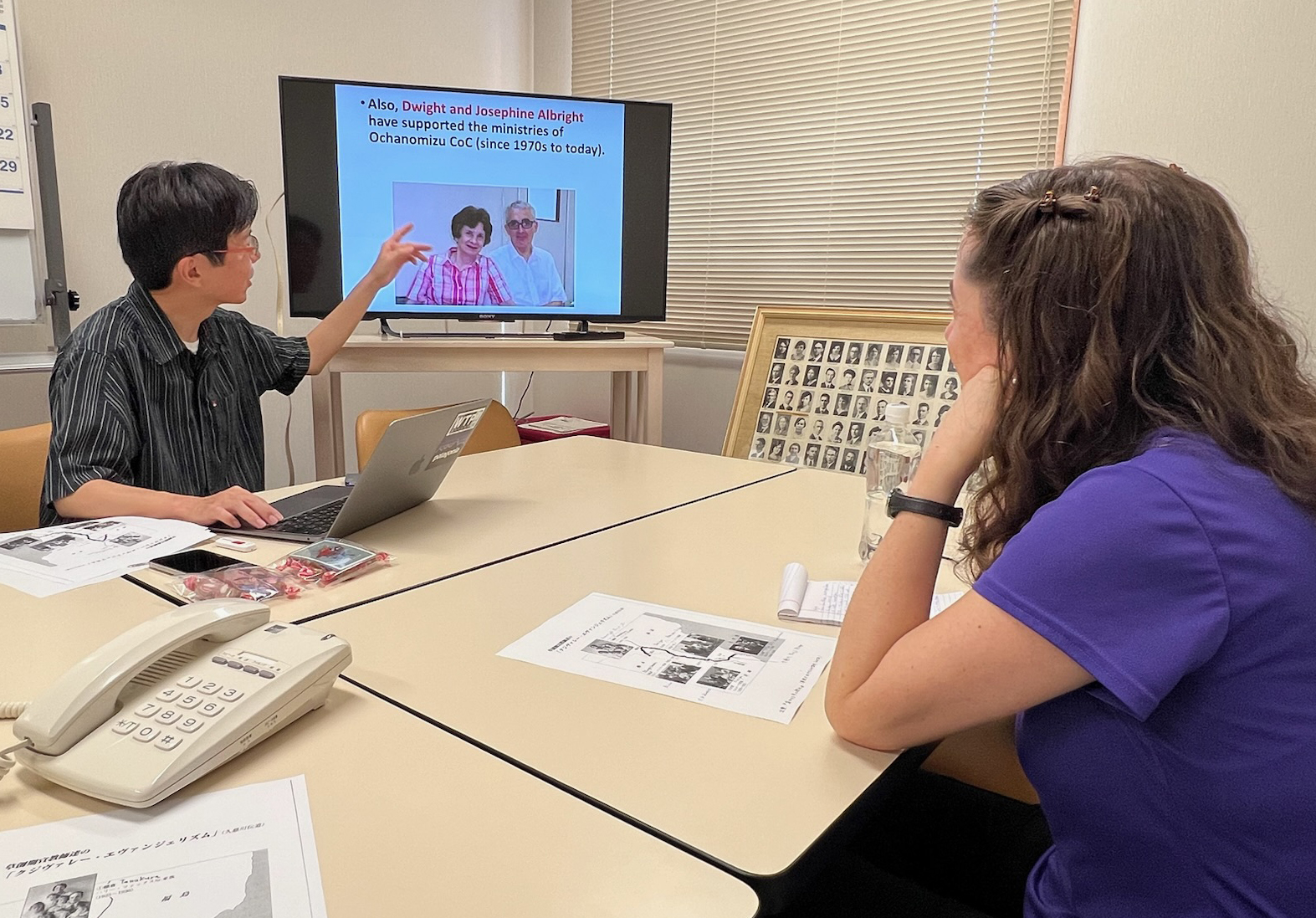
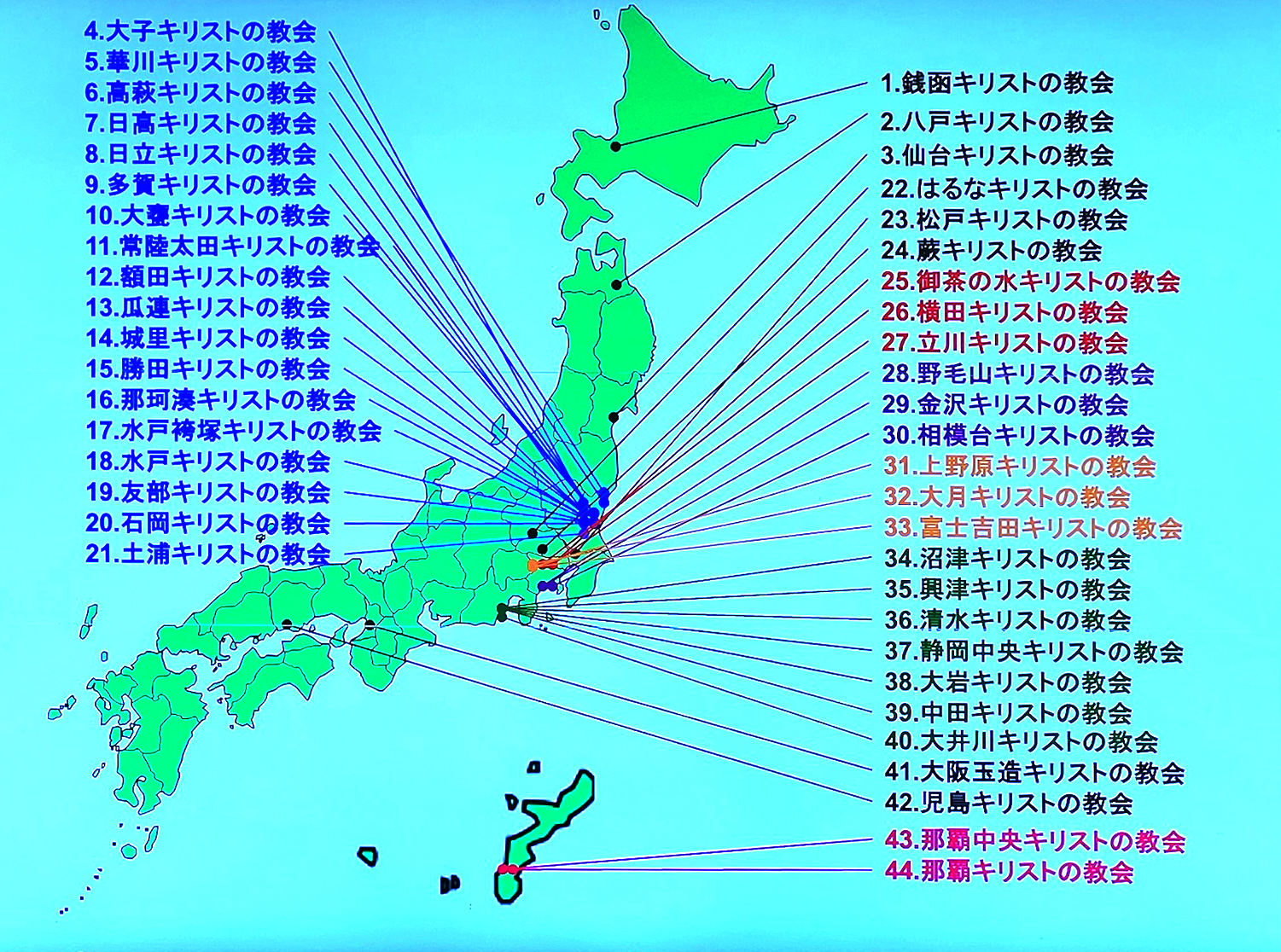
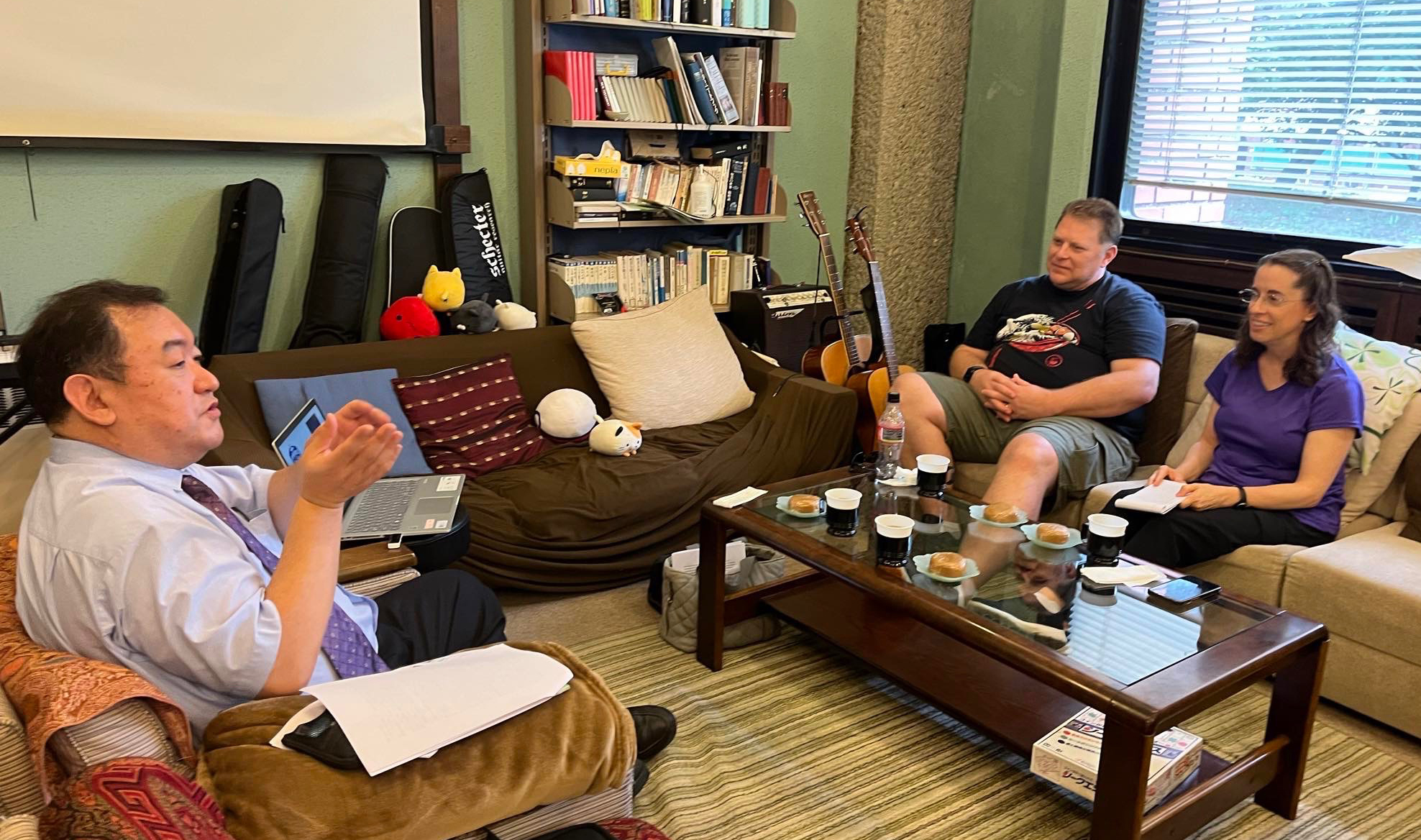
On Monday, Emily and I set out on a two-day excursion. Several people were planning to spend some time with us sharing their insights into Japanese culture and how it affects ministry and missions. They had some history of mission efforts in Japan to share with us as well. We rode the train into downtown Tokyo and headed for the Ochanomizu Church of Christ to meet with Tadayoshi Aikawa and Kazutaka Adachi. They shared some of the history of the churches of Christ, particularly in the Tokyo and Ibaraki areas, as well as some of the challenges reaching and ministering to young adults. The Ibaraki area is where most of the congregations are currently concentrated, and the map above really depicts that well. The ones listed in blue are all in Ibaraki, and the rest are scattered in clusters in a few other places. There is much work still to do!
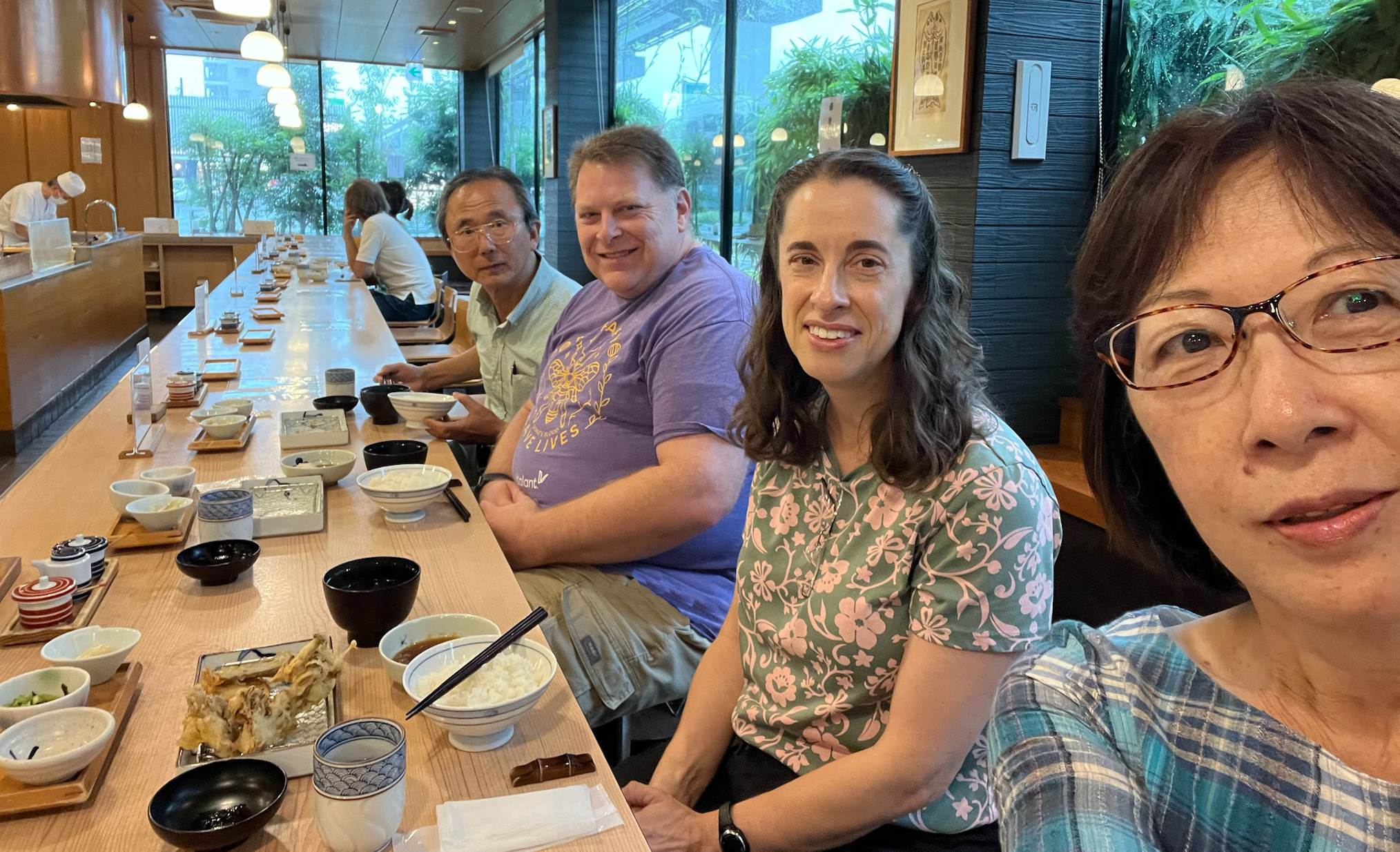
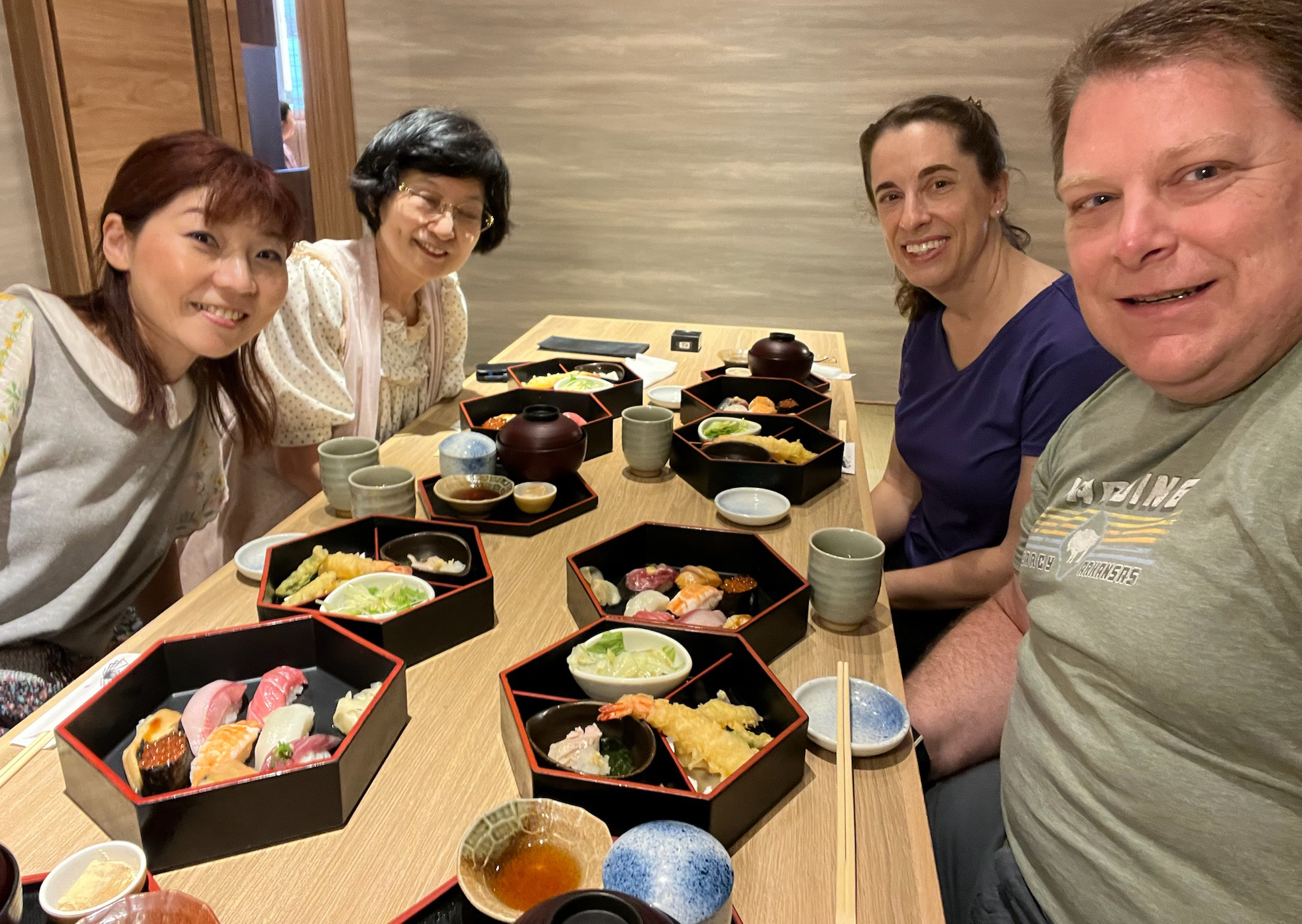
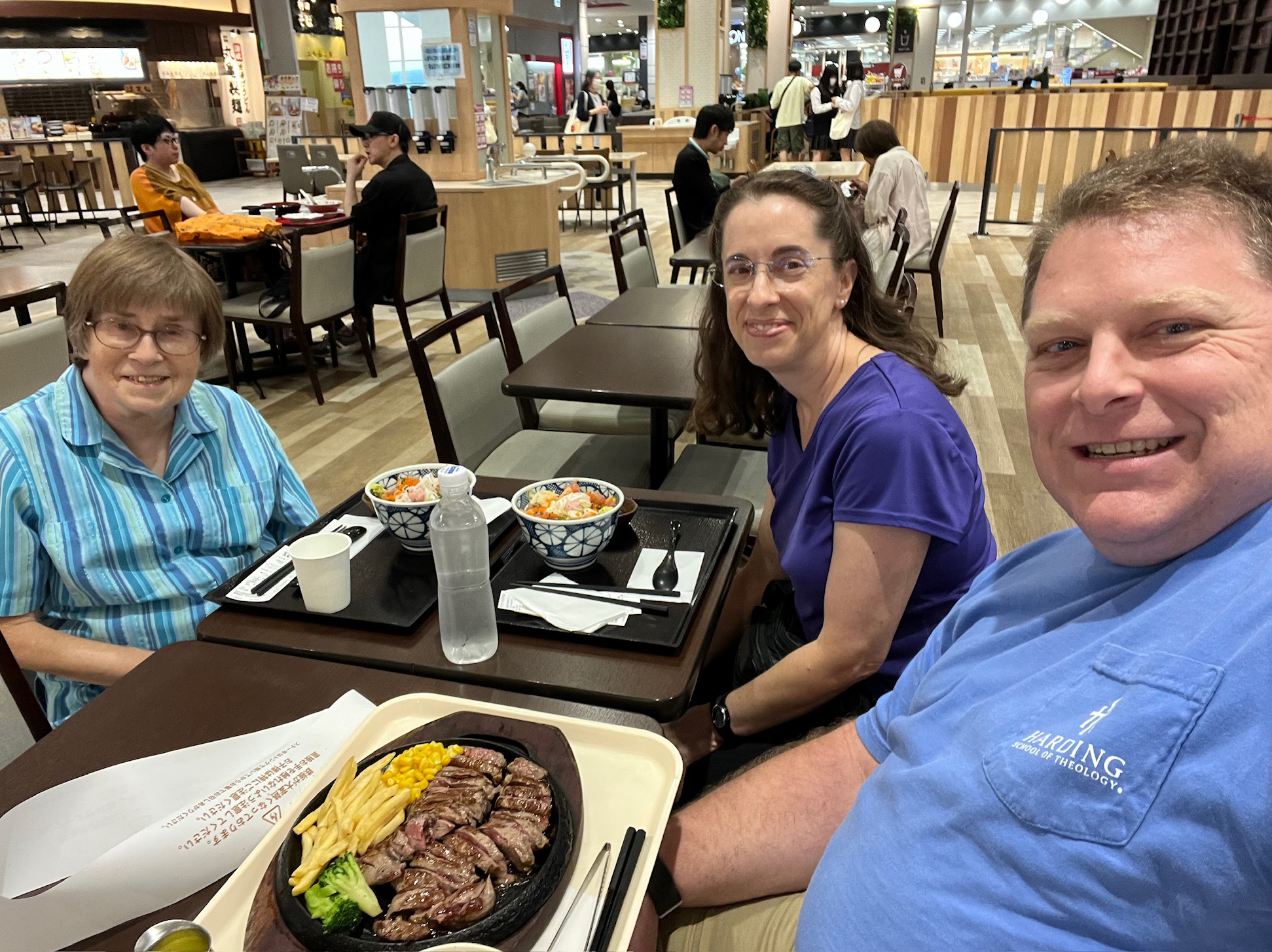
Before long, it was time to say goodbye to Ochanomizu and travel North by train to the town of Tomobe to visit with long-time missionary Jeanne Ray. We started with dinner in the local food court (pictured above). Her husband, Marlin, passed away about five years ago, but she is still continuing to work with the Tomobe congregation and stays busy with a number of outreach activities. She welcomed us into her home to stay overnight, and it was a wonderful time to relax and chat. After being in the big city for a while, it was nice to be in a place that was quieter and slower-paced. She fixed us a wonderful breakfast the next morning and delivered us to the train station for the next stop!
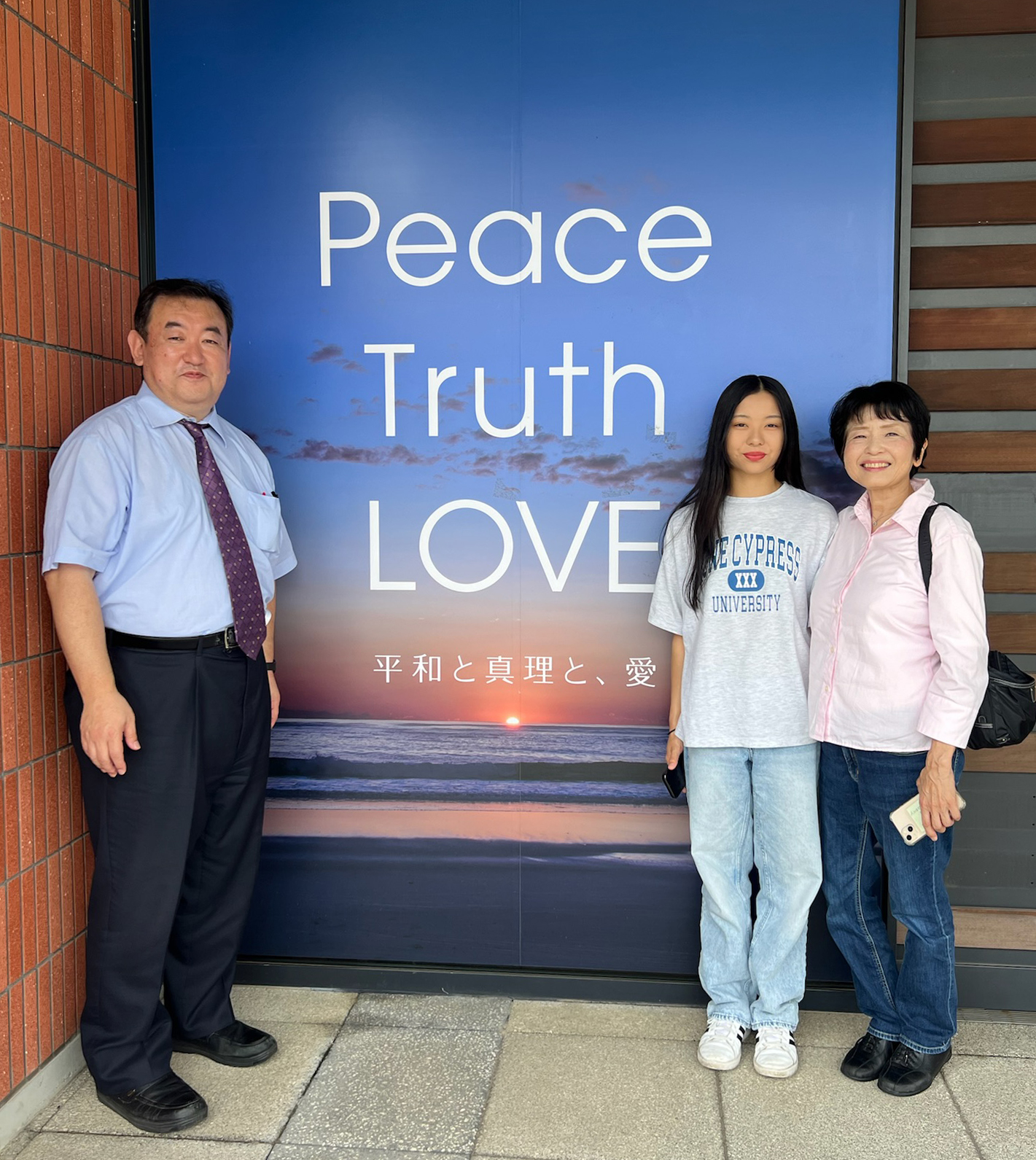
Most of Tuesday was spent in Omika, where Ibaraki Christian University is located. It is a well-known school with about 2,000 students enrolled in a variety of college programs including Education, Nursing, and Engineering. They have grade schools and kindergarten as well. However, despite the university’s name, very few students are Christians. We spent some time with Yoshiya Noguchi, who serves as the campus chaplain. He is also the main preacher for the Ochanomizu congregation back in Tokyo, for which they make the commute to Tokyo each week.
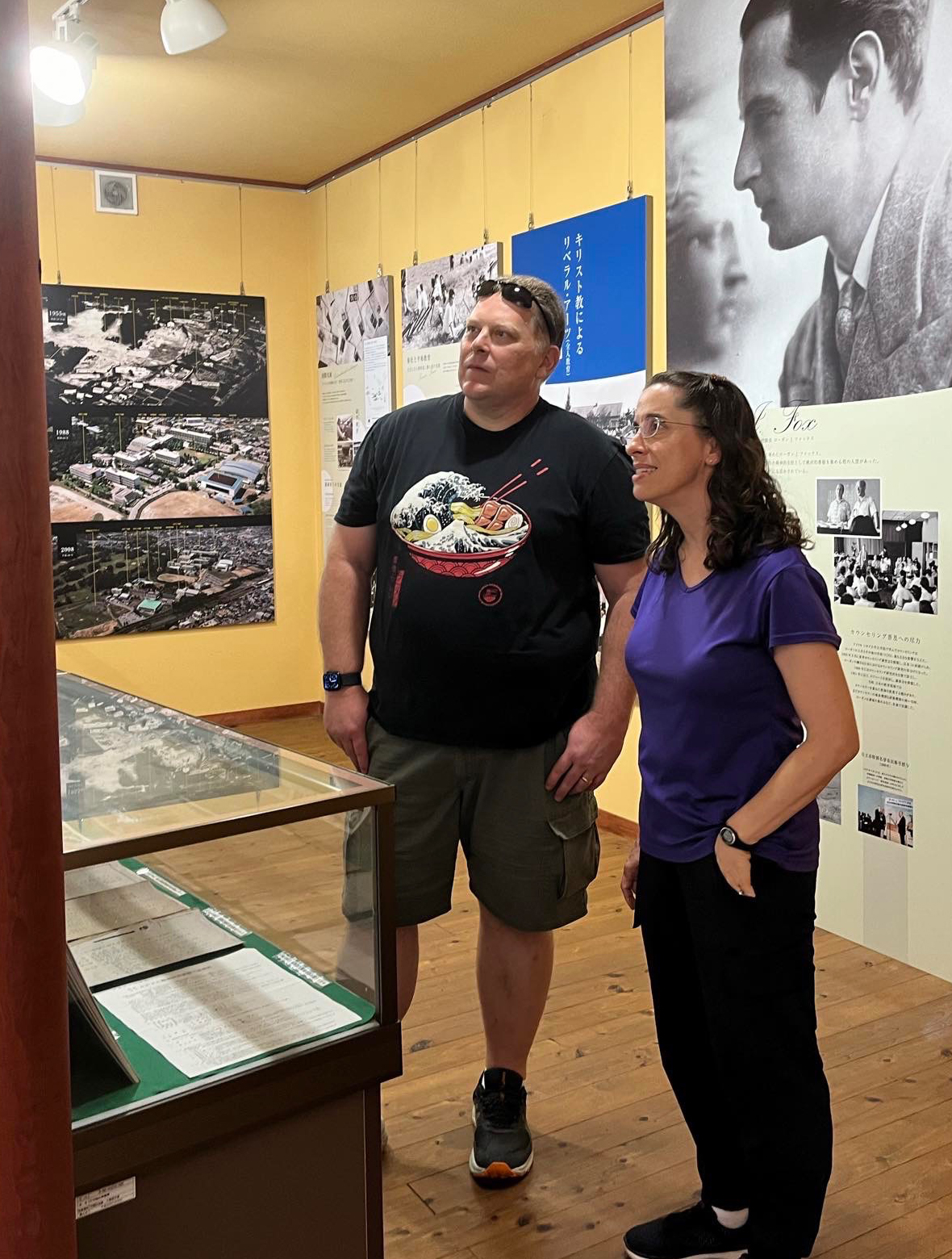
Yoshiya continued the history lesson, with emphasis on ICU and the missionaries who started several congregations in the area. We were able to tour a museum on campus which gave biographies and other information about past mission efforts. He gave us a tour of the campus (and the ocean view from the 4th floor of one of the buildings!) and also welcomed us to a sweet chapel service for the students. Though it was lightly attended, I still felt the passion that Yoshiya has toward reaching the student body here.
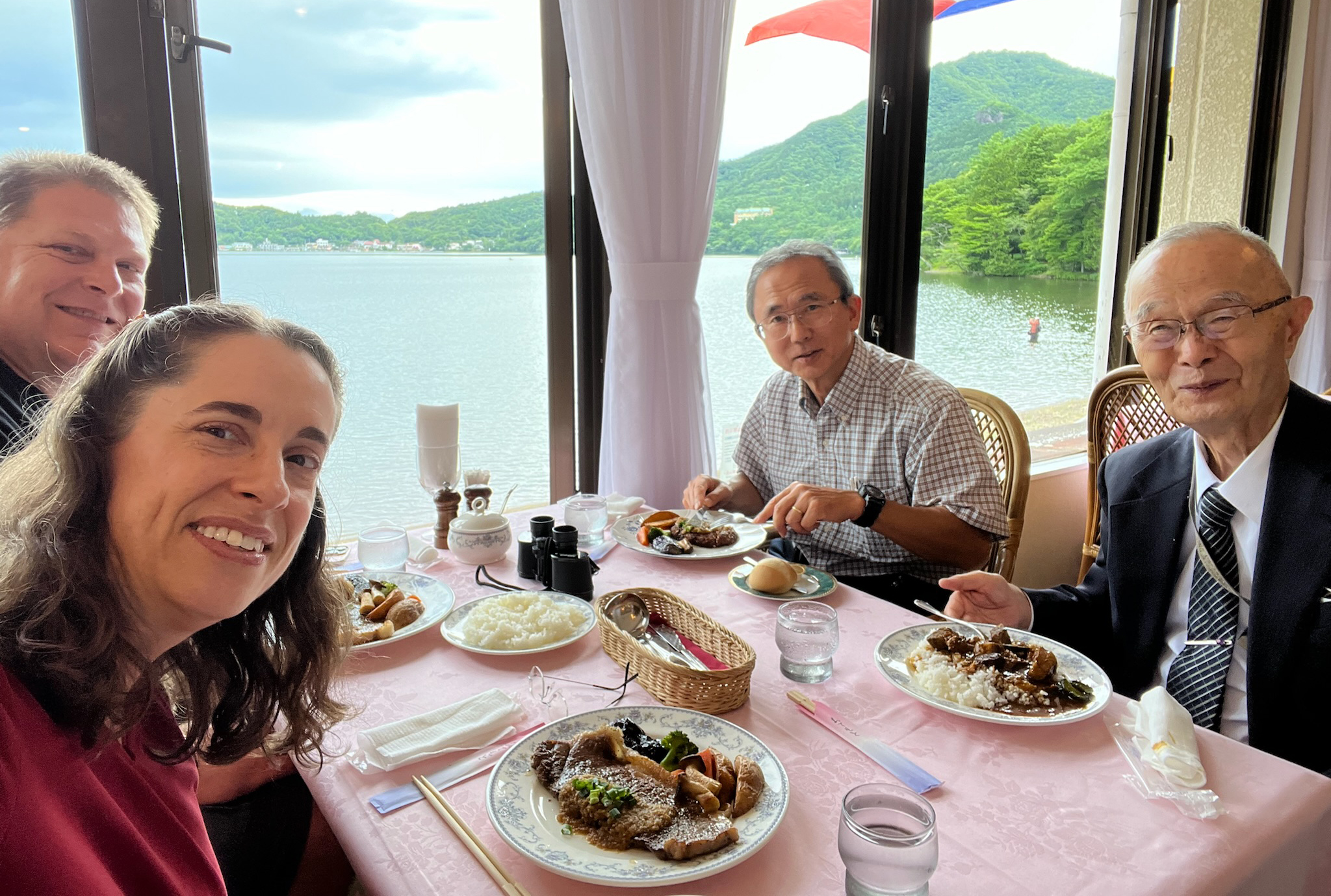
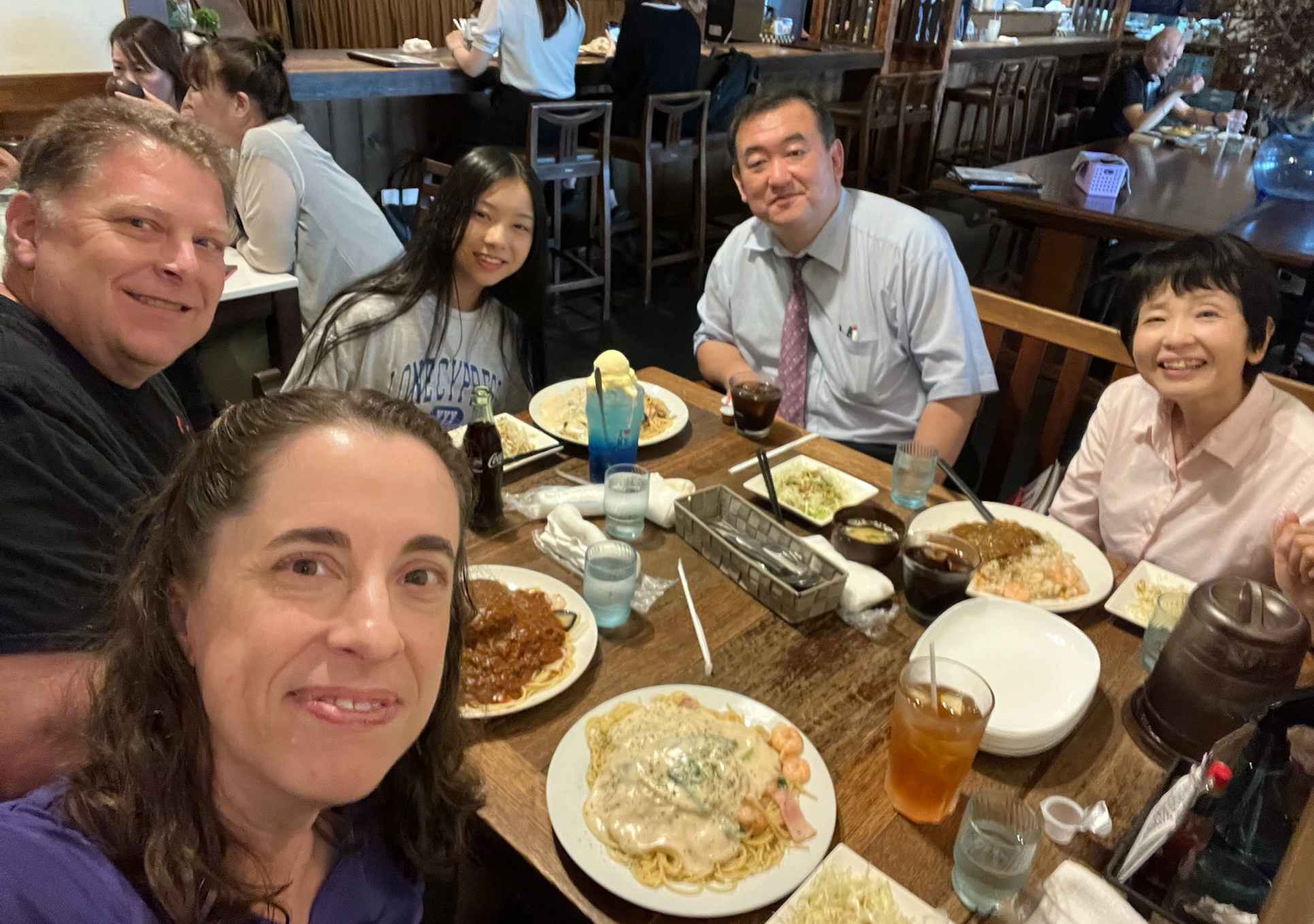
Yoshiya and Emiko’s daughter Hannah was also around, and it was good to reconnect with her a bit as well. She is attending Harding University (having just finished her freshman year), and stayed with us in Memphis on a couple of occasions when the dorms were closed for holidays. And, of course, we were treated to a wonderful spaghetti lunch (though rather Japanese-style) at a local restaurant with the Noguchi’s. None of us knew what to expect, and we were all surprised at how large the portions were! It was a delicious way to spend some time in fellowship with these dear ones.
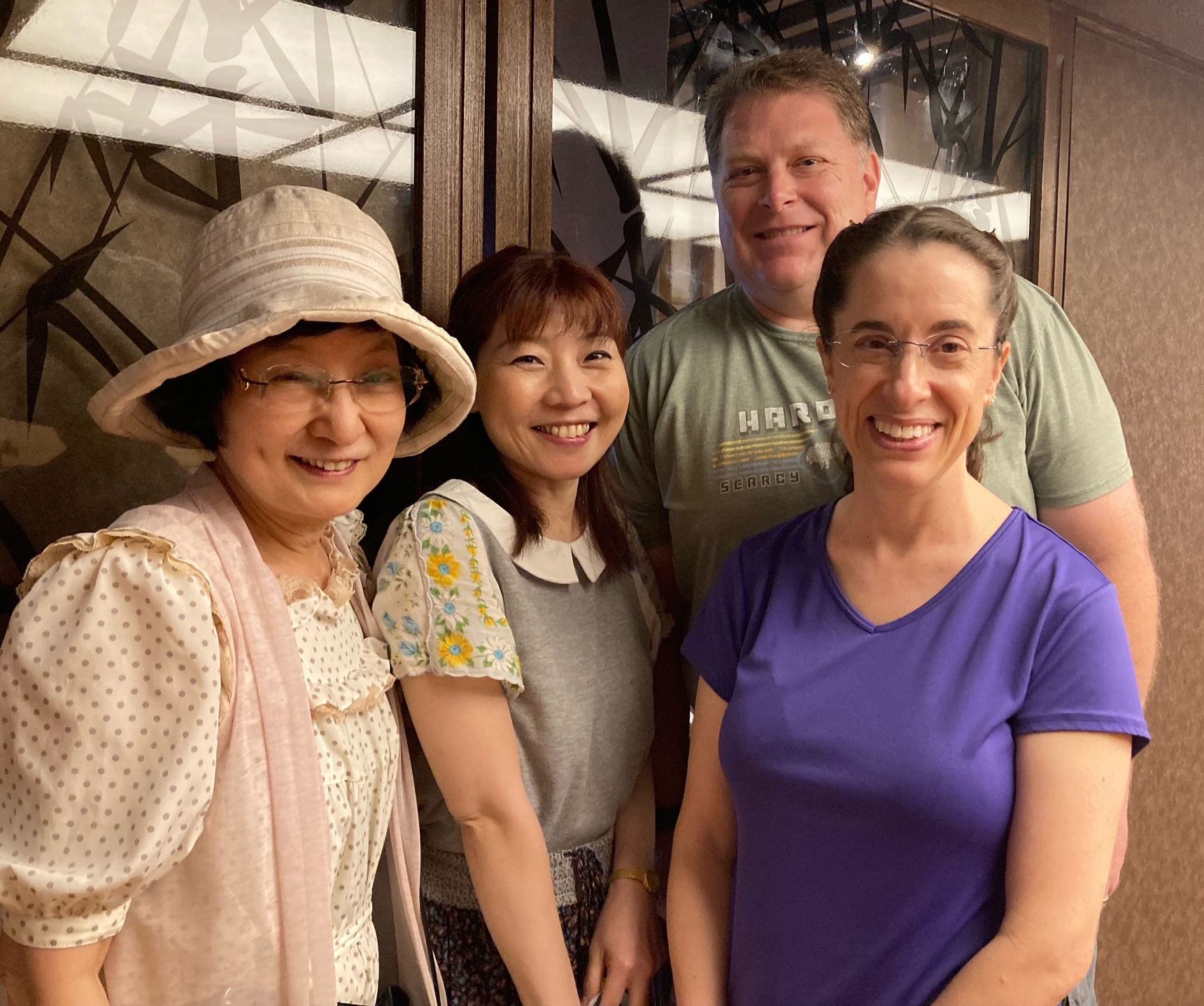
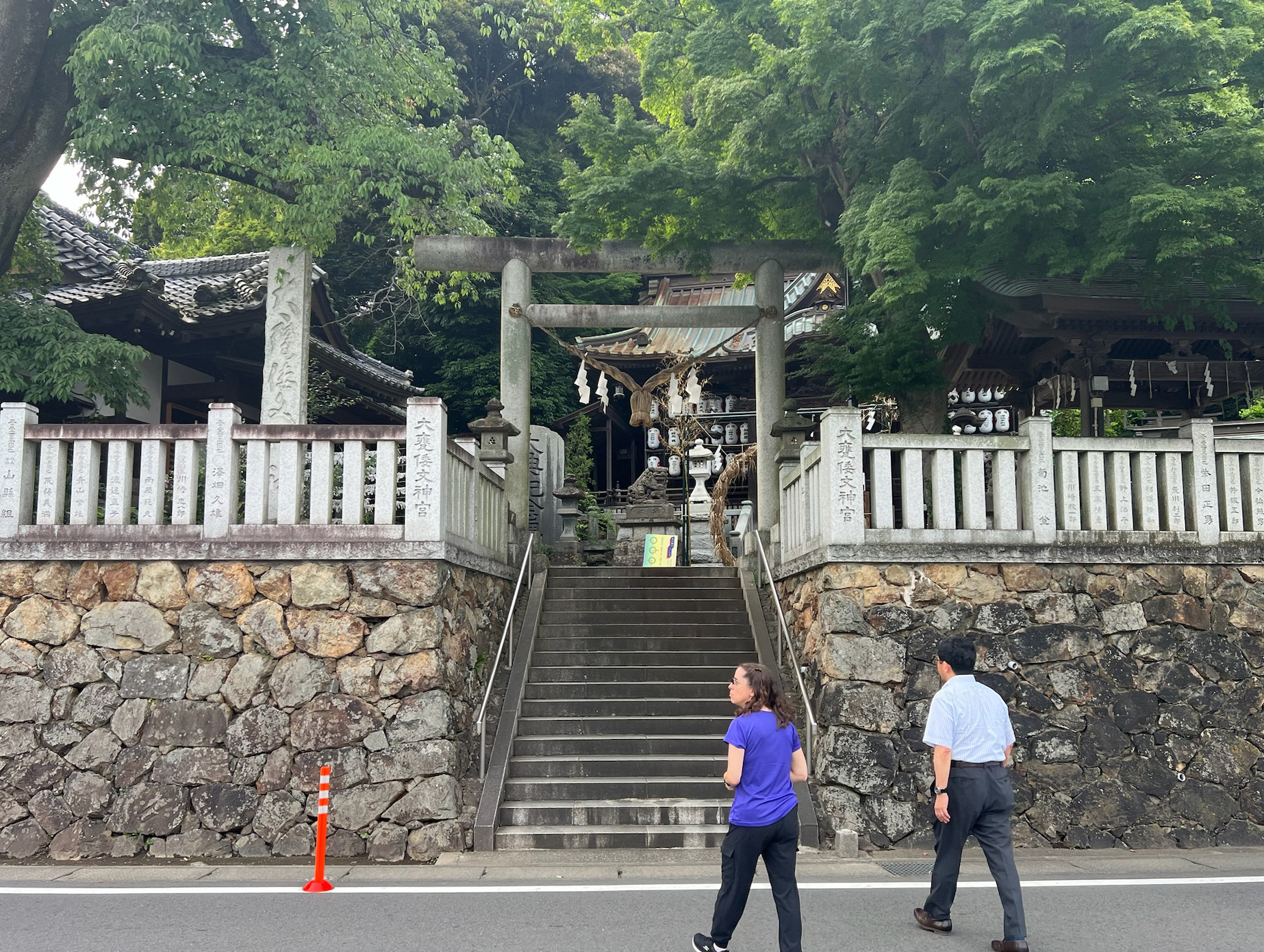
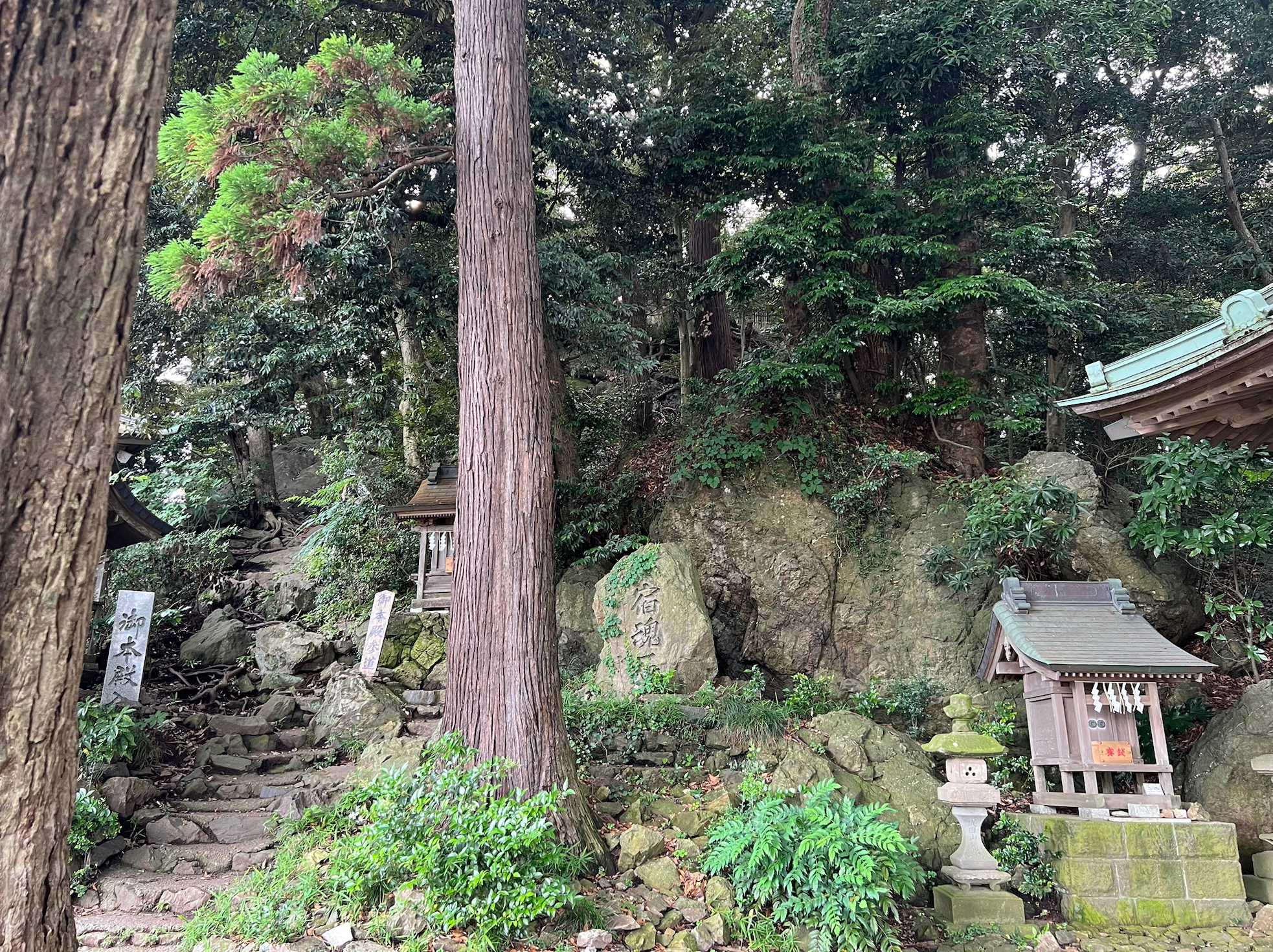
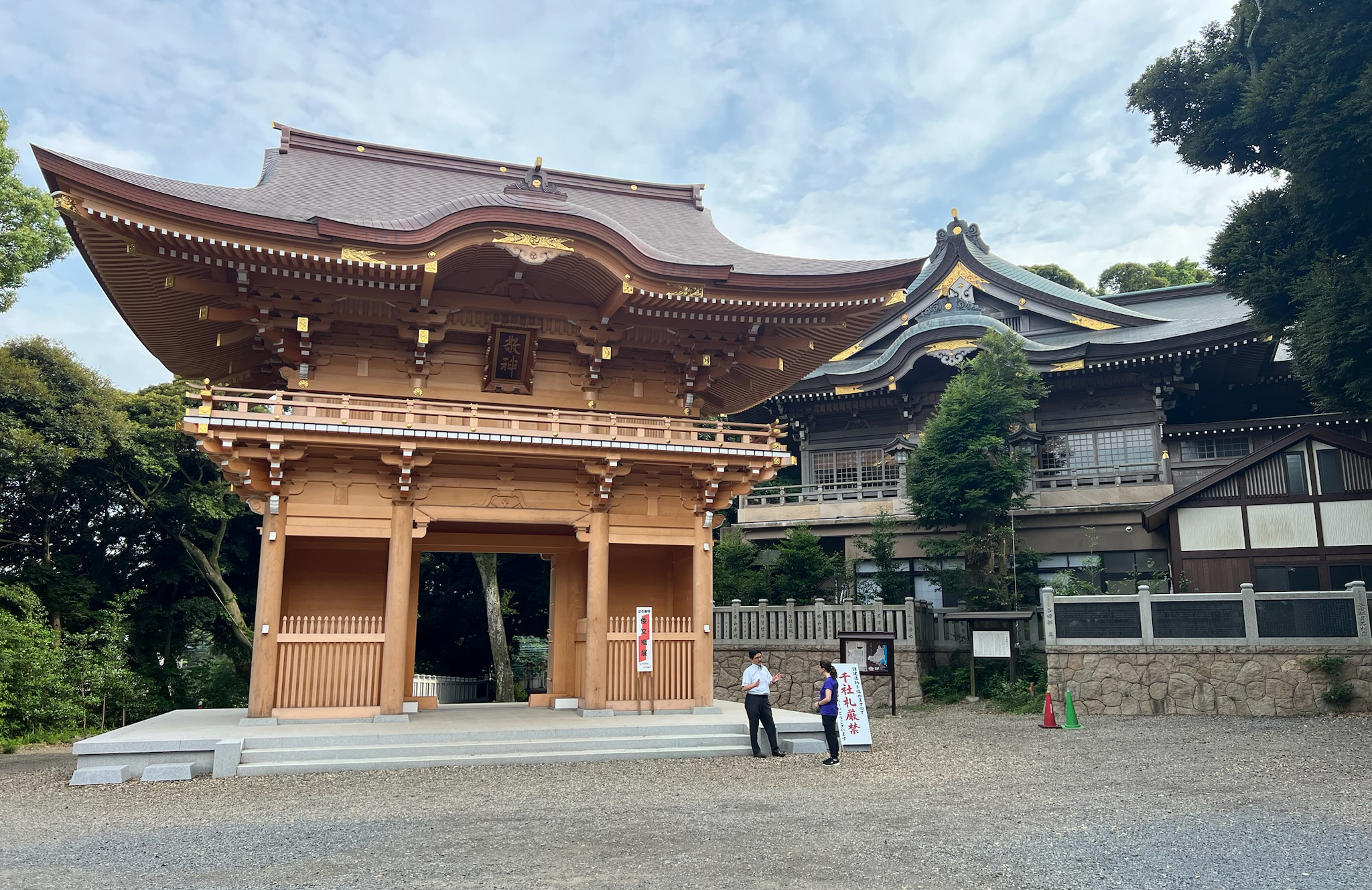
Before long, Yoshiya passed us off to Yukikazu Obata, who is one of the professors at ICU. He is a long-time church member and past preacher, and the son of Shiro Obata, minister for the Haruna congregation (and Ochanomizu for many years before that). Yukikazu brought one of his elementary education students with him, and we chatted about what it takes to be a teacher in the US vs Japan, and some of the cultural influences that make it different both ways. Afterwards, we toured the nearby Omika Shrine. This is a Shinto shrine that some people claim has been around for over 2,600 years. The current buildings aren’t that old, of course, but if you look closely at the second picture there is a stone stairway that leads up to a large boulder at the very top of the hill. Natural formations which are particularly conspicuous are venerated in Shinto with some people believing that a deity must inhabit such a unique structure. Many of the buildings there were indeed old, but they had also just erected a new gate structure (the golden-brown one) in the last several years to add to the importance of the site.
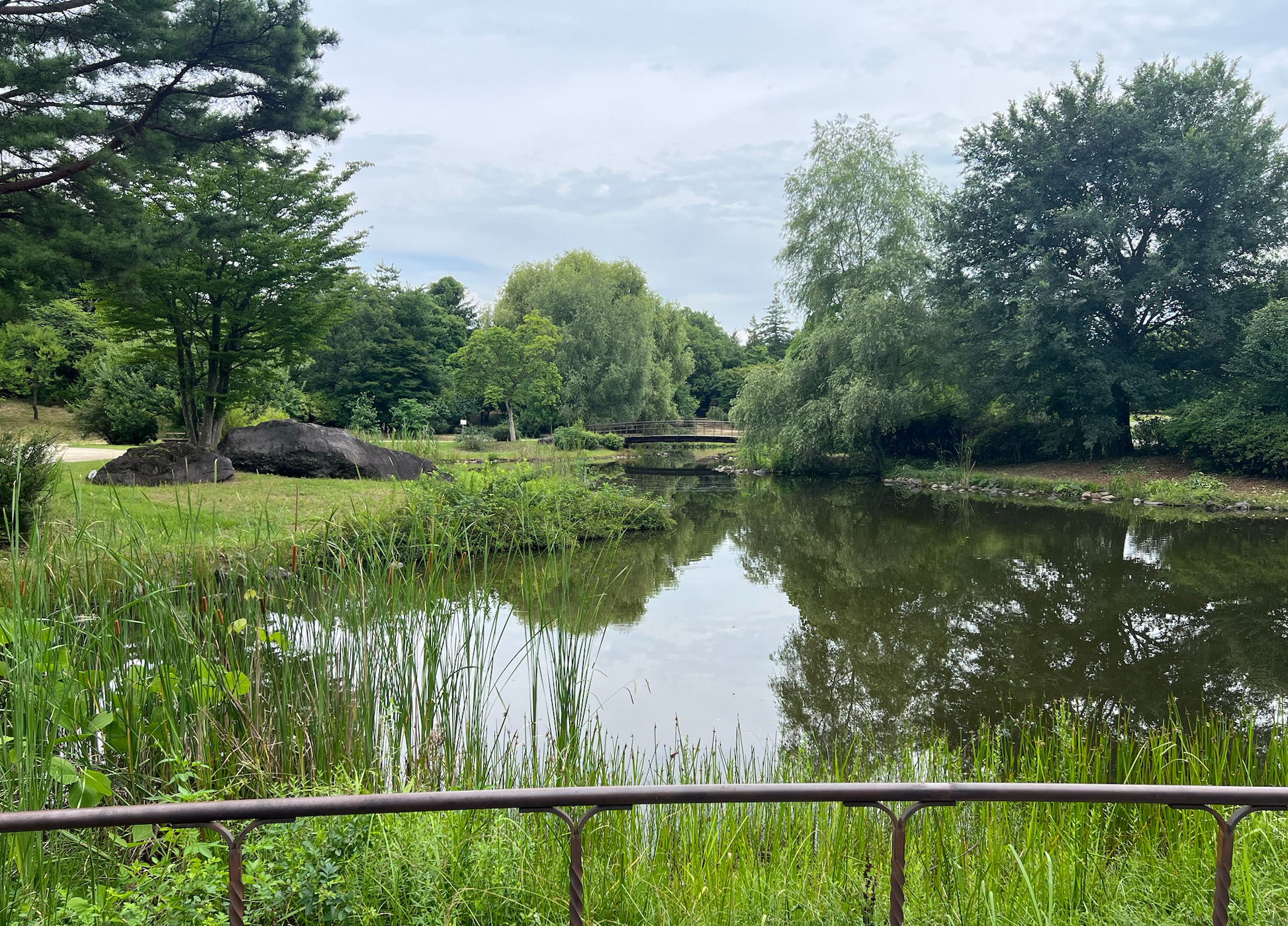
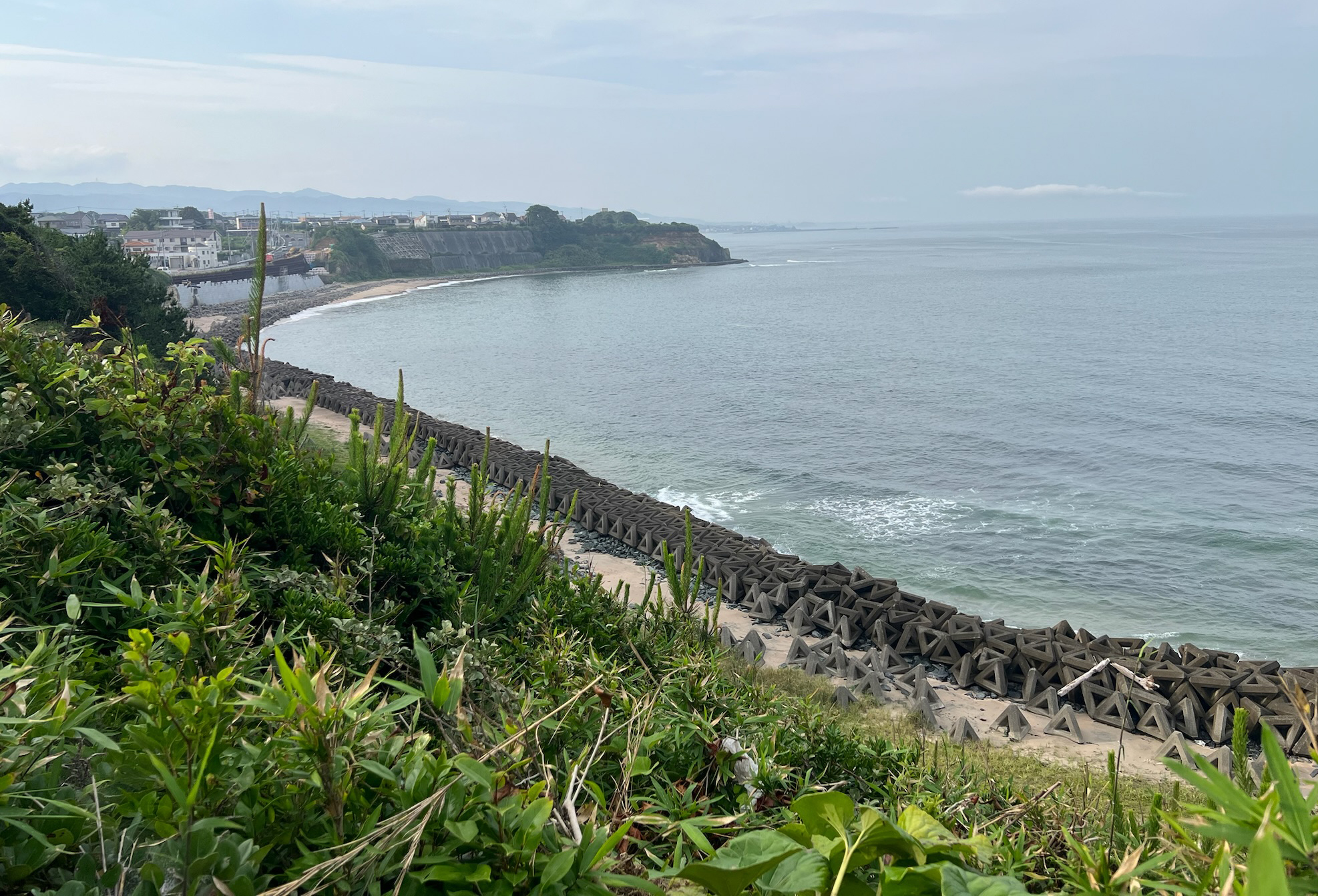
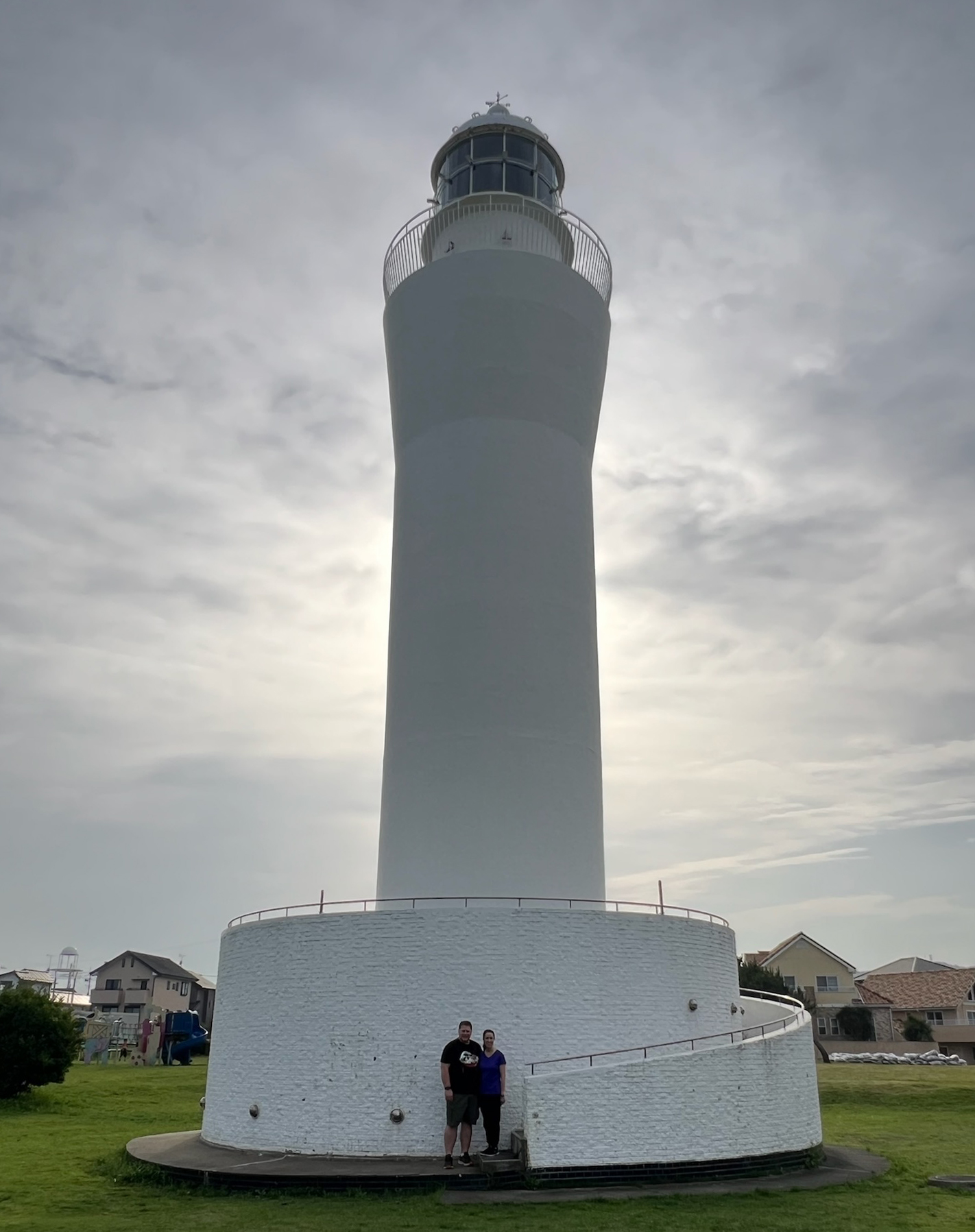
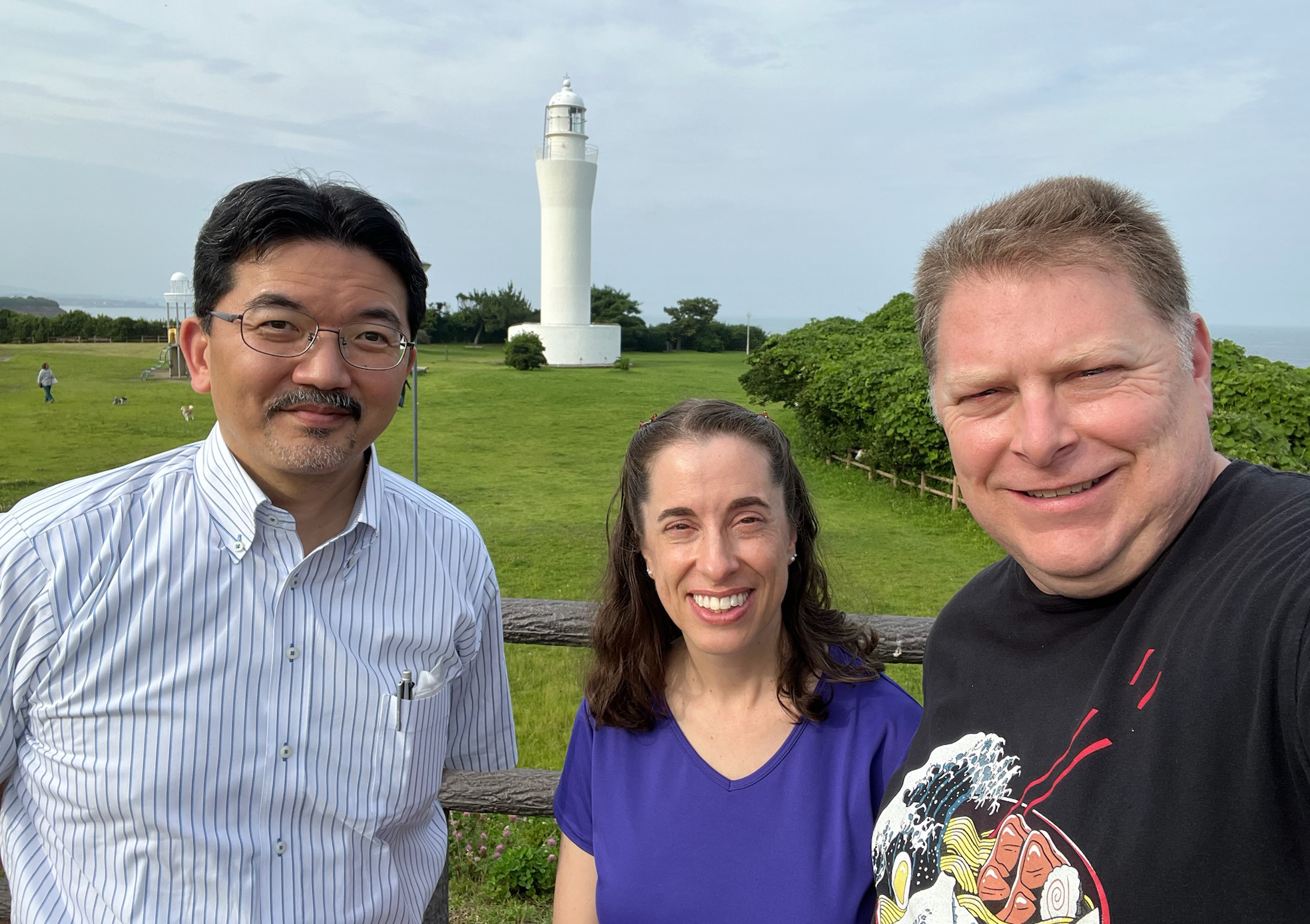
Yukikazu helped us understand just a little bit more about the Japanese mind when it comes to religion and culture. For many Japanese people, Shinto isn’t really thought of as a religion at all. Instead it is just part of being Japanese. It is still quite a mystery to us western-style thinkers, but we are learning slowly. After walking the shrine grounds, we visited a park overlooking the ocean and continued talking about Japanese culture. It was a pleasant afternoon, and we enjoyed the time together.
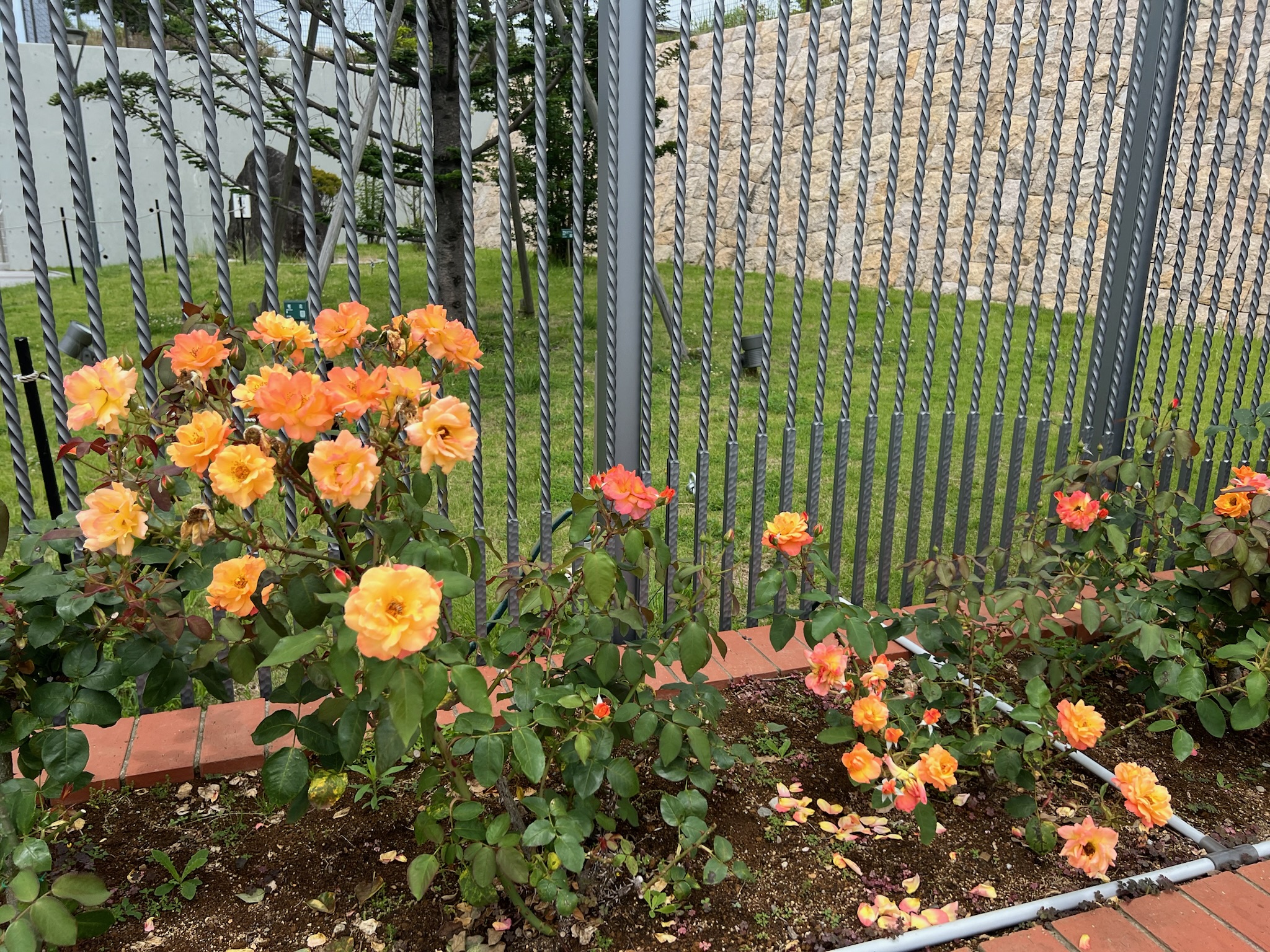
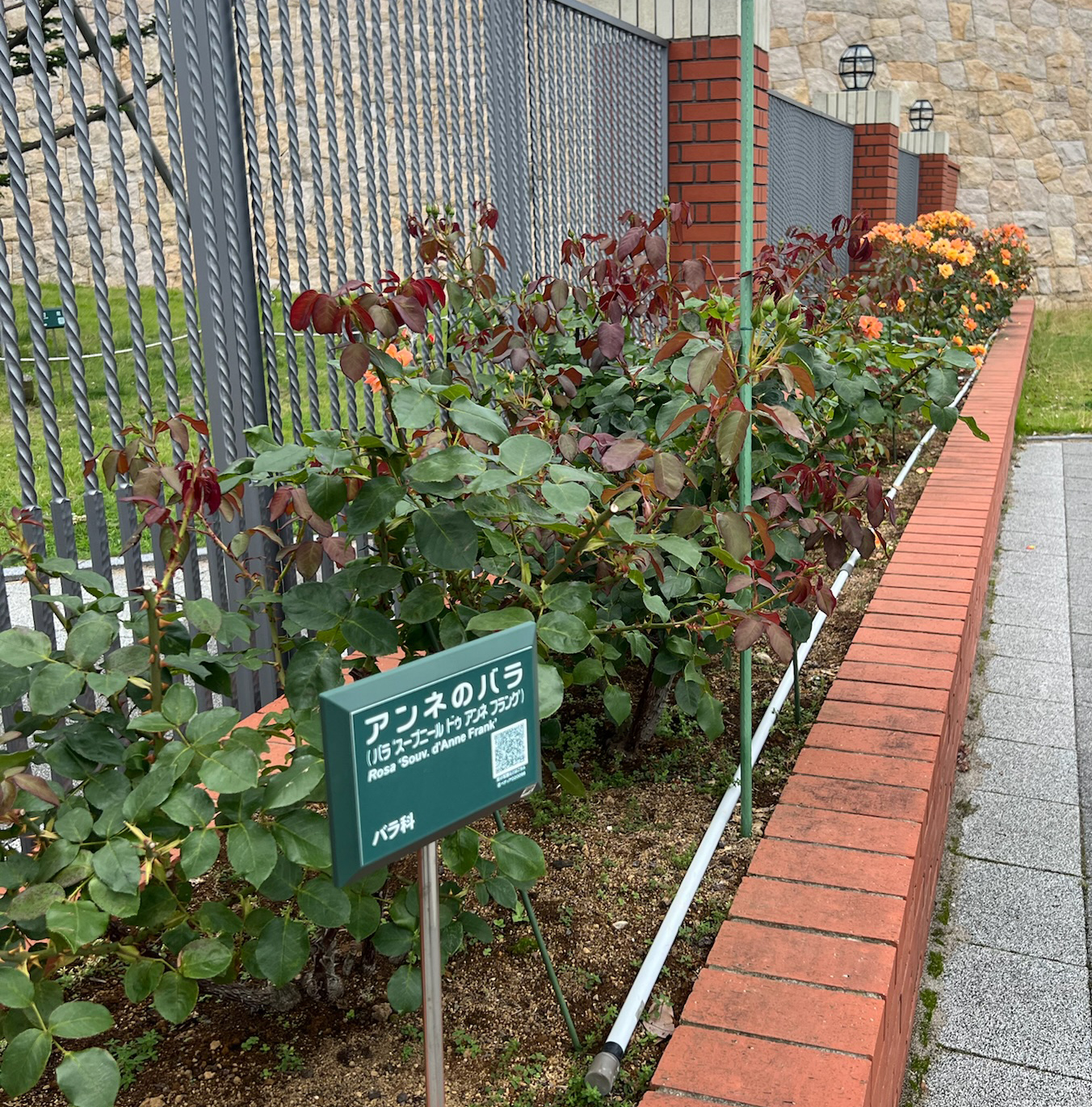
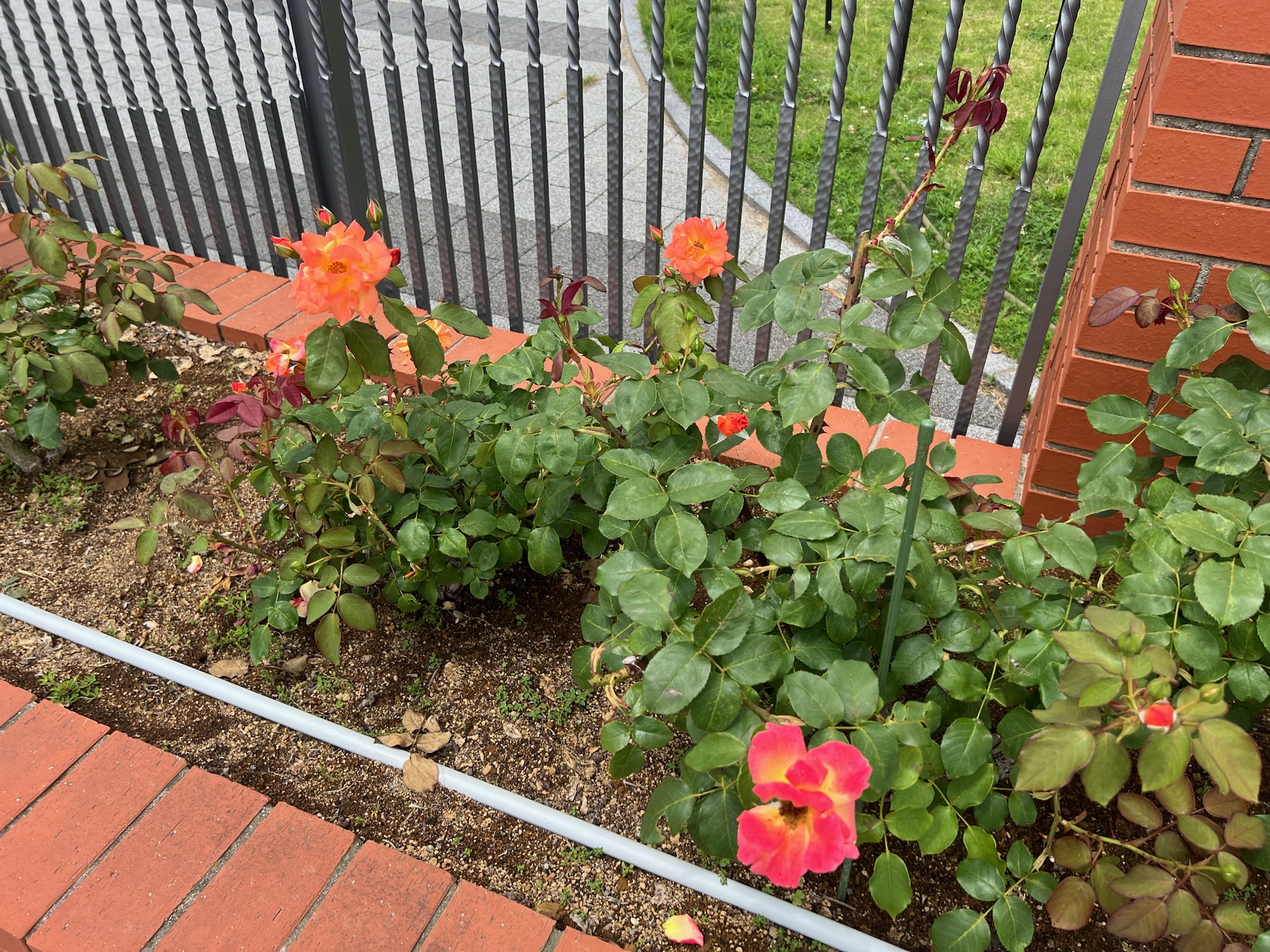
And for our parting shot this week, here are some images of the “Anne Frank Roses” at the front gates to the Ibaraki Christian University campus. This species of rose was developed in Belgium in the 1950’s, and was eventually named after Anne Frank in hopes that its blooms would inspire peace around the world. It is an interesting variety because its flowers change color over time. The bud starts out dark red, then it is a vivid orange when in full bloom. Over time, as it is exposed to sunlight, the petals shift toward a pale salmon pink before returning to a shade of red. There are blooms in each stage at any given time, so it makes for a neat variety of colors and textures. Also, it is a rose that blooms year-round, making it a great reminder of the need for peace in the world. For Yoshiya Noguchi, it is also a reminder of the peace between God and man offered by faith in Jesus. Amen!
~ Clay
<– Return to the Week Two Report
Jump to the Week Four Report –>











 Fowlers in Japan