So in Christ Jesus you are all children of God through faith, for all of you who were baptized into Christ have clothed yourselves with Christ. There is neither Jew nor Gentile, neither slave nor free, nor is there male and female, for you are all one in Christ Jesus.
~ Galatians 3:26-28

You really can’t talk about one while ignoring the other. Language and Culture are interwoven so tightly that trying to pick out the threads of one will cause the other to unravel. If you attempt to learn a language but don’t give proper attention to the culture that produced that language, then much of the meaning of what you are saying will be left un-communicated. The reverse is true as well – you will miss important parts of a target culture if you don’t know the language. (And Google Translate won’t help, either!)
For instance, we have been studying basic Japanese grammar in language school. There is a certain group of sentences which follow a specific grammatical structure. Essentially, most all of the sentences in which you might express something about yourself (a desire, an ability, a like/dislike, etc.) go like this: The topic is stated, followed by the subject (usually the item/ability expressed), and then the verb.
“I understand Japanese.” is a pretty straightforward sentence in English. The Japanese version has a hidden trick, though. “Watashi wa Nihongo ga wakarimas.” is how you would say this sentence in Japanese. True, if you copy/paste that into Google Translate, the English equivalent you get back is “I understand Japanese.” But that isn’t the whole story.
Although Watashi means I and Nihongo means Japanese and wakarimas means understand, what a Japanese person is communicating with this sentence is something more along the lines of “As for me, the Japanese language is understandable.” As Westerners, we might not realize the difference of saying it this way. But in the Japanese culture, this phrasing is much more acceptable. Without getting into the weeds linguistically, the main reason to use this form of speaking is so that it is much less direct. The “likability” is now attached to the Japanese language. The focus of the sentence has been shifted away from myself and onto the thing that I am talking about, in this case the Japanese language.
That is a cultural influence that shows up in language. Japanese people, having spent centuries developing a culture that avoids most direct expression, say it this way because it helps to maintain harmony (or Wa). Harmony is a core part of this culture. Fulfilling your place in society is prioritized here because that helps maintain Harmony. To express something about your self (or someone else!) too strongly would potentially disrupt this balance. So, they have developed ways of thinking that reduce the opportunity for this kind of friction to occur.
As Emily and I wade deeper into this culture, we are keenly mindful of the fact that the Gospel of Jesus Christ is intended to be quite disruptive. It is one of the reasons that Japan remains such an unreached culture. Finding ways to navigate cultural dynamics like these will be vitally important as we connect with people. It is our hope to lead Japanese people to Christ, but to do so in ways that honor their Japanese heritage to the greatest extent possible.
It will take time and learning for us to become more effective. That is exactly the goal of focusing the majority of our effort these first two years on language acquisition and cultural study. It is also why we are so thankful to have found TAC as our language school. It’s a place where the teachers are Christian, where the students are all engaged in some form of Christian ministry, and where the curriculum is optimized toward understanding these dynamics between language and culture. To share more about our experience so far, this month’s email is focused on our first month of study.
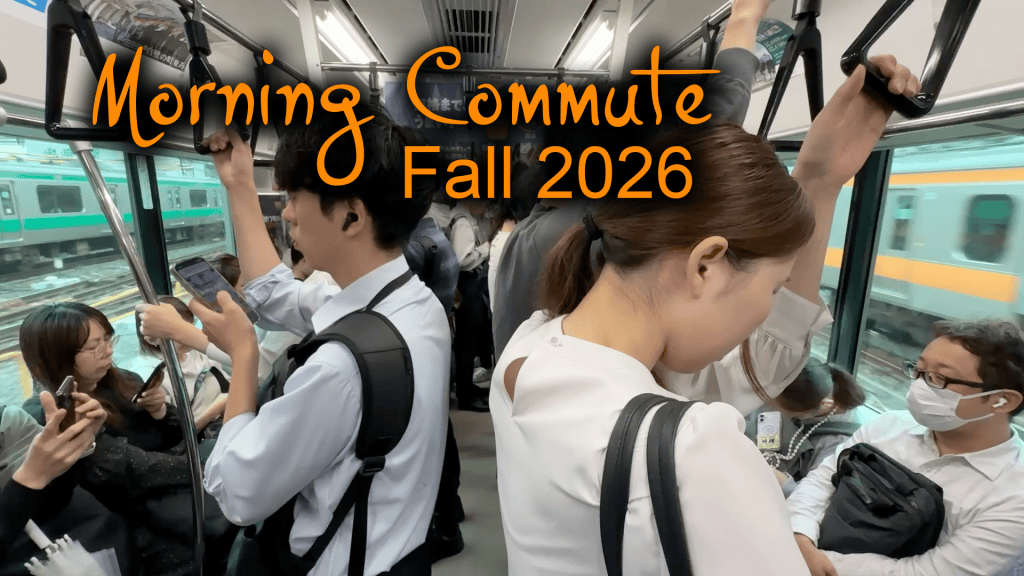
But before we can attend class, we have to get there! Our morning commute on school days takes just about 90 minutes from our front door to the classroom. That includes a 5-minute walk to the local monorail station, a few minutes on the platform for the monorail to arrive, a 10-minute monorail ride, a five-minute walk from the monorail station to the JR train station in downtown Tachikawa, a few minutes on the platform for that train to arrive, a 45-minute train ride to Ochanomizu station downtown, then a 5-minute walk to the Ochanomizu Christian Center where our school is located on the fifth floor. All with several thousand of our closest friends (especially in the trains)! I recently had a chance to capture some video during the 45-minute train ride while remaining fairly discreet. You can enjoy those clips here.
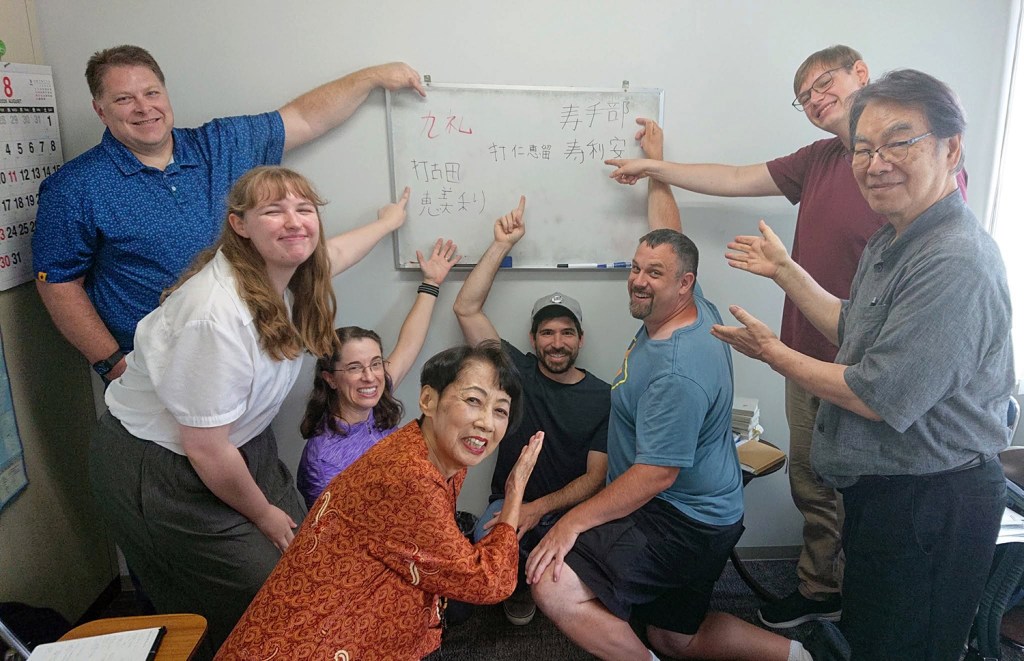
Here are Takahashi-sensei (right) and Yamamoto-sensei (center) during a recent class. Takahashi-sensei had thoughtfully put together meaningful kanji that phonetically sounded out our first names. We then went through each one as a class, teasing out the meanings behind each kanji character and why he thought they might be good candidates to be included as part of each person’s name.
As I wrote above, Emily and I are extremely blessed to be learning at TAC. The class sizes are wonderfully small, the teachers care about us as people (not just as students), and our classmates are all here to do mission work for the kingdom. Among the full-time students, one is from Germany, one is from Malaysia, one is from Montana, one is from Louisiana, one is from Georgia, one is from Kentucky, and then Emily and I as well. There are some other part-time students who come on individual days, too. It has become a fun little family to be a part of.
Having said that, it has also been a challenge. I once read that language study has several distinct phases. One such phase is a “disorientation” in which your brain starts to lose many of its well-worn thinking paths in your original language while it tries to re-wire those paths in the new language. I think we both are firmly in this phase of learning. It feels like the last week or two have been harder to get anything done. I find myself misspelling English words that I have spelled correctly forever.
We are hoping that this stage of things passes soon. The main challenge has been the pace of learning new information. Grammar, vocabulary, kanji characters, conjugations, and when to use each in combination with the others is all a bit dizzying. We are forging ahead anyway and trusting God to work through our teachers and fellow students to bring us through. I am confident that it will happen (even if it did take me three tries to write this sentence).
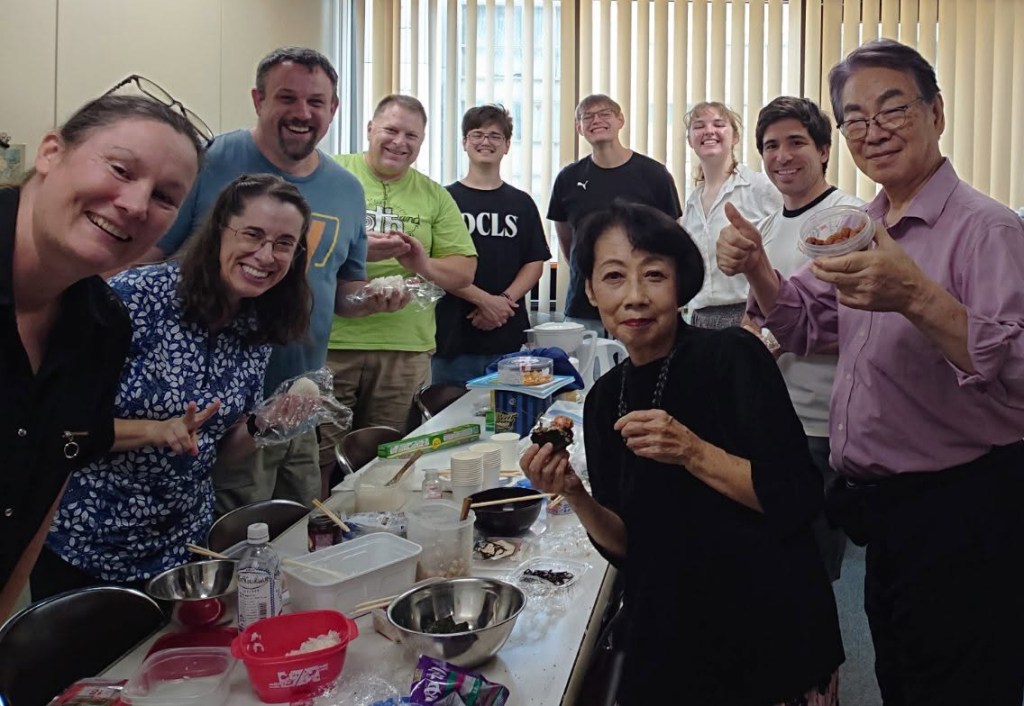
Did I mention that our language school teaches culture alongside language? We have had several opportunities in recent weeks to close the books and focus on something else instead. The picture above is from our onigiri workshop. Onigiri is a triangular-shaped rice ball which is usually wrapped in seaweed. Most onigiri also have some sort of tasty filling in the middle, too. They are a staple of the Japanese diet both at home and on-the-go. Every konbini (convenience store) in town will have a section dedicated to fresh onigiri that is restocked daily, if not more often.
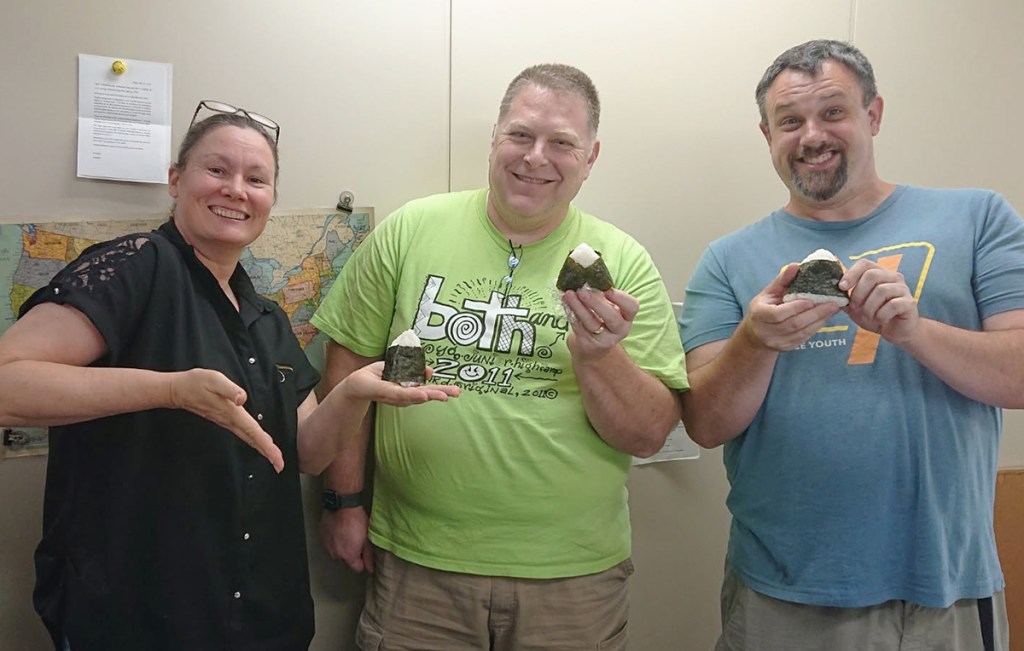
We each tried our hand at making several using a variety of fillings and seaweed types. It was quite a tasty and fun afternoon! We watched carefully as our two senseis each showed us different techniques for packing and wrapping. There was also a good bit of experimentation and trying new ways of our own. Additionally, we paired the onigiri creations with some home-made miso soup. Several of us got the miso a bit too strong, but is was savory all the same.
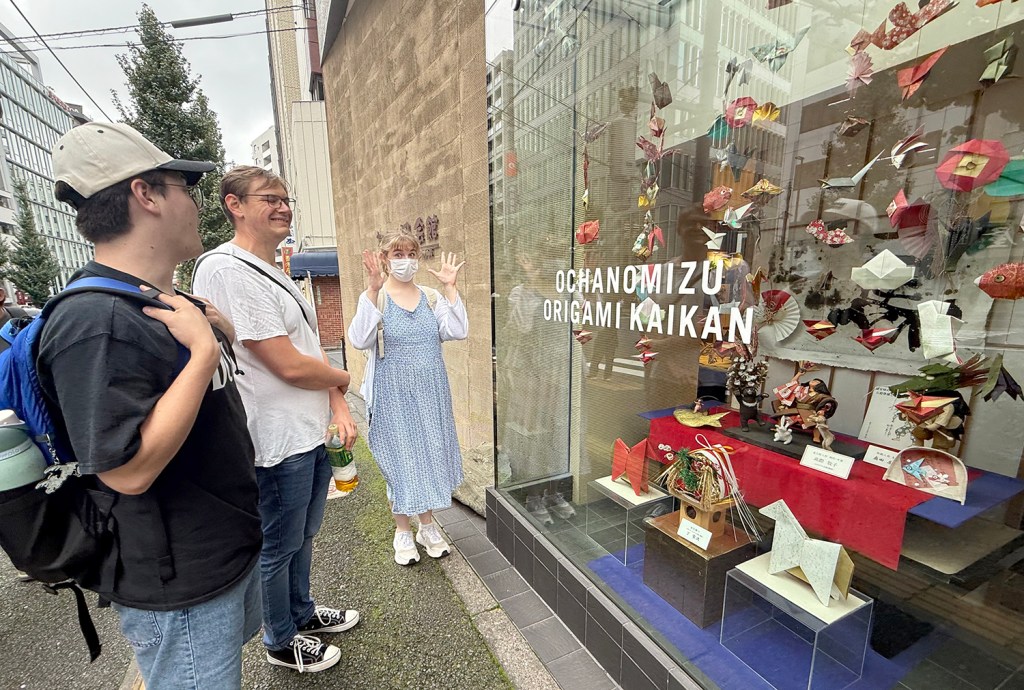
For our first big excursion, we ventured outside into the neighborhood nearby to visit the Ochanomizu Origami Kaikan. It is part museum, part workshop, and part supply store. Most of all, it is the home base for Kazuo Kobayashi, an origami master who is the fourth generation to head this family-run origami business from its beginnings in 1858.
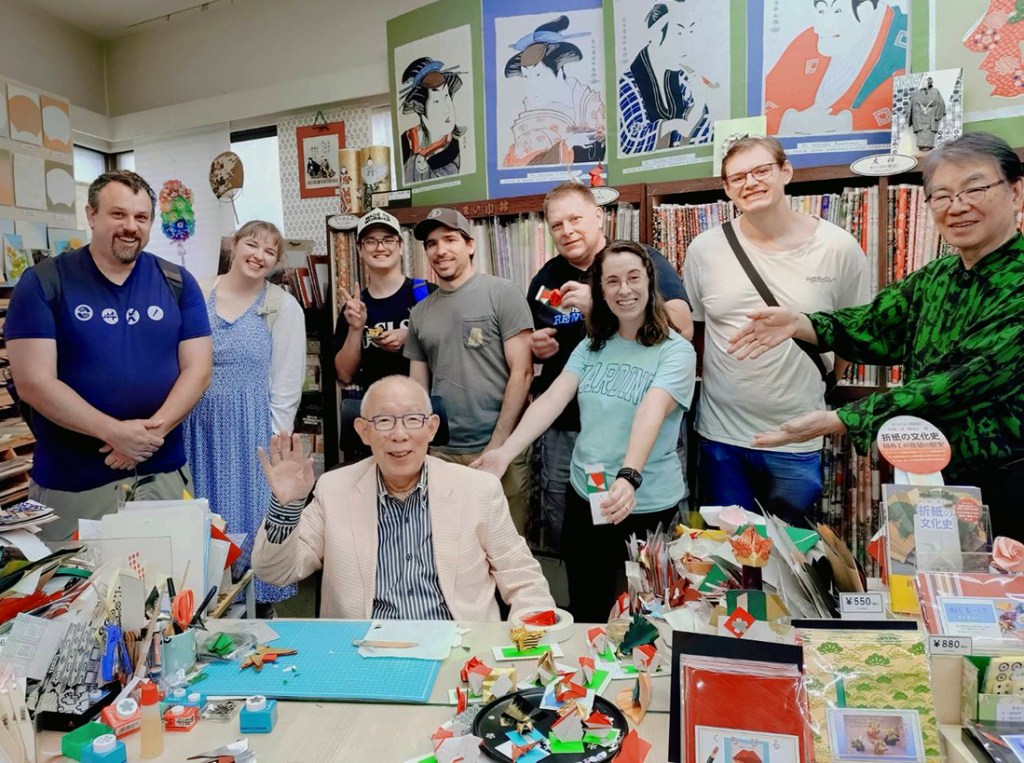
Origami is such a simple pastime. But in the hands of a master, it can also be an emissary of peace and cultural heritage, and a means to jump right over other barriers to communication. We watched as he laughed and joked with people, wriggled his fingers a few times, and out popped anything from a rose to a ballerina to a sunrise over Mt. Fuji (complete with moving sun!).
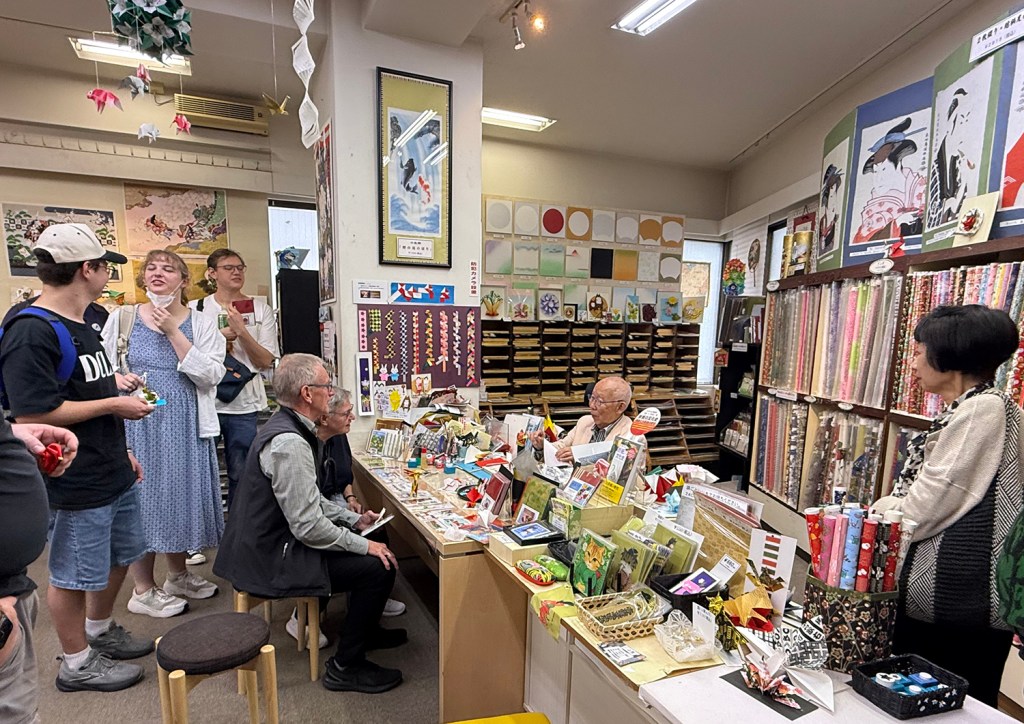
He rarely glanced down at what he was working on, but made enough pieces while we were sitting there for everyone to go home with something. Any scrap of paper could turn into something fanciful. It is an approach to life that brings meaning and purpose to common things. I think there is much to learn there.
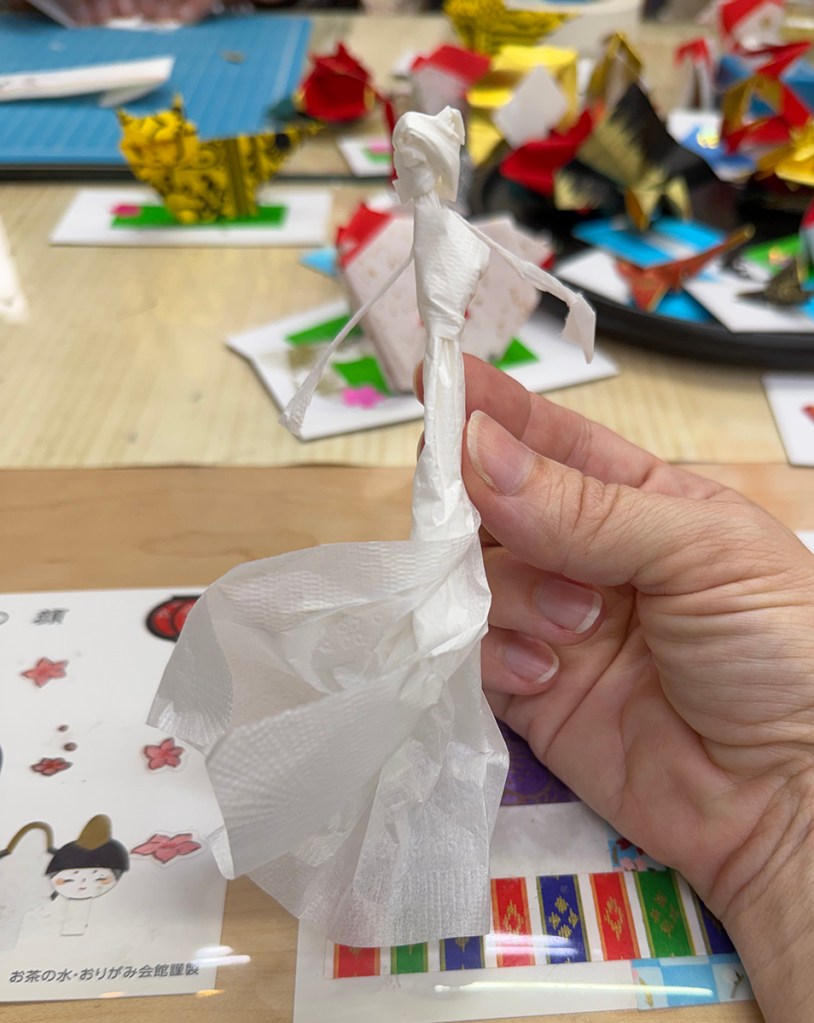
Case in point, he took an everyday restaurant napkin and a couple of moments later handed a ballerina to Emily! He seemed to enjoy the moment when people recognize what he made the most.
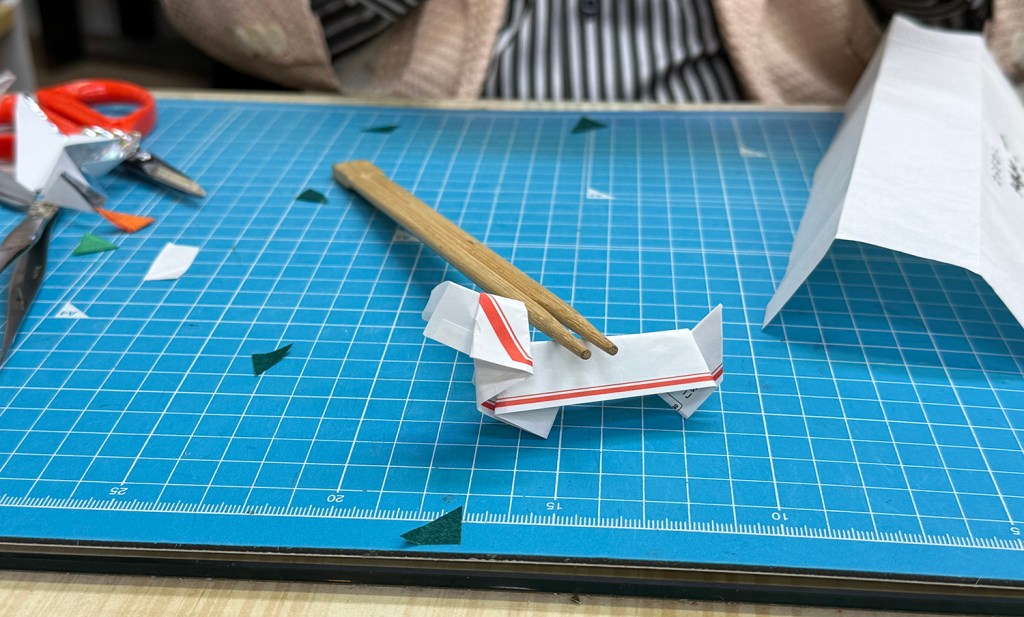
Or you could imagine yourself mastering this one! The next time you are at an asian restaurant, you can create a dachshund-shaped chopstick rest from the wrapper! It only took him about 5 seconds, so i’m sure that I could manage it at least by the time to leave. Ha!
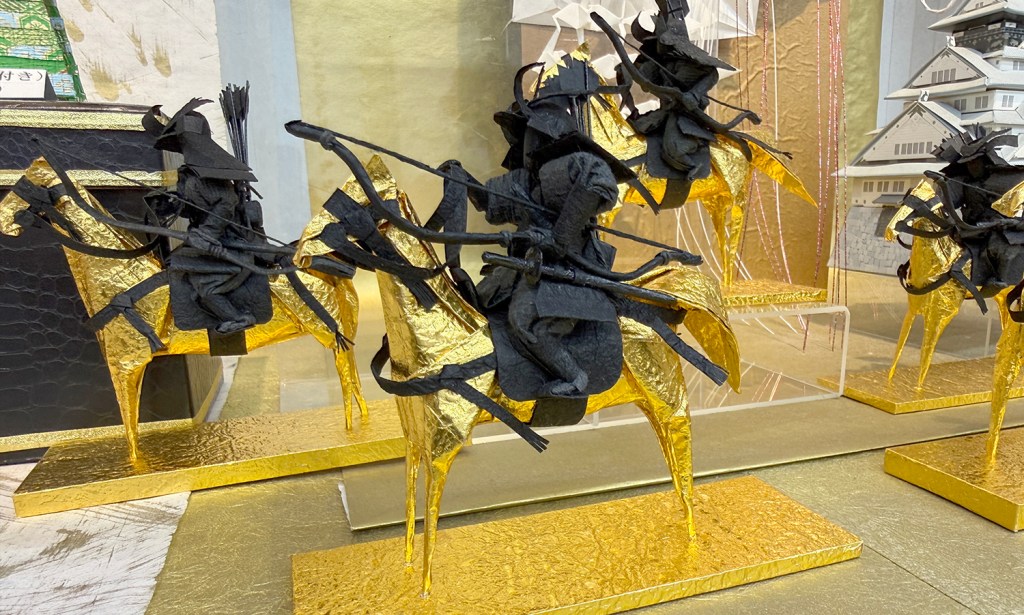
Lest you think that his skills are just limited to party tricks, this samurai on horseback was part of a large procession in one of the galleries. It was made entirely out of paper without glue! Simply amazing. It was a fun outing and an intriguing look into part of Japan’s long and unique culture.
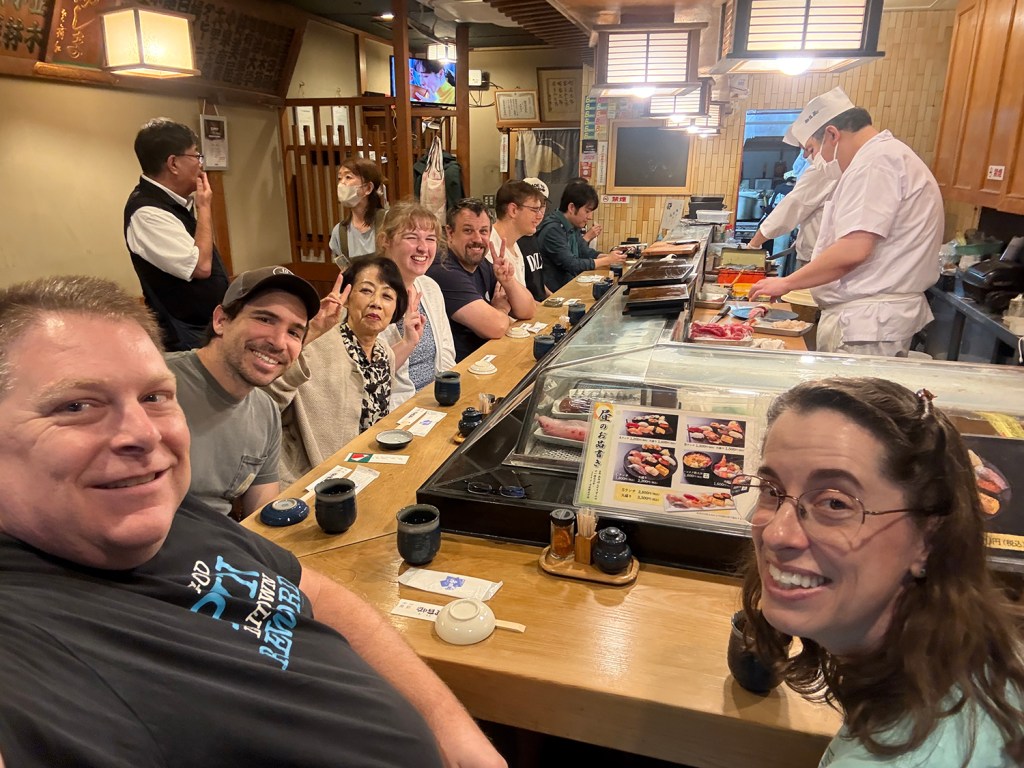
As if an origami master wasn’t enough for one outing, we then walked a few doors down the street to a traditional sushi restaurant for a tasty lunch. From the moment we walked through the door, the anticipation was high.
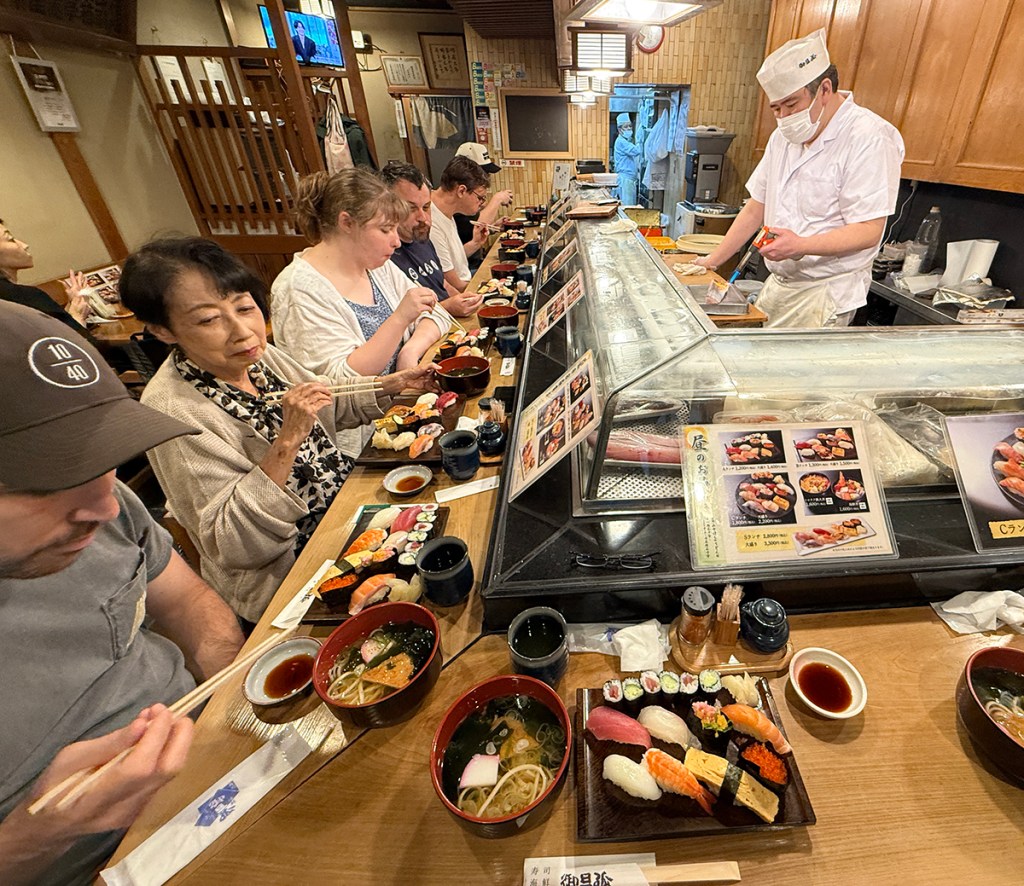
WOW. Not only was the lunch set affordable, it was tasty and filling too. Everything was made right before us with skill and efficiency. Most of us got the “A Set” which included both nigiri sushi and maki rolls, but a couple people got the “B Set” which included more nigiri and no rolls. Everyone’s lunch came with a bowl of udon noodles and green tea.
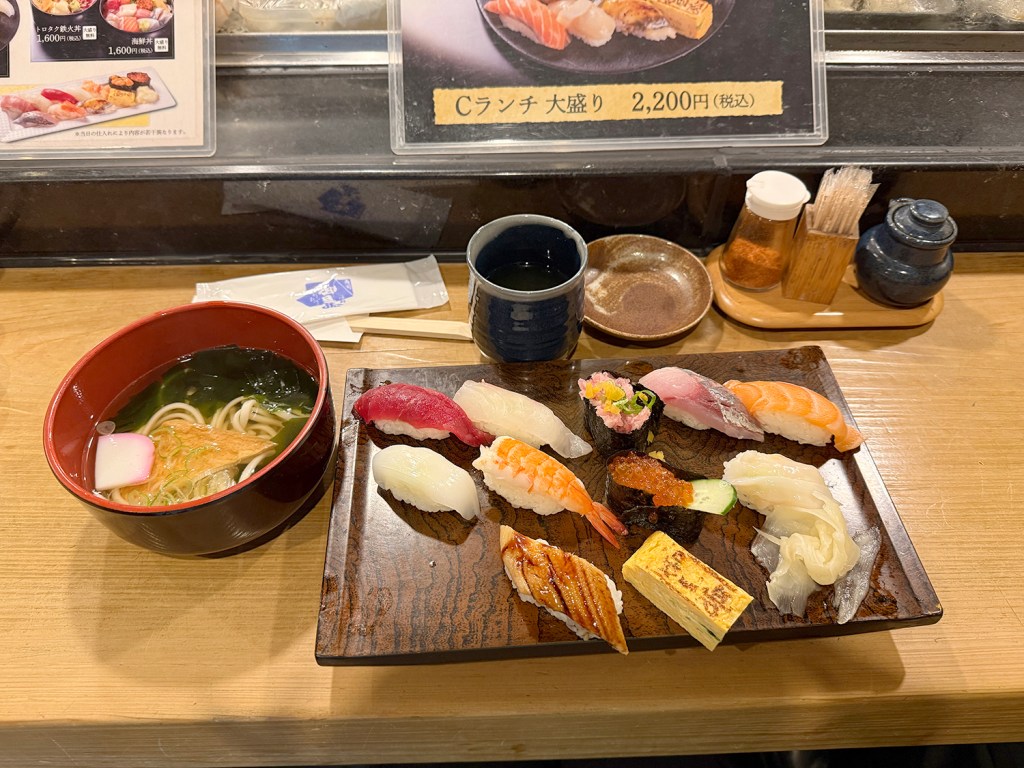
Here is a closeup of Emily’s “B Set” lunch. Doesn’t it just make your mouth water? The crazy part is that since the yen is currently so weak against the dollar, each meal only cost about $8 or $9. Now that is downright crazy!
Life in the Neighborhood
Aside from our activities with TAC, we have been slowly settling in at our new apartment. Although we got the keys back on September 11, we spent the next two and a half weeks working around our school schedule to be able to receive deliveries for appliances, gas and electrical hookups, and our shipment of belongings from the US. We moved out of the church building’s dormitory on Wednesday, September 30th, once things were finally established enough where we could keep and cook food.
It is just one block north of the church building, but away from the main road. So, our neighborhood is quiet and peaceful. What a blessing! God really opened some doors (literally AND metaphorically) when He made a way for us to be here. We were able to take some cookies to each of our neighbors and introduce ourselves and we look forward to building on these introductions as future interactions allow.
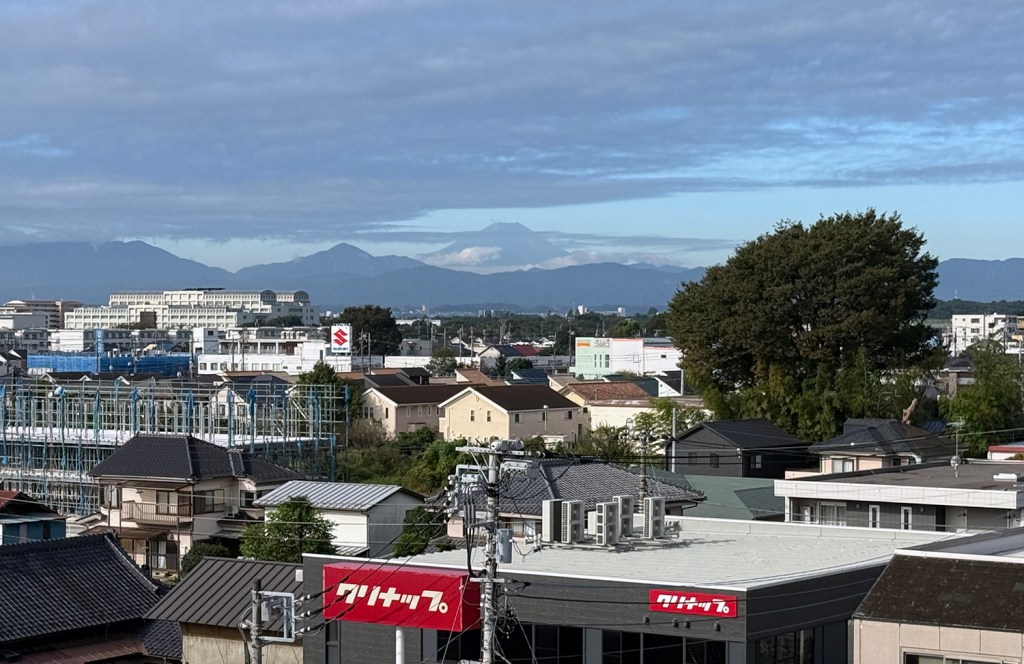
Our morning commute to school from the new apartment begins at the monorail station that is one more station down the line from when we were staying at the church dormitory. The monorail line is elevated, so the view from the platform is much better than the apartment balcony (or street level). Of course, a different station means a different platform, and that means a different view of Mt. Fuji!
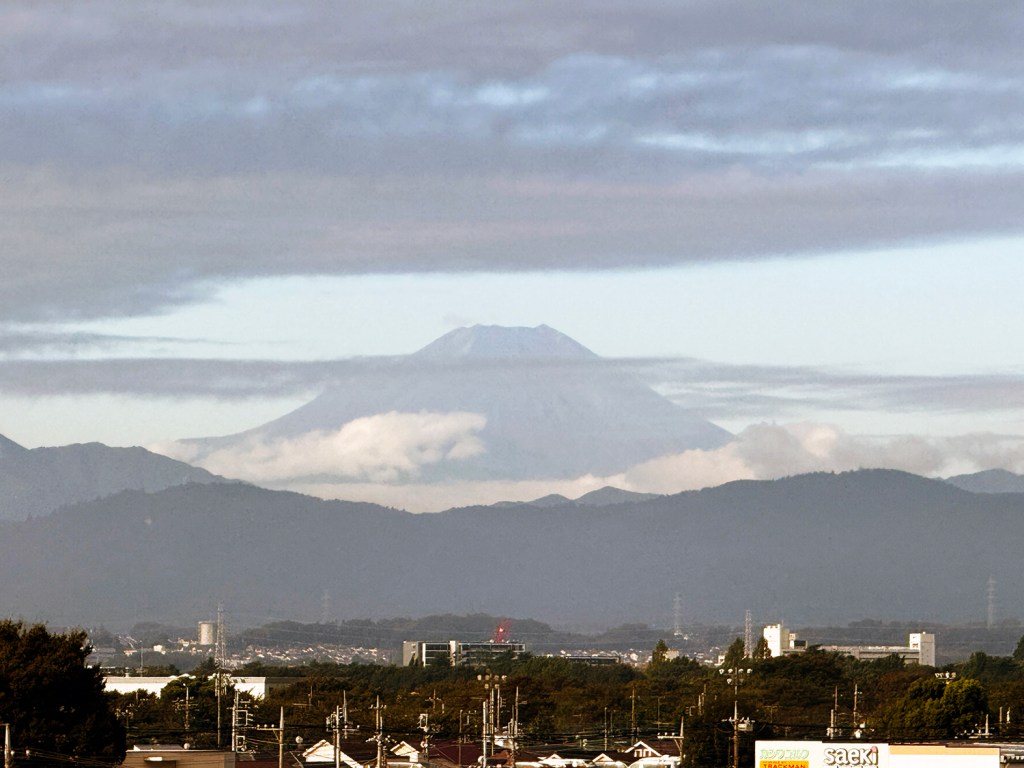
Tokyo recently had a stretch of 34 days straight with rain, so we had to wait a while to see what Fuji looks like from our new station, but we did enjoy the view when it finally showed! The photos don’t have the sense of scale as seeing it in person, but it is still interesting to look at. Although some pictures make it look like it is part of the other mountains in this picture, Mt. Fuji is MUCH farther behind the front range.
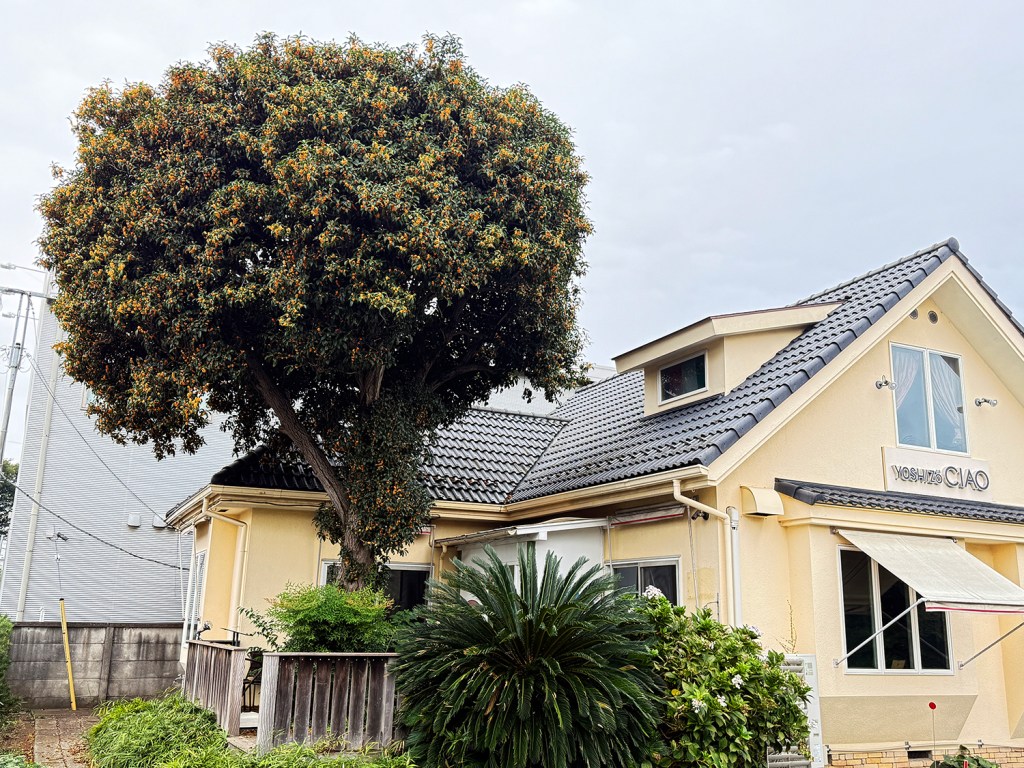
Also on our walk from the apartment to the station is this excellent tree. It’s name in Japanese is Kinmokuse and right now is the season that it is in full bloom. The flowers are very fragrant and you can usually smell one nearby even if you can’t see it. We have enjoyed this one and several others around our apartment building these last couple of weeks.
Views of Mt. Fuji, fragrant trees, and quiet streets are nice benefits of this new place. But what makes a neighborhood truly good is neighbors. As mentioned above, we had a chance to introduce ourselves to most of the people we live next to in this building, but we have also had a number of encounters with other people nearby as well. Japan is a place where foreigners stick out. We ran into Eduardo again while heading to dinner one night. He is from Venezuela, but has lived in Tachikawa for many years. We first met him while participating in the Sumo event volunteer day. Then, Margaret was waiting on the monorail platform at the same time we were. She is from Gambia, but has been here for a few months as a student. She and Emily struck up a conversation that continued on the train until we reached our stop. She gets off at the very last stop, but she is also a Christian and attends a church near her house. Then, one afternoon I stood next to another white guy on the monorail. Talking to strangers on the train is not something people do much here, so I rode quietly and waited for my stop. After Emily and I left the station, he caught up to us on the sidewalk and we chatted while we walked. David is from England but his wife is Japanese. He has lived here for several years. God keeps putting people in our path.
Recently, we also met a family at a local festival. Kosuke is Japanese, his wife Rebecca is British, and they have one daughter Megumi who is two years old. They moved to the neighborhood a while back because it was a better place to raise their daughter. We enjoyed some good conversation, connected via LINE, and look forward to potentially finding ways to interact with them again soon.
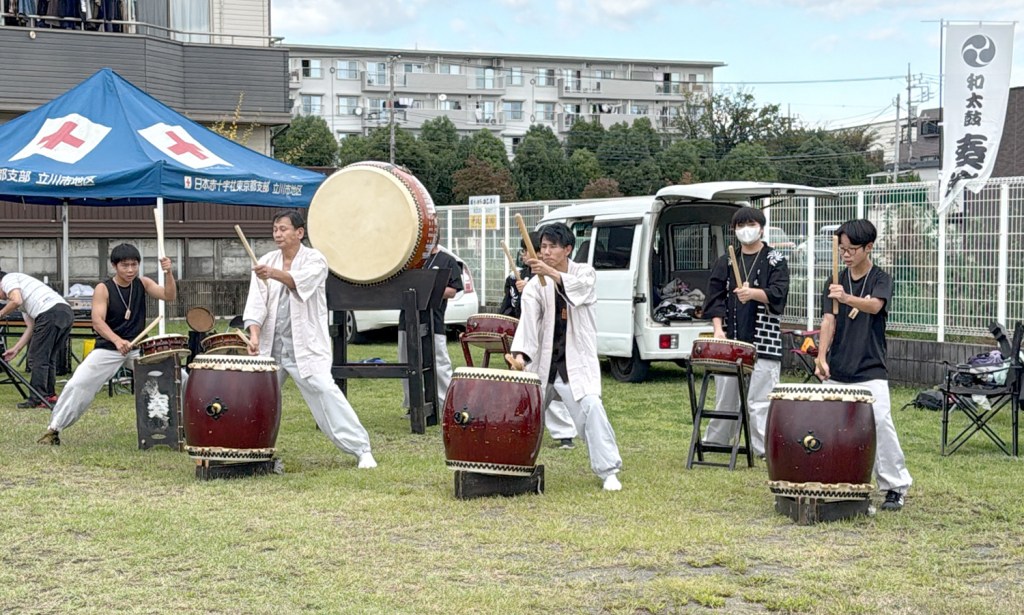
Speaking of the neighborhood festival, or matsuri, here are some pictures. It was a sweet event that felt very local. Our neighborhood is called Sunagawa Nanaban, which translates to something like “Suna River #7.” I’m sure nearby neighborhoods are probably #6 and #8, but to my knowledge ours is the only one that owns the number as their name. I guess it is sort of like how many Memphians will refer to their city as “the 901.” The picture above is of a local Taiko drumming group that performed in the afternoon. They were pretty good!
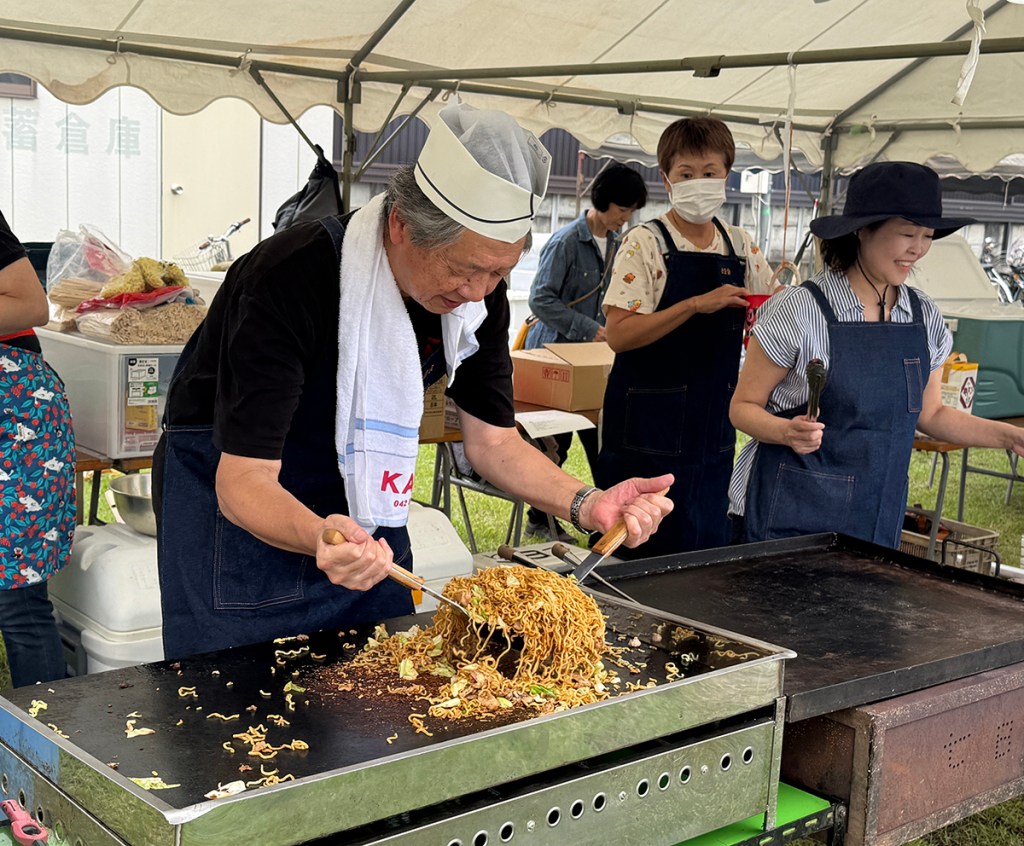
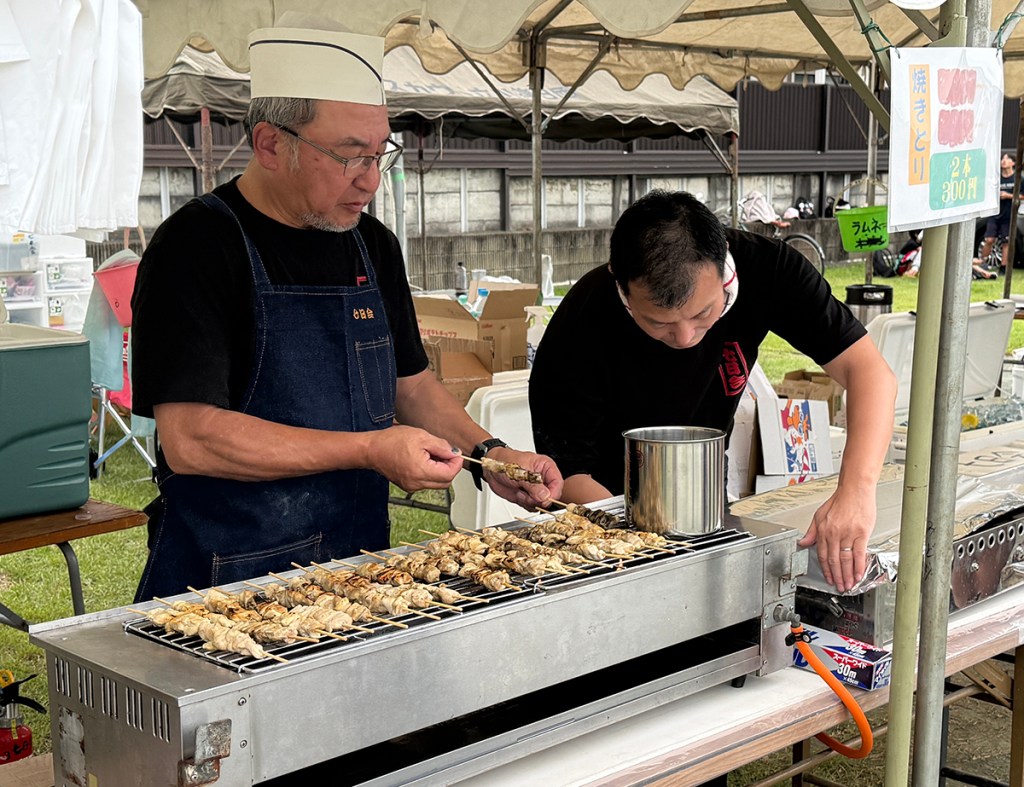
We actually didn’t know about the matsuri until we heard the sound of the Taiko drumming coming in the open apartment window, so it was a pleasant surprise activity for a slow Saturday. We followed the sound of drumming to a local preschool playground and found the festival just getting started at about 2:30pm. That’s when we met Kosuke and Rebecca. Things were just getting started and most people hadn’t arrived yet, but as you can see in the pictures above and below, the yakisoba (noodles) and yakitori (chicken) were getting underway.
There were games for children and various community groups on hand to interact with. We also noticed that a poster of the scheduled activities promised some vocal performers later on that evening. The whole event was scheduled to last until 8pm. Emily and I decided to walk home for a while and then return later on for snacks and the vocal performances.
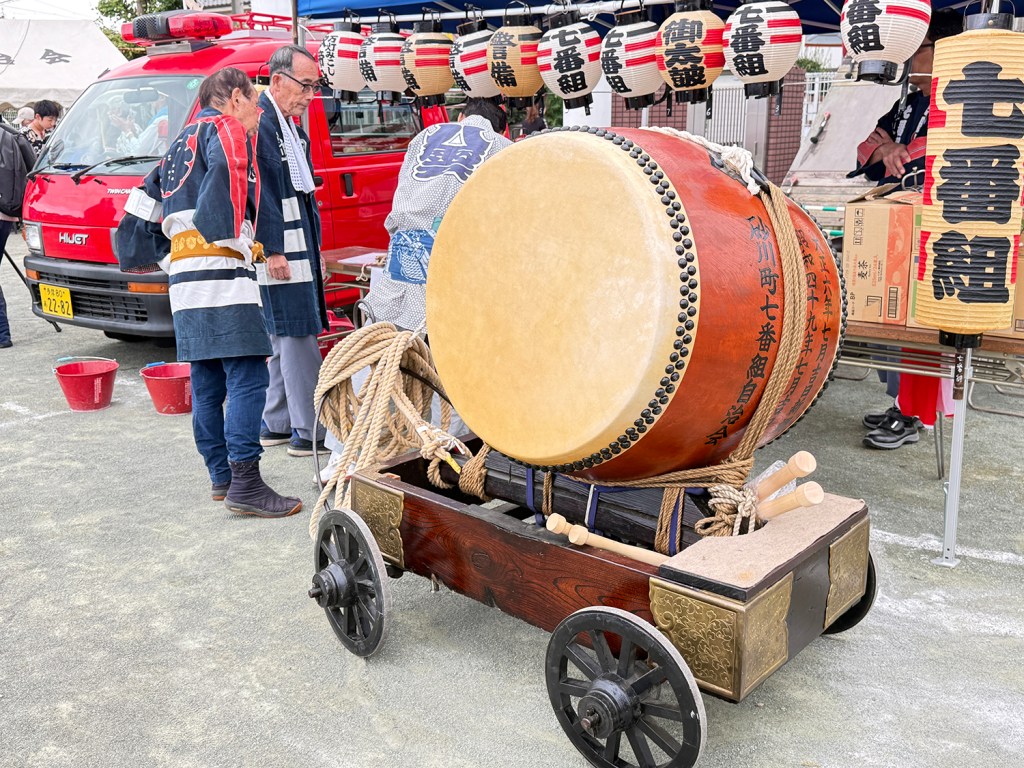
This massive drum was available for kids (or anyone) to try. The fire department was also on hand to pass out information and let people look at some of their equipment. Later on that evening many people bought sparklers and enjoyed themselves and their neighbors. It was a neat time for people to really meet up with friends or mix with the crowd. Most of all, it just felt very local and we were glad to have the opportunity to attend, meet a few people, and be seen as part of the group.
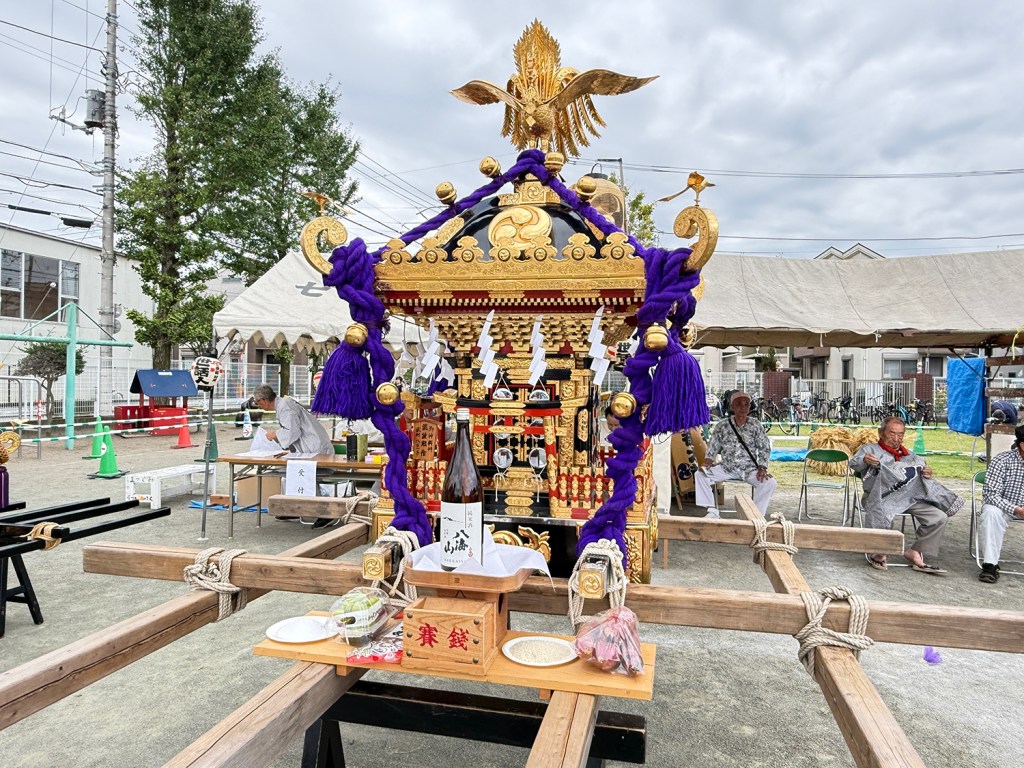
This was a Japanese festival, and so naturally the local Shinto shrine had a presence. This portable shrine was on display the whole time. I was curious to see how most people interacted with it. During the late afternoon, while Emily and I were back at the apartment, we could hear a group of people carrying it around the streets nearby as a procession. By the time we made it back over to the festival in the evening, it was back on its resting blocks, only without the wooden carrying poles.
For most people at the festival, this object was just another part of the background. It was not given any special attention by anyone that I noticed. Everyone just sort of enjoyed themselves while this elaborate piece sat off to the side. For a handful of individuals, the ones with the fancy vests who were clearly shrine supporters, I’m sure it held significant meaning for the neighborhood. But for the average person, it didn’t seem to have much draw. Maybe they might acknowledge it if asked, but I suspect they would be noncommittal about actively participating. I think their primary thought would be to go along with whatever the group is doing because that’s part of being Japanese.
Which is another little window into the culture that we are learning about. The stats online will tell you that most Japanese people are Buddhist and/or Shinto. In reality, I think most people are nothing, but they honor the traditions of the past because that’s just what you do. It all comes back to that idea of Harmony – how do you maintain it and what does living in Harmony with your community give you in return. That’s a cultural lesson worth studying.
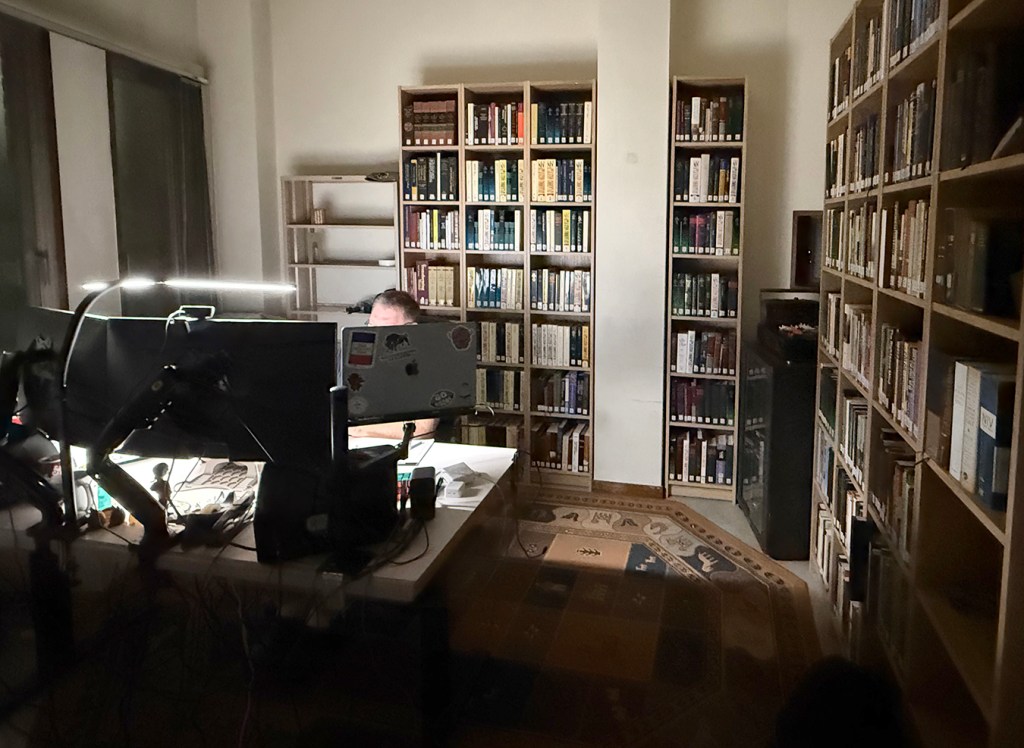
And for one last picture, my office at the church building is now a functional space. There is still a bunch of cardboard boxes and packing paper that needs to be hauled away, and I need to do some serious cord management under my desk, but the essential bits for sermon prep and other activities are done. One more item checked off that long list.
Don’t forget to sign up for our monthly email newsletter for more. The newsletter also contains specific prayer requests so that you can join this mission effort too. Subscribe at this link today!
~ Clay


